
 Worksheets
unit 2 practice test
Total questions: 20
Worksheet time: 12mins
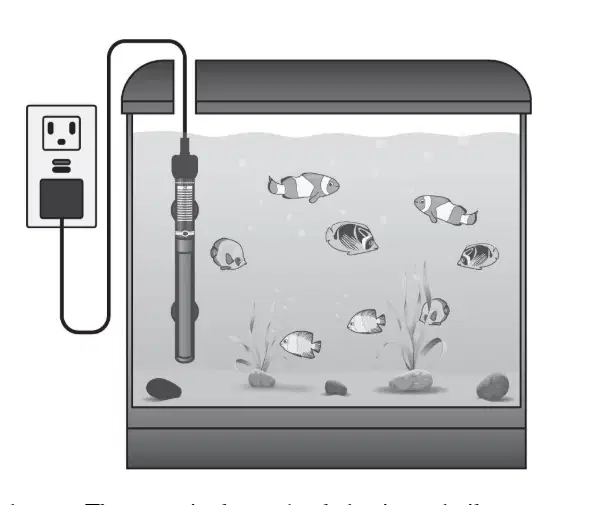
Beth has an aquarium with tropical fish that
need to be kept warmer than room temperature. She uses a warming device to control the water temperature. The warming device uses electrical energy to warm a rod held inside a glass tube. The glass tube is submerged in the water. The diagram shows the aquarium and the warming device.
What is one way that energy is TRANSFERRED in the tank
Thermal energy from the air to the water
Electricity from wall to thermal energy
Thermal energy from the water to the air
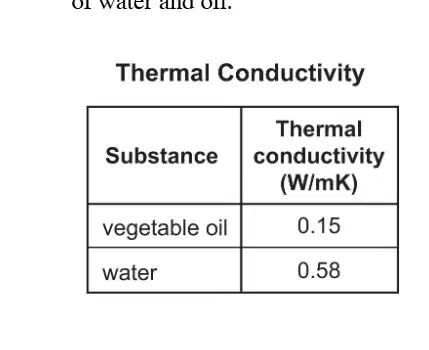
The engineer is experimenting with using oil instead of water. He knows that water and oil have different thermal conductivity, a measurement of how easily thermal energy flows into or out of a substance. The higher the conductivity, the more easily thermal energy flows. The table shows the thermal conductivity of water and oil.
In which situation would a potato cook the slowest once once the container warms to 185 °F?
A. a large potato cooked in oil
B. a small potato cooked in oil
C. a large potato cooked in water
D. a small potato cooked in water
A chef needs to choose a pan that will allow food to cook as quickly as possible for a special recipe and has decided that he will use one of three pans. Each pan has the same dimensions and design but is made of a different type of metal. The chef will design an experiment that will test and rank the thermal conductivity of the pans by cooking a hamburger patty to an internal temperature of 170 °F in each pan on the same stove burner. The thermal conductivity is the rate of transfer of energy in the form of heat over a period of time through a material.
In the above scenario, what would be a dependent variable the chef would use in his experiment?
Material of each pan
The temperature of the burger
How long each burger is cooked for
A chef needs to choose a pan that will allow food to cook as quickly as possible for a special recipe and has decided that he will use one of three pans. Each pan has the same dimensions and design but is made of a different type of metal. The chef will design an experiment that will test and rank the thermal conductivity of the pans by cooking a hamburger patty to an internal temperature of 170 °F in each pan on the same stove burner. The thermal conductivity is the rate of transfer of energy in the form of heat over a period of time through a material.
Which is true about the pan with the highest conductivity
Will cook the burger equally with the other pans
will take longer to cook the burger
will take less time to cook the burger
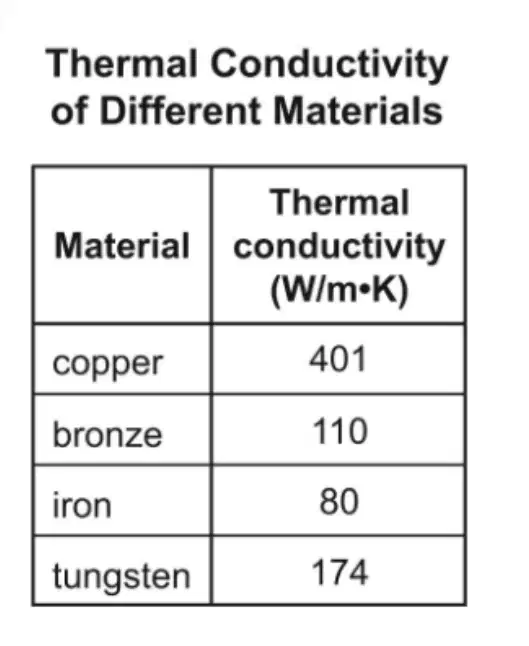
5. Engineers want to make a warming sheet on which to transfer granola bars when they come out of the oven. They want the warming sheet to to prevent transfer thermal energy from the granola bars to keep the bars as warm as possible. The engineers are studying each material's thermal conductivity, or how easily a material can transfer thermal energy in the form of heat. Thermal conductivity is measured in W/m•K.
Based on the information in the table, which material should the engineers use to make the warming sheet
. copper
B. bronze
C. iron
D. tungsten
Why do urban areas tend to be warmer than rural areas?
Urban areas are closer to the sun
Urban areas have more water bodies
Urban areas have surfaces that absorb and hold more heat
Urban areas have more plants
4. A swimmer jumps into a pool and does a cannonball, creating a big splash. Which statement explains the energy exchange as the swimmer hits the pool water?
Energy from the swimmer is transferred to the pool
Energy from the swimmer is transformed to the pool

Carol builds two identical toy cars. She uses motors that provide the same total amount of energy to each car. She starts both cars from rest and lets them speed up for a few seconds. She calculates the kinetic energy for both cars and writes it in the table along with her observations of the sound each car produces. Complete the table to summarize the energy generated by the motors.
Which car most likely produces MORE thermal energy?
1
2

A pot of water with an egg sits on a hot stove. Which of the following correctly describes a flow of heat energy in the diagram?
Heat energy flows from the egg to the stove.
Heat energy flows from the egg to the water.
Heat energy flows from the water to the pot.
Heat energy flows from the water to the egg.
A ball is dropped from a height of 20 feet onto a trampoline. When it hits the trampoline, it produces a 2-foot depression in the trampoline before bouncing back to a maximum height of 10 feet.
What type of transformation occurs when the ball pressing the trampoline down?
kinetic energy to thermal energy
chemical energy to kinetic energy
kinetic energy to elastic energy
Elastic potential energy to kinetic energy
A ball is dropped from a height of 20 feet onto a trampoline. When it hits the trampoline, it produces a 2-foot depression in the trampoline before bouncing back to a maximum height of 10 feet.
What type of transformation occurs when the ball bounces back up?
kinetic energy to thermal energy
chemical energy to kinetic energy
kinetic energy to elastic energy
kinetic energy to gravitational potential energy
What types of energy below does a car motor produce? pick 2
A. Thermal
B. Potential
C. Electrical
D. sound
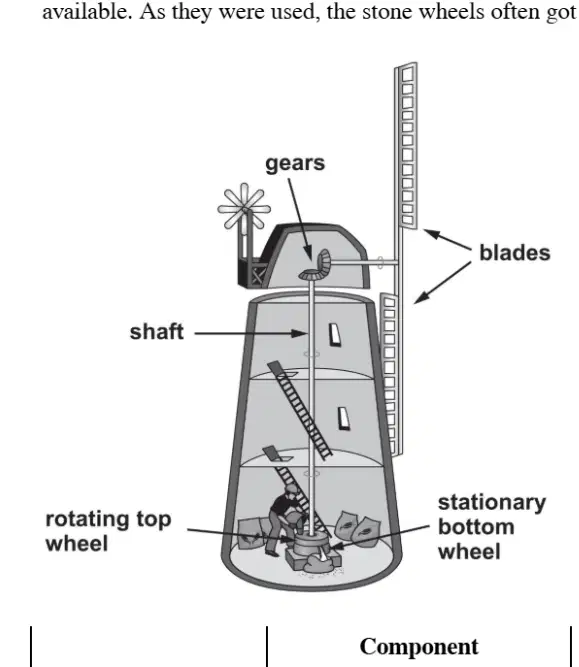
What types of energy could be produced when the two wheels grind together to crush the grain
thermal
potential
elastic
electrical
sound
What types of energy that the wheel CAN be used to crush the grain?
thermal
kinetic
sound
A sous-vide machine uses a warming coil to maintain the water at a specific temperature. What will happen to the water molecules? pick 2
the kinetic energy will increase
the temperature will increase
energy of the water will be destroyed by the device
the molecules will get closer together
A student wants to keep their hot chocolate warm for as long as possible. They have a metal cup, a ceramic mug, and a thermos. Using your knowledge of heat transfer, which container should they choose and why?
A student wants to keep their hot chocolate warm for as long as possible. They have a metal cup, a ceramic mug, and a thermos. Using your knowledge of heat transfer, which container should they choose and why?
Ceramic mug, because it looks nice.
Thermos, because it reduces heat loss by conduction, convection, and radiation.
It does not matter which one they use.
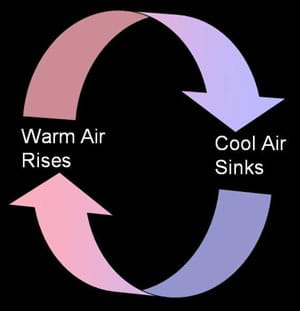
Near the ceiling of a room the air is warmer. The warm air rises because of
conduction
convection
radiation
Which of these are types of potential energy?
Sound
electrical
chemical
elastic
friction
Which is an example of heat being transferred by conduction?
a furnace heating the air in a school
an ice cube melting in a person’s hand
a pot of water on a stove boiling
the sun heating water in a swimming pool

