
 Worksheets
Health and Fitness Quiz
Total questions: 86
Worksheet time: 43mins
What is the definition of health?
A state of complete physical, mental, and social well-being and not merely the absence of disease or infirmity.
The ability to meet or cope with the demands of the environment.
A mix of physical, mental, and social factors that give people a sense of being comfortable, healthy, and happy.
The absence of any physical illness or disease.
What is fitness?
A state of complete physical, mental, and social well-being.
The ability to meet or cope with the demands of the environment.
A mix of physical, mental, and social factors that give people a sense of being comfortable, healthy, and happy.
The absence of any physical illness or disease.
What is wellbeing?
Only physical health.
Only mental health.
A mix of physical, mental, and social factors that give people a sense of being comfortable, healthy, and happy.
The ability to meet or cope with the demands of the environment.
What is a potential effect of increased fitness on health?
It can make you immune to all diseases.
It can positively affect health, making you less likely to catch certain illnesses and diseases.
It has no effect on health.
It can only improve mental health.
What are some immediate feelings you might experience after your first workout?
Excitement and energy
Fatigue and soreness
Hunger and thirst
Dizziness and confusion
Explain what DOMS stands for and how long it typically lasts.
Delayed Onset Muscle Soreness, 1-2 days
Direct Onset Muscle Soreness, 3-4 days
Delayed Onset Muscle Soreness, 3-5 days
Direct Onset Muscle Soreness, 1-2 days
What changes can you expect in your body after six months of strength training?
Increased flexibility and balance
Decreased muscle mass and strength
Increased muscle mass and strength
Decreased endurance and stamina
Which benefit is associated with improving heart function, making it more efficient for exercise?
Physical
Mental
Social
Emotional
What type of benefit is associated with encouraging cooperation skills?
Physical
Mental
Social
Emotional
Releasing feel-good hormones like serotonin is an example of which type of benefit?
Physical
Mental
Social
Emotional
Which benefit is related to providing opportunities to socialize and make friends?
Physical
Mental
Social
Emotional
Improving the efficiency of body systems, such as cardiovascular and respiratory systems, is an example of which benefit?
Physical
Mental
Social
Emotional
Reducing the risk of illnesses like diabetes and heart disease is an example of which type of benefit?
Physical
Mental
Social
Emotional
Enabling a person to control their emotions and work productively is an example of which benefit?
Physical
Mental
Social
Emotional
Reducing stress and tension levels is an example of which type of benefit?
Physical
Mental
Social
Emotional
What is mental health?
The ability to run long distances
A state of mental well-being where a person realizes their potential
The ability to lift heavy weights
A measure of physical endurance
What is social health?
The ability to form and maintain good relationships with others
The capacity to memorize facts quickly
The skill to solve complex mathematical problems
The ability to run a marathon

Which of the following is a key term related to health, fitness, and wellbeing?
Physical Strength
Mental Health
Nutritional Balance
Cardiovascular Endurance
Mental __________ is a state of mental __________ in which a person realises their potential, can cope with normal __________, work __________, and can contribute to __________.
Health, Well-Being, Stressors, Productively, Society
Health, Society, Productively, Well-Being, Stressors
Well-Being, Productively, Society, Health, Stressors
Society, Stressors, Productively, Health, Well-Being
People with good mental health are able to set realistic __________ and show __________ in difficult situations.
Goals, Resilience
Resilience, Goals
Society, Stressors
Stressors, Society
Social Health is the ability to __________ and __________ good relationships with others and to __________ appropriately in different __________ situations.
Interact, Maintain, Form, Social
Interact, Form, Maintain, Social
Maintain, Social, Interact, Form
Form, Interact, Social, Maintain
What is one benefit of good mental health in sports?
Increased stress levels
Improved sleep patterns
Decreased motivation
Poor emotional control
How does good social health benefit athletes in sports?
It leads to isolation from teammates
It causes more conflicts
It helps in forming good relationships
It reduces empathy
Which of the following is a result of controlling emotions in sports?
Increased tension
Poor performance
Ability to cope with decisions
Lack of focus
What is a benefit of athletes developing empathy?
It leads to weaker relationships
It enhances interaction with others
It decreases communication skills
It causes more conflicts
What is social health?
The ability to interact and form relationships with others
The absence of mental disorders
The capacity to perform daily physical tasks
The state of being physically fit
What's the difference between health and fitness?
Health is only about physical well-being, while fitness includes mental health
Health is a state of complete physical, mental, and social well-being, while fitness is the ability to perform physical activities
Health and fitness are the same concepts
Fitness is about social interactions, while health is about physical strength
Why do people need to exercise?
To increase stress levels
To improve physical health and reduce the risk of diseases
To decrease social interactions
To avoid mental health
What happens to your body when you don't exercise?
It becomes more flexible
It may lead to weight gain and decreased muscle strength
It improves cardiovascular health
It enhances mental clarity
What effect can a lack of exercise have on your health?
Improved immune function
Increased risk of chronic diseases
Enhanced physical endurance
Better mental health

What is a sedentary lifestyle?
A lifestyle with regular physical activity
A lifestyle with little or irregular physical activity
A lifestyle focused on healthy eating
A lifestyle with frequent social interactions
What choice does a sedentary adult tend to make?
To participate in sports regularly
To engage in frequent social activities
To not take part in activity or sports
To follow a strict diet plan
Which of the following is a physical consequence of a sedentary lifestyle?
Suffering from poor self-esteem and confidence
Having a lack of friends/social life
Gaining weight/becoming obese
Feeling tired and lethargic
What type of consequence is suffering from poor self-esteem and confidence due to a sedentary lifestyle?
Physical
Mental
Social
None of the above
Which consequence of a sedentary lifestyle is most likely to affect your social interactions?
Hypertension
Suffering from diabetes
Having a lack of friends/social life
Poor sleep/insomnia
How can feeling tired and lethargic due to a sedentary lifestyle be classified?
Physical
Mental
Social
Emotional
Which of the following is a health risk associated with a sedentary lifestyle?
Improved social life
Increased energy levels
Suffering from heart disease
Enhanced mental clarity
What is obesity primarily caused by?
Lack of exercise
Calorie imbalance
High protein intake
Low water consumption
What does BMI stand for?
Body Measurement Index
Body Mass Index
Body Muscle Index
Body Metabolism Index
Which BMI range is classified as overweight?
<20
20-25
25-30
30+
What is a limitation of using BMI to assess weight?
It does not consider height
It does not consider muscle mass
It does not consider age
It does not consider diet
Explain three negative effects that obesity could have on performance in athletics.
Improved endurance, increased speed, better flexibility
Decreased stamina, increased risk of injury, reduced agility
Enhanced strength, faster recovery, better coordination
Increased energy, improved balance, greater motivation
What is obesity?
A condition characterized by excessive body fat
A state of being underweight
A temporary increase in body weight
A condition of having low body mass index
Why may different sports require different body types?
To ensure uniformity in team appearance
Different body types offer advantages in specific physical activities
To make sports more challenging
To reduce the risk of injuries
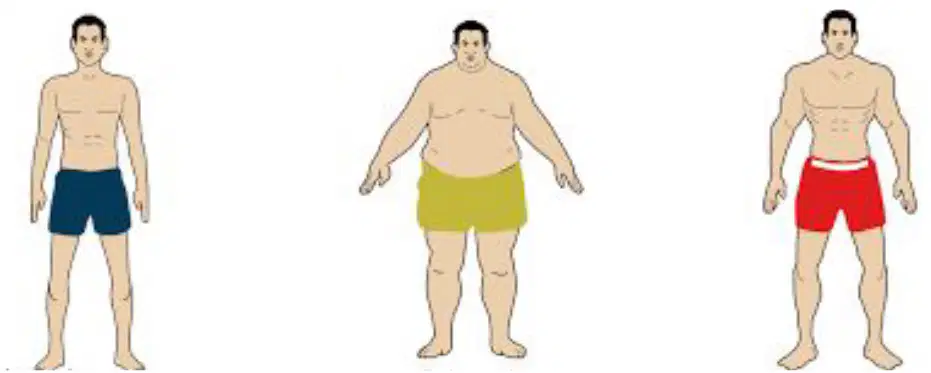
Which body type is typically associated with being lean and long?
Endomorph
Mesomorph
Ectomorph
None of the above
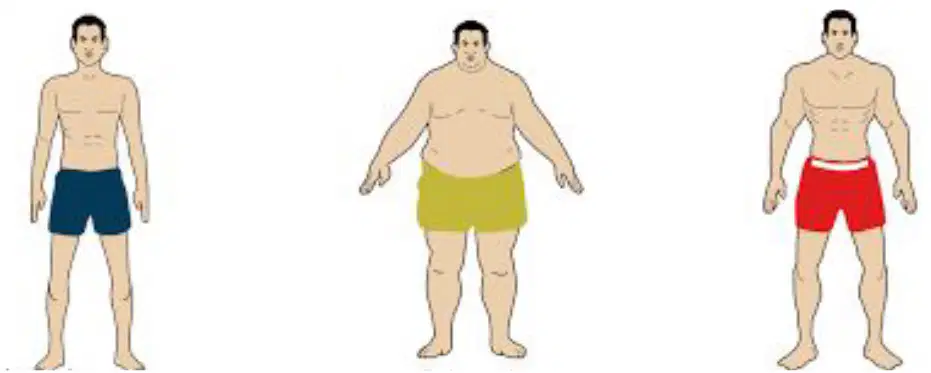
Which body type is generally muscular and well-built?
Ectomorph
Mesomorph
Endomorph
None of the above
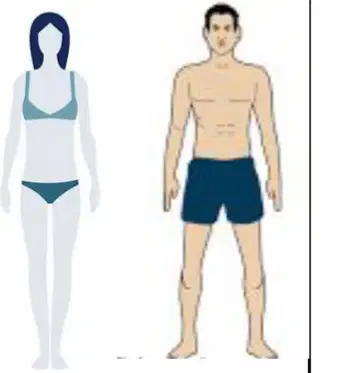
Which of the following characteristics best describes an ectomorph body type?
Short and muscular
Very thin and lean, usually tall
Broad shoulders and chest
High body fat percentage
What type of shoulders, hips, and chest do ectomorphs typically have?
Broad and muscular
Narrow
Wide and bulky
Rounded
Which of the following sports is an ectomorph body type best suited for?
Weightlifting
Sumo wrestling
Long-distance running
Bodybuilding
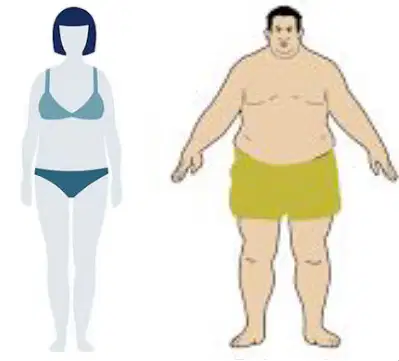
Which of the following characteristics is associated with an endomorph body type?
Pear shape body
High muscle content
Low body fat
Narrow shoulders
What is a common feature of fat distribution in endomorphs?
Fat around the middle, thighs, and upper arms
Fat concentrated in the lower legs
Fat evenly distributed throughout the body
Fat primarily in the chest area
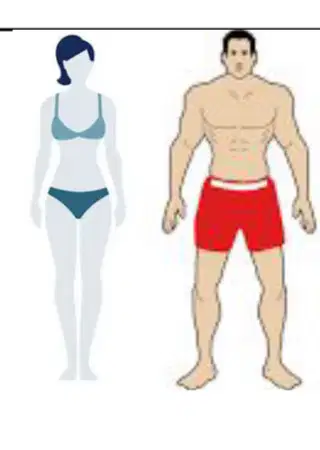
Which of the following characteristics is associated with a mesomorph body type?
Narrow shoulders and wide waist
Large muscle content
Small muscle content
Rounded body shape
What is a typical body shape of a mesomorph?
Pear-shaped
Wedge-shaped
Apple-shaped
Rectangular
Which sport is a mesomorph body type best suited for?
Long-distance running
Weightlifting
Synchronized swimming
Chess
What is somatotyping?
A method of classifying body types
A type of exercise routine
A diet plan for athletes
A psychological assessment
Which somatotype is described as having a pear-shaped body with wide hips and narrow shoulders?
Ectomorph
Mesomorph
Endomorph
Metamorph
Which somatotype is characterized by a muscular appearance with wide shoulders and narrow hips?
Ectomorph
Mesomorph
Endomorph
Endomorph
Define skill and ability and explain the difference between them.
Skill is innate, ability is learned; skill is broader.
Skill is learned, ability is innate; skill is specific.
Skill and ability are the same; both are learned.
Skill is innate, ability is learned; ability is specific.
What is the purpose of mental rehearsal in mental preparation?
To imagine being somewhere relaxing
To lower your heart rate
To imagine the feeling in the muscles when performing a skill
To focus on important things
Which technique involves imagining what an aspect of your performance should look like?
Deep Breathing
Visualisation
Positive Self-Talk
Selective Attention
How does deep breathing help in mental preparation?
It helps you imagine being somewhere relaxing
It lowers your heart rate and makes you feel calm
It helps you focus on important things
It involves telling yourself positive things
What is the role of selective attention in mental preparation?
To imagine the feeling in the muscles
To focus on important things and ignore unimportant ones
To lower your heart rate
To tell yourself positive things
Which technique involves telling yourself positive things to motivate or reassure yourself?
Imagery
Deep Breathing
Positive Self-Talk
Visualisation
What is one benefit of mental preparation on performance?
It helps you stay focused.
It decreases your energy levels.
It makes you forget important details.
It increases your stress levels.
How does mental preparation affect your emotions?
It makes you lose control of your emotions.
It helps you stay in control of your emotions.
It causes emotional instability.
It makes you indifferent to emotions.
Which of the following is NOT a benefit of mental preparation?
Keeping you motivated.
Making you feel more confident.
Increasing your stress.
Reducing stress.
What is one of the benefits of physical health and wellbeing?
Reduces stress and anxiety
Improves heart function
Provides opportunities to socialize
Helps with the release of serotonin
According to the World Health Organization, what is a key aspect of mental health and wellbeing?
Having all body systems working well
Meeting basic human needs
Realizing one's own potential
Improving heart function
What does social health and wellbeing ensure?
Reduces the risk of diabetes
Provides opportunities to socialize
Increases confidence and self-esteem
Helps to avoid obesity
What is fitness defined as in the context of health and wellbeing?
The ability to meet basic human needs
The ability to meet the demands of the environment
The ability to control emotions
The ability to improve heart function
Which of the following is a possible consequence of a sedentary lifestyle on physical health?
Improved cardiovascular fitness
Weight gain or obesity
Increased muscle strength
Enhanced flexibility
How can a sedentary lifestyle impact mental health?
Improved concentration
Increased energy levels
Poor self-esteem
Enhanced mood
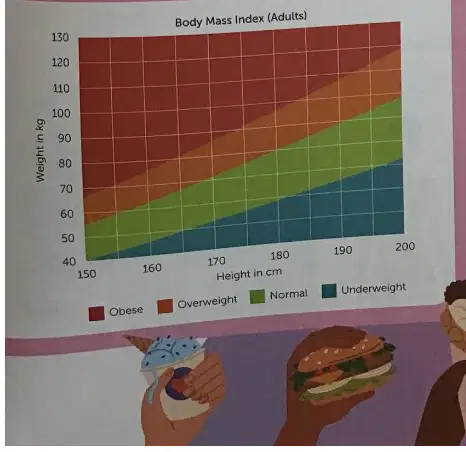
What is the Body Mass Index (BMI) threshold for obesity?
Over 25
Over 20
Over 30
Over 15
Which of the following is a negative impact of obesity on physical health?
Increased flexibility
Cancer
Improved stamina
Enhanced agility
How does obesity affect performance in physical activity and sport?
Increases speed
Limits stamina
Enhances agility
Improves power
Which mental health issue is associated with obesity?
Increased confidence
Depression
Enhanced social skills
Improved stress management
What is one social health impact of obesity?
Increased socialization
Inability to socialize
Enhanced public speaking
Improved teamwork
What is a characteristic feature of an endomorph body type?
Muscular appearance
Pear-shaped body
Wide shoulders
Narrow hips
Which sports are endomorphs most suited for?
Swimming and sprinting
Football and rugby
Discus and shot put
Tennis and badminton
What is a defining characteristic of a mesomorph body type?
Narrow shoulders
Muscular appearance
Pear-shaped body
High fat content
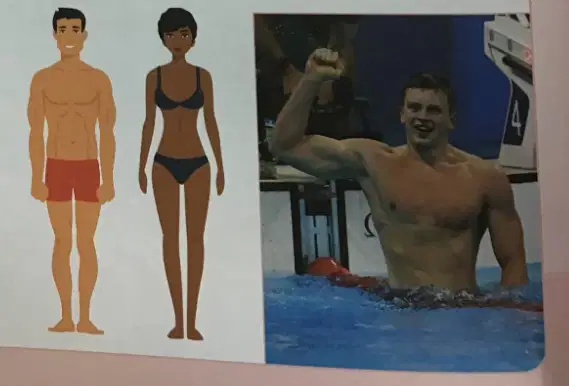
Which sports are mesomorphs ideally suited for?
Netball and volleyball
Football and swimming
Basketball and tennis
Golf and archery
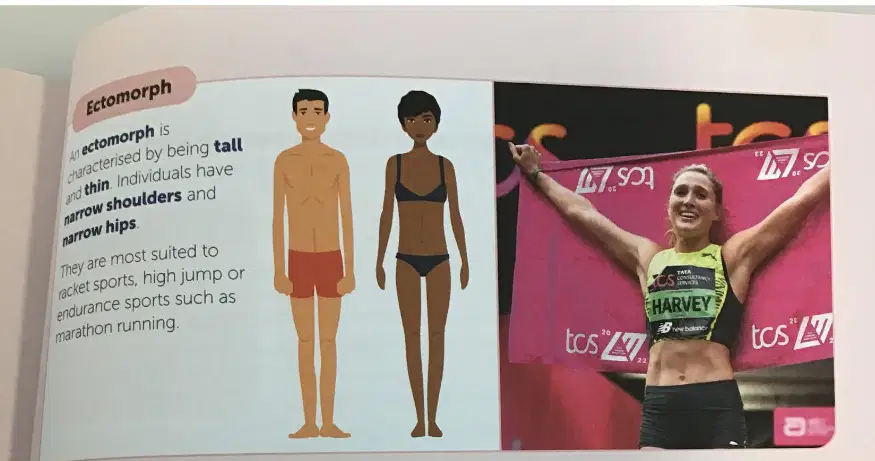
What are the characteristics of an ectomorph body type?
Tall and thin with narrow shoulders and hips
Short and muscular with broad shoulders
Average height with a balanced build
Short and stocky with wide hips
Why are ectomorphs well suited to distance running?
They have more muscle mass
They are heavier, providing more momentum
They are thin and lightweight, reducing air resistance
They have shorter legs, increasing stride frequency
What is the main focus of mental preparation in sports?
Physical strength
Mental focus and control
Nutritional balance
Equipment quality
Which technique involves imagining the feeling in the muscles when performing a skill perfectly?
Positive self-talk
Deep breathing
Mental rehearsal
Selective attention
What is the purpose of deep breathing in mental preparation?
To increase anxiety
To lower heart rate and promote calmness
To enhance visualization
To improve physical strength

