
 Worksheets
Unit 7 Lesson 2: Rocks and Fossils
Total questions: 12
Worksheet time: 6mins
What do some fossils and modern-day organisms have in common?
They are the same age.
They all lived in the same kind of habitat.
They may have similar body structures.
They all come from rock layers.
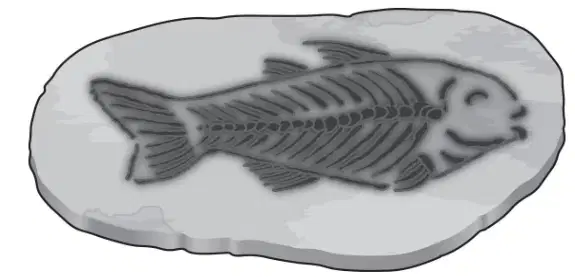
The Green River Formation in Wyoming is made of layers of rock that contain fabulous fish fossils. The picture shows the type of fossils that are found in these rocks. What most likely occurred to allow the fish to be preserved so well?
The fish got buried in sediment.
The fish got moved along until it landed in a safe quiet place.
Animals ate the fish so the bones were clean and ready to turn to fossils.
Temperature and pressure increased until conditions were right to form fossils.
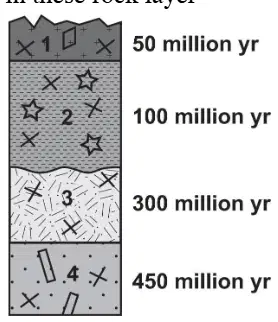
Which type of fossil is approximately 438 million years old?
x
star
diamond
rectangle
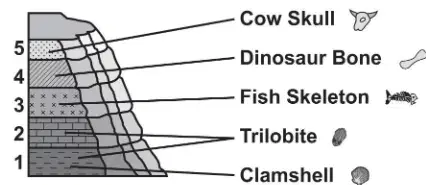
A class took a field trip to look at some rock layers and the fossils in the rock. The fossils found in each rock layer are shown. Which fossil is the youngest?
trilobite
cow skull
clamshell
dinosaur bone
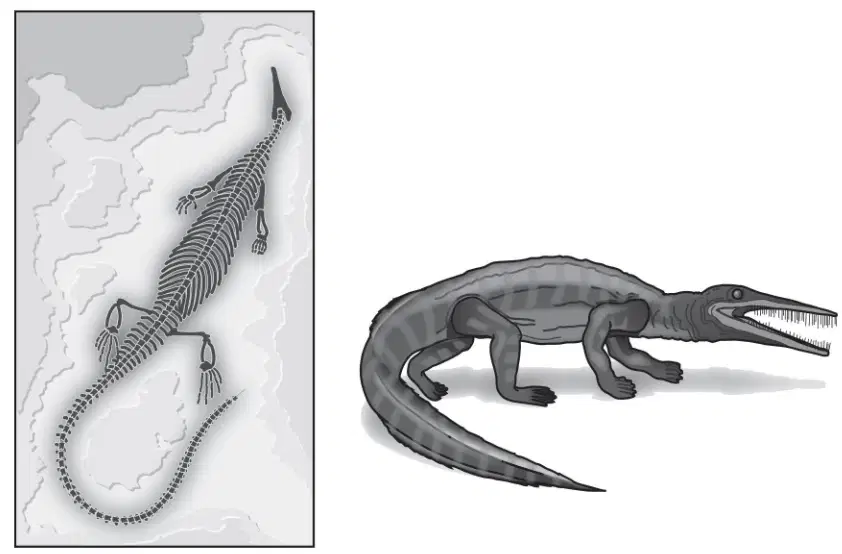
The picture shows a Mesosaurus fossil and a drawing of what scientists think Mesosaurus looked like. Which living organism looks most like the Mesosaurus, and where did it likely live?
lizard, in trees
snake, on land
alligator, in water
frog, on land and in water
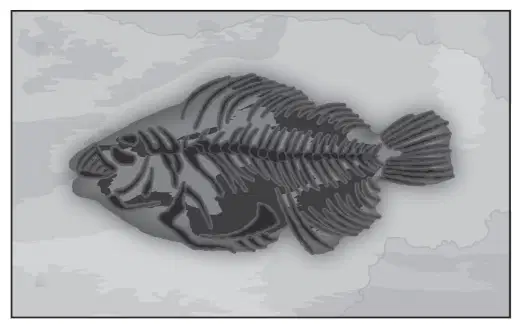
The fossil shows a type of animal. What type of animal is it, and what can you say about the materials found with it?
It is a fish, and the materials found are rocks and shells.
It is a bird, and the materials found are feathers and twigs.
It is a mammal, and the materials found are bones and fur.
It is a reptile, and the materials found are leaves and branches.
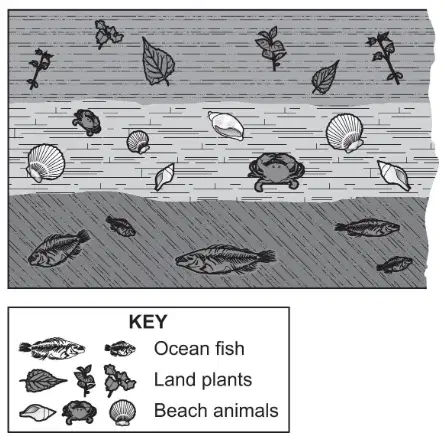
The diagram shows three rock layers. The evidence that supports the scientist's statement that this area was once under the ocean and later not covered by water is:
Fossils of sea creatures are found in the lower rock layers, while the upper layers contain land animal fossils or no marine fossils.
All rock layers contain only land animal fossils.
There are no fossils found in any of the rock layers.
The rock layers are all made of volcanic ash.
We learn about the organisms of long ago from _____________________________.
fossils
modern animals
weather reports
mountains
They are the ____________________________, or traces, of organisms that lived in the past.
remains
plants
minerals
clouds
Many animals alive today have structures that are similar to ____________________________ that lived in the past.
animals
plants
minerals
rocks
The similarities suggest that the organisms are ____________________________.
related
unaware
separated
unaffected
When we study today's organisms, we can ____________________________ things about related organisms of the past.
infer
ignore
forget
repeat

