
NEW
Font size
 Worksheets
Biol 1306 Unit 5: Cells Membrane & Signaling Inteactive
Total questions: 15
Worksheet time: 8mins
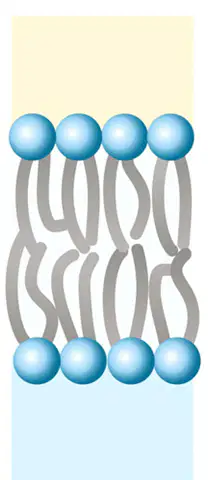
The figure shown depicts the molecular structure of a typical phospholipid bilayer. Which of the following statements regarding phospholipid bilayers is false?
Phospholipids have both hydrophobic and hydrophilic regions.
In water, phospholipids tend to aggregate to form a bilayer.
Individual phospholipids are free to change sides of the bilayer
The hydrophobic interior of the membrane is an oil-like fluid.
The inner and outer halves of a bilayer often differ in phospholipid composition.
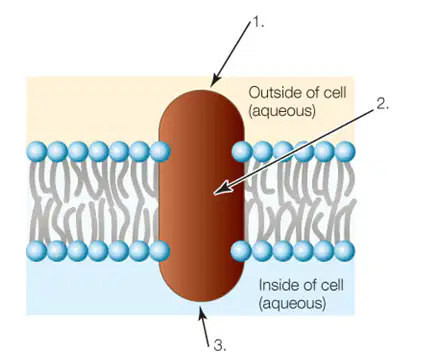
In the accompanying figure of an integral membrane protein, which of the following groups of terms correctly describes the three labeled regions (1, 2, 3) of the protein?
1 = hydrophilic;
2 = hydrophobic; 3 = hydrophilic
1 = hydrophobic; 2 = hydrophobic; 3 = hydrophilic
1 = hydrophilic; 2 = hydrophobic; 3 = hydrophobic
1 = hydrophobic; 2 = hydrophilic; 3 = hydrophobic
1 = hydrophobic; 2 = hydrophilic; 3 = hydrophilic
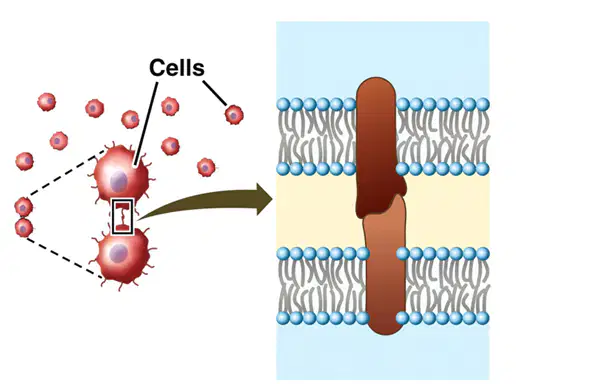
Which of the following statements regarding cell–cell adhesion (shown) is false?
Proteins on the surfaces of cells are the main mediators of cell–cell adhesion.
Oligosaccharides attached to proteins may be the basis for cell–cell adhesion.
Oligosaccharides may be attached to membrane lipids.
Cell–cell adhesion is important in animal development.
Different cells may have different glycoproteins on their surfaces.
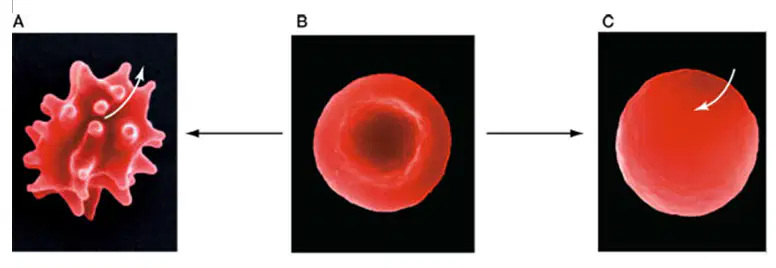
Which of the following statements regarding the sequence of events shown here is true?
The cell in condition C has been immersed in a hypertonic solution.
The concentration of solutes inside the cell shown in condition C is higher than the solution surrounding the cell.
The cell in condition A has been immersed in a hypotonic solution.
Osmosis occurs when going from condition B to C, but not from B to A.
Diffusion of solutes out of the cell is causing the events shown in the transition from condition B to A.
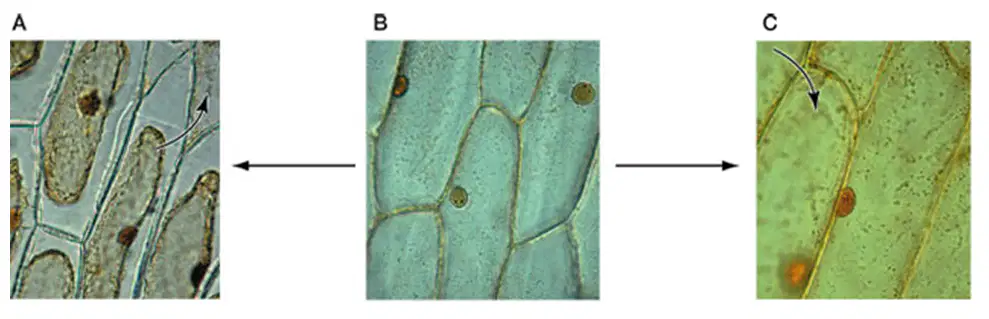
Which of the following statements regarding the sequence of events shown here is true?
The cells in condition B have less turgor pressure than the cell in condition A.
The cells in condition A have been placed in a hypotonic solution.
The cells in condition C have been placed in a hypertonic solution.
The cells in condition C have been placed in an isotonic solution.
The cells in condition C have greater turgor pressure than the cells in condition B.
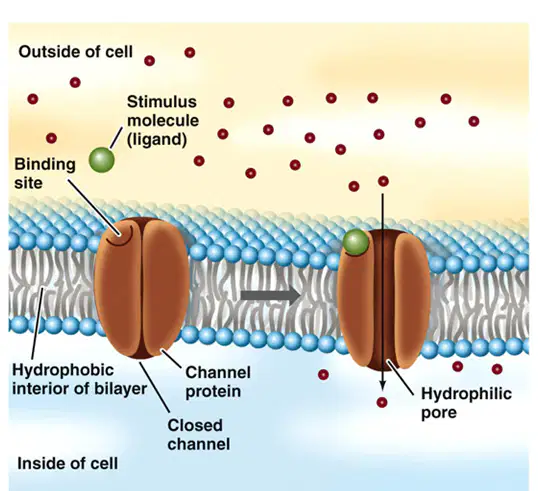
Which of the following statements regarding channel proteins is false?
Channel proteins can assist polar molecules to cross the plasma membrane by facilitated diffusion.
The gated ion channel can allow ions to pass when stimulated to open.
The surface of a channel protein in contact with the bilayer would likely have hydrophilic amino acids.
Water plays a role in determining which ions are allowed to pass through an ion channel.
Aquaporins facitate the diffusion of water across membranes.
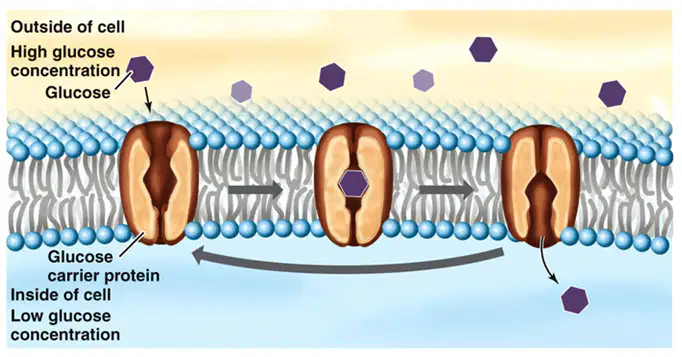
The accompanying figure shows
simple diffusion of glucose into a cell.
active transport of glucose into a cell
facilitated diffusion of glucose into a cell.
the accumulation of glucose against its concentration gradient.
the gated transport of glucose.
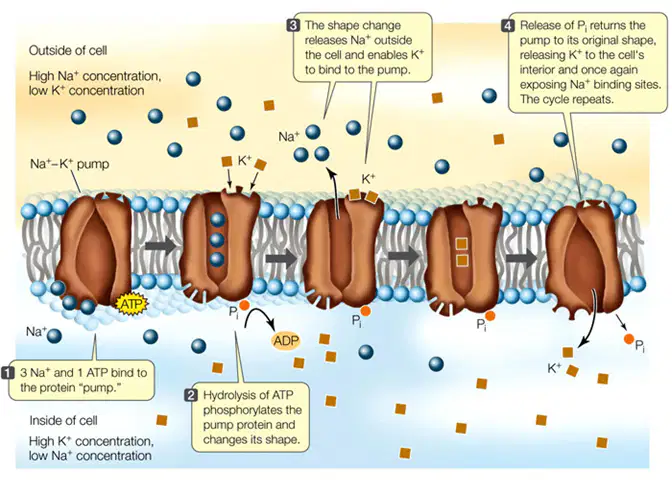
Which of the following statements regarding the transport system shown here is false?
Both primary and secondary active transport processes are depicted in the diagram.
Both primary and secondary active transport processes move substances against their concentration gradients.
Both primary and secondary active transport processes require energy.
ATP hydrolysis provides the energy for the generation of both the Na+ and K+ gradients.
Both primary and secondary active transport require the activity of a membrane protein.
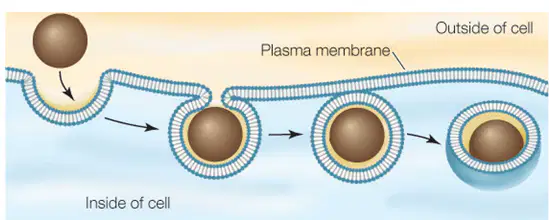
The process in the figure shown is called
diffusion
osmosis
facilitated diffusion.
endocytosis
exocytosis
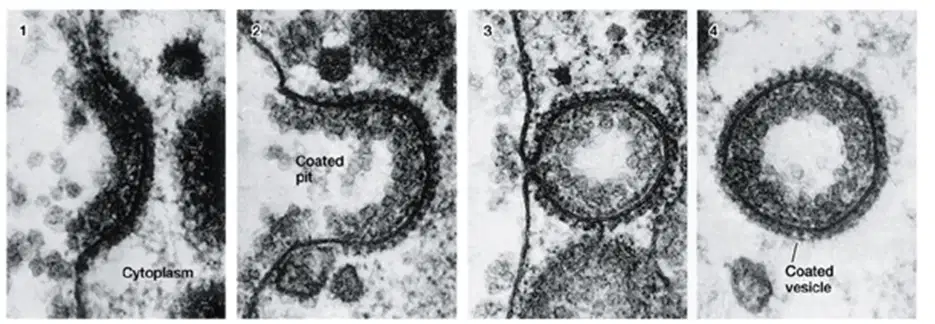
The process of receptor-mediated endocytosis is shown in the accompanying figure. Which of the following statements regarding this process is false?
Receptor-mediated endocytosis requires receptor proteins located on the cell’s surface.
Coated pits are lined on their cytoplasmic surface by clathrin.
Receptor-mediated endocytosis is important in cellular uptake of cholesterol.
Coated vesicles eventually become part of the endoplasmic reticulum.
Coated vesicles contain previously extracellular material.
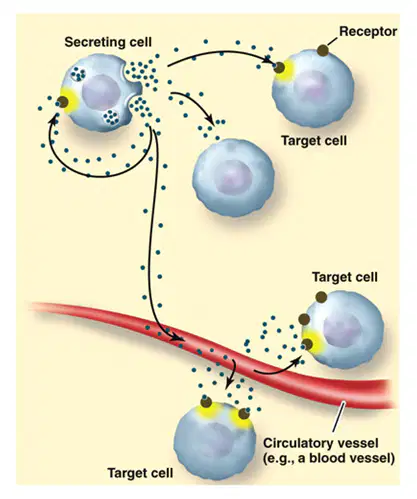
Which of the following statements regarding chemical signaling systems (shown) is false?
Autocrine signals have an effect on the cells that secrete them.
Paracrine signals have an effect on nearby cells.
In larger organisms, circulating signals are carried from the environment to internal cells.
In a larger organism, most signals received by cells are chemical in nature.
The cells of our body can respond to a diverse array of chemical signals.
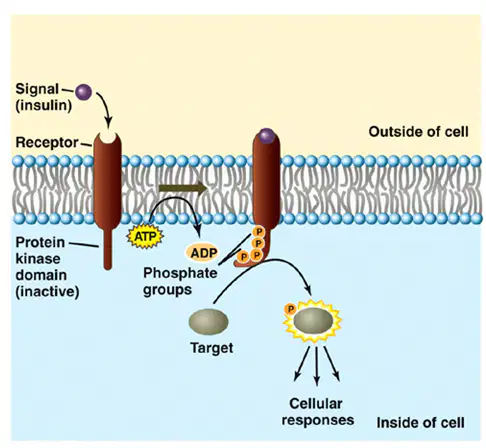
The insulin receptor shown is considered which of the following receptor types?
Ion channel receptor
Protein kinase receptor
G protein–linked receptor
Cytoplasmic receptor
Nonpolar signal receptor
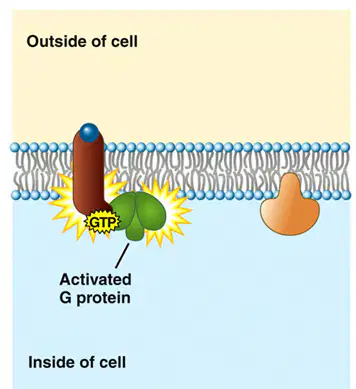
In this figure, part of the signal transduction mechanism common to G protein–linked receptors is shown. Of the steps in this pathway, select the step that would occur third in the sequence.
Activated G protein activates cellular enzymes.
Activated receptor binds to membrane-bound G protein.
Extracellular hormone (signal) binds to the receptor.
GDP bound to the G protein is exchanged for GTP, completing activation of the G protein.
Activated cellular enzymes catalyze the formation of products, effectively amplifying the signal inside the cell.
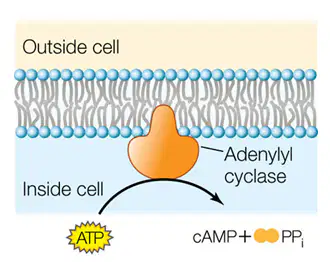
In their glycogen phosphorylase activation experiments, Sutherland and colleagues incubated liver cell membranes with epinephrine. Following incubation, the investigators removed the membrane components and mixed what was left with liver cell cytoplasm, resulting in activation of phosphorylase enzyme. Which critical component, which was activated the phosphorylase, was present in their membrane-depleted mixture?
Glycogen
Glucose
cAMP
Adenylyl cyclase
Epinephrine
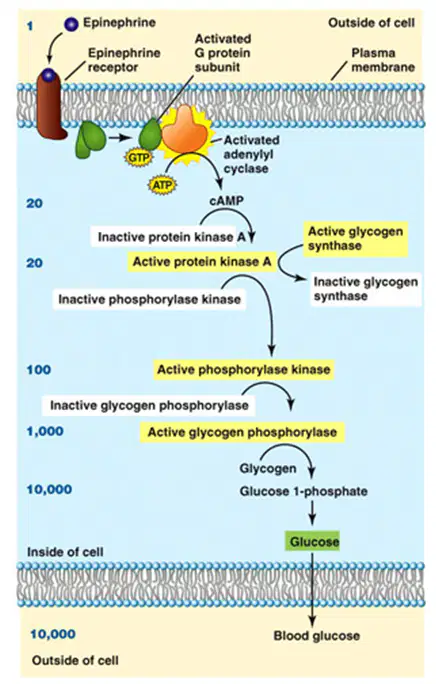
Which of the following statements regarding the cascade of reactions leading to altered enzyme activity (shown) is false?
Glycogen synthase is inhibited in the cascade shown.
Phosphorylase kinase is inhibited in the cascade shown.
The binding of epinephrine results in the release of stored glucose in the cascade shown.
The binding of epinephrine results in the inhibition of glycogen synthesis in the cascade shown.
The cascade shown results in both the inhibition and activation of different enzymes.

