
 Worksheets
Lowry's 2025 ch 5 & 6 Quiz review
Total questions: 26
Worksheet time: 36mins
What is exponential growth?
Rapid increase in quantity or size over time
Random fluctuation in quantity or size over time.
Stagnation in quantity or size over time.
Gradual decrease in quantity or size over time.
Which of the following is an example of exponential growth?
Population of bacteria doubling every hour
Number of cars on the road increasing steadily over time.
Number of trees in a forest growing at a constant rate.
Number of books in a library decreasing over time.
Which of the following is an example of logistic growth?
Number of cars in a parking lot.
Temperature of a room.
Population of deer in a forest
Amount of rainfall in a city.
Which of the following statements about carrying capacity is true?
Carrying capacity is the maximum number of individuals of a species that an environment can support sustainably.
Carrying capacity is only influenced by biotic factors and not abiotic factors.
Carrying capacity is a fixed value and does not change over time.
Carrying capacity is the minimum number of individuals of a species that an environment can support sustainably.
What is the relationship between birth rate and population growth?
A higher birth rate leads to higher population growth.
A higher birth rate leads to lower population growth.
Birth rate has no impact on population growth.
The relationship between birth rate and population growth is complex and depends on other factors.
What are the limiting factors that affect logistic growth in a population?
Social media influence
Weather patterns
Food availability, predation, disease, and competition for resources
Alien invasion
Give an example of logistic growth in nature.
Population of deer in a forest
Height of a building
Number of cars in a parking lot
Amount of water in a reservoir
What is an example of exponential growth in real life?
Spread of a virus in a population
Increase in the number of cars on the road
Growth of a tree over time
Rise in the price of a product


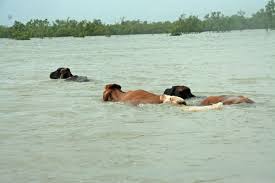
Natural disasters can be considered limiting factors.
true: density independent limiting factors
false; natural disasters are not limiting factors
true: density dependent limiting factors
false: because Mrs. Schaffer said
A lion and a cheetah attempt to occupy the same niche. The more aggressive lion survives; the cheetah does not.
Density-Dependent: Competition
Density-Independent: Competition
Density-Dependent: Predator-Prey
Density-Independent: Predator-Prey
Coyotes cross the winter pack ice and enter Newfoundland. The moose population starts to decline.
Density-Dependent: Competition
Density-Independent: Competition
Density-Dependent: Predator-Prey
Density-Independent: Predator-Prey
Due to severe overcrowding in an Asian village, many children do not survive to reach adulthood.
Density-Dependent: Disease
Density-Independent: Disease
What process starts with bare/barren rock followed by lichen?
primary succession
secondary succession
both types of succession
Wildfires in Crater Lake burned approximately 33,000 acres in 2011, leaving 25 square miles of charred timber and bare ground. The five-week fire burned the loblolly pine trees and seeds for which Bastrop State Park is famous. Park rangers are hoping that new plant growth on the bare soil cover will eventually be established as pine trees; however, immediately following a wildfire, the first plants which emerge will most likely be grasses as a stage in─
PRIMARY SUCCESSION
SECONDARY SUCCESSION
TERTIARY SUCCESSION
CLIMAX COMMUNITY
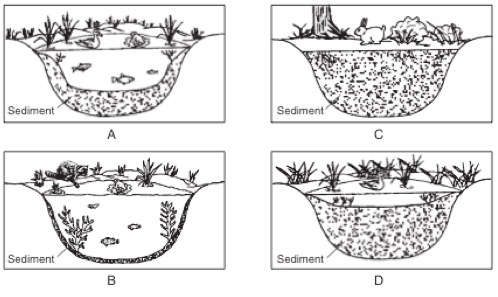

Cattle egrets forage (feed) in fields among cattle. The egret gets easy access to flying insects stirred up by the cattle, and the cattle don't care if they are there or not.
mutualism
commensalism
competition
predation
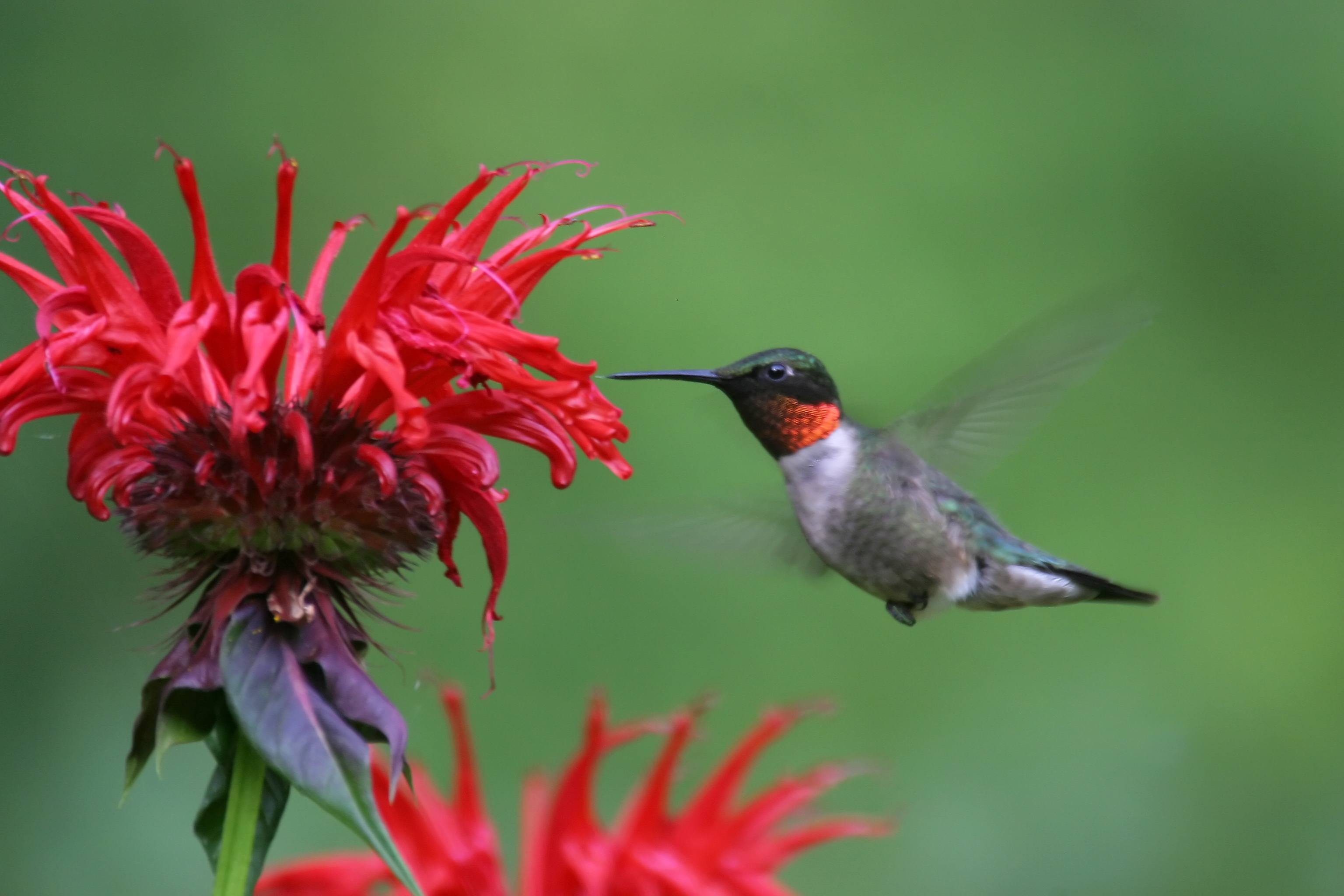
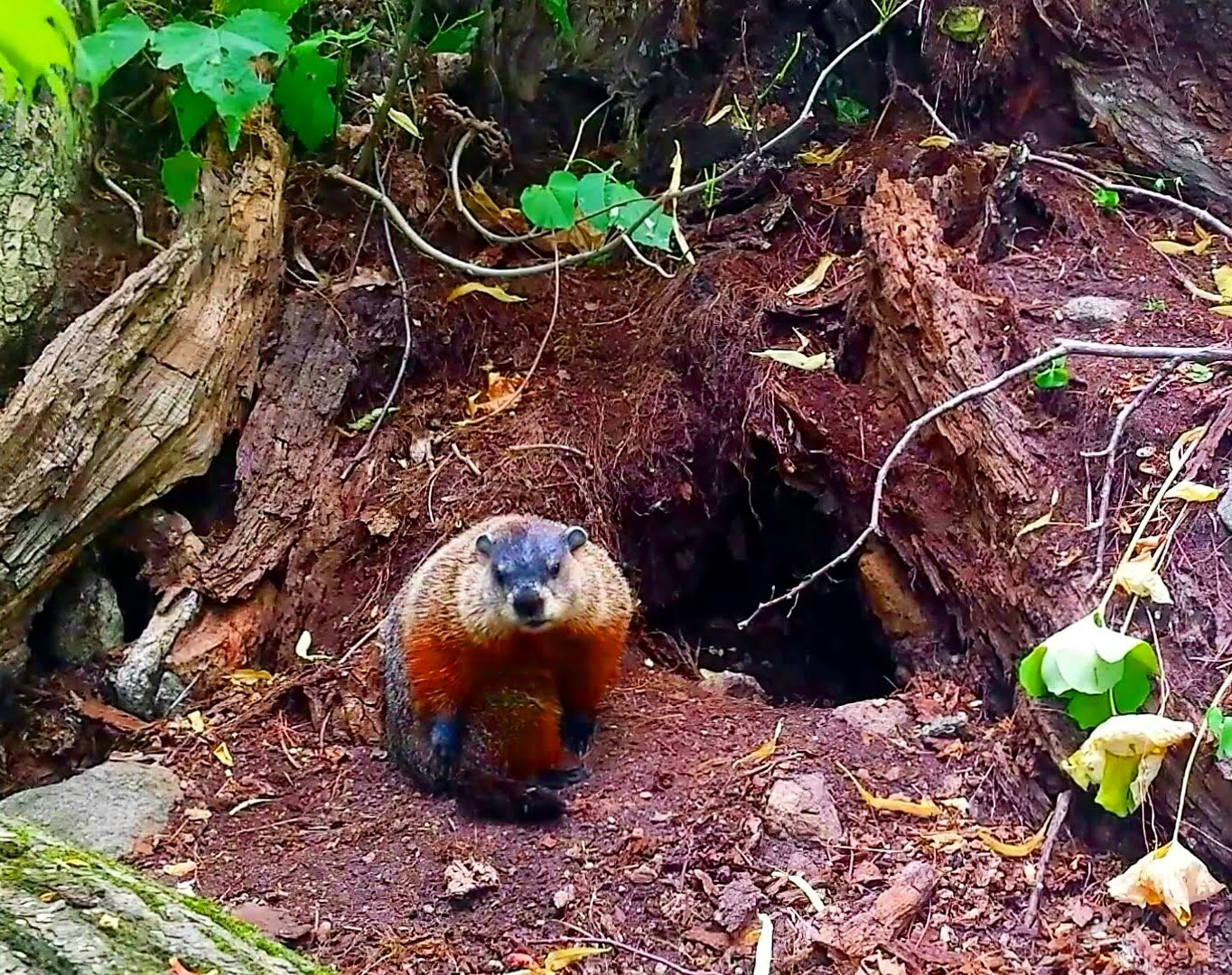


The pearl fish using the sea cucumber to hide is an example of
Mutualism
Commensalism
Parasitism
Metabolism

The snowshoe hare, a member of the rabbit family, is the primary prey for the Canadian lynx, a wild feline slightly larger than a bobcat. Scientists plan to investigate the relative sizes of the hare and lynx populations over a three-year period.
Based on predator-prey dynamics, which of the following identifies the hypothesis MOST LIKELY to be supported by the study?
A decrease in the lynx population size will lead to a decrease in the hare population size.
A decrease in the hare population size will lead to an increase in the lynx population size.
An increase in the lynx population size will lead to a decrease in the hare population size.
An increase in the hare population size will lead to a decrease in the lynx population size.

In a forest ecosystem, a food web is diagrammed. What would MOST LIKELY happen if the rabbit population decreased as a result of a wolf being introduced to the food web?
The fox population would decrease.
The food web would not be affected.
The bird population would decrease.
The spider population would decrease.
What is a keystone species?
A species that is the most abundant in an ecosystem
A species that has a crucial role in the way an ecosystem functions
A species that is the largest in an ecosystem
A species that is the smallest in an ecosystem

