
 Worksheets
UNIT 4 AG Review
Total questions: 42
Worksheet time: 24mins
Which principle is best illustrated by the Bill of Rights limiting government actions?
checks and balances
popular sovereignty
majority rule
individual liberties
Double jeopardy prohibited; Right to be heard by a Grand Jury; no self-incrimination; All of these are part of the
First Amendment
Second Amendment
Fifth Amendment
Seventh Amendment
"In Suits at common law, where the value in controversy shall exceed twenty dollars, the right of trial by jury shall be preserved, and no fact tried by a jury, shall be otherwise re-examined in any Court of the United States, than according to the rules of the common law." This is the text of what amendment to the U.S. Constitution?
Sixth Amendment
Seventh Amendment
Fourteenth Amendment
Fifteenth Amendment
The Fourth Amendment would prevent which of these situations?
being punished for criticizing the government
having police search your home without cause
being jailed for worshiping your faith
not being allowed to have an attorney in court
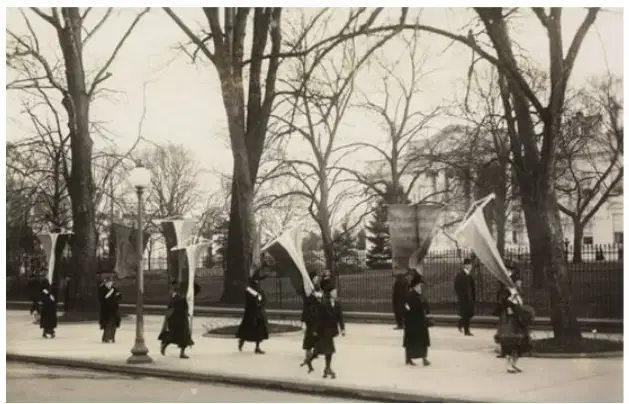
Which First Amendment right is depicted in the photograph?
right to vote
freedom of press
right to assemble
freedom of religion
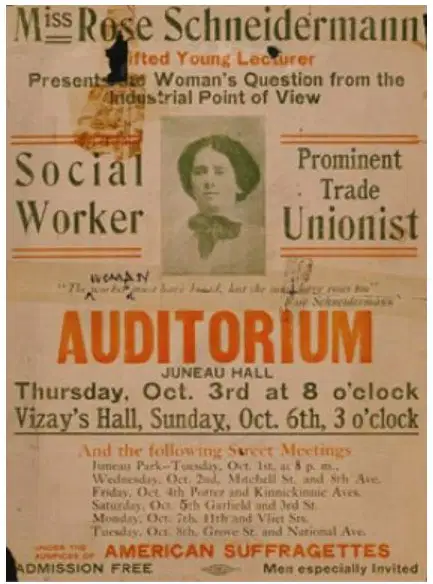
Which political right does this poster BEST represent?
freedom of speech
freedom of religion
right to citizenship
right to due process
Congress shall make no law respecting an establishment of religion, or prohibiting the free exercise thereof; or abridging the freedom of speech, or of the press; or the right of the people peaceably to assemble, and to petition the Government for a redress of grievances. - First Amendment to the U.S. Constitution Which action would be protected under the First Amendment?
voting in the next presidential election
applying for a conceal and carry license
being tried for a crime by a jury of peers
organizing a sit-in to protest a city tax increase
The amendment states but a truism that all is retained which has not been surrendered. There is nothing in the history of its adoption to suggest that it was more than declaratory of the relationship between the national and state governments as it had been established by the Constitution before the amendment, or that its purpose was other than to allay fears that the new national government might seek to exercise powers not granted, and that the states might not be able to exercise fully their reserved powers. - from United States v. Darby (1941) To which amendment does this Supreme Court decision refer?
First Amendment
Sixth Amendment
Tenth Amendment
Second Amendment
Right to an Attorney; Right to Bear Arms; Right to Speak Freely; Right to a Jury Trial Where can all of these rights be found?
1st Amendment
5th Amendment
The Bill of Rights
The Declaration of Independence
What amendment guarantees our right to participate in social movements to change government regulations or laws?
First Amendment
Fifth Amendment
Eighth Amendment
Fourteenth Amendment
Which BEST explains why the U.S. government might consider placing limits on specific rights?
to prevent free speech
to protect the common good
to promote one business over another
to ensure that one political party is in control
Which amendment to the Constitution protects a citizen’s right to speak out against the government?
First Amendment
Third Amendment
Seventh Amendment
Ninth Amendment
Which statement about the First Amendment is a true statement?
The First Amendment restricts government officials from interfering with an individual’s exercise of his or her religious beliefs.
The First Amendment prohibits government officials from establishing an official religion.
Both statements are false.
Both statements are true.
"Believing with you that religion is a matter which lies solely between Man & his God, that he owes account to none other for his faith or his worship, that the legitimate powers of government reach actions only, & not opinions, I contemplate with sovereign reverence that act of the whole American people which declared that their legislature should 'make no law respecting an establishment of religion, or prohibiting the free exercise thereof', thus building a wall of separation between Church & State." - President Thomas Jefferson, 1802 In this passage, Jefferson is referencing what Amendment?
Fifth
First
Second
Sixth
"Congress shall make no law respecting an establishment of religion, or prohibiting the free exercise thereof; or abridging the freedom of speech, or of the press; or the right of the people peaceably to assemble, and to petition the Government for a redress of grievances." -First Amendment to the U.S. Constitution Which action would be prevented by the underlined portion of the First Amendment?
Newspapers cannot criticize the President.
Citizens cannot attend a rally against war.
Methodism is declared the national religion.
People are prevented from worshiping on Saturday.
"Congress shall make no law respecting an establishment of religion, or prohibiting the free exercise thereof; or abridging the freedom of speech, or of the press; or the right of the people peaceably to assemble, and to petition the Government for a redress of grievances." -First Amendment to the U.S. Constitution Which action would be prevented by the underlined portion of the First Amendment?
Newspapers cannot criticize the President.
Citizens cannot attend a rally against war.
Methodism is declared the national religion.
People are prevented from worshiping on Saturday.
…Congress shall make no law respecting an establishment of religion, or prohibiting the free exercise thereof… —Amendment I, United States Constitution Which of these practices would be a violation of the ideas outlined in the First Amendment of the United States Constitution?
allowing Quakers to abstain from military service
allowing Jehovah’s Witnesses to refrain from compulsory flag salutes
allowing Protestants to require religious tests for political offices
allowing Native American tribes to use peyote in religious practices
The (a) clause prevents our government from interfering with the religious practices of American citizens.
What was the main legal argument used in Brown v. Board of Education?
the federal government cannot regulate schools according to the 10th Amendment
The 14th Amendment guarantees equal protection under the law.
The Supreme Court must uphold and follow state segregation laws.
The ruling in Plessy v. Ferguson was correct and should be upheld.
"Segregation of white and colored children in public schools has a detrimental effect upon the colored children. The impact is greater when it has the sanction of the law, for the policy of separating the races is usually interpreted as denoting the inferiority of the Negro group...Any language in contrary to this finding is rejected. We conclude that in the field of public education the doctrine of 'separate but equal' has no place. Separate educational facilities are inherently unequal." —Earl Warren, Chief Justice of the U.S. Supreme Court Chief Justice Warren's majority opinion was from which Supreme Court case?
Brown v. Board of Education (1954)
Gideon v. Wainwright (1964)
Engel v. Vitale (1962)
Tinker v. Des Moines Independent Community School District (1969)
All persons shall be entitled to be free, at any establishment or place, from discrimination or segregation of any kind on the ground of race, color, religion, or national origin, if such discrimination or segregation is or purports to be required by any law, statute, ordinance, regulation, rule, or order of a State or any agency or political subdivision thereof. It is unlawful to deny the right of any individual to vote in any Federal election because of an error or omission on any record or paper relating to any application, registration, or other act requisite to voting, if such error or omission is not material in determining whether such individual is qualified under State law to vote in such election. - from The Civil Rights Act of 1964 What is the BEST conclusion that can be drawn from this excerpt from the Civil Rights Act of 1964?
The federal government secured passage of this legislation because all of the states supported it.
The federal government intended to put an end to segregation and discrimination in the United States
The southern states were successful in blocking the federal government from desegregating public facilities.
The southern states were able to reach a compromise with northern Republicans in order to secure passage of the Act
TITLE II--INJUNCTIVE RELIEF AGAINST DISCRIMINATION IN PLACES OF PUBLIC ACCOMMODATION SEC. 201. (a). All persons shall be entitled to the full and equal enjoyment of the goods, services, facilities, and privileges, advantages, and accommodations of any place of public accommodation, as defined in this section, without discrimination or segregation on the ground of race, color, religion, or national origin. - Civil Rights Act of 1964 According to this law, which situation would be illegal?
Deciding to attend a church that has only Caucasian members.
Being allowed to have a special parking space at the mall because of a physical condition.
Being forced to sit in a special section of a doctor's waiting room solely because of your race.
Not having accommodations for handicapped individuals and refusing to serve those with disabilities.
The Fourteenth Amendment to the Constitution was ratified following which war?
Civil War
Vietnam War
World War II
American Revolution
"I know there may have been concerns that [it] may be too vague or too costly, or may lead endlessly to litigation. But I want to reassure you right now that my administration and the United States Congress have carefully crafted this Act. We've all been determined to ensure that it gives flexibility, particularly in terms of the timetable of implementation; and we've been committed to containing the costs that may be incurred.... Let the shameful wall of exclusion finally come tumbling down." -President George H.W. Bush, July 26, 1990 The "Act" President Bush speaks of was enacted to guarantee equal rights to
people of all races.
people of all sexes.
people who are homeless.
people with disabilities.
This famous law prohibits discrimination by employers on the basis of race, color, religion, sex or national origin, and is part of the legacy of President Lyndon Johnson's presidency.
Title IX
Twenty-fourth Amendment
Civil Rights Act of 1964
Voting Rights Act of 1965
Which clause of the Fourteenth Amendment is most often used in incorporation cases?
Equal Protection Clause
Due Process Clause
Necessary and Proper Clause
Establishment Clause
Right to a fair and speedy trial; Right to an attorney; Right to remain silent — What would be the BEST title for this short list?
“First Amendment Rights”
“Due Process Rights”
“De Facto Jurisdiction”
“The Preamble to the Constitution”
Which of these would be considered part of the due process of law?
the right to protest
the right to freedom of speech
the right to a fair and speedy trial
the right to a free public education
Which of these would be considered part of the due process of law?
the right to bear arms
the right to an attorney
the right to free speech
the right to worship freely
The courts in the judicial system must make sure that all people have access to the due process of law. What does due process mean?
All persons born or naturalized in the United States and subject to the jurisdiction thereof, are citizens of the United States and of the State wherein they reside. No State shall make or enforce any law which shall abridge the privileges or immunities of citizens of the United States; nor shall any State deprive any person of life, liberty, or property, without due process of law; nor deny to any person within its jurisdiction the equal protection of the laws.
Which state law would be considered unconstitutional based on the Fourteenth Amendment?
a law that requires all citizens to pay taxes on their incomes
a law that sets the speed limit on state highways at 55 miles an hour
a law that prohibits a specific group of citizens from purchasing property
a law that restricts citizens under the age of 21 from receiving a driver’s license
States cannot pass laws that restrict a person's right to due process of the law or infringe on their rights as an American citizen because of the
1st Amendment.
10th Amendment.
14th Amendment.
15th Amendment.
This portion of the 14th Amendment has been interpreted to mean that
slavery is abolished in the United States.
no official can serve more than two terms in office.
government of the people, by the people, and for the people is protected.
all people in all states are protected under the U.S. Bill Rights and the U.S. Constitution.
The Bill of Rights has been "incorporated" to states mostly due to the actions of
state courts.
the President.
Federal courts.
the U.S. Congress.
Section 1. The right of citizens of the United States, who are eighteen years of age or older, to vote shall not be denied or abridged by the United States or by any State on account of age. Section 2. The Congress shall have the power to enforce this article by appropriate legislation. How did the 26th Amendment expand voting rights?
It allowed an 18 year old to work.
It allowed voting to people 18 years or older.
It allowed an 18 year old to run for Congress.
It limited voting to people under 18 years of age.
Why were the 19th, 24th, and 26th amendments so important to the Constitution?
They passed through Congress without opposition.
They addressed the issue of Congressional representation.
They ended the remaining institutions of legal racism in the South.
They expanded democratic principles to include more of the U.S. population.
Amendment XXVI (Passed by Congress: March 23, 1971; Ratified by the States: July 1, 1971.) SECTION 1- The right of citizens of the United States, who are eighteen years of age or older, to vote shall not be denied or abridged by the United States or by any State on account of age. SECTION 2 The Congress shall have power to enforce this article by appropriate legislation. Protestors demanded the passage of the 26th Amendment partly because of what event?
the Vietnam War
the Bay of Pigs Invasion
the 1968 Democratic Convention
the election of President Johnson
The use of "poll taxes" as a means of racial discrimination was MOST effectively stopped by which of these methods?
Executive Order
Congressional law
Supreme Court ruling
Constitutional amendment
The Constitutional amendment that prohibited denying voting rights to people based on race or color is the
Twelfth Amendment.
Fifteenth Amendment.
Thirteenth Amendment.
Fourteenth Amendment.
Which statement BEST describes women's suffrage for much of the first century of the United States' history?
the federal government barred women from voting
women were allowed to vote in most northern states
most state Constitutions did not address the issues of women's suffrage
women could vote only if their husbands gave them legal permission to do so
Protestors demanded the passage of the 26th Amendment partly because of what event?
the Vietnam War
the Bay of Pigs Invasion
the 1968 Democratic Convention
the election of President Johnson
The states labeled "No Voting Rights" in 1919 would have been MOST affected by which Constitutional Amendment?
18
19
25
26

