
NEW
Font size
 Worksheets
year 8 term 1 biology final revision
Total questions: 45
Worksheet time: 37mins
What is the process of respiration?
Breathing
The release of energy from food
Inhalation
Oxygen transfer
What is the process of breathing in also called?
Respiration
Exhalation
Combustion
Inhalation
What is the process of breathing out also called?
Respiration
Exhalation
Combustion
Inhalation
What substance do we need to breathe in?
Water
Carbon dioxide
Oxygen
Carbon monoxide
What substance do we need to breathe out?
Water
Carbon dioxide
Oxygen
Carbon monoxide
What is the name of the body's fuel?
Protein
Oxygen
Glucose
Carbon dioxide

The correct word equation for aerobic respiration is
carbon dioxide + water (+ energy) → glucose + oxygen
water + oxygen → carbon dioxide + glucose (+ energy)
glucose + oxygen → carbon dioxide + water (+ energy)
glucose + water → carbon dioxide + water (+ energy)
Aerobic means
without oxygen
with oxygen
without effort
Anaerobic means
with oxygen
without oxygen
to run for a long time

What is the primary site for gas exchange in humans?
bronchi
nose
he alveoli within the lungs
trachea

Gas exchange is needed to supply _____________ to cells and remove __________________ from cells.
carbon dioxide; oxygen
oxygen; food
oxygen; carbon dioxide
carbon dioxide; water
Which of the following is the primary function of the respiratory system?
make carbon dioxide
produce oxygen
gas exchange
Trachea is also known as?
voicebox
windpipe
throat
When we inspire (inhale), our diaphragm does what?
relaxes and moves down
contracts and moves down
contracts and moves up
relaxes and moves up
Every cell in our body needs a supply of oxygen. The cells use oxygen for ___?
respiration
breathing
digestion

Which is true about diffusion?
occurs from a higher concentration to a lower concentration
occurs from a lower concentration to a higher concentration
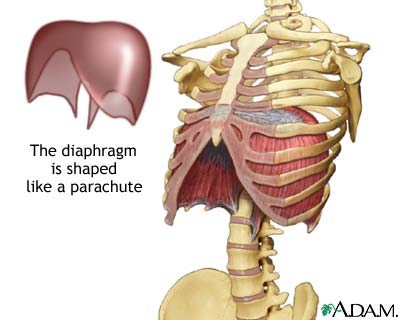
Where is the dome-shaped diaphragm?
above the lungs
below the lungs

Letter D in this diagram is
pharynx
bronchiole
trachea
alveoli
The two tubes that the trachea splits into (letter E) are known as the ______.
pharynx
bronchi
trachea
alveoli

__________ are air sacs where gas exchange takes place.
Bronchi
Trachea
Oxygen
Alveoli
What is the definition of diffusion?
A) The movement of water molecules across a partially permeable membrane.
B) The spreading out of particles from an area of high concentration to an area of low concentration.
C) The process by which plants make their own food using sunlight.
D) The breakdown of large molecules into smaller ones during digestion.
What is the main function of the respiratory system?
to provide oxygen and remove carbon dioxide from the body
to bring oxygen to the body
to break down food and absorb nutrients
to remove oxygen from the body and deliver carbon dioxide
B7.5 What is the function of the lungs
To breathe
To exchange gases (respiration)
To inflate
To photosynthesize
B7.8 What happens to breathing rate when you exercise
increases
decreases
stays the same
B7.8 Why does your breathing rate increase when you exercise?
more oxygen is picked up at the lungs for delivery to the working muscles
less oxygen is picked up at the lungs for delivery to the working muscles
your muscles are resting
your lungs need more energy to function
B7.9 Why does your heart rate increase when doing exercise
To deliver more blood to the working muscles
To deliver more oxygen to the working muscles as oxygen is transported in the blood stream
It doesn't increase
To deliver more carbon dioxide to the working muscles as carbon dioxide is transported in the bloodstream
What carries oxygen around the body?
Plasma
Red Blood Cells
Platelets
White Blood Cells
What causes the blood to be the distinct red colour?
Heamaglobin
Glucose
Hormones
Oxygen
What is the function (job) of the white blood cells?
To transport oxygen around the body.
To carry dissolved sugars.
To clot and cover wounds like cuts and grazes.
To release antibodies to help destroy infections.
Which blood vessels take blood TO the heart?
Veins
Arteries
Capillaries
Which blood vessels take blood AWAY from the heart?
Veins
Arteries
Capillaries
Which is the smallest of the 3 blood vessels?
Veins
Arteries
Capillaries

The main function of stomata is to
capture sunlight
protect leaves from insects
allow gases to move rapidly in/out of leaves
release sugars into the atmosphere

What is the function of the STOMATA in plants?
Allows water to enter the plant
Provides food to enter the plant
Allows for gas exchange
Site of photosynthesis
Which type of respiration does not need oxygen?
Aerobic
Anaerobic
Lactic
Which type of respiration releases the most energy?
Aerobic
Anaerobic
Fermentation
What is a by-product of anaerobic respiration?
Carbon dioxide
Water
Lactic acid
Oxygen
What happens to glucose during anaerobic respiration?
It is stored as fat
It is converted to water
It reacts and produces lactic acid
It is used to produce oxygen
Which of the following is a characteristic of anaerobic respiration?
Long duration
High oxygen requirement
Short bursts of activity
Low energy output

