
 Worksheets
USH Unit 9 Standards 15 & 16 Notes Questions
Total questions: 40
Worksheet time: 20mins
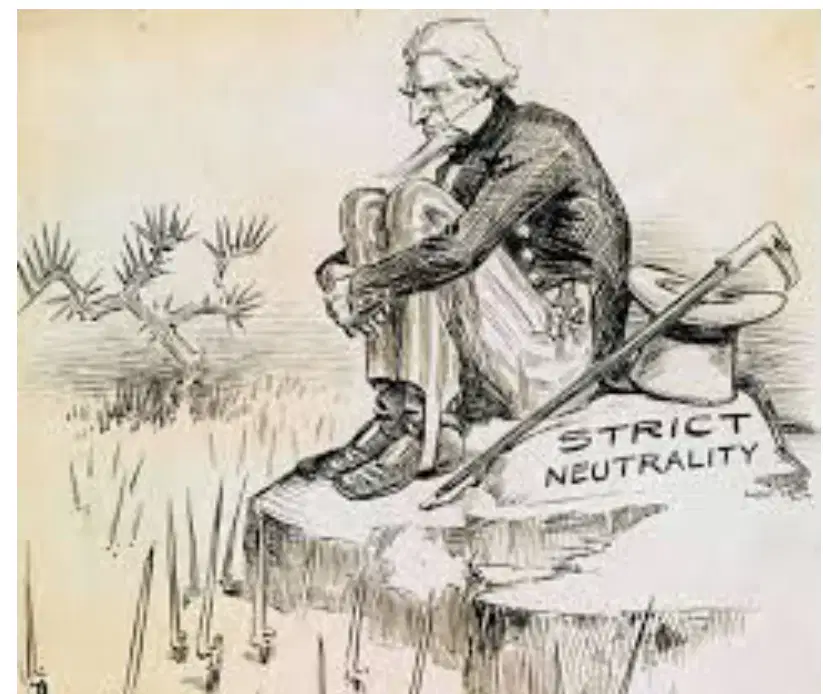
Why did President Woodrow Wilson adopt a neutrality policy when World War I began in Europe in 1914?
To keep the United States out of the war.
To support European allies with military aid.
To expand U.S. territory in Europe.
To encourage American citizens to join the war effort.
Evaluate the potential challenges President Wilson might have faced in maintaining U.S. neutrality during World War I. Use reasoning and evidence to support your answer.
Pressure from both Allied and Central Powers, economic interests, and public opinion could have made neutrality difficult to maintain.
The United States had no economic or political ties to Europe, making neutrality easy.
The U.S. military was too weak to participate in any conflict.
There were no significant challenges because all Americans supported neutrality.
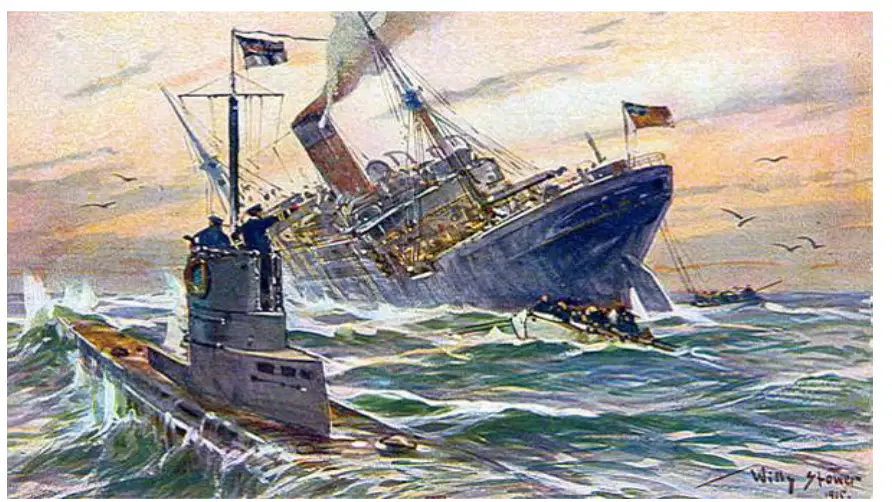
How did the sinking of the Lusitania influence American attitudes toward World War I?
It caused America to immediately declare war on Germany.
It began to turn American attitudes away from neutrality.
It led to the end of World War I.
It resulted in the United States supporting Germany.
Based on the information provided, how did unrestricted submarine warfare contribute to the United States entering World War I?
It led to the United States enforcing a trade embargo on Germany.
It caused the United States to declare war after repeated attacks on vessels in the Atlantic.
It resulted in the United States forming an alliance with Germany.
It encouraged the United States to remain neutral in the conflict.
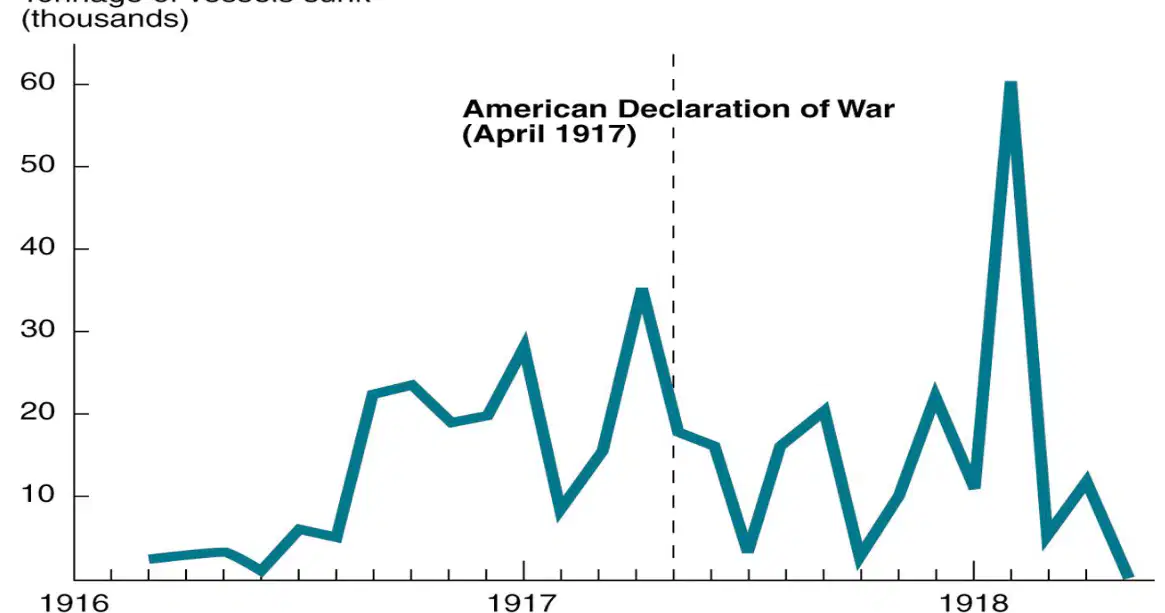
Analyze the graph and explain the relationship between the American Declaration of War in April 1917 and the tonnage of vessels sunk in the Atlantic Ocean.
The tonnage of vessels sunk decreased significantly after the declaration.
The tonnage of vessels sunk remained unchanged after the declaration.
The tonnage of vessels sunk increased sharply after the declaration.
The tonnage of vessels sunk was not affected by the declaration.
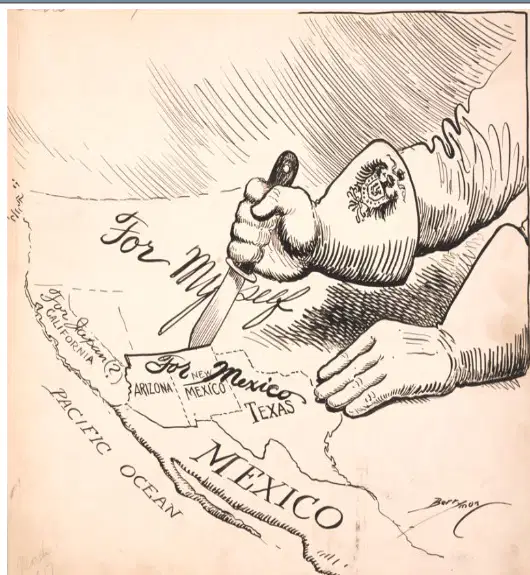
Why did the Zimmerman Telegram contribute to the United States entering World War I?
It promised Mexico land if it attacked the US on Germany's behalf.
It offered the US new territories in Europe.
It was a peace proposal between Germany and the US.
It was a trade agreement between Germany and Mexico.
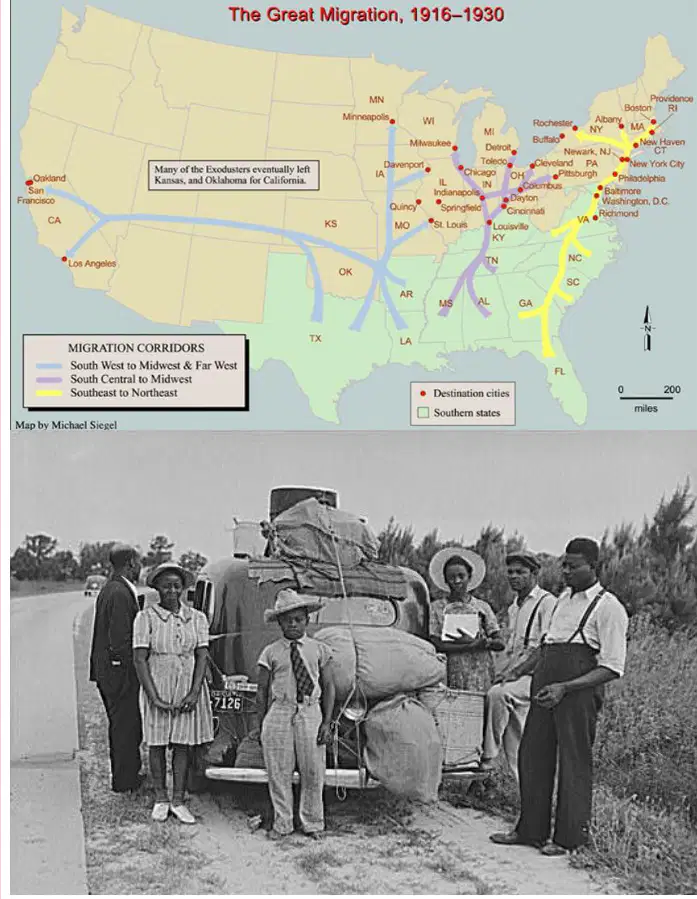
How did World War I contribute to the Great Migration of African Americans from the South to Northern cities?
It created new job opportunities in northeastern and mid-western cities.
It increased agricultural production in the South.
It led to a decrease in industrial jobs in the North.
It encouraged immigration from Europe.
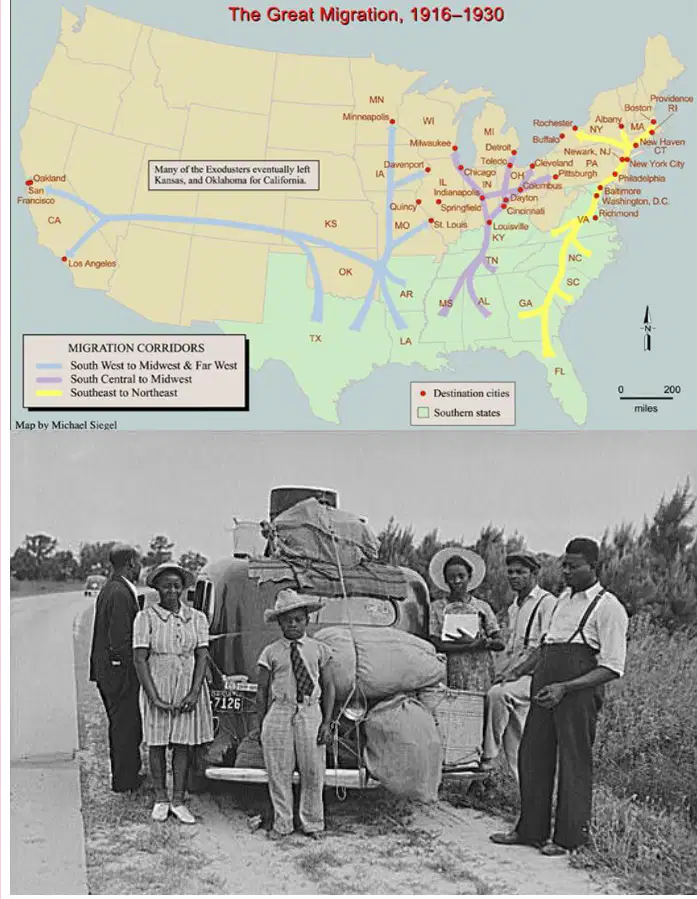
Which of the following best describes the impact of the Great Migration on Northern cities during the 1910s and 1920s?
The Black population in cities like Chicago, Cleveland, and Detroit increased dramatically.
The population of Northern cities decreased due to emigration.
The South experienced a population boom.
Immigration from Europe surpassed internal migration.
What was the primary purpose of the Espionage Act passed by Congress in June 1917?
To encourage open discussion about the war effort
To provide penalties for spying, sabotage, and obstructing the war effort
To increase military funding
To promote international alliances
Which of the following actions was banned by the Espionage Act?
Sending pro-war materials through the United States Mail
Sending anti-war materials through the United States Mail
Sending personal letters to soldiers
Sending food supplies to Europe
Why did President Wilson want to silence critics of the war and pacifists during World War I?
He wanted to promote free speech
He believed criticism would weaken the war effort
He wanted to encourage debate
He was seeking re-election
How did the Espionage Act impact individuals like Eugene Debs?
It allowed them to freely express anti-war opinions
It protected their right to protest
It led to their conviction and imprisonment for hindering military recruiting
It gave them government positions
Analyze how the Espionage Act reflects the balance between national security and civil liberties during wartime.
It prioritized civil liberties over national security
It balanced both equally without restricting rights
It restricted civil liberties in favor of national security
It had no impact on either
How did President Woodrow Wilson's "Fourteen Point" plan aim to impact the world after World War I?
By making the world safe for democracy and proposing the creation of a League of Nations
By dividing Europe into new colonies
By increasing military alliances among European nations
By isolating the United States from international affairs
What was the primary purpose of the League of Nations as established by the Treaty of Versailles?
To maintain international peace
To expand American territory
To punish Germany economically
To promote colonialism
Analyze the strategic reasoning behind the United States' involvement in the Treaty of Versailles negotiations after World War I.
The U.S. wanted to play a key role in shaping postwar peace and prevent future conflicts through international cooperation.
The U.S. aimed to gain new territories in Europe.
The U.S. sought to increase tariffs on European goods.
The U.S. wanted to withdraw from all international agreements.

What was the main reason the Isolationist Senate opposed joining the League of Nations?
They believed it would force the U.S. to get involved in future wars.
They thought the League would make the U.S. too powerful.
They wanted to form a different international organization.
They believed the League would end all wars.
Analyze how President Wilson’s vision for the League of Nations differed from the actions taken by the U.S. government. What does this reveal about the challenges of implementing international agreements?
Wilson wanted international cooperation, but the Senate prioritized national interests, showing the difficulty of aligning domestic and international goals.
Wilson wanted to avoid all international involvement, while the Senate wanted to join the League, showing a lack of communication.
Both Wilson and the Senate agreed on joining the League, but other countries prevented it, showing international resistance.
Wilson and the Senate both wanted to avoid future wars by staying isolated, showing unity in foreign policy.
Which of the following best describes the economic conditions of the United States during the Roaring Twenties?
A decade of economic decline and high unemployment
A period of economic growth and widespread prosperity
A time of political instability and war
An era of agricultural collapse and famine
What was one major industry that experienced a significant boom during the Roaring Twenties?
Textile industry
Automobile industry
Mining industry
Shipbuilding industry
How did the rapid growth of consumer goods during the Roaring Twenties impact American society? Use reasoning and evidence to support your answer.
It led to a decrease in urbanization and less demand for new products.
It contributed to widespread prosperity and changed lifestyles by making new products more accessible.
It caused a decline in the entertainment industry.
It resulted in fewer job opportunities for women.
Which of the following best describes socialism as presented in the context of the Red Scare?
An economic system where the government owns or heavily controls major industries, but individuals may still own smaller businesses.
An economic system where all businesses are privately owned and operated for profit.
A political system where only the military controls the government.
A system where only agricultural production is controlled by the government.
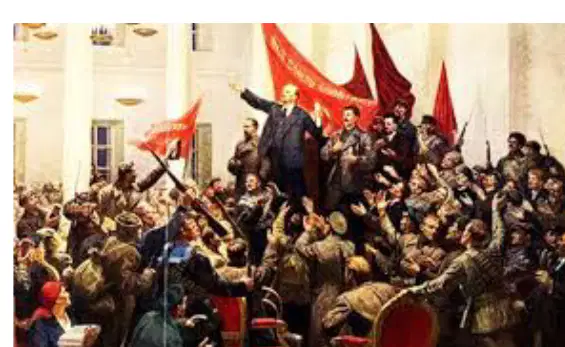
How did the idea of a worker-controlled economic system influence industrial workers worldwide during the period leading up to the Red Scare?
It appealed to industrial workers and inspired movements for economic reforms.
It discouraged workers from joining labor unions.
It led to the immediate collapse of all capitalist economies.
It resulted in workers rejecting all forms of government intervention.
Analyze the impact of the creation of the Socialist Party of America in 1901 on American society and labor movements.
It introduced socialist ideas that influenced labor unions and worker reforms.
It led to the banning of all labor unions in the United States.
It resulted in the immediate adoption of socialism as the national economic system.
It had no effect on American society or labor movements.
Which labor union is specifically mentioned as being influenced by socialist theory during the Red Scare era?
Industrial Workers of the World (I.W.W.)
American Federation of Teachers (AFT)
National Education Association (NEA)
United Auto Workers (UAW)
Which of the following best explains why the Red Scare occurred in the United States after World War I?
Fear of communism spreading and loss of personal freedoms
Economic prosperity and increased private ownership
The rise of democracy in Europe
The end of single-party governments worldwide
How does communism, as described in the learning material, differ from capitalism in terms of property ownership?
In communism, all property is owned by the state, while in capitalism, property is privately owned.
In communism, property is owned by individuals, while in capitalism, it is owned by the government.
Both communism and capitalism have no private ownership.
In communism, property is owned by corporations, while in capitalism, it is owned by the community.
Evaluate the impact of a single-party government ruled by a dictator, as seen in communist systems, on personal freedoms and economic equality. Use evidence from the learning material to support your answer.
It often leads to loss of personal freedoms despite aiming for equality.
It guarantees both personal freedoms and economic equality.
It results in complete economic inequality and increased personal freedoms.
It has no impact on personal freedoms or economic equality.
Which of the following statements about communism is supported by the learning material?
Communism is a more extreme form of socialism.
Communism encourages private ownership of businesses.
Communism was first implemented by Karl Marx.
Communism supports multi-party democratic governments.
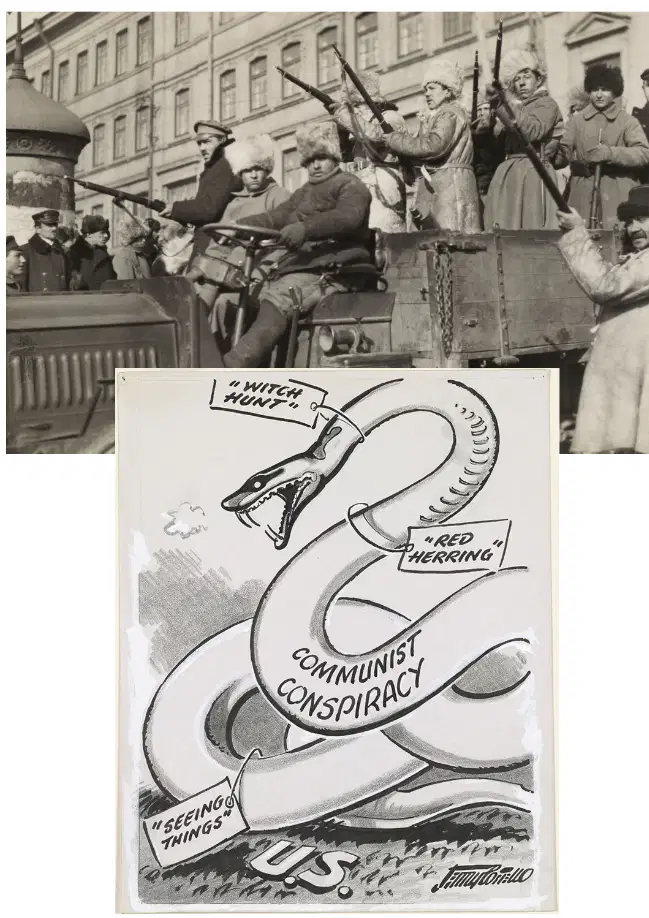
Why did people in the United States begin to fear communists after 1919?
The U.S. government encouraged fear to increase military spending.
The Bolsheviks overthrew the czar in Russia, established the Soviet Union, and called for a worldwide revolution to destroy capitalism.
The United States was at war with Russia.
Communism was already popular in the United States.
How did the term "Red Scare" originate in the context of American history?
It referred to the fear of a new political party in the U.S.
It was named after a famous American leader.
It was called the Red Scare because red was the color of the communist flag.
It was a term used for economic depression.
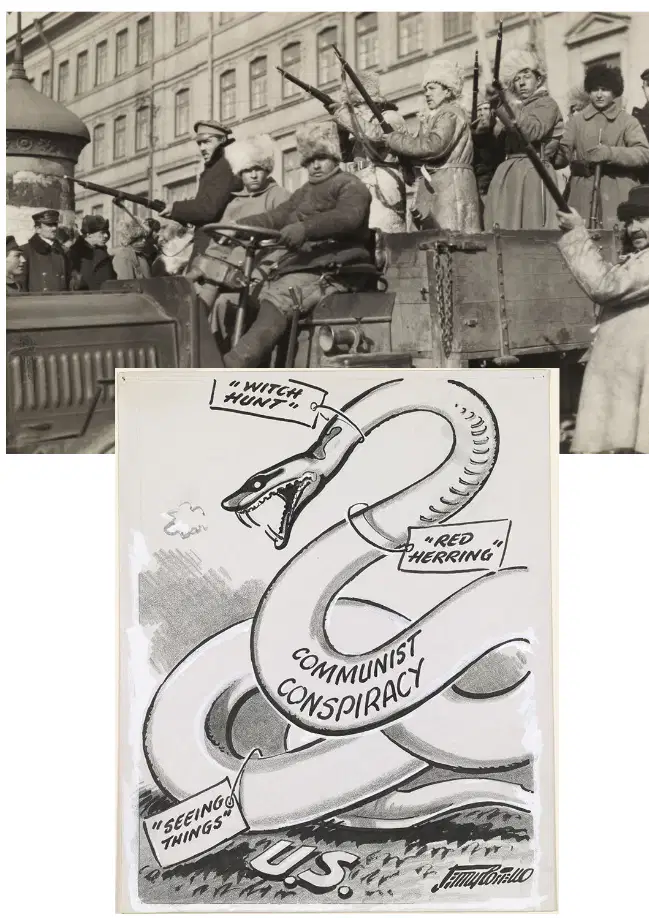
Analyze how the events in Russia in 1919 contributed to changes in U.S. government policy.
The U.S. government began to support communism.
The U.S. government ignored the events in Russia.
The U.S. government pursued suspected communists due to fear of the spread of communism.
The U.S. government increased trade with the Soviet Union.
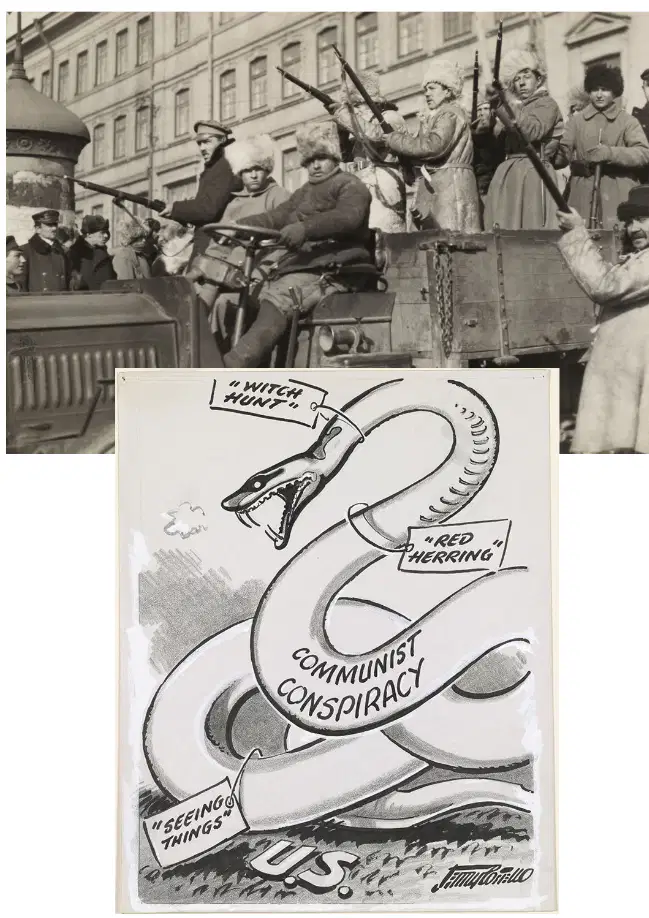
Explain the reasoning behind the U.S. public's fear of communism after the Bolshevik Revolution.
The Bolsheviks promoted worldwide revolution to destroy capitalism, which threatened the American way of life.
The Bolsheviks wanted to form an alliance with the U.S.
The Bolsheviks supported democracy in the U.S.
The Bolsheviks had no influence outside Russia.
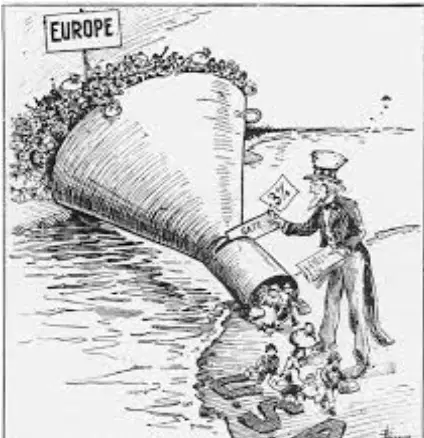
Which of the following was a major factor that led to the development of Nativism and new restrictions on immigration in the United States?
The Red Scare
The Great Depression
The Civil Rights Movement
The Industrial Revolution
According to the principles of Nativism, what belief was held about people born in America compared to immigrants?
People born in America were superior to immigrants
Immigrants were superior to people born in America
All people were considered equal regardless of birthplace
Immigrants should be given more rights than natives
How did Nativism influence American society in the early 20th century?
It led to increased acceptance of immigrants from all backgrounds
It contributed to anti-immigrant, anti-Jewish, and anti-Catholic sentiments and the rise of the Ku Klux Klan nationwide
It promoted multiculturalism and diversity in American culture
It resulted in the abolition of all immigration laws
What was the main provision of the National Origins Acts?
To abolish all immigration restrictions
To establish the Quota System, limiting the number of immigrants from each country
To grant citizenship to all immigrants
To encourage immigration from Europe only
Analyze how the Red Scare and Nativism together shaped U.S. immigration policy in the early 20th century.
They led to more open borders and increased immigration
They resulted in stricter immigration laws and the establishment of quotas based on nationality
They had no impact on immigration policy
They encouraged the integration of immigrants into American society
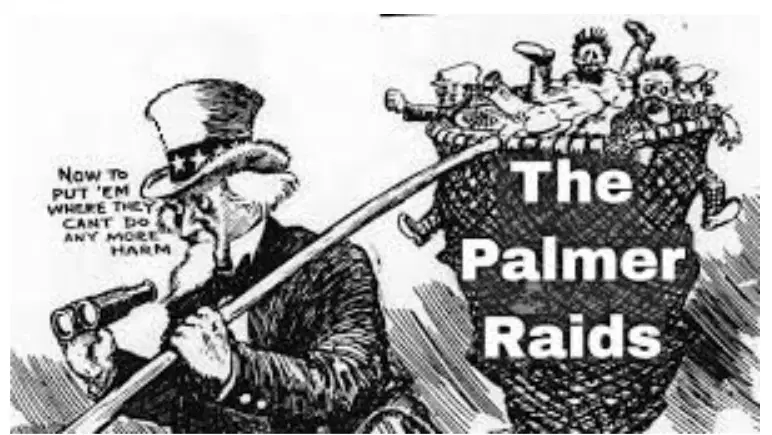
What were the Palmer Raids, and who led them?
A series of raids in 1919 and 1920 by the US Department of Justice led by Attorney General A. Mitchell Palmer.
A set of economic reforms led by President Woodrow Wilson.
A military campaign against foreign invaders led by General Pershing.
A diplomatic mission to Europe led by Secretary of State Charles Evans Hughes.
Analyze the reasoning behind Attorney General Palmer's belief that radicals were a threat to American democracy. How did this belief shape government actions?
Palmer believed radicals could undermine democratic institutions, leading to aggressive government actions like mass arrests and deportations.
Palmer thought radicals would improve democracy, so he encouraged their activities.
Palmer ignored the radicals, believing they posed no real threat.
Palmer focused on economic reforms rather than addressing radicalism.

