
 Worksheets
AAA572 Indus Valley Civilization
Total questions: 10
Worksheet time: 5mins
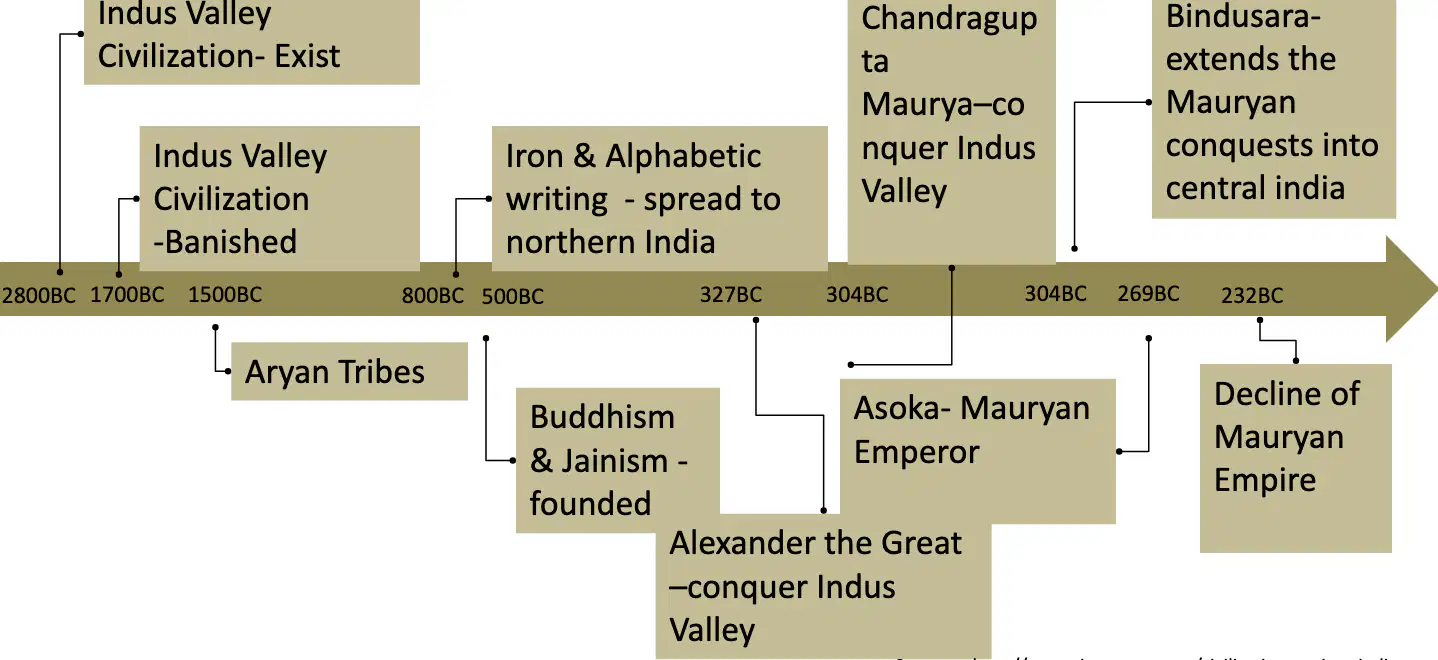
Based on the timeline, which ruler is associated with the extension of Mauryan conquests into central India?
Asoka
Chandragupta Maurya
Bindusara
Alexander the Great
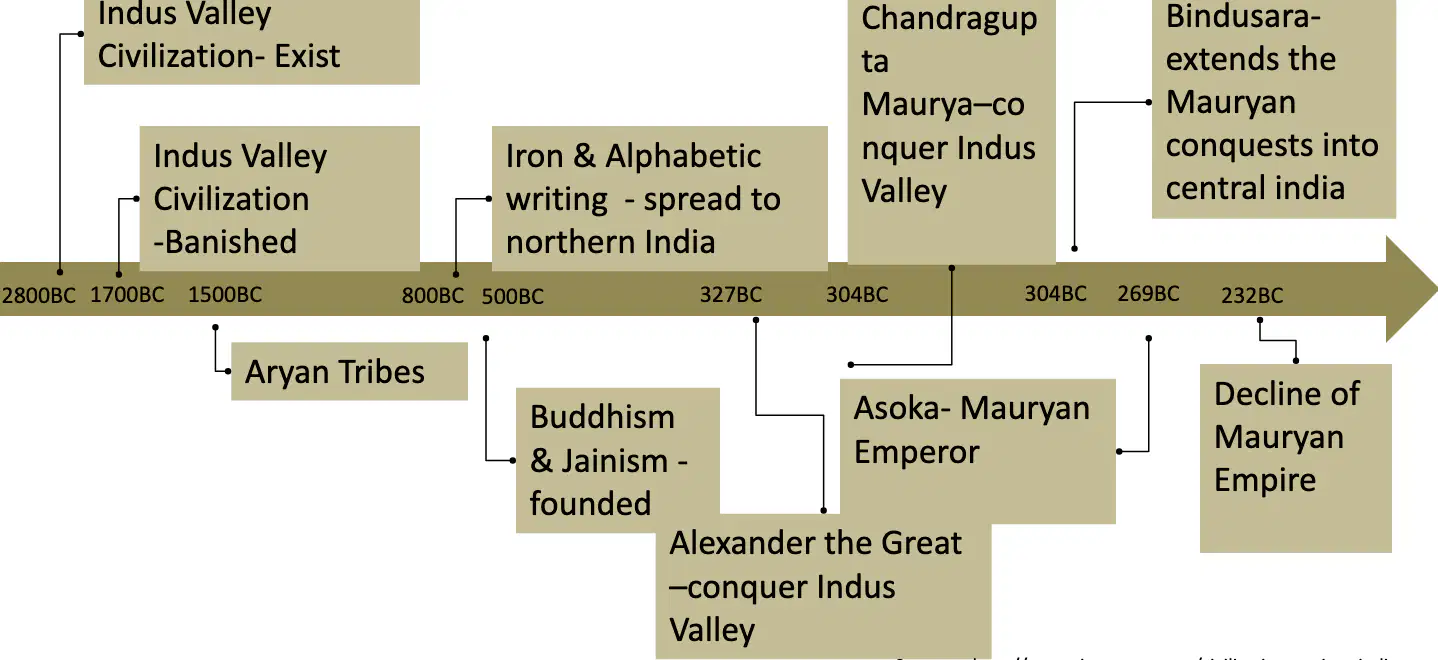
Evaluate the impact of the introduction of iron and alphabetic writing on northern India. Which of the following best explains its significance?
It led to the immediate decline of the Indus Valley Civilization
It facilitated cultural and technological advancements in northern India
It marked the end of the Mauryan Empire
It resulted in the founding of Buddhism and Jainism
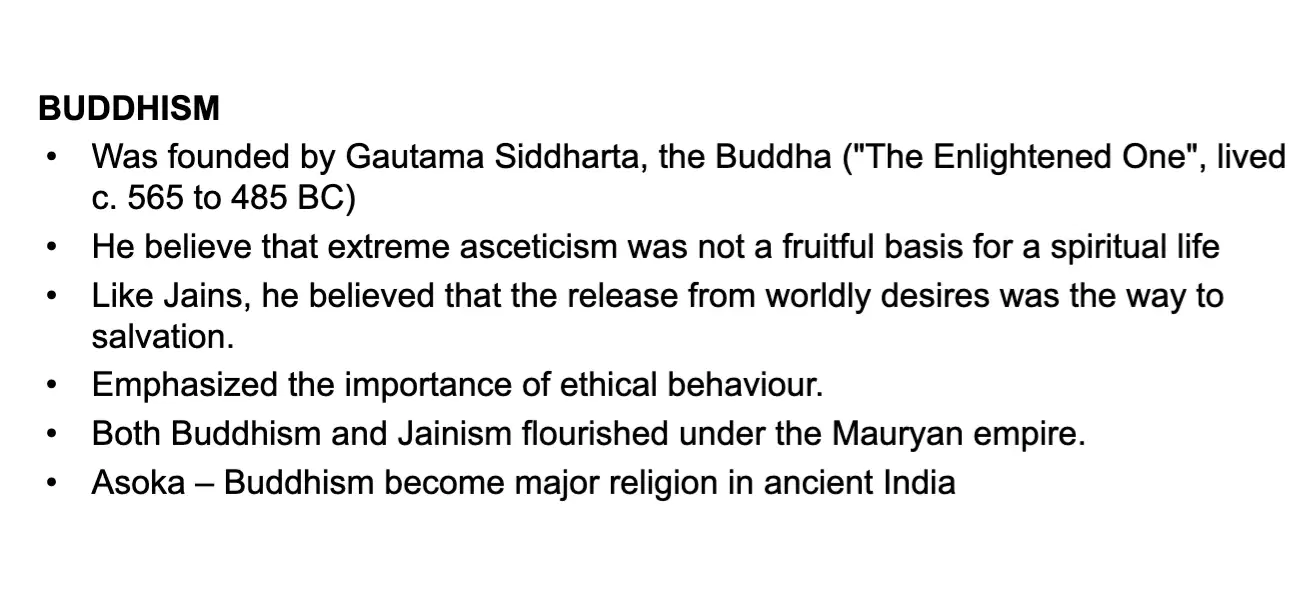
How did Buddhism and Jainism relate to each other in terms of their beliefs about worldly desires?
Both believed that indulging in worldly desires was necessary for salvation.
Both believed that release from worldly desires was the way to salvation.
Only Buddhism believed in the release from worldly desires.
Only Jainism believed in the release from worldly desires.
Which group is considered the priestly caste in the traditional Indian caste system?
Brahmins
Kshatriyas
Vaisyas
Sudras
Jains and Buddhists rebelled against the caste system. What was the outcome of their rebellion?
The caste system was overthrown
The caste system became less rigid
The caste system was never overthrown
The caste system was replaced by a new system
Analyze how the caste system became more complex and rigid over time. What evidence from the material supports this development?
The caste system was only present in ancient times
The caste system was overthrown by religious movements
The caste system has endured and become more rigid up to the present day
The caste system was never influenced by religious rules
The earliest Jain and Buddhist scriptures were written in which literary form?
Epic poetry
Sutras
Prose novels
Folk tales
How did the tradition of epic poetry, such as the Ramayana and Mahabharata, differ from the Sutras?
Epic poetry focused on scientific discoveries, while Sutras focused on mythology.
Epic poetry retold famous incidents in semi-mythological history, while Sutras expressed ideas in short texts.
Epic poetry was written in short texts, while Sutras were long narratives.
Epic poetry was only used in Buddhist scriptures, while Sutras were used in Jain texts.
Which of the following statements best explains the historical significance of Sanskrit in ancient India?
Sanskrit was only used for trade and commerce.
Sanskrit was the language in which all religious writings were composed.
Sanskrit was primarily used for scientific research.
Sanskrit was the official language of the Roman Empire.
Analyze the layout of the Virupaksha Temple, Hampi, and determine which feature is most likely used for ritual purification.
Pillared Halls
Water tank
Mantapam
Outer Wall

