
 Worksheets
Unit Test: Ancient Greece
Total questions: 67
Worksheet time: 34mins
Which is a slight advantage Spartan warriors had over their average opponents?
They were trained better
They had better armor
They were a little more organized
They were better at hand-to-hand combat
Sparta's military was the best in Greece and the Ancient World
Myth
Reality
What was the purpose of the agoge (the Spartan "school")?
to produce elite warriors
to teach boys and girls to read and write
to train Spartans in the arts
to produce men who are obedient to the laws and subservient to Sparta
Sparta had the reputation of a strong military, but didn't really have a strong one
Myth
Reality
What was the main job of Spartiate women?
to keep businesses running while men were off fighting
to train their sons and daughters in the Spartan Way
to make food and clothing
give birth to strong and healthy babies
The primary domestic tasks of the Spartiate class was done by SPARTIATE women
True
False
Usually how much production (food, clothing, other creations) was stolen from the helot population by the Spartiate class?
50%
75%
25%
10%
Which physical features made Sparta somewhat isolated?
surrounding mountains
major highways
poor soil
broad rivers

Which number represents the country of Greece? (Refer to the map labeled 'Renaissance Europe, c. 1500')
7
1
4
2
3
Before democracy, what group of people ran Athens?
Areopagus
Council of 500
Military leaders
All males
About what percentage of the population was completely ignored from governmental affairs?
About 50%
About 10%
About 90%
About 75%
What was the role of the Assembly (Ekklesia) in Athens?
To judge criminals for their crimes
To serve in the army
To make laws for Athens (pass legislation)
To choose who got to vote
What was the job of the Council of 500 (the Boule)?
They decided what the Assembly would discuss and vote on
They decided who Athens would go to war with
They decided who would be part of the Assembly
They decided how slaves should be treated
How were people chosen to serve on the Athenian Ekklesia?
Your name was randomly chosen (if you volunteered)
Power was taken by force
People voted on the members
Power was passed to you from your father
What is a main difference between the Assemblies of Athens (ekklesia) and Sparta (appella)?
The Ekklesia could only vote yes or no, whereas the appella could change laws
Sparta's appella could control the economy
The Ekklesia was weaker than the Appella
Sparta's Appella couldn't debate issues, whereas the ekklesia could
Which is true about Sparta's Gerousia?
They were the elite Spartiates warriors
They held the kings in check
Elected by Appella and had veto power over it
Sparta's equivalent of the Athenian Ekklesia
Which was the most powerful branch of Sparta's government?
Gerousia
Two Kings
Appella
Ephors
The Magistrates in Athens were the only part of Athenian government that weren't citizens
True
False
In Athens a few more “citizens” had a little more influence in how the government worked than the average Greek polis
True
False
Athenian government was not specially different than any other poleis in form or function
True
False
Which ingredient was NOT one that went into making Athens such a great city in such a short time?
They were the wealthiest Greek polis
Athens attracted and housed more foreigners than any other Greek polis
Civic life was not optional
The ancient Greeks did everything outdoors
Which is NOT an era of Greek Philosophy?
Socratic
Post-Socratic
Stoic
Pre-Socratic
The Socratic philosophers mainly investigated natural phenomena
True
False
Select an example of a character virtue
Lazy
Boastful
Witty
Cowardly
What is virtue?
The happy medium between two character extremes
The philosophy of being skeptical about facts
Making sure you get what you want out of life
The mathematics of Pythagoras
Where did Alexander the Great come from?
Athens
Rome
Macedonia
Sparta
Which is considered to be the longest lasting effect of Alexander the Great's conquests?
The perfection of the ancient military strategies
The popularity of the Empire in the ancient world
The spread of Greek culture
The spread of democracy
Which are the BIGGEST influence of Ancient Greece on our lives today?
A) Government and Philosophy
B) Hellenism and Mythology
C) Economics and Trade
D) Medicine and Math
In Greece, small independent city-states developed because:
A) Greek families did not get along with one another
B) foreign invaders divided up the Greek people so that they could control them
C) mountains, seas, and islands separated Greek city-states from one another
D) each city-state had a different language and religion than others
Make an inference based on what you know about the geography of Athens. Which features of Athens's geography most affected its economy?
It was built on rocky cliffs where mineral deposits were found.
It was in a river valley which provided a variety of foods.
It was close to the sea allowing for increased wealth through trade.
It was surrounded by fertile fields which led to wealth from agriculture.
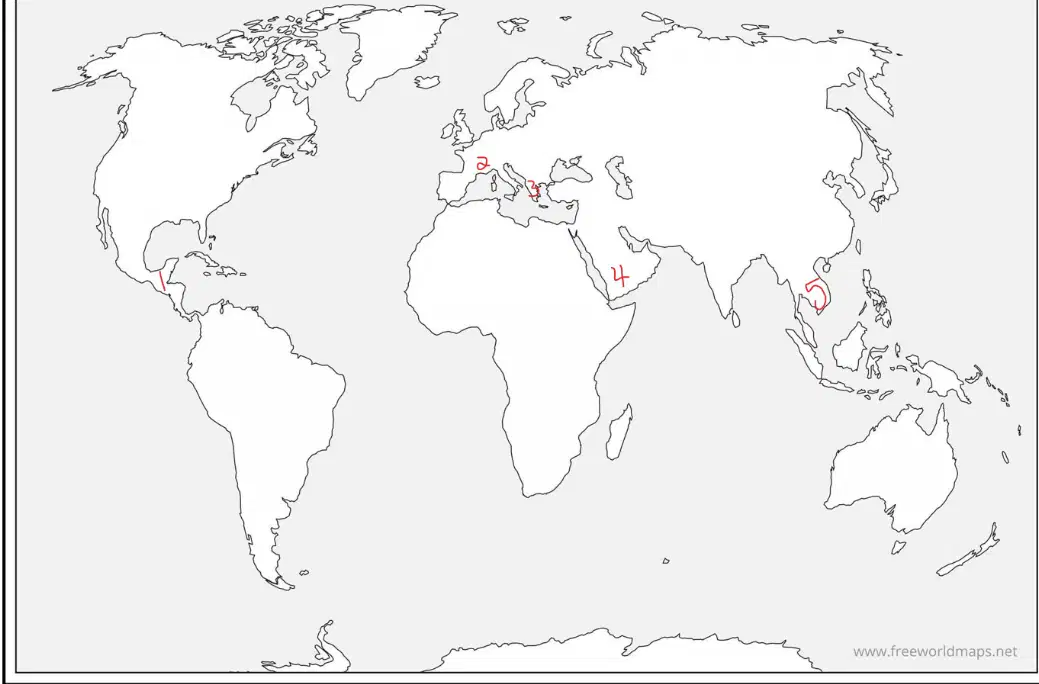
Which number on the map represents the location of Greece?
1
2
3
4
5
Being near the sea is an important part of life in Greece. Which of these is the BEST example of a way the Greeks used the seas to their advantage?
They used the seas as a source of transportation that allowed them to trade with other city-states and civilizations.
They used the sea water to irrigate their crops
They used the sea to prevent other people from visiting their city-states by setting up blockades to keep traders out.
They used the seas as a source of drinking water
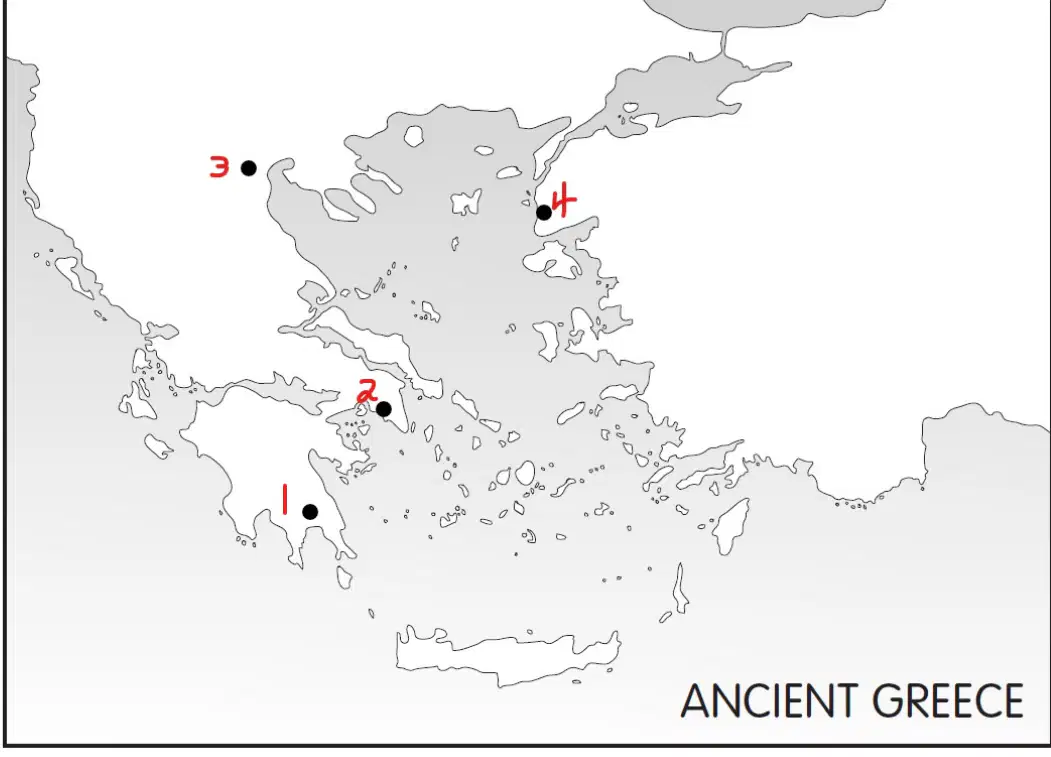
Which number represents the location of Athens?
1
2
3
4
Which is a slight advantage Spartan warriors had over their average opponents?
They were trained better
They were a little more organized
They had better armor
They were better at hand-to-hand combat
Sparta's military was the best in Greece and the Ancient World
True
False
Sparta's military was the best in Greece and the Ancient World
Myth
Reality
What was the purpose of the agoge (the Spartan "school")?
to teach boys and girls to read and write
to train Spartans in the arts
to produce elite warriors
to produce men who are obedient to the laws and subservient to Sparta
Sparta had the reputation of a strong military, but didn't really have a strong one
Myth
Reality
What was the main job of Spartiate women?
give birth to strong and healthy babies
to keep businesses running while men were off fighting
to make food and clothing
to train their sons and daughters in the Spartan Way
Spartan women were expected to be weak and submissive.
Myth
Reality
The primary domestic tasks of the Spartiate class was done by SPARTIATE women
True
False
Usually how much production (food, clothing, other creations) was stolen from the helot population by the Spartiate class?
50%
75%
25%
10%
Which physical features made Sparta somewhat isolated?
surrounding mountains
major highways
poor soil
broad rivers
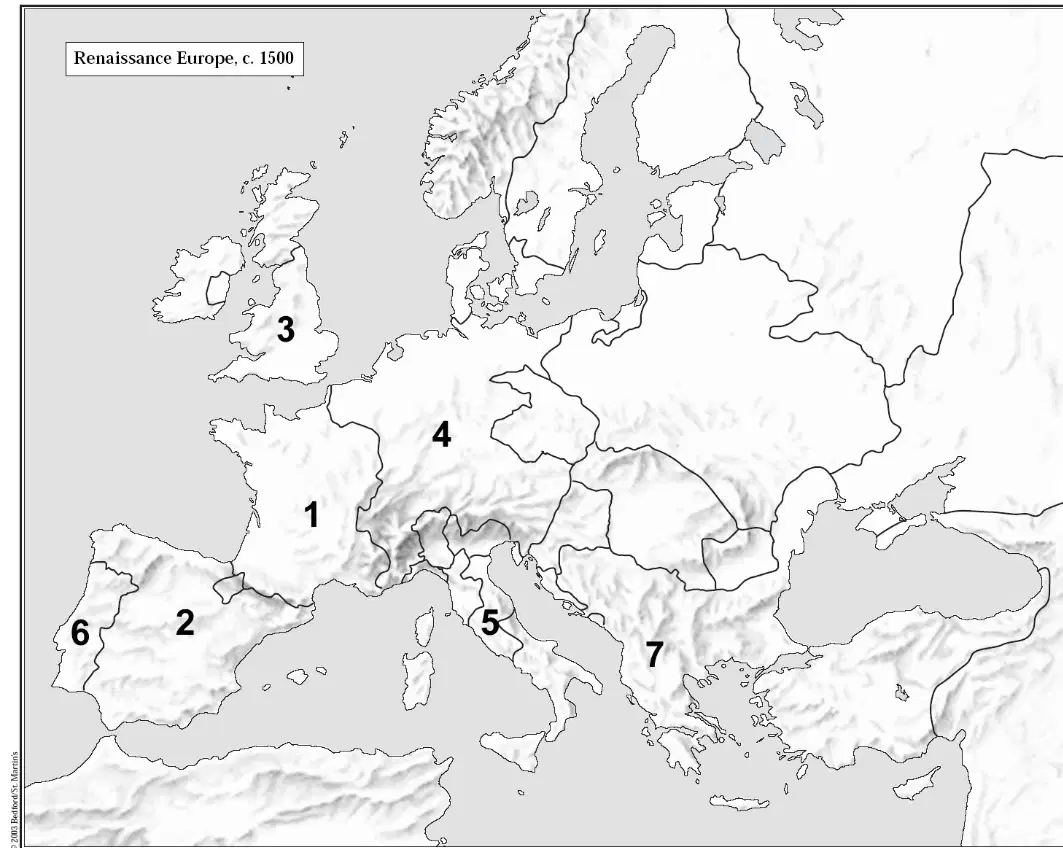
Which number represents the country of Greece?
3
2
7
1
4
Before democracy, what group of people ran Athens?
All males
Council of 500
Areopagus
Military leaders
About what percentage of the population was completely ignored from governmental affairs?
About 90%
About 10%
About 50%
About 75%
What was the role of the Assembly (Ekklesia) in Athens?
To serve in the army
To choose who got to vote
To judge criminals for their crimes
To make laws for Athens (pass legislation)
What was the job of the Council of 500 (the Boule)?
They decided who would be part of the Assembly
They decided who Athens would go to war with
They decided how slaves should be treated
They decided what the Assembly would discuss and vote on
How were people chosen to serve on the Athenian Ekklesia?
Power was taken by force
People voted on the members
Your name was randomly chosen (if you volunteered)
Power was passed to your from your father
What is a main difference between the Assemblies of Athens (ekklesia) and Sparta (appella)?
Sparta's appella could control the economy
The Ekklesia was weaker than the Appella
Sparta's Appella couldn't debate issues, whereas the ekklesia could
The Ekklesia could only vote yes or no, whereas the appella could change laws
Which is true about Sparta's Gerousia?
They were the elite Spartiates warriors
Elected by Appella and had veto power over it
They held the kings in check
Sparta's equivalent of the Athenian Ekklesia
Which was the most powerful branch of Sparta's government?
Two Kings
Appella
Ephors
Gerousia
The Magistrates in Athens were the only part of Athenian government that weren’t citizens
True
False
In Athens a few more “citizens” had a little more influence in how the government worked than the average Greek polis
True
False
Athenian government was not specially different than any other poleis in form or function
True
False
Which ingredient was NOT one that went into making Athens such a great city in such a short time?
They were the wealthiest Greek polis
Civic life was not optional
Athens attracted and housed more foreigners than any other Greek polis
The ancient Greeks did everything outdoors
Which is NOT an era of Greek Philosophy?
Stoic
Socratic
Pre-Socratic
Post-Socratic
The Socratic philosophers mainly investigated natural phenomena
True
False
Select an example of a character virtue
Witty
Cowardly
Boastful
Lazy
What is virtue?
Making sure you get what you want out of life
The mathematics of Pythagoras
The happy medium between two character extremes
The philosophy of being skeptical about facts
Where did Alexander the Great come from?
Rome
Athens
Sparta
Macedonia
Which is considered to be the longest lasting effect of Alexander the Great's conquests?
The spread of democracy
The spread of Greek culture
The popularity of the Empire in the ancient world
The perfection of the ancient military strategies
Which are the BIGGEST influence of Ancient Greece on our lives today?
A) Government and Philosophy
B) Hellenism and Mythology
C) Economics and Trade
D) Medicine and Math
In Greece, small independent city-states developed because:
foreign invaders divided up the Greek people so that they could control them
each city-state had a different language and religion than others
mountains, seas, and islands separated Greek city-states from one another
Greek families did not get along with one another
Make an inference based on what you know about the geography of Athens. Which features of Athens's geography most affected its economy?
It was in a river valley which provided a variety of foods.
It was surrounded by fertile fields which led to wealth from agriculture.
It was close to the sea allowing for increased wealth through trade.
It was built on rocky cliffs where mineral deposits were found.
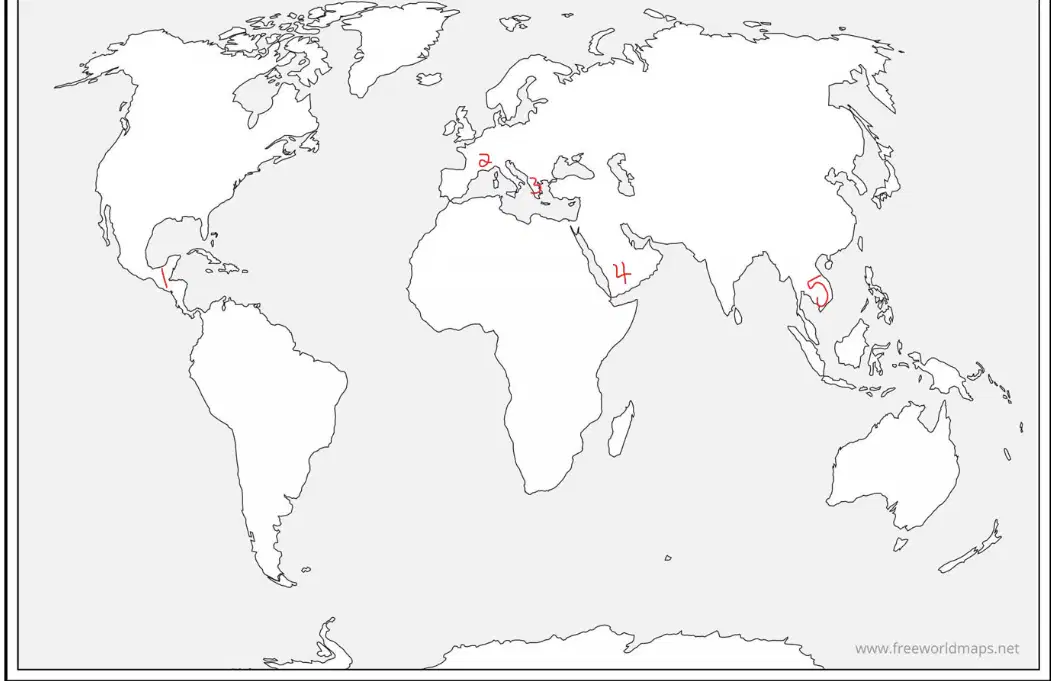
Which number on the map represents the location of Greece?
1
2
3
4
5
Being near the sea is an important part of life in Greece. Which of these is the BEST example of a way the Greeks used the seas to their advantage?
They used the seas as a source of drinking water
They used the sea water to irrigate their crops
They used the sea to prevent other people from visiting their city-states by setting up blockades to keep traders out.
They used the seas as a source of transportation that allowed them to trade with other city-states and civilizations.

