
 Worksheets
The Gilded Age
Total questions: 20
Worksheet time: 12mins
Name
Class
Date
1.
Define the word "nativism"
a)
Nativism is a philosophy that encourages global citizenship.
b)
Nativism refers to the practice of adopting foreign customs.
c)
Nativism is a political ideology that supports open borders.
d)
Nativism is a belief that prioritizes the interests of native inhabitants over those of immigrants.
2.
Choose a phrase that most accurately describes the Gilded Age
a)
“Give me your tired, your poor, your downtrodden”
b)
“America is for Americans”
c)
“A piece of coal painted gold”
d)
“Immigrants, we get the job done.”
3.
What is urbanization?
a)
The process of building and expanding cities
b)
The process of people from other countries coming to the US
c)
The belief that the richest deserve their wealth because they work hard
d)
The law that required people to move from rural areas to urban areas
4.
What was a problem created by Urbanization and what is a solution to that problem?
a)
Increased public transportation and traffic congestion; solution: more highways.
b)
Job creation and economic growth; solution: tax incentives for businesses.
c)
Environmental pollution and deforestation; solution: stricter zoning laws.
d)
Overcrowding and inadequate housing; solution: affordable housing projects.
5.
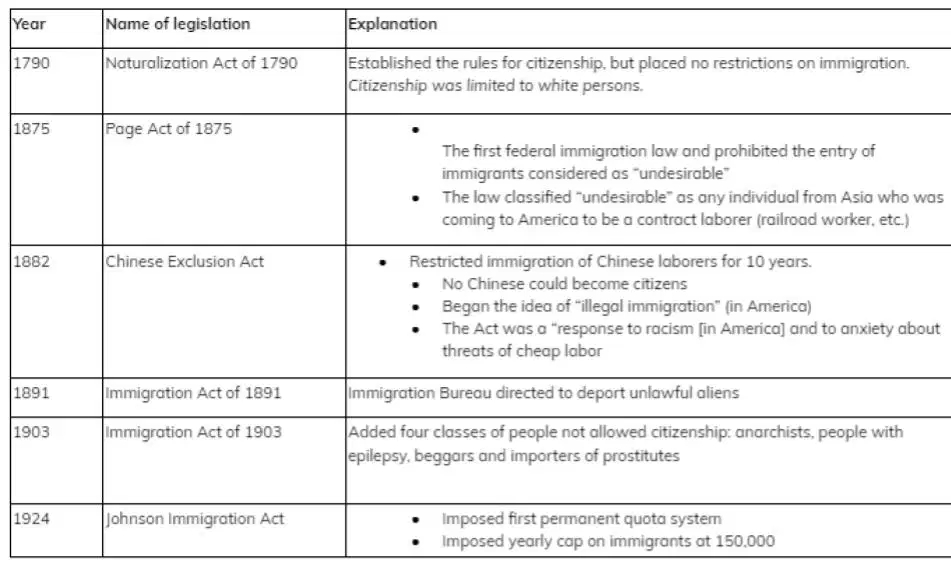
The above chart demonstrates that the United States’ immigration policy has…
a)
always been tolerant of new waves of immigrant populations.
b)
focused only on excluding Asians from immigrating to the United States.
c)
focused on preventing immigrant groups who were “undesirable” from entering the United States.
d)
never tried to prevent immigrants from coming to the US.
6.
Due to urbanization, cities saw many issues such as..
a)
Unclean water
b)
Sanitary Issues
c)
Rise of Crime and Fire
d)
All of the above
7.
One "purpose" of the Chinese Exclusion Act (1882) was to…
a)
Speed construction of the western railroads
b)
Encourage settlement of the Pacific Coast
c)
Expand the civil rights of immigrants
d)
Protect the jobs of American workers
8.
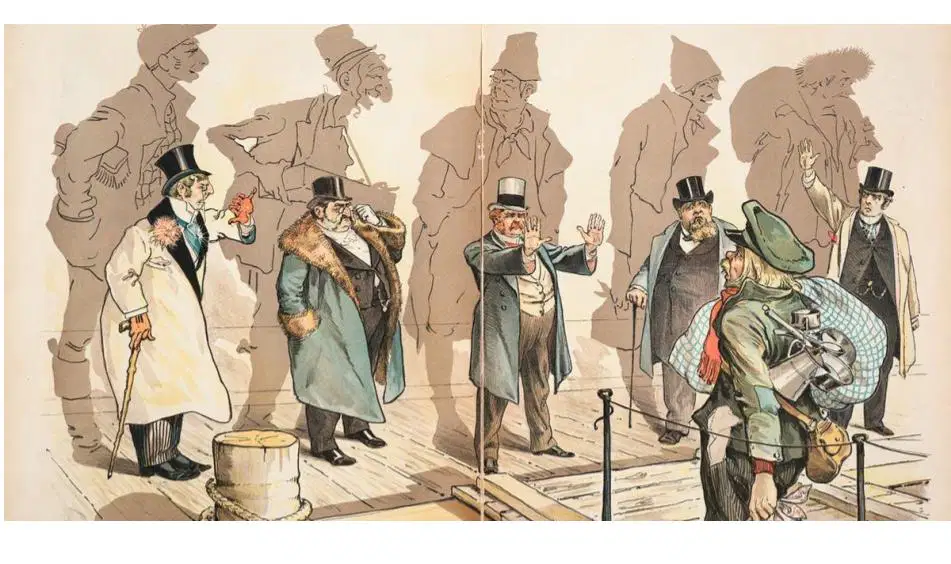
Which groups of people are described in this political cartoon? (1 point)
a)
Immigrants and upper class
b)
Immigrants and lower class
c)
Lower class and those in poverty
d)
Government workers and upper class
9.
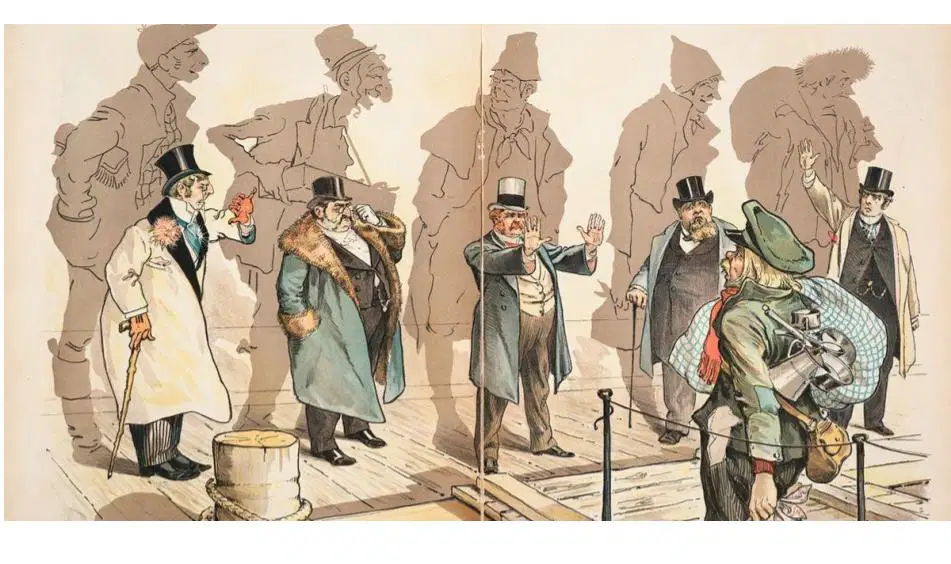
What is the message of the cartoon? How do you know?
a)
The cartoon is a celebration of wealth.
b)
The cartoon promotes social equality.
c)
The cartoon depicts a humorous scene without any message.
d)
The message of the cartoon is a critique on the rise of immigration.
10.
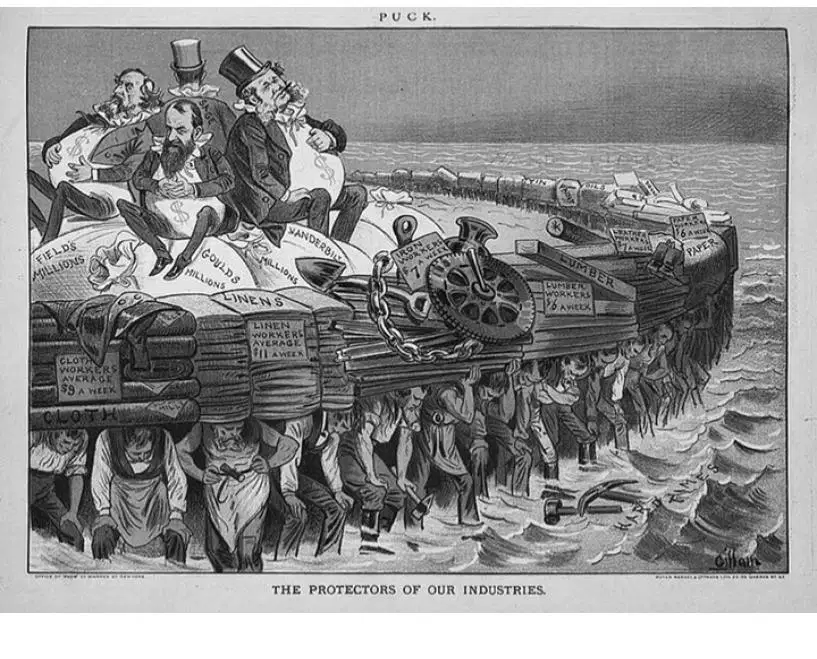
The message of the cartoon is… (1 point)
a)
The upper class is helping the working class
b)
The upper class and the working class work together
c)
The working class supports the upper class
d)
The upper class deserves their wealth
11.
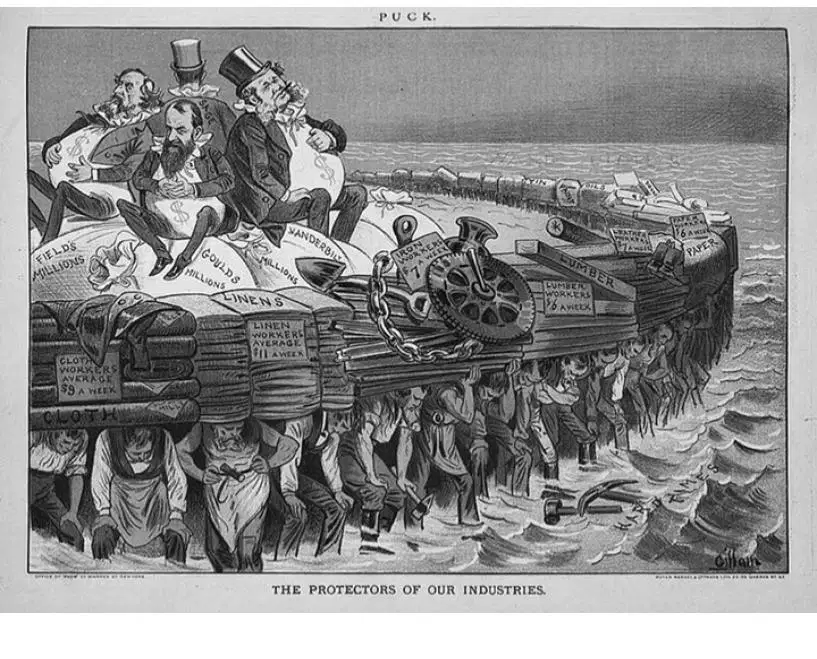
Identify and explain two symbols that represent the Gilded Age within this political cartoon, “The Protectors of our Industries” (Puck, 1878).
a)
Wealthy industrialists and workers holding them up
b)
Labor unions and broken chains
c)
Small business owners and lifting up all of their wealth
d)
Farmers and open fields
12.
The majority of ”old” immigrants who arrived in the US between 1800 and 1900 came from…
a)
East Asia
b)
Latin America
c)
Northern and Western Europe
d)
Eastern Europe
13.
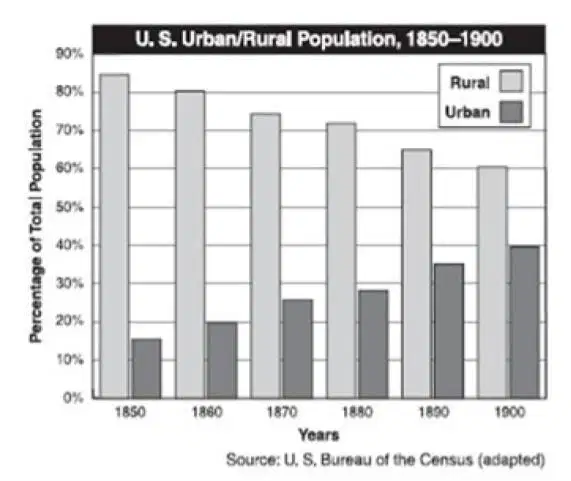
Summarize the chart.
a)
As the rural population lowers, the urban population stays the same
b)
As the urban population rises, the rural population stays the same
c)
As the rural population rises, the upper class population rises
d)
As the rural population lowers, the urban population rises
14.
"We recognize that peaceful industry is necessary to successful civilized life, but the right to strike and the preparation to strike is the greatest preventive to strikes. If the workmen were to make up their minds tomorrow that they would under no circumstances strike, the employers would do all the striking for them in the way of lesser wages, and longer hours of labor.” —Report on the (U.S.) Industrial Commission on Capital and Labor, 1890
In this report, Samuel Gompers is explaining the need for...
a)
Pensions
b)
Unions and strikes
c)
Wage labor
d)
Freedom of contract
15.
How did some business owners respond to labor unions?
a)
Some business owners supported labor unions and increased wages.
b)
All business owners welcomed labor unions and collaborated with them.
c)
Some business owners used tactics like hiring strikebreakers against union activities.
d)
Many business owners ignored labor unions and continued their practices unchanged.
16.
Which of the following is the clearest example of how immigrants during this period contributed to American culture as they adapted to their new lives?
a)
The development of new political parties
b)
They fueled industrial growth and added their traditions to American culture.
c)
Immigrants brought new foods to American cuisine.
d)
The adoption of American-style clothing by all immigrants
17.
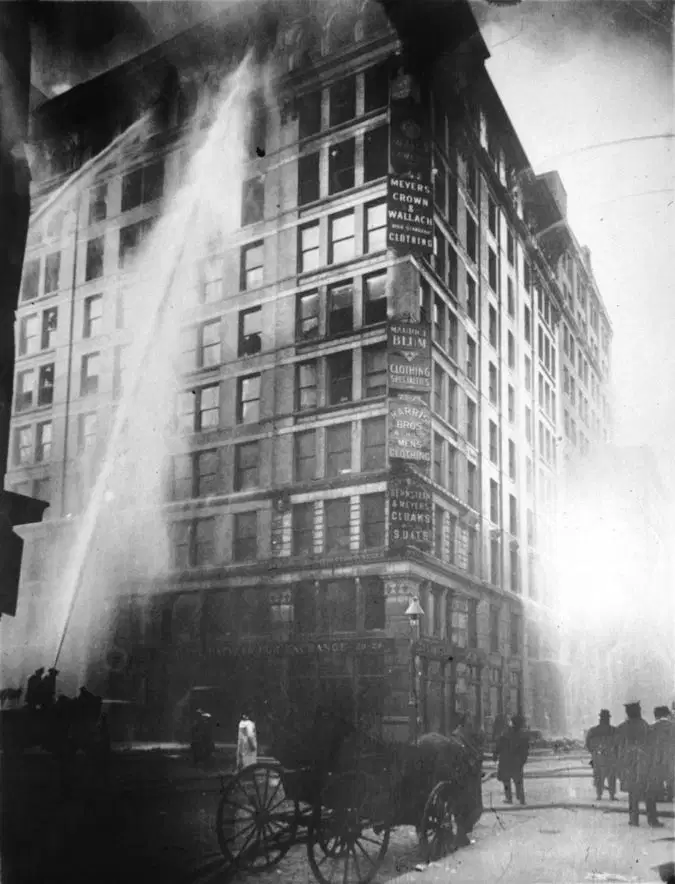
The Triangle Shirtwaist Factory Fire was one main event we discussed in class. Describe the role JOURNALISM played in this event.
a)
Journalism celebrated the factory's success without criticism.
b)
Journalism focused solely on the factory's profits.
c)
Journalism ignored the fire and its consequences.
d)
Journalism exposed unsafe working conditions and raised public awareness, leading to labor reforms.
18.
Streetcars powered by electricity improved city life because they
a)
transported people to shops.
b)
were quiet and clean
c)
led to city planning
d)
providing escape from cities
19.
Cities could be described as ________ during the gilded age
a)
Overcrowded and unsanitary
b)
Sparsely populated and clean
c)
Pastoral and agrarian
d)
Technologically advanced and pollution-free
20.
THIS IS A SHORT ANSWER TOMORROW -- BE PREPARED
Andrew Carnegie was a (Captain of Industry OR Robber Baron) BECAUSE... Justify your response with evidence from class!
a)
Thanks! I'm ready for tomorrow
b)
Don't pick this one.
100 %

