
 Worksheets
Emergency Preparedness - EAPs
Total questions: 52
Worksheet time: 29mins
Emergency Preparedness is defined as:
The process of planning and preparing for potential emergencies or disasters.
A routine daily activity with no risk involved.
Ignoring possible hazards and risks.
Only responding after a disaster has occurred.
The importance of a written emergency action plan is:
It provides clear procedures to follow during emergencies.
It increases confusion during emergencies.
It is only necessary for large organizations.
It is rarely used in real situations.
The components of the emergency plan are:
Hazard identification, communication plan, evacuation procedures, resource management
Daily schedules, meal plans, entertainment options, travel itineraries
Marketing strategies, sales targets, customer feedback, product launches
Financial reports, investment portfolios, tax returns, audit schedules
The roles of everyone involved in an emergency are:
to provide assistance, call for help, and follow safety procedures
to ignore the situation and walk away
to panic and create confusion
to wait for someone else to act
Identify how to activate the EMS System.
Call 911 or the local emergency number.
Wait for someone else to respond.
Drive the victim to the hospital yourself.
Perform first aid without calling for help.
The difference between defined medical emergencies and non-emergencies is:
Medical emergencies require immediate attention, while non-emergencies do not.
Non-emergencies are more serious than medical emergencies.
Medical emergencies can be ignored safely, but non-emergencies cannot.
Non-emergencies always require surgery, while emergencies do not.
Emergency medical cards are important because:
They provide critical health information in emergencies.
They are used for shopping discounts.
They are required for traveling abroad.
They are only for identification purposes.
A (a) is a medical illness or traumatic injury that has the potential to be life-threatening or progress to a life-threatening event in the absence of treatment.
Fill in the blank: ________ is a formal document outlining the steps to be taken in the event of a medical crisis or disaster.
Emergency Action Plan (EAP)
Patient Consent Form
Medical History Report
Incident Observation Log
Fill in the blank: ________ are professionals who are properly equipped and trained for any medical crisis or disaster.
Emergency Medical Services (EMS)
Firefighters
Police Officers
Paramedics
Fill in the blank: ________ is any medical illness or injury that does not pose a serious threat to life or limb.
Non-emergency
Emergency
Critical condition
Life-threatening event
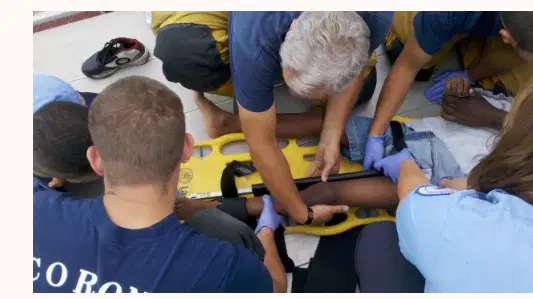
What is the term for being properly trained for any medical crisis or disaster?
Emergency Preparedness
Medical Negligence
Disaster Ignorance
Casual Response
Unplanned Action
Why must expedient action be taken in the event of an athletic injury?
To provide appropriate care to athletes involved in hazardous or life-threatening conditions
To delay treatment
To avoid paperwork
To increase risk
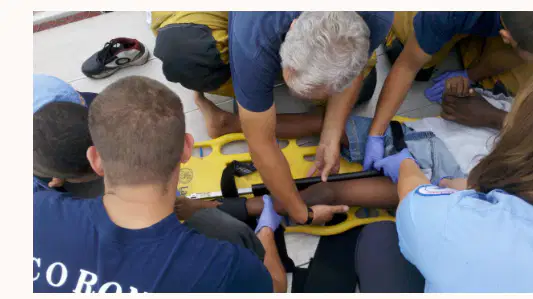
How does the development and implementation of an emergency plan help in sports medicine?
It helps to ensure the best care is provided.
It increases the risk of injury.
It delays the response to emergencies.
It prevents all injuries from occurring.
According to the information on Emergency Preparedness, what is the duty of each athletic organization regarding emergencies?
To ignore emergency situations
To develop an emergency plan that can be implemented quickly and provide appropriate health care
To wait for emergencies to happen
To only focus on training athletes
Which of the following is NOT included in the preparation for emergencies as described in the Emergency Preparedness information?
Formulation of a plan
Proper event coverage
Maintenance of emergency equipment and supplies
Ignoring emergency medical personnel
Preparation for emergencies includes continuing education in the area of (a) medicine.
According to the Emergency Preparedness information, what are some ways to prepare for emergencies in athletic organizations?
Careful preparticipation physical screenings, adequate medical coverage, safe practice, and training techniques.
Only allowing athletes to play without any medical checks.
Ignoring safety protocols during practice sessions.
Relying solely on athletes' self-assessment for readiness.

An (a) is a written document detailing the preparations and on-site emergency response of healthcare professionals and other stakeholders to medical emergencies in the pre-hospital setting.
According to the Emergency Action Plan (EAP), what is one of the four basic categories that should be specified for a program's needs?
equipment
food
lighting
uniforms
According to the Emergency Action Plan (EAP), what is one of the four basic categories that should be specified for a program's needs?
Transportation
Nutrition
Recreation
Technology
According to the EAP, what should be clearly outlined for emergency personnel who are on the scene of a medical crisis?
The medical equipment to use
The roles of the emergency personnel
The location of the nearest hospital
The names of the injured athletes
Each member of the athletic training staff should be assigned specific (a) to play in the event of an emergency.
What is the most important role of the athletic training staff in the event of an emergency?
Calling the ambulance
Providing immediate care to the injured athlete
Notifying the family
Documenting the incident
Who should provide immediate care to the injured athlete during an emergency?
The least experienced staff member
The most qualified member of the athletic training staff, usually the head athletic trainer or team physician
The athlete's friend
The coach
According to the information about emergency personnel, who should be assigned to locate and obtain all emergency equipment needed at the scene?
The coach
Other members of the staff
The principal
The players
According to the information about emergency personnel, who should be assigned to activate the emergency medical system (EMS)?
Any bystander
One member of the athletic staff on scene
The injured person
The local Police Department
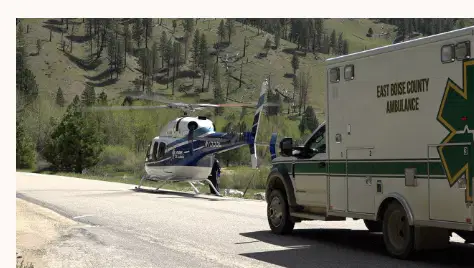
According to the information about emergency personnel, what should you do if you are in a remote area not served by 911 coverage?
Wait for help to arrive
Call the local Police Department
Drive to the nearest hospital
Do nothing
According to the information about emergency personnel, the individual assigned to activate EMS must be able to clearly and calmly communicate the situation over the phone.
True
False
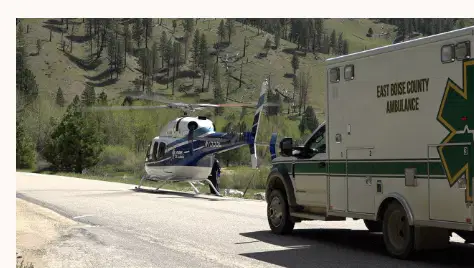
Fill in the blank: The individual assigned to activate EMS must be familiar with the ______ in order to provide proper directions.
venue
weather
equipment
schedule
Once EMS arrives, what must someone be available to do?
Call the police
Direct them to the scene
Lock the doors
Leave the area
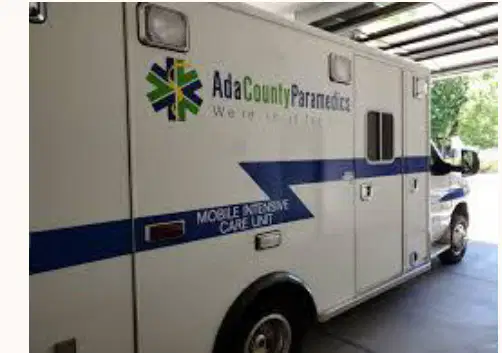
Why is it important for athletic training staff and emergency medical personnel to have good working relationships?
To ensure the best care for an injured athlete
To save money
To avoid paperwork
To win competitions
Relationships between athletic training staff and emergency medical personnel should be established only after an emergency occurs.
True
False
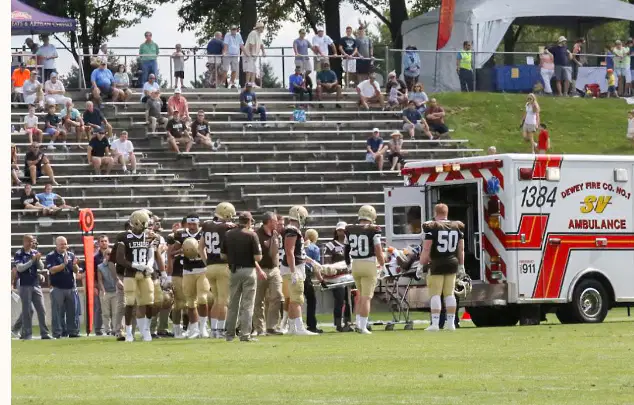
Emergency Communication: The athletic training staff on scene must have access to a _________?
working phone or radio
first aid kit
pair of running shoes
water bottle
According to the Emergency Communication instructions, what information about the caller should be relayed to EMS? Fill in the blank: The name, address, and (a) of the caller.
According to the Emergency Communication instructions, what details about the injured should be relayed to EMS? Fill in the blank: Approximate ________ and ________ of the injured.
age, gender
height, weight
location, time
name, address
According to the Emergency Communication instructions, what should you report about the condition and care of the injured to EMS? The condition of the injured, the care and ________ being provided at the scene by the athletic training staff.
treatment
location
arrival
departure
Which of the following is a requirement for emergency equipment at an athletic event?
It must be stored far from the site
It must be readily accessible, in good working condition, and checked before each event or competition
Only doctors can use it
It should be used only after the event
Fill in the blank: Individuals providing care to the athletes must be __________ in the purpose and application of the equipment on hand.
knowledgeable
careless
uninterested
untrained
confused
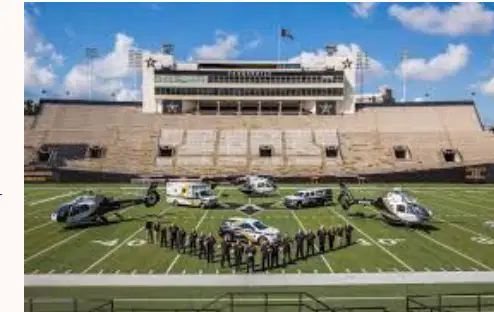
According to the information provided, why should EMS providers and an ambulance be on standby at any event where there is a high risk of traumatic injury?
To provide entertainment
To lessen the response time for EMS and ensure timely proper care for injured athletes
To increase ticket sales
To supervise the audience

Athletes with unstable injuries should never be transported in a vehicle that is not appropriately equipped to deal with emergencies.
True
False
Which of the following is NOT considered a defined medical emergency?
A) Breathing cessation
B) Severe bleeding
C) Mild headache
D) No pulse
A severe asthma attack is considered a medical emergency.
True
False
According to the information on 'Identifying a Medical Emergency', what are considered non-emergencies?
A) Injuries that threaten life or limb
B) All other injuries that do not threaten life or limb
C) Only major injuries
D) Only illnesses
All injuries, no matter how minor, should be reported to the athletic training staff.
True
False
If left untreated, minor injuries can become ______ and require advanced medical care.
serious
colorful
invisible
pleasant
Is 'Minor cuts and lacerations' considered a non-emergency or emergency situation?
Non-emergency
Emergency
Is 'Sprains and strains' considered a non-emergency or emergency situation?
Non-emergency
Emergency
Is 'Chest pain' considered a non-emergency or emergency situation?
Non-emergency
Emergency
Is 'Head trauma' considered a non-emergency or emergency situation?
Non-emergency
Emergency
Is 'Loss of consciousness' considered a non-emergency or emergency situation?
Non-emergency
Emergency
Is 'Uncontrollable bleeding, vomiting or diarrhoea' considered a non-emergency or emergency situation?
Non-emergency
Emergency

