
 Worksheets
Unit 2: Revolutionary War
Total questions: 20
Worksheet time: 30mins
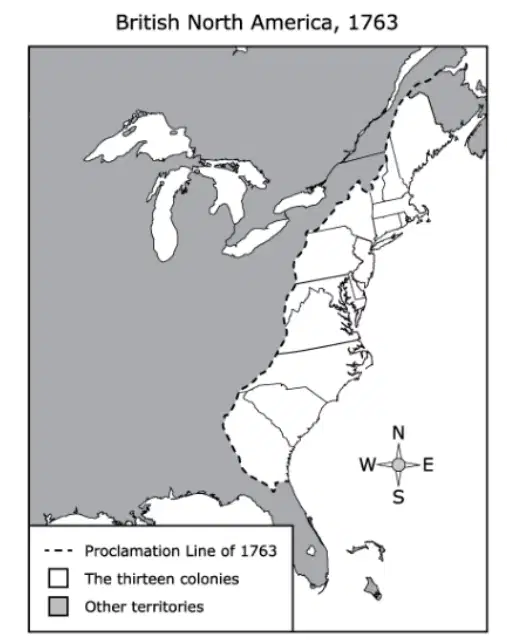
Why were the colonists upset by the Proclamation of 1763?
It limited their westward expansion
It allowed the natives access to their homes
It created tension between the colonists and the French
It gave land to freed slaves
How did the British government react to the Boston Tea Party?
They declared war on the colonies
They repealed the tax on tea
They passed the Intolerable Acts
They put the Sons of Liberty on Trial
Why were the colonists upset about the taxes being passed by the British government?
They were upset because of the cost of the taxes
They didn't agree that they should pay any taxes at all
The taxes violated their rights because they had no representation in Parliament
They felt they were a punishment for the Boston Tea Party
Why did Parliament begin to pass taxes on the colonies?
To promote industry
To help expand their trade with foreign nations
to pay the debt created by the French and Indian War
To help pay for the cost of creating the colonies
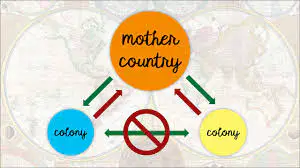
What economic theory is represented in the image
Salutary Neglect
Triangle Trade
TransAtlantic Slave Trade
Mercantilism
What secret organization was created by Samuel Adams to help fight against British taxes?
The Sons of Liberty
Delta Force
Federalists
Democratic-Republicans
How did the Sons of Liberty protest taxes?
Boycotts
Sit-ins
Armed assaults on soldiers
Hunger strike
Match the following people with their achievements
Thomas Jefferson
Wrote the Declaration of Independence
George III
King of England During the Revolution
Marquis de Lafayette
helped to train and lead soldiers
Crispus Attucks
First to die in the Revolution
Patrick Henry
Give me Liberty or Give me Death
Where were the first shots fired in the Revolutionary War?
Saratoga
Monmouth
Yorktown
Lexington and Concord

Which battle is considered a turning point in the Revolution?
Lexington and Concord
Valley Forge
Yorktown
Saratoga
What events was considered a representation of the hardships faced by the Continental Army during the war?
Lexington and Concord
Valley Forge
Saratoga
Yorktown
Match the following
Stamp Act
Tax on Paper
Intolerable Acts
Punishment for the Boston Tea Party
Quartering Act
British soldiers take over private homes
Sugar Act
First tax passed
Townshend Acts
tax on imported goods
Which battle was a defeat for Americans, but encouraged them because they put up a good fight?
Siege of Boston
Saratoga
Monmouth
Bunker Hill
The victory at which battle convinced the French to help the Americans?
Brooklyn
Saratoga
Bunker Hill
Yorktown
French ships trapped the British at which battle?
Yorktown
Monmouth
Saratoga
Ticonderoga


