
 Worksheets
Earth Midterm 25F
Total questions: 36
Worksheet time: 18mins
Name
Class
Date
1.
What variable does the experimenter change?
a)
independent
b)
dependent
c)
controll
d)
constant
2.
What is the first step in the scientific method?
a)
ask a question
b)
the experiment
c)
hypothesis
d)
make an observation
3.
What statement does a hypothesis need to be in?
a)
"before/after"
b)
"if/maybe"
c)
"if/then"
d)
"then/if"
4.
What is the independent variable?
"What type of bubble gum makes the biggest bubbles?"
a)
bubble gum
b)
bubbles
c)
temperature
d)
psi
5.
Which of the following statements will be a correct hypothesis for the problem?
"How does wearing a seatbelt affect the passenger motion when a car stops suddenly?"
a)
If you wear a seatbelt then you will stay in the seat when the sar stops.
b)
If the car stops suddenly then you will get in a wreck.
c)
If the roads are dry then the car will stop quicker.
d)
If you do not wear a seatbelt then you will fly out of your seat.
6.
Aristotle and Ptolemy were ancient Greek astronomers that developed a model based on the observations they made of space. This model had Earth in the center, what was the name of it?
a)
geocentric
b)
heliocentric
c)
solar system
d)
cinder cone
7.
Approximately how old is the Earth?
a)
5 billion years old
b)
20 thousand years old
c)
4.6 billion years old
d)
67 years old
8.
What is the one star in our solar system?
a)
Jupiter
b)
Hailey's
c)
Pluto
d)
Sun
9.
What causes Earth's days and nights?
a)
revolution
b)
rotation
c)
axis
d)
apogee
10.
What is the dwarf planet in our solar system
a)
Earth
b)
Venus
c)
Mars
d)
Pluto
11.
What causes Earth's years?
a)
revolution
b)
rotation
c)
axis
d)
apogee
12.
Earth is tilted on it's axis at about 23 degrees, which causes one hemisphere to become closer to the Sun than the other. What does this tilt cause on Earth?
a)
seasons
b)
day and night
c)
years
d)
Coriolis Effect
13.
How long does it take the Earth to revolve around the Sun?
a)
25 days
b)
24 hours
c)
365 days
d)
summer
14.
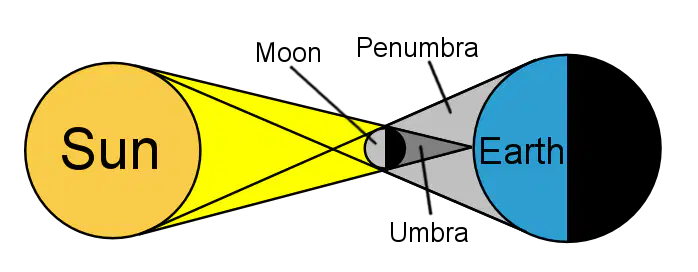
What eclipse is shown below?
a)
lunar
b)
solar
15.
How did Earth's first atmosphere form?
a)
gasses from the solar nebula
b)
water evaporating
c)
a comet
d)
expelled from the rocks
16.
Where did Earth's hydrosphere come from?
Choose all that apply.
a)
outgassing
b)
aliens
c)
impacts of comets
d)
the big bang
17.
What is the center of the Earth?
a)
crust
b)
mantle
c)
outer core
d)
inner core
18.
What heats up the center of the Earth?
a)
Sun
b)
radioactive decay
c)
convection current
d)
pressure
19.
What moves the the tectonic plates?
a)
ocean currents
b)
Alfred
c)
convection current
d)
radiation
20.
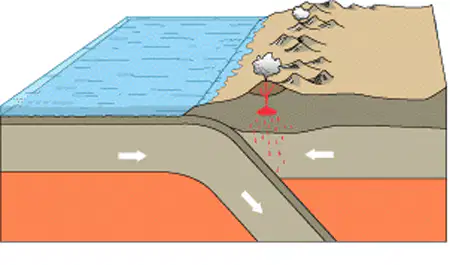
What does the diagram show below?
a)
convergent
b)
divergent
c)
transform
21.
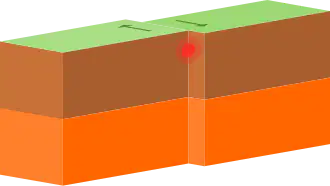
What does the diagram show below?
a)
convergent
b)
divergent
c)
transform
22.
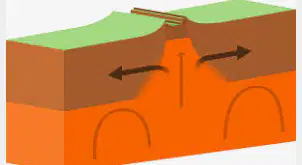
What does the diagram show below?
a)
convergent
b)
divergent
c)
transform
23.
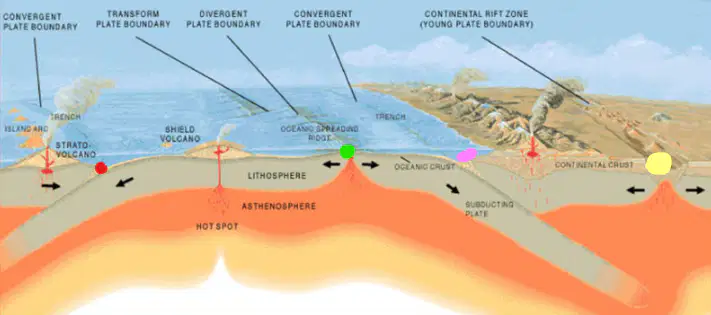
What boundary is the red dot?
a)
continental continental convergent boundary
b)
oceanic oceanic convergent boundary
c)
continental oceanic convergent boundary
d)
continental continental divergent boundary
24.
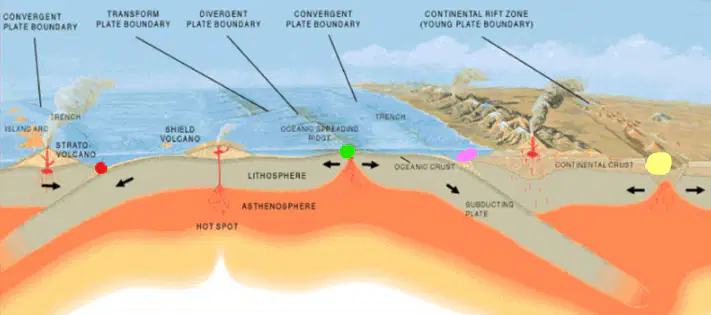
What boundary is the yellow dot?
a)
continental continental convergent boundary
b)
oceanic oceanic convergent boundary
c)
continental oceanic convergent boundary
d)
continental continental divergent boundary
25.
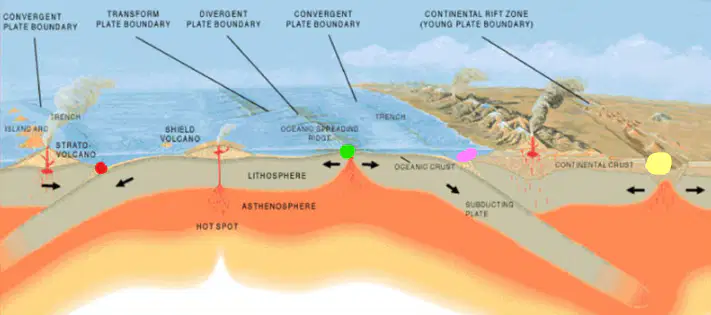
What boundary is the green dot?
a)
oceanic oceanic divergent boundary
b)
continental continental convergent boundary
c)
continental oceanic convergent boundary
d)
continental continental divergent boundary
26.
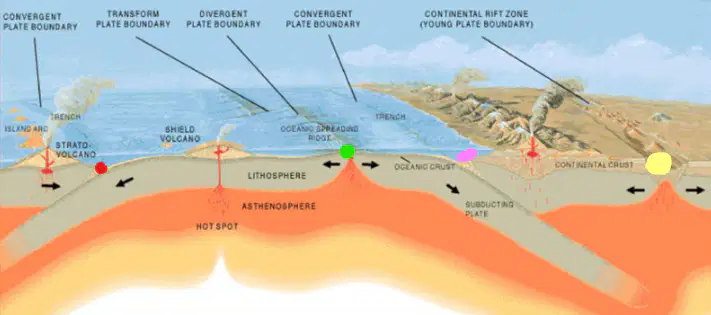
What boundary is the pink dot?
a)
oceanic oceanic divergent boundary
b)
continental continental convergent boundary
c)
continental oceanic convergent boundary
d)
continental continental divergent boundary
27.
What is physical weathering?
a)
sediments change shape
b)
sediments are being taken away
c)
sediments change composition
d)
sediments being dropped off
28.
Choose the example that shows abrasion.
a)
rock arch
b)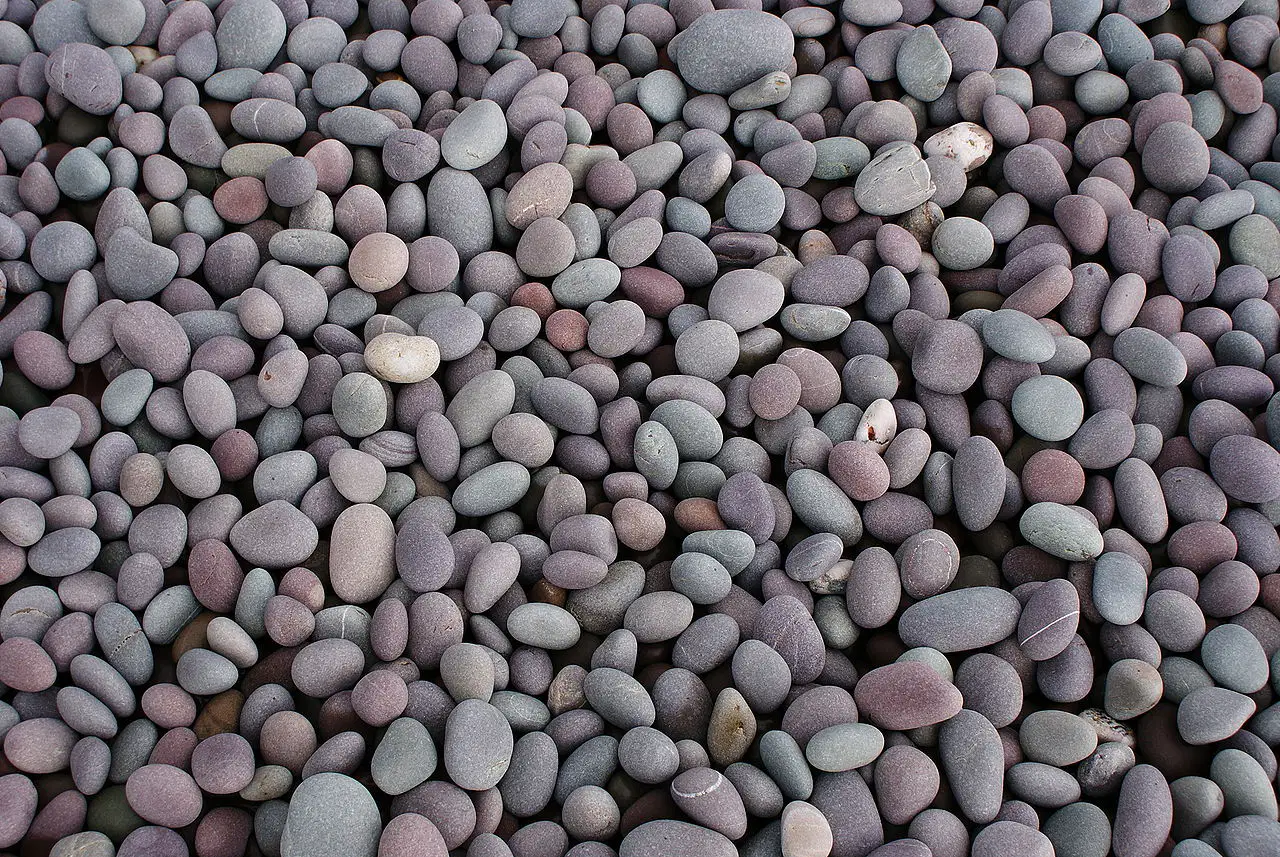
pebbles
c)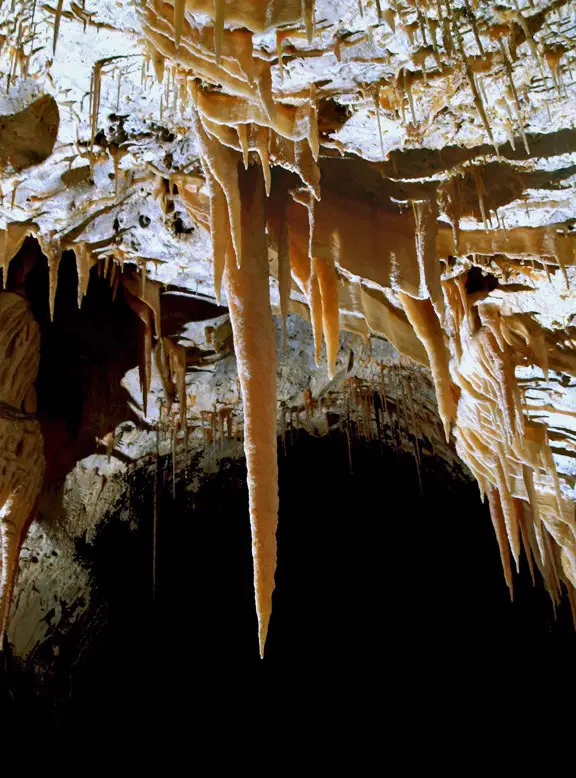
caves
d)
rust
29.
What is chemical weathering?
a)
sediments change shape
b)
sediments are being taken away
c)
sediments change composition
d)
sediments being dropped off
30.
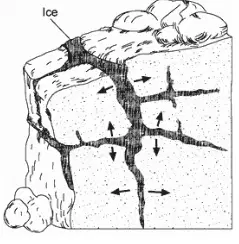
Which statement best describes the physical weathering shown by the diagram?
a)
Enlargement of the cracks occurs because water expands when it freezes.
b)
This type of weathering occurs only in bedrock composed of granite.
c)
The cracks become wider because of chemical reactions between water and the rock.
d)
This type of weathering is common in regions of primarily warm and humid climates.
31.
What are the three factors affecting the rates of weathering?
a)
climate
b)
mineral composition
c)
surface area
d)
all of the above
32.
Chemical weathering will occur most rapidly when rocks are exposed to the _______________________
a)
wet
b)
hot
c)
tropical
d)
dry
e)
cold
33.
Landscapes will undergo the most chemical weathering if the climate is _______________________
a)
cold
b)
humid
c)
hot
d)
dry
34.
What is soil?
a)
leftover crumbs from Earth's creating
b)
mixture of weathered rocks and biological activity
c)
where plants store leftover energy
d)
fertilizer
35.
What is erosion?
a)
sediments being made
b)
sediments being taken away
c)
sediments being dropped off
d)
sediments being changed
36.
What is deposition?
a)
sediments being made
b)
sediments being taken away
c)
sediments being dropped off
d)
sediments being changed
100 %

