
 Worksheets
SMART Goals Quiz
Total questions: 23
Worksheet time: 12mins
What does the "S" in SMART goals stand for?
Specific
Simple
Strategic
Sensible
What does the "M" in SMART goals represent?
Manageable
Measurable
Motivational
Meaningful
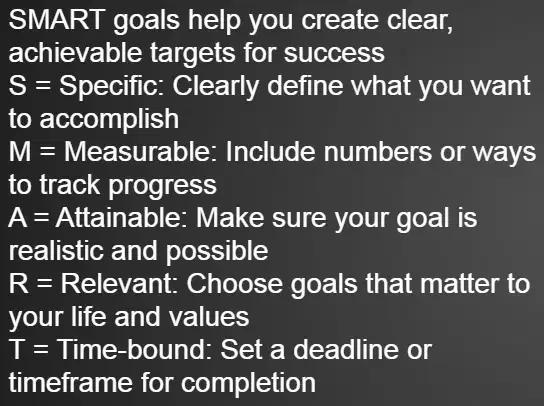
Which component of SMART goals ensures that your goal is realistic and possible?
Specific
Relevant
Attainable
Measurable
What does the "R" in SMART goals stand for?
Realistic
Relevant
Reliable
Resourceful
What is the main purpose of SMART goals?
To create clear, achievable targets for success
To make goals more complicated
To focus only on short-term goals
To avoid setting deadlines
How can SMART goals help you on your journey to a bigger goal?
By making the journey harder.
By celebrating small wins along the way.
By avoiding any challenges.
By skipping the process entirely.
What does research show about people who set specific, written goals?
They are less likely to succeed.
They are more likely to succeed.
They avoid setting goals altogether.
They achieve goals without effort.
What is an example of a specific goal for improving eating habits?
Eat better
Eat 3 servings of vegetables daily
Exercise more
Walk for 30 minutes after school
What is an example of a specific goal for improving exercise habits?
Walk for 30 minutes after school
Exercise more
Eat better
Be healthier
What should you include when setting a specific goal?
The what, when, where, and how of your goal
Only the 'what' of your goal
A general idea of what you want to do
A list of unrelated tasks
What is the purpose of being precise about the behavior you want to change?
To make your goal clear and actionable
To make your goal vague
To avoid accountability
To confuse yourself
What is one way to track your progress effectively?
Use numbers, times, or frequencies you can count
Guess your progress based on how you feel
Avoid tracking progress to save time
Only track progress once a year
Which of the following is an example of a measurable goal?
Drink 8 glasses of water daily
Be healthier
Try harder
Think positively
What tools can you use to track your progress?
Apps, journals, or simple checklists
Random guesses
Only your memory
None of the above
What is the first step in setting attainable goals for success?
Start with goals that challenge you but aren't overwhelming
Set goals that are impossible to achieve
Ignore your current fitness level, schedule, and resources
Begin with the hardest goal possible
Why is it better to succeed at a smaller goal than fail at an impossible one?
It builds confidence and allows for progress
It saves time and effort
It avoids setting any goals at all
It ensures you never have to try again
What should you consider when setting attainable goals?
Your current fitness level, schedule, and resources
Only your long-term dreams
What others expect from you
Goals that require no effort
What can you do after achieving your first goal?
Increase the difficulty of your next goal
Stop setting goals altogether
Repeat the same goal indefinitely
Avoid setting any more goals
What question should you ask yourself when setting a goal?
Can I realistically do this with my current lifestyle?
Will this impress others?
Is this the hardest goal possible?
Can I achieve this without any effort?
What is required to achieve long-term nutrition goals according to the text?
Occasional effort
Consistent daily actions and habit changes
Avoiding all unhealthy foods
Eating only vegetables
What is an example of a long-term fitness goal?
Running a 5K race within 6 months by following a training plan
Drinking more water every day
Taking a short walk after lunch
Doing 5 push-ups once a week
What is required to achieve long-term fitness goals?
Quick results and no effort
Progressive training and patience
Skipping workouts regularly
Only eating healthy food
Which of the following is an example of a social pressure that can act as a barrier to achieving your goals?
Friends or family who don't support healthy choices
Stress eating and low motivation
Limited access to safe exercise spaces
Not knowing how to exercise safely

