
 Worksheets
Heat Pumps Introduction
Total questions: 24
Worksheet time: 12mins
What is the definition of 'Antifreeze'?
A) A vertical hole drilled in the ground.
B) An additive that gives water a lower freezing point.
C) A system which requires an additional source of energy.
What does 'Bivalent' mean in the context of heat pump systems?
A) A system which requires an additional source of energy to meet the heat load of the building.
B) An additive that gives water a lower freezing point.
C) A vertical hole drilled in the ground.
_________: A large volume of water that either provides additional volume for a heating system (volumiser) or as a means of decoupling the flow rate between the heat pump and emitter circuit (buffer). Buffers can also serve as volumisers.
Buffer Tank / Volumiser
Expansion Vessel
Heat Exchanger
Circulation Pump
_________: A sealed polyethylene (MDPE or HDPE) series of pipework which usually contain glycol antifreeze. For example, a horizontal ground collector, slinky or borehole U-tube system.
Closed Loop Collector
Open Loop Collector
Expansion Vessel
Heat Exchanger
_________: A pre-fabricated “panel” consisting of an array of collection pipework arranged in a ladder or similar format.
Compact Collector
Evacuated Tube
Flat Plate Collector
Solar Pond
A component which allows the transfer of heat from one circuit to another without the two circuits mixing. This could be a plate to plate, shell or tube design.
Heat Exchanger
Compressor
Pump
Valve
Pipework forming the Closed Loop Collector (Normally Vertical).
Hi Density Polyethylene (HDPE) Pipework
Copper Pipework
PVC Pipework
Galvanized Steel Pipework
_________: Pipes laid in a loop formation and buried up to 2m deep in open ground. The pipe is usually made of polyethylene (MDPE or HDPE) and contains a glycol antifreeze solution as the heat transfer fluid.
Horizontal Collector
Vertical Collector
Open Loop System
Direct Expansion Loop
A system where all of the energy required for the heat load of the building is provided by the heat pump.
Monovalent
Bivalent
Trivalent
Hybrid
_________: This uses ground water taken from one area of a borehole, stream or lake, pumped through a heat exchanger, then expelled to the environment a few degrees colder further downstream or into another borehole (outside the scope of this manual).
Open Loop Collector
Closed Loop Collector
Solar Collector
Air Source Collector
_________: A type of closed loop collector that utilises a coiled polyethylene pipe (MDPE) that remains in coiled formation in the ground. It is buried at depths of up to 2m.
Slinky
Horizontal trench
Vertical borehole
Open loop
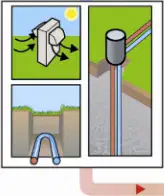
Which part of the system is responsible for extracting energy from the ground or air?
Collector Circuit
Heat Pump
Emitter Circuit
Return Circuit
According to the text, what is the expected average year round temperature at around 15m deep in the UK for ground source heat pumps? The expected average year round temperature is ______ °C, dependant on location in the country.
8 - 12°C
2 - 5°C
15 - 18°C
20 - 25°C
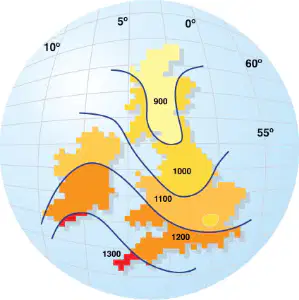
What is the minimum depth at which the collector loop is buried?
0.8m
1m
1.5m
50m
What is a critical factor to consider when sizing the collector circuit for ground source heat pumps?
The color of the pipes
The amount of energy removed from the ground
The type of building
The number of rooms
Fill in the blank: The higher the temperatures from the heat pump, the COP or efficiency of the heat pump will be considerably ______ than when the heat pump has lower flow temperature.
worse
better
unchanged
higher
According to the text, what should be considered prior to the installation of a heat pump to help keep running costs to a minimum whilst maintaining a level of comfort for the consumer?
Increasing the size of radiators
Improving building insulation
Using traditional steel panel radiators
Installing underfloor heating
What standard should any calculation method used for building heat loss be based on?
EN 12831
ISO 9001
EN 16001
ASHRAE 90.1
Which of the following is a factor to consider during the installation of a heat pump system?
Start and end date of works
Specialist equipment/contractors
Ongoing access requirements for maintenance and servicing
All of the above
Fill in the blank: FGAS Regulations cover the use of ________ in commercial, industrial, and public sector organisations.
refrigerant gases
natural gas
liquid nitrogen
compressed air
Which category for working with F gases allows you to carry out all activities?
Category 1
Category 2
Category 3
Category 4
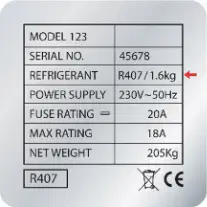
Which refrigerant type has the lowest practical limit (kg/m³) according to the table?
R410a
R407c
R404a
R290
What is a Bivalent system? Fill in the blank: A Bivalent system is where part of the heat load is met by the heat pump and the remainder by an additional energy source, i.e. solar thermal panels, bio fuel, oil or gas boiler etc. Where a Bivalent system is to be installed it must always be designed to give the least ________ intensive fuel source priority.
carbon
water
electricity
maintenance
Which of the following statements is true about Air Source Heat Pumps?
They use the ambient outdoor air temperature as the energy source.
They require a large land mass area to gain energy.
They are not suitable for areas with limited ground available.
They cannot operate at temperatures below 0°C.

