
Font size
 Worksheets
Causes of the American Revolution as it Impacted Georgia
Total questions: 100
Worksheet time: 50mins
What was one of the causes of the American Revolution as it impacted Georgia?
The French and Indian War
The Civil War
The War of 1812
The Industrial Revolution
Which proclamation, issued in 1763, was a cause of the American Revolution as it impacted Georgia?
The Proclamation of 1763
The Emancipation Proclamation
The Proclamation of Independence
The Proclamation of 1812
What act, related to taxation, contributed to the causes of the American Revolution as it impacted Georgia?
The Stamp Act
The Tea Act
The Sugar Act
The Quartering Act
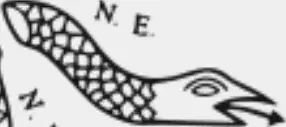
Who created the 'Join, or Die' drawing, and in what year was it created?
George Washington, 1776
Benjamin Franklin, 1754
Thomas Jefferson, 1787
John Adams, 1765
During which war was the 'Join, or Die' drawing created?
The American Revolution
The Civil War
The French and Indian War
The War of 1812
When did the 'Join, or Die' drawing become popular?
During the French and Indian War
During the American Revolution
During the Civil War
During the War of 1812
What is the main message conveyed by the 'Join, or Die' drawing?
Unity among the colonies
Opposition to taxation
Support for independence from Britain
Advocacy for peace

Who created the political cartoon 'Join or Die' in 1754?
George Washington
Benjamin Franklin
Thomas Jefferson
John Adams
What was the main message of the 'Join or Die' cartoon?
Unite or Perish
Freedom for All
Join or Die
Rebel Against the British
What did each part of the snake in the 'Join or Die' cartoon represent?
Different British territories
The 13 colonies or groups of colonies
The British government
The French and Indian War
Why did the 'Join or Die' cartoon become popular only after the rebellion against the British started?
The colonists initially believed the British government would protect them.
The cartoon was banned by the British government.
The colonists did not understand the message of the cartoon.
The cartoon was created during the French and Indian War.
During which war did the colonists realize the importance of uniting together?
The American Revolutionary War
The French and Indian War
The War of 1812
The Civil War
When did the French and Indian War take place?
1740-1750
1754-1763
1765-1775
1776-1783
What was the primary conflict in the French and Indian War?
Control over trade routes
Control over land and resources
Religious differences
Disputes over taxation
Which region was primarily fought over during the French and Indian War?
Appalachian Mountains
Ohio River Valley
Great Plains
Mississippi Delta
Which side did the majority of Indian tribes support during the French and Indian War?
The British
The French
Both sides equally
Neither side
What was the impact of the French and Indian War on Georgia?
It had a significant impact on Georgia's economy.
It had little impact as Georgia was far away and more supportive of Britain.
Georgia became a French colony.
Georgia's population decreased significantly.
What territories did Britain gain after winning the French and Indian War?
Florida and the Great Plains
Canada, Ohio River Valley, and all land east of the Mississippi River
Louisiana and Texas
The Caribbean Islands
What was one consequence of the French and Indian War for Britain?
Britain became the wealthiest nation in the world.
Britain was left in major debt.
Britain lost control of its colonies.
Britain gained new allies among Indian tribes.
Why might participating in the French and Indian War have been beneficial to the colonists?
It allowed them to gain military experience and strengthen their defenses.
It helped them establish trade routes with the French.
It gave them independence from British rule.
It allowed them to avoid future conflicts with Native Americans.
Why might a British officer and a French officer not see eye to eye on the French and Indian War?
They had different alliances and territorial goals.
They both wanted to avoid the war entirely.
They were competing for control over the same colonies.
They shared the same strategies but disagreed on leadership.
What was one reason the British might have found the French and Indian War beneficial?
It allowed them to expand their territory in North America.
It helped them form an alliance with the French.
It reduced their military expenses.
It ended all conflicts with Native American tribes.
Why might the French have participated in the French and Indian War?
To protect their fur trade and maintain their territories in North America.
To form a military alliance with the British.
To gain independence from European powers.
To avoid conflicts with the colonists.
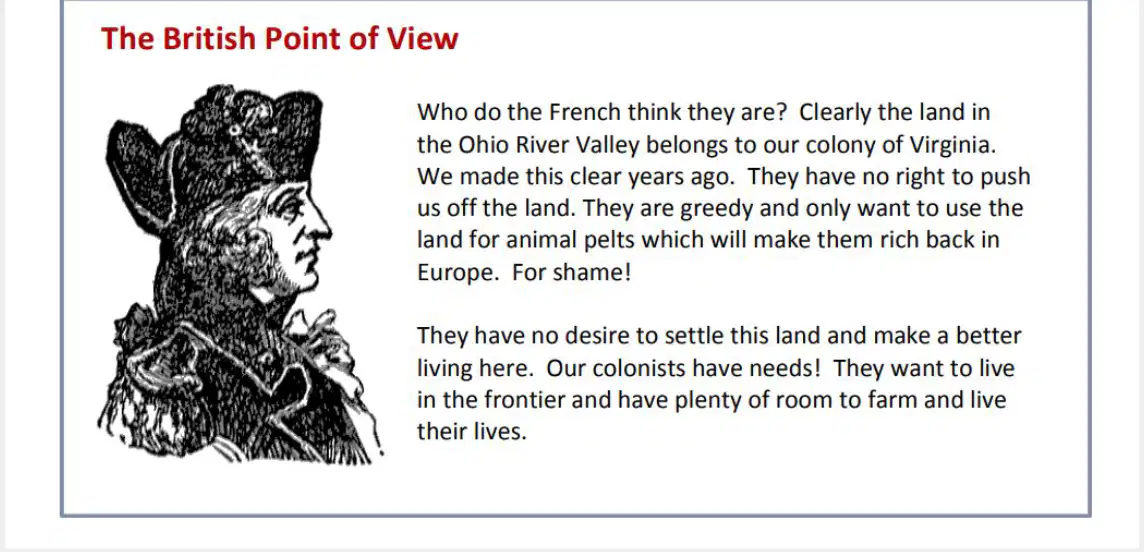
According to the British point of view, which colony did they believe the Ohio River Valley belonged to?
Virginia
Pennsylvania
New York
Maryland
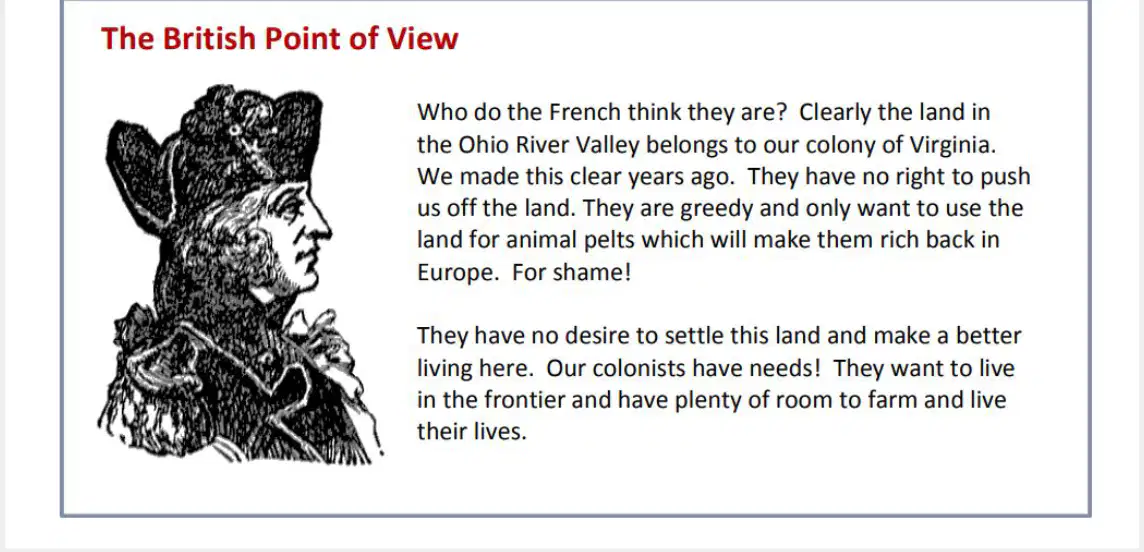
What reason did the British give for accusing the French of being greedy?
The French wanted to use the land for farming.
The French wanted to use the land for animal pelts to sell in Europe.
The French wanted to build settlements in the Ohio River Valley.
The French wanted to trade with Native Americans.
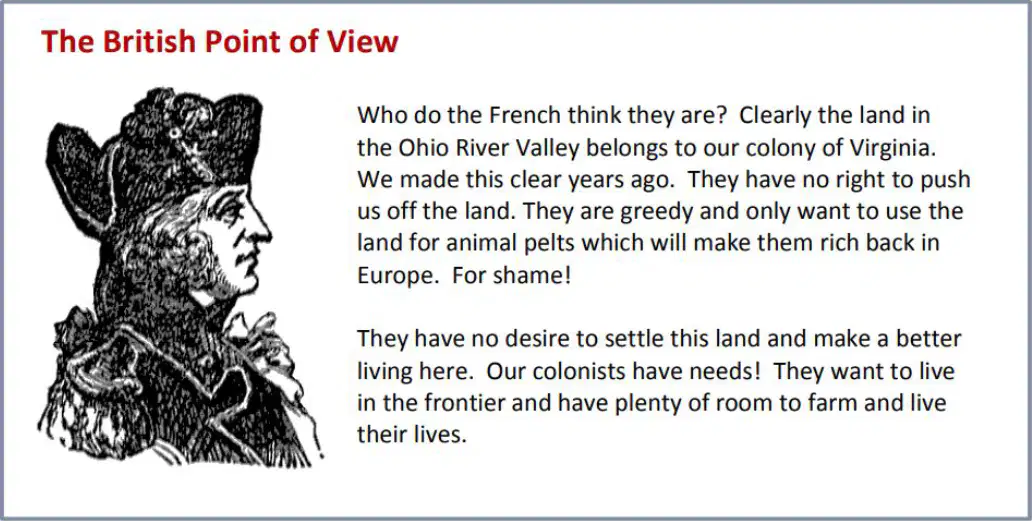
What did the British claim their colonists needed the Ohio River Valley for?
To trade with Native Americans
To live in the frontier and farm
To mine for gold and silver
To establish military bases
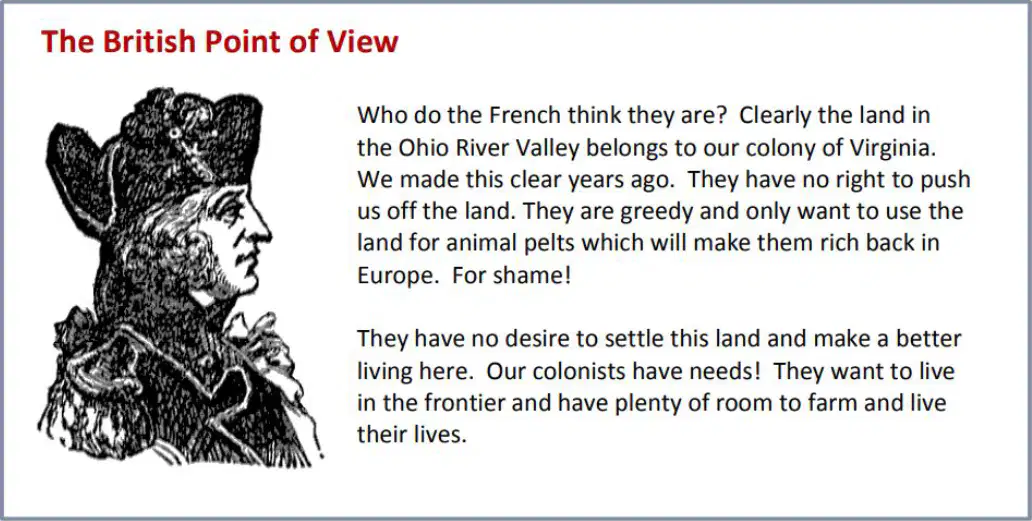
How did the British view the French's intentions in the Ohio River Valley?
As an attempt to create peaceful settlements
As a way to push the British off the land
As a strategy to trade with Native Americans
As a plan to establish a new colony
What is the French perspective on the British claim to the upper Ohio River Valley?
The French believe the British have a rightful claim to the land.
The French think the British claim does not pass the natural border of the Appalachian Mountains.
The French agree to share the land with the British.
The French are indifferent to the British claim.
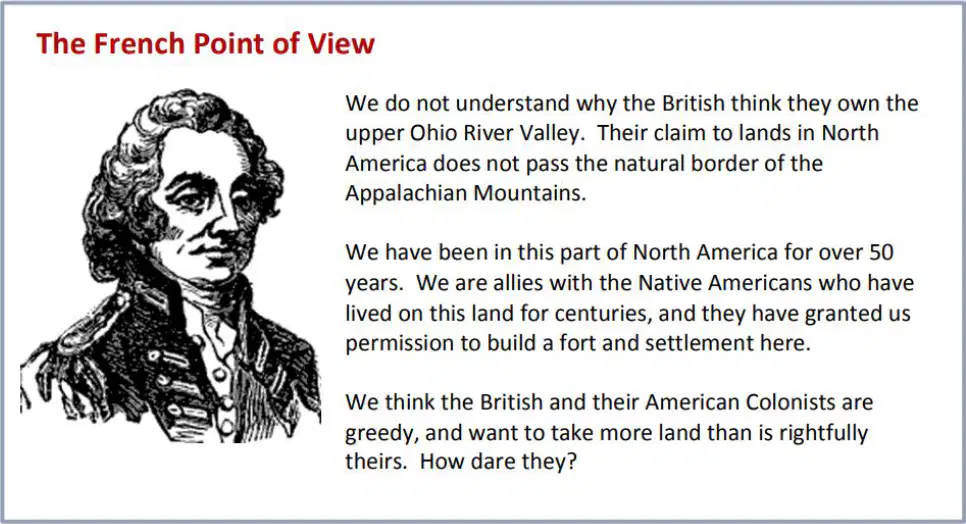
How long have the French been in this part of North America, according to the text?
Over 50 years.
Over 100 years.
Over 20 years.
Over 10 years.
Who are the French allied with in this part of North America?
The British.
The American Colonists.
The Native Americans.
The Spanish.
What do the French accuse the British and their American Colonists of being?
Generous.
Greedy.
Fair.
Indifferent.
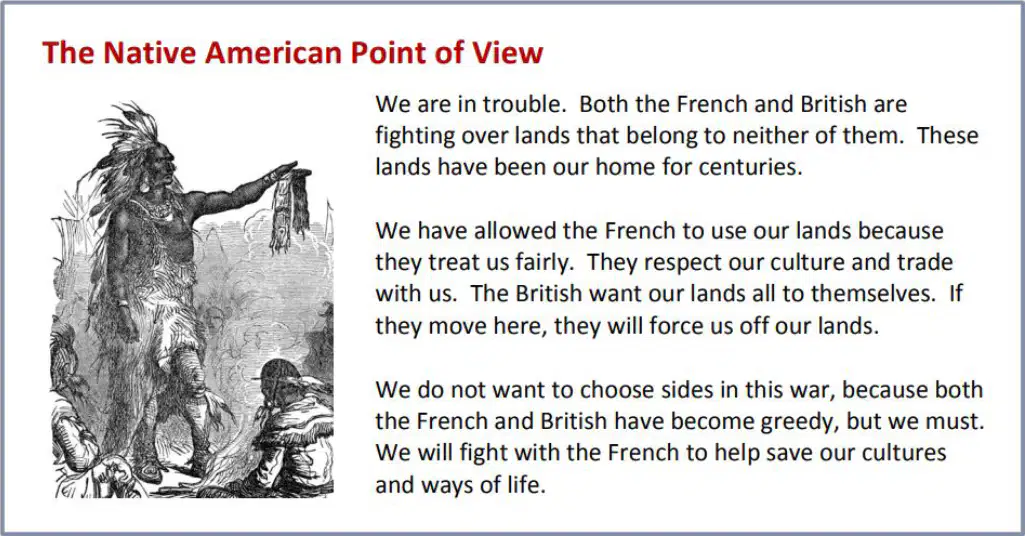
What is the main concern of the Native Americans as described in the text?
The French and British are fighting over lands that belong to the Native Americans.
The French are forcing the Native Americans off their lands.
The Native Americans want to ally with the British.
The Native Americans are seeking to expand their territory.
Why have the Native Americans allowed the French to use their lands?
Because the French respect their culture and trade fairly with them.
Because the French have promised to protect them from the British.
Because the French have offered them weapons and resources.
Because the French have claimed ownership of the lands.
What do the Native Americans believe the British will do if they move onto their lands?
The British will force them off their lands.
The British will trade fairly with them.
The British will protect their culture.
The British will share the lands equally.
Why do the Native Americans feel compelled to choose sides in the war?
To save their cultures and ways of life.
To gain more land for their people.
To form an alliance with the British.
To avoid conflict with the French.
What was one major outcome of the French and Indian War for the British colonies?
The British colonies gained independence from the mother country.
The British colonies formed alliances with Native American tribes.
The British colonies' relationship with the mother country changed.
The British colonies were annexed by France.
What treaty marked the end of the French and Indian War?
Treaty of Versailles
Treaty of Paris (1763)
Treaty of Ghent
Treaty of Tordesillas
What challenge did the British face after the French and Indian War?
Managing a huge new empire
Defending against Spanish invasions
Rebuilding their navy
Establishing trade routes with Asia
How did the British respond to the challenges after the French and Indian War?
They granted independence to the colonies.
They enacted policies that set the stage for the American Revolution.
They formed a military alliance with France.
They abandoned their colonies in North America.
What was one of the outcomes for the British at the end of the French and Indian War?
They lost a large amount of land to the French.
They gained a large amount of land from the French.
They formed an alliance with the American colonists.
They stopped taxing the American colonists.
Why did the British government begin taxing the American colonists after the French and Indian War?
To fund the construction of new colonies.
To pay for soldiers stationed in North America.
To support the French in future wars.
To reduce the cost of imported goods.
How did the American colonists feel about the taxes imposed by the British government after the French and Indian War?
They were supportive of the taxes.
They were indifferent to the taxes.
They were upset by the taxes.
They were unaware of the taxes.
What experience did many Americans gain during the French and Indian War?
Political experience.
Military experience.
Economic experience.
Diplomatic experience.
Why did the French join the American Revolution?
To form an alliance with the British.
To gain control of American colonies.
To get revenge on the British for losing the French and Indian War.
To establish trade routes with the American colonists.
How did the American colonists' cooperation during the French and Indian War impact their relationship with the British government?
It made them more loyal to the British government.
It made it easier for them to work together against the British government.
It led to the colonists supporting British taxation policies.
It resulted in the colonists refusing to work together in the future.
What was the significance of the Treaty of Paris 1763 for Georgia's borders?
It gave Spanish Florida to England.
It expanded Georgia's borders to include the Mississippi River.
It returned Georgia to Spanish control.
It reduced Georgia's territory significantly.
Why were Georgians happy with the decision made in the Treaty of Paris 1763?
Because it eliminated the Spanish threat to the colony.
Because it allowed them to trade freely with Spain.
Because it gave them control over the Gulf of Mexico.
Because it reduced their taxes.
Which river marked the western boundary of the Colony of Georgia after the French and Indian War?
Mississippi River
Savannah River
Altamaha River
Ohio River
What was the main purpose of the Proclamation of 1763 issued by King George?
To encourage colonists to expand westward.
To stabilize relations between Great Britain and American Indian tribes.
To grant independence to the American colonies.
To increase taxes on the colonists.
Why were the colonists unhappy with the Proclamation of 1763?
They were forced to pay higher taxes.
They were prohibited from moving west of the Appalachian Mountains.
They were required to join the British army.
They were denied access to trade with American Indians.
What was one reason much of the land was given to American Indians under the Proclamation of 1763?
To encourage American Indians to adopt British culture.
To avoid uprisings and violence with settlers.
To establish new trade routes.
To create a buffer zone for British military operations.
Why did Great Britain issue the Proclamation of 1763 after the Seven Years War?
They wanted to reward the colonists for their loyalty.
They were nearly bankrupt and could not afford another costly war.
They wanted to expand their territory further west.
They sought to establish new colonies in the Appalachian region.
What geographical feature marked the boundary that colonists were prohibited from crossing under the Proclamation of 1763?
The Mississippi River.
The Appalachian Mountains.
The Rocky Mountains.
The Ohio River.
What was one of the goals of the Proclamation of 1763 in addition to making peace with the American Indians?
To establish a new government in the colonies
To build a trade relationship with American Indians for the fur trade
To abolish the fur trade business
To expand British colonies westward
Why did Great Britain plan to build forts along the Proclamation Line of 1763?
To expand their territory into the Indian Reserve
To better defend and maintain its colonies
To prevent trade with American Indians
To establish new settlements for colonists
Who issued the Proclamation of 1763?
King George III
Queen Elizabeth I
King Henry VIII
King Charles II
The map shows the Proclamation Line of 1763 and the division of territories in North America. What was the main purpose of the Proclamation Line of 1763?
To prevent colonists from settling west of the Appalachian Mountains
To encourage westward expansion by colonists
To divide land between France and Spain
To establish new colonies along the Mississippi River
What was the main reason the colonists were upset by the Proclamation of 1763?
It imposed heavy taxes on the colonists.
It restricted their ability to move westward and gain new land.
It forced them to trade only with Great Britain.
It required them to return land to the Native Americans.
Which areas did many frontiersmen move into despite the Proclamation of 1763?
Georgia and Florida
Virginia and Maryland
Kentucky and Tennessee
New York and Pennsylvania
How did the people in Georgia react to the Proclamation of 1763 compared to other colonists?
They were more upset than other colonists.
They ignored the proclamation entirely.
They did not share the same reactions as other colonists.
They supported the proclamation wholeheartedly.
What was one benefit Georgia gained after the French and Indian War?
Independence from Great Britain
Land and resources from the Spanish
A stronger military presence
A new trade agreement with France
Why was the new land gained by Georgia after the French and Indian War significant?
It allowed for the construction of new forts.
It opened up new coastal areas for settlement and trade.
It provided a buffer zone against Native American attacks.
It was used exclusively for agricultural purposes.
What was the relationship between Great Britain and the American colonies throughout the 1700s?
Great Britain maintained strict control over the colonies.
The colonies were left to manage their own affairs for years.
The colonies were heavily taxed and monitored.
Great Britain provided constant military support to the colonies.
What change occurred in the 1760s that made the colonists unhappy?
England began to assert more control over the colonies.
England reduced its military presence in the colonies.
England stopped trading with the colonies.
England granted independence to the colonies.
During the 1760s and 1770s, what did Great Britain begin to do in relation to the colonies?
Grant the colonies independence
Assert more control over the colonies
Reduce taxes on the colonies
Establish new trade agreements with the colonies
Why did the British Parliament believe the colonists should pay new taxes?
To fund colonial expansion
To alleviate the debt incurred from the war
To build new infrastructure in the colonies
To promote trade between Britain and the colonies
Why were many colonists angered by the taxation imposed by the British Parliament?
They believed the taxes were too high
They had no colonial representation in the British Parliament
They wanted to establish their own currency
They were opposed to British military presence in the colonies
In what year did England impose the Stamp Act, requiring colonists to buy a government stamp for nearly every paper document?
1750
1765
1776
1783
What type of items were directly taxed under the Stamp Act?
Food and beverages
Clothing and textiles
Paper documents such as newspapers, licenses, and legal documents
Weapons and ammunition
Why did many colonists rebel against the Stamp Act?
They believed the tax was too high.
They felt the government should not tax them without representation in Parliament.
They wanted to avoid paying taxes on imported goods.
They thought the tax only applied to merchants.
What was the primary purpose of the Stamp Act imposed by England in 1765?
To regulate trade between colonies
To raise revenue by taxing paper documents
To enforce military control over the colonies
To promote the use of British goods
Which of the following was NOT a reason for the colonists' opposition to the Stamp Act?
Lack of representation in Parliament
The tax applied to commonly used items
The Stamp Act was seen as a violation of their rights
The tax was only imposed on imported goods
What was the primary reason the British Parliament repealed the Stamp Act?
Due to colonial pressure.
Because it was ineffective.
To avoid war with France.
To reduce taxation on British citizens.
What was the long-term impact of the acts issued after the repeal of the Stamp Act?
They caused more discontent and set the stage for the Revolutionary War.
They resolved tensions between the colonies and Britain.
They led to the immediate independence of the colonies.
They strengthened the relationship between Britain and the colonies.
What was Georgia's response to the Stamp Act compared to other colonies?
It was more violent than other colonies.
It was equally violent as other colonies.
It was less violent due to its small population, strong royal governor, and economic dependence on Great Britain.
Georgia did not respond to the Stamp Act at all.
Which colony was the only one where a small number of stamps were sold during the Stamp Act period?
Virginia
Georgia
Massachusetts
New York
What group was established in Georgia on November 6, 1765, to oppose the Stamp Act?
The Liberty Boys
The Sons of Freedom
The Patriots of Georgia
The Stamp Act Rebels
Why was Georgia's response to the Stamp Act less violent than other colonies?
Georgia had a large population and strong military.
Georgia had a strong royal governor, small population, and economic dependence on Great Britain.
Georgia was geographically isolated from other colonies.
Georgia was not affected by the Stamp Act.
In what year did Britain impose the Townshend Acts on the American colonists?
1765
1767
1770
1776
Which of the following items was NOT taxed under the Townshend Acts?
Glass
Lead
Tea
Sugar
How did the colonists respond to the taxes imposed by the Townshend Acts?
They accepted the taxes without protest.
They boycotted the taxed items and limited imports from Britain.
They petitioned the British government for representation.
They declared independence immediately.
What was the only tax that remained after the repeal of the Townshend Acts in 1770?
Tax on glass
Tax on lead
Tax on tea
Tax on paper
What event occurred in 1770 when British soldiers fired into an angry mob of protestors, killing five colonists?
The Boston Tea Party
The Boston Massacre
The Declaration of Independence
The Stamp Act Protest
Who created an engraving that was printed in newspapers around the colonies, influencing many people to want to go to war with Britain?
Samuel Adams
John Hancock
Paul Revere
Benjamin Franklin
Why were the American colonists becoming more rebellious, particularly in Boston?
They wanted independence from Britain.
They were unhappy with the Stamp Act.
They were reacting to British soldiers firing into protestors.
They were upset about the Tea Act.
What year was the Tea Act passed by Parliament?
1765
1773
1781
1754
What was the primary purpose of the Tea Act of 1773?
To impose a new tax on tea
To create a monopoly for the East India Company
To ban the sale of tea in the colonies
To reduce the price of tea for colonists
Why did the colonists become angry about the Tea Act?
They were forced to pay higher taxes on tea
They had no choice but to buy tea from the East India Company
The Tea Act banned tea consumption in the colonies
The Tea Act increased the price of tea significantly
What event occurred in 1773 as a protest against the Tea Act?
The signing of the Declaration of Independence
The Boston Tea Party
The Stamp Act Congress
The Battle of Lexington and Concord
How many chests of tea were dumped into the Boston Harbor during the Boston Tea Party?
200
342
150
500
What was the main reason Great Britain passed the Coercive Acts in 1774?
To reward the colony of Massachusetts for its loyalty
To punish the colony of Massachusetts and set an example for other colonies
To encourage trade between Great Britain and the colonies
To establish a new government in the colonies
What name did the colonists give to the Coercive Acts?
The Tolerable Acts
The Revolutionary Acts
The Intolerable Acts
The Boston Acts
What condition did Great Britain set for repealing the Intolerable Acts?
The colonists had to declare loyalty to the British Crown
The colonists had to pay for the tea destroyed in Boston
The colonists had to stop all trade with other nations
The colonists had to disband their militias
In what year were the Coercive Acts passed by the British Parliament?
1765
1774
1783
1750
Which of the following acts closed the port of Boston to trade as part of the Intolerable Acts?
Massachusetts Government Act
Boston Port Act
Quartering Act
Impartial Administration of Justice Act
What did the Massachusetts Government Act prohibit as part of the Intolerable Acts?
Trade in Boston
Town meetings
Housing British soldiers
Sending officials back to England for trial
Which act stated that British officials accused of capital crimes would be sent back to England for trial?
Quartering Act
Boston Port Act
Impartial Administration of Justice Act
Massachusetts Government Act
What did the Quartering Act require the citizens of Massachusetts to do?
Close the port of Boston
Prohibit town meetings
House and feed British soldiers at their own expense
Send British officials back to England for trial
What event led to the British Parliament enacting the Intolerable Acts?
The signing of the Declaration of Independence
The Boston Tea Party
The Stamp Act protests
The Battle of Lexington and Concord
How many chests of tea were dumped into the Boston Harbor during the Boston Tea Party?
100
242
342
442

