
Font size
 Worksheets
Astro 1500 - Exam 2 review (Fall 2025)
Total questions: 30
Worksheet time: 16mins

Angular Momentum is...
always conserved
never conserved
Super cool
not real

Parsecs are a unit of ...
Time
Distance
Volume
How long the Kessel run takes
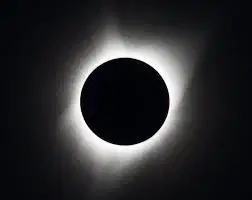
The outermost layer of the sun is ...
The core
The radiative zone
The convective zone
The corona

Which is hotter, an O type star or an A type star?
O
A
More information needed
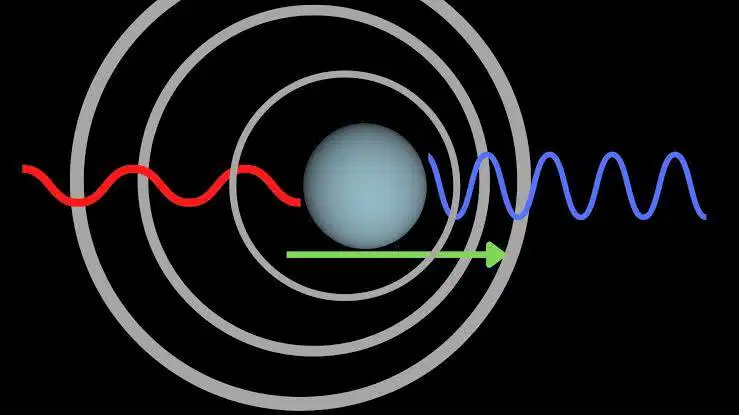
A blue shifted star is moving (towards/away) from us.
Towards
Away

If star 1 and star 2 are the same brightness then ...
Star 1 is hotter, while star 2 is closer
Star 1 is larger, while star 2 is hotter
They are the same in every way
Any of these options

The mass of a binary star system can be determined by ...
Looking at their brightnesses
Asking them nicely
Looking at how they orbit each-other and using kepler's laws
Looking at their helium lines
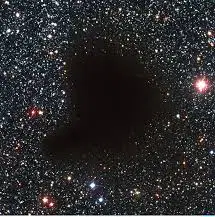
Background light passes through a cloud of ISM dust, less light makes it through. This is called
Absorption
Emission
Aberration
A grand ole time

What is the solar composition? (select the most correct answer)
70% Hydrogen, 30% helium
72% Hydrogen, 26% helium, 2% metals
100% metal
90% helium, 5% hydrogen, 5% metals

You would expect a given object to have a spectral line at 490 nm, but you see one at 495 nm. What does this tell you about the object.
It's moving towards you very quickly
It's moving away from you very quickly
It's spinning
The object is blue

In an HR diagram of a cluster, the turnoff point is
Where the stars start to turn on giants and die
Where the stars get dimmer and redder
Where the cluster stopped forming stars
The exit ramp the stars need to toke
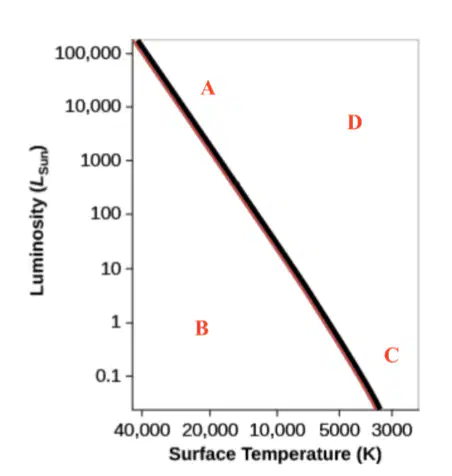
In the pictured H-R diagram, stars that are hot, but smaller, like white dwarves, sit where?
A (Top left)
B (Bottom left)
C (Bottom right)
D (Top right)
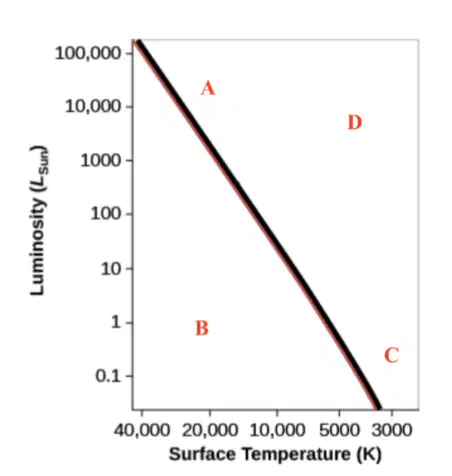
We know for sure that a on the left of an HR diagram is ___ than a star on the right
Hotter
Colder
Larger
Smaller
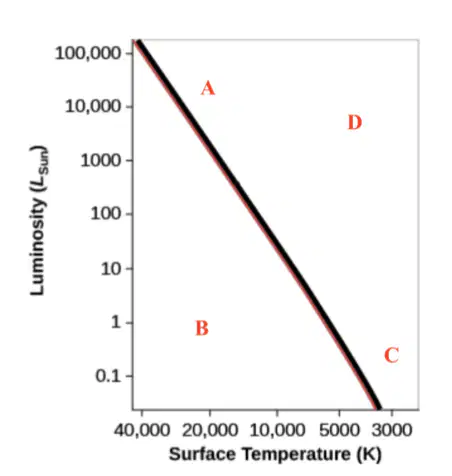
The line in the middle of the H-R diagram is called the ...
Lifeline
Star path
Main Sequence
Great diagonal divider
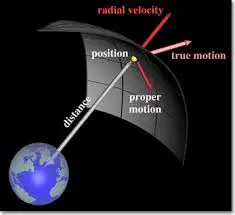
Star A is moving twice as fast in the plane of the sky as Star B, but is 2 times farther away. How do their proper motions compare? (Hint: the equation is PM = V_tan / d)
Star A has twice the proper motion of star B
Star A has four times the proper motion of star B
Star A has half the proper motion of star B
Star A and Star B have the same proper motion

In the case of protostars, what is responsible for the "outward pressure" that tries
(and fails) to stop gravitational collapse?
Nuclear Fusion
Nuclear Fission
Radiation from the Inter Stellar Medium
Heat from gravitational contraction

When observing the spectrum of a star, no redshift or blueshift is observed. If the speed of the star would suddenly increase while maintaining the same direction, what type of shift would we see.
Blueshift
Redshift
No shift

Star A is much smaller than Star B, but Star A is still brighter than Star B as seen from earth. How can this be explained?
Star A is much closer to earth than Star B
Star A is much hotter than Star B
Star A has a larger redshift than Star B
Star A has a smaller parallax than Star B
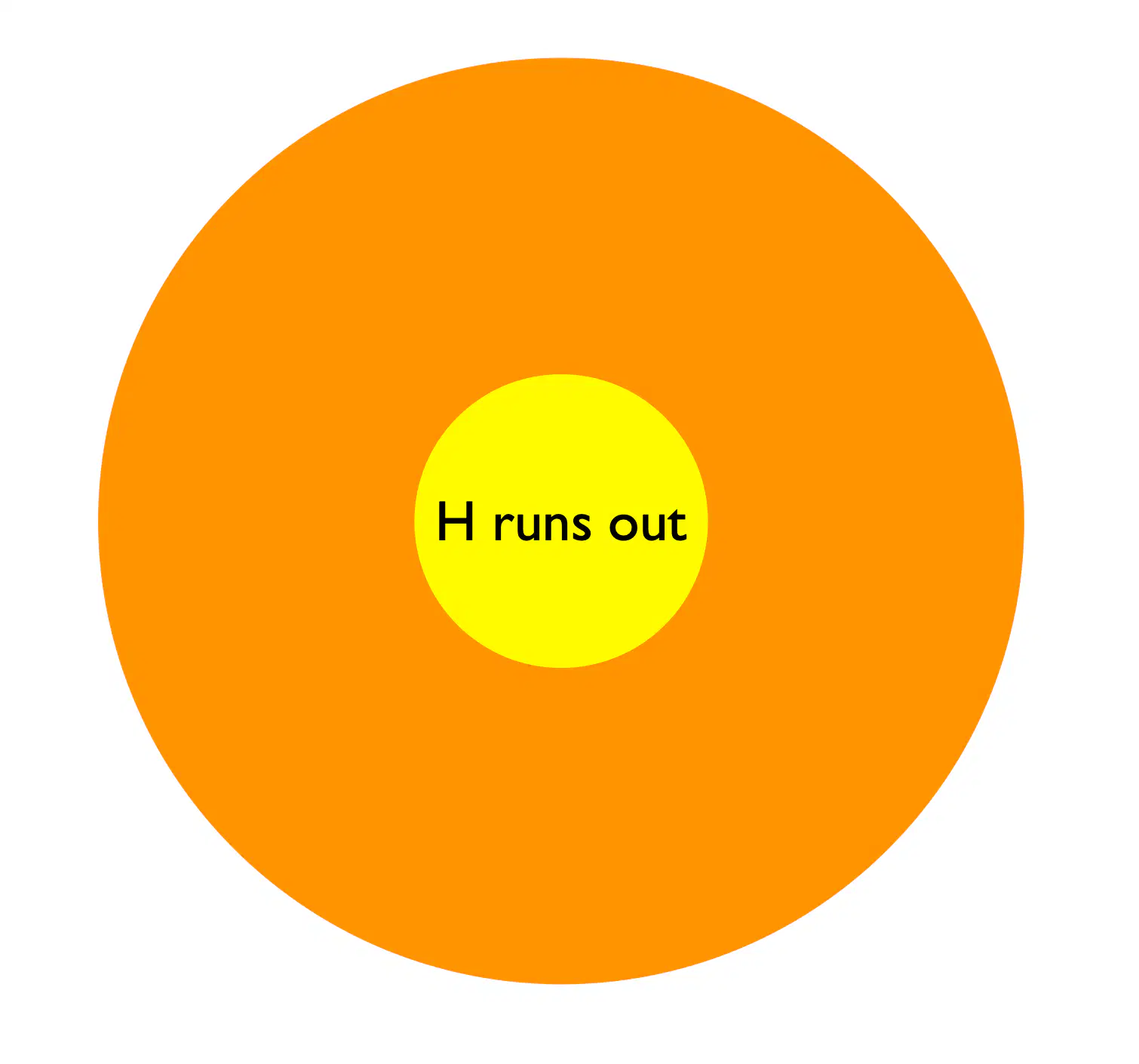
When a star runs out of hydrogen in its core, what causes it to expand?
Helium fusion in the core
Hydrogen combustion in a shell
Hydrogen fusion in a shell
Core contraction

Star A is 7 parsecs away. Star B is 10 parsecs away. Which one has the greater parallax angle?
Star A
Star B
They both have the same parallax
More information is needed

What type of binary system is being depicted?
Visual
Eclipsing
Spectroscopic
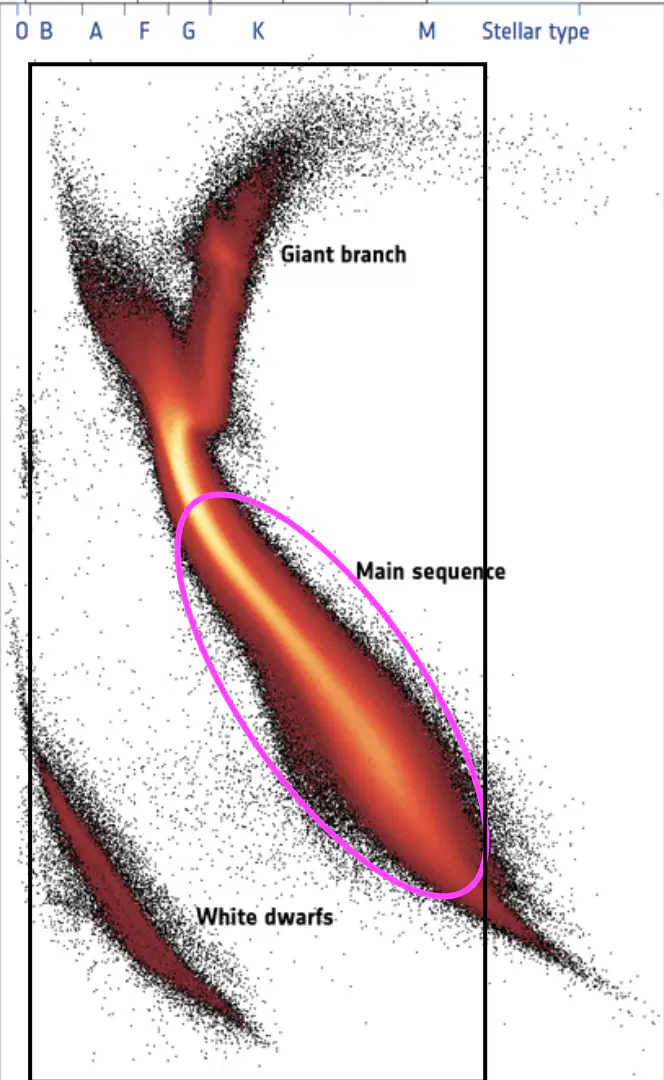
What does the vertical axis of an H-R diagram typically represent?
Luminosity
Temperature
Distance
Mass
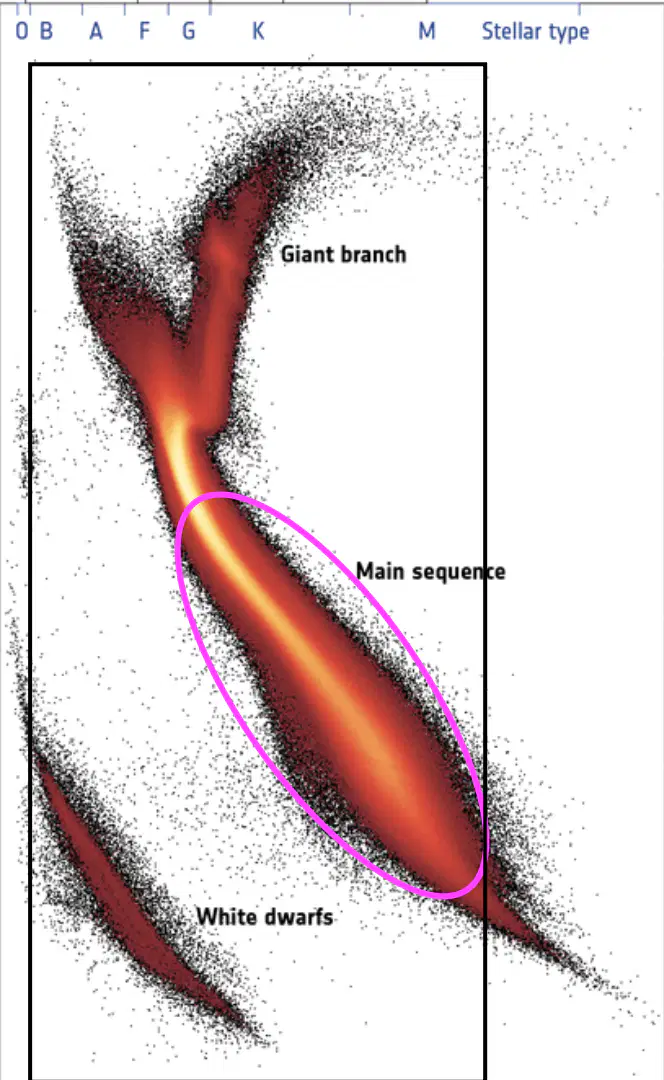
Which process is responsible for the energy production in the core of main sequence stars?
Radioactive decay
Nuclear fission of helium
Gravitational contraction
Nuclear fusion of hydrogen
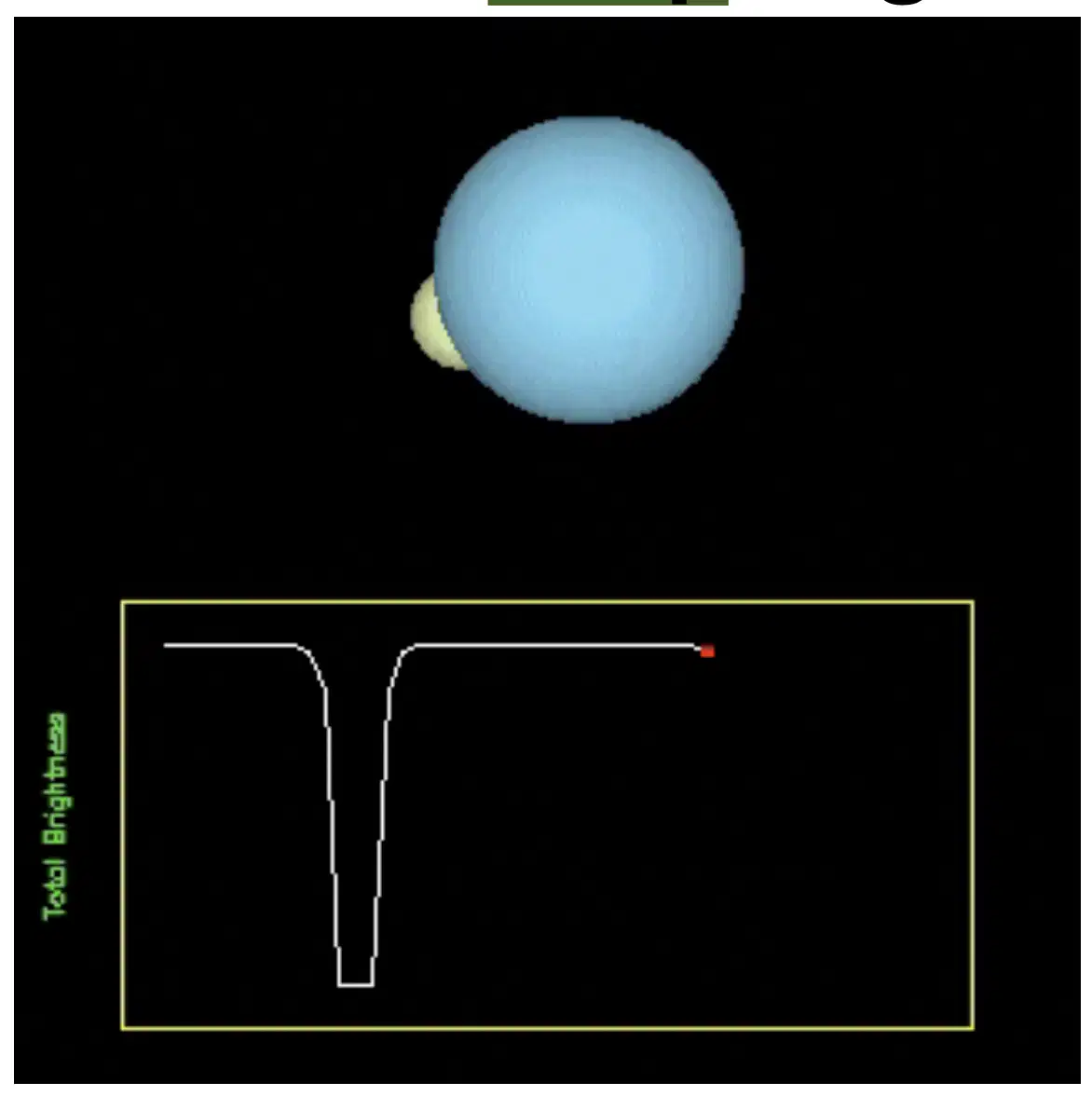
What information can be found from an eclipsing binary system?
The composition of the stars
The radii of the stars
The period of the stars' orbits
The masses of the stars

True or false: Hotter stars tend to ionize Hydrogen better than cooler stars
True
False

Why are sunspots cooler than the rest of the Sun's surface?
Magnetic fields inhibit convection
The natural flow of the photosphere sometimes makes cooler spots
Especially large bubbles in the convective zone are cooler
Sunspots aren't cooler, just darker
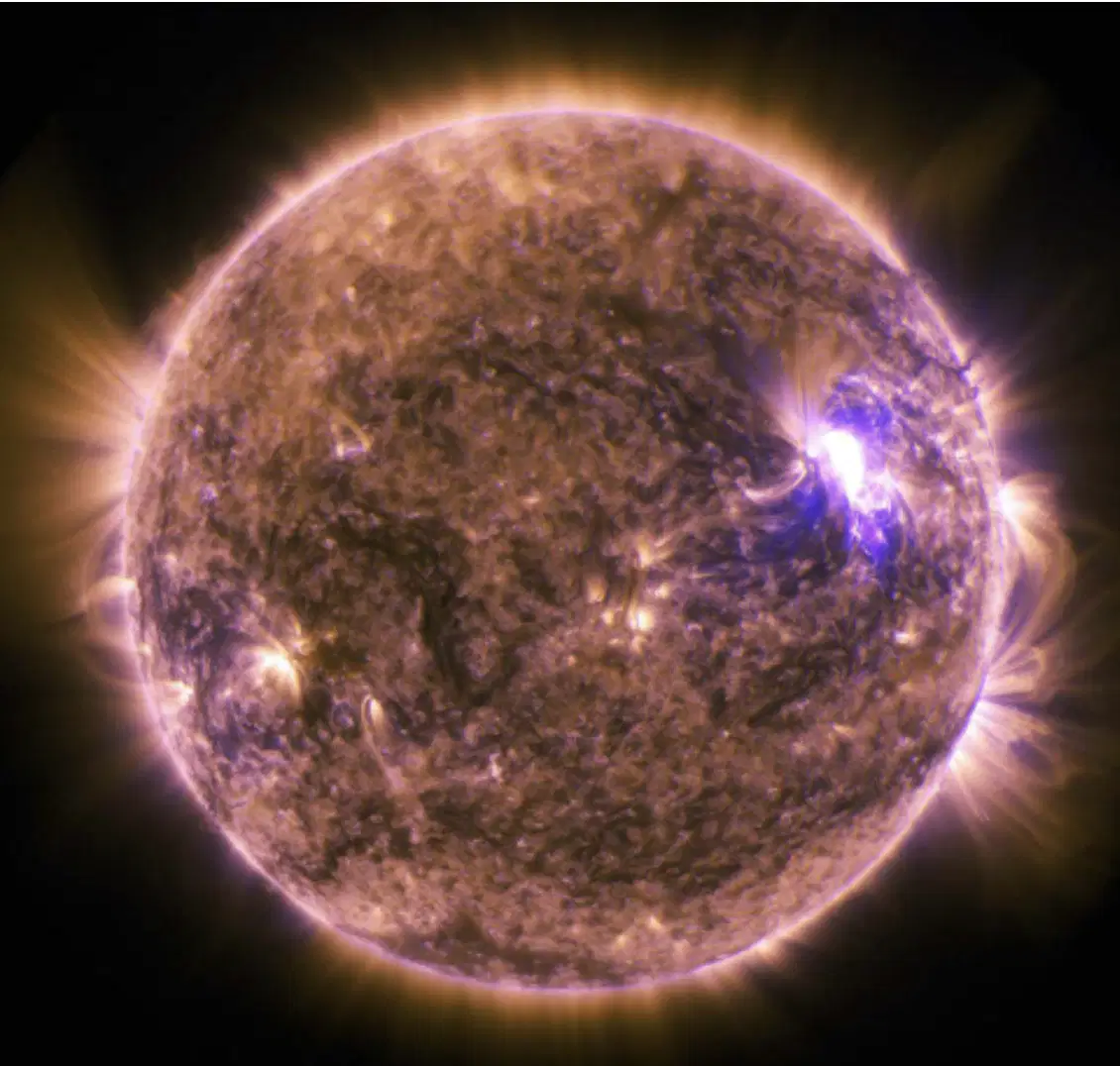
Gravity is constantly trying to compress the Sun, but it doesn't collapse. Why?
Sun's heat naturally makes it expand
Radiation pressure from the corona stabilizes
Core fusion makes an outward pressure
Atoms in the Sun refuse to compress any further

Which of the following is not true about the ISM regions?
HI clouds are hotter than Giant Molecular Clouds
Giant Molecular Clouds are the coolest in the ISM
HII regions are hotter than HI clouds
HII regions are the hottest in the ISM

Brown dwarf stars...
are stars obscured by dust
are the old remnants of stars
are more massive than planets and less massive than stars
Fuse deuterium in their cores

What kind of wavelengths do HI clouds emit when electrons flip it's spin?

