
 Worksheets
ITGS and Digital Society Quiz
Total questions: 51
Worksheet time: 26mins
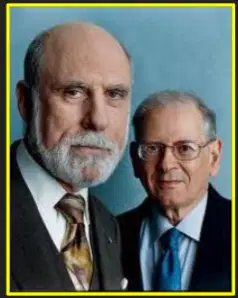
Who are credited with creating the Internet?
Vint Cerf & Bob Kahn
Tim Berners-Lee & Marc Andreessen
Steve Jobs & Bill Gates
Larry Page & Sergey Brin
Which of the following is an example of a technology used in the Internet?
TCP/IP
HTML
CSS
PHP
Which statement best explains the difference between the Internet and the Web?
The Internet is the infrastructure, while the Web is the information shared via web pages.
The Web is the infrastructure, while the Internet is the information shared via web pages.
Both the Internet and the Web refer to the same thing.
The Internet is only used for social media, while the Web is used for emails.
Which term describes how consistently something works without failure?
Reliability
Integrity
Privacy
Anonymity
What does the term "Integrity" refer to in the context of data?
Ensuring that data is accurate
The right to control access to personal information
How consistently something works
The state of being unidentifiable
Which key term is defined as the right of individuals to control who can access their personal information and how it is used?
Privacy
Reliability
Anonymity
Integrity
What is the meaning of "Anonymity"?
The state of being unidentifiable; a person’s identity is hidden so actions or data cannot be traced back to them
Ensuring that data is accurate
How consistently something works without failure
The right to control access to personal information
A company wants to ensure that their customers' data cannot be traced back to individual users, even if the data is accessed. Which key term best describes this goal?
Anonymity
Reliability
Integrity
Privacy
If a system is designed to always provide correct and accurate information, which key term does this describe?
Integrity
Anonymity
Privacy
Reliability
Suppose a user wants to make sure that only certain people can see their personal data online. Which key term is most relevant to this situation?
Privacy
Reliability
Integrity
Anonymity
A software application is praised because it rarely crashes and works as expected every time. Which key term best describes this characteristic?
Reliability
Anonymity
Privacy
Integrity
Which of the following is an example of a data breach?
Customers' personal information is stolen from a company's database.
A website publishes a fake news article.
An online service experiences a temporary outage.
A company launches a new product.
What is a possible consequence of fake news being shared online?
People may believe false information and make poor decisions.
Internet services may crash.
Customers' data may be stolen.
Companies may increase their profits.
If Google services like Gmail, Drive, Docs, and Meet go down globally, what strategic steps should organizations take to minimize disruption?
Develop backup communication and data storage plans.
Ignore the outage and wait for services to return.
Delete all company data.
Stop all business operations permanently.
Consider the case studies of data breach, fake news, and outages. What is a common consequence that organizations and individuals might face?
Loss of trust and potential financial or reputational damage.
Increase in internet speed.
Improvement in customer satisfaction.
Growth in social media followers.
Which of the following is a step involved in analyzing a real-world case study as described in the activity?
Identifying the issue(s)
Writing a fictional story
Ignoring the affected people
Memorizing random facts
When conducting a case study activity, what should students do after identifying the issue(s)?
Answer questions about what happened, who was affected, under what key term it falls, and what could have been done differently
Only list the names of people involved
Create a timeline of unrelated events
Focus only on the outcome
Which question encourages students to think strategically about solutions in a case study activity?
What could have been done differently?
What is the color of the logo?
How many pages are in the document?
What is the date of the event?
What is the purpose of identifying "who was affected" in a case study analysis?
To understand the impact of the issue on individuals or groups
To memorize names for a test
To ignore the consequences
To focus only on the solution
Which of the following is a reason for being anonymous related to safety and security?
Protection from physical harm
Asking sensitive questions
Your ideas are judged on their own merit
Whistleblowing and exposing injustice
Which of the following best describes a benefit of anonymity for freedom of expression?
Preventing ID theft
Sharing unpopular opinions
Risk of doxing
Whistleblowing and exposing injustice
How does anonymity help in reducing bias and promoting fairness?
By preventing ID theft
By allowing people to ask sensitive questions
By ensuring ideas are judged on their own merit
By exploring without judgement
A student wants to report unethical behavior at their school without fear of retaliation. Which reason for being anonymous does this situation best illustrate?
Protection from physical harm
Whistleblowing and exposing injustice
Sharing unpopular opinions
Preventing ID theft
Which of the following is a reason why being anonymous online can lead to more harmful behavior?
People are more likely to be kind when anonymous.
People can spread rumors and cyberbully without seeing the hurt they cause.
Anonymity increases trust between users.
Anonymous users are always held responsible for their actions.
Why is it harder to build trust with someone who is anonymous?
Anonymous people always tell the truth.
You can easily verify their identity.
It is difficult to know who they really are or if their advice is reliable.
Anonymous users are usually experts.
How can anonymous accounts contribute to the spread of misinformation?
By always providing accurate information.
By being held responsible for their posts.
By creating and sharing false information without accountability.
By making it easier to identify the truth.
Imagine you see a medical tip online from an anonymous user named "GhostUser123." What should you consider before following their advice?
The advice is definitely trustworthy because it is online.
The advice is more reliable because the user is anonymous.
It is harder to trust the advice since you do not know who the person is.
Anonymous users are always medical professionals.
Which of the following best explains why accountability is important online?
It allows people to be anonymous.
It encourages people to act responsibly because their actions can be traced back to them.
It makes it easier to spread rumors.
It prevents people from expressing their opinions.
Which of the following is a reason why privacy should not always outweigh security?
Because safety and protection are fundamental in society, such as counter-terrorism and public health.
Because privacy is never important in any situation.
Because security is only needed for personal reasons.
Because privacy laws are always more important than security measures.
Why should security not always outweigh privacy?
Because excessive surveillance can erode freedoms and human rights.
Because privacy is not necessary for anyone.
Because security is always more important than any other value.
Because surveillance never affects people's rights.
Why might someone care if a product is fake, based on the question "Would you care if this was fake? Why or why not?"?
Because fake products may be of lower quality or unsafe
Because fake products are always more expensive
Because fake products are always healthier
Because fake products are easier to find
Why are logos protected as intellectual property?
Because they are only about the product itself
Because they represent ideas, designs, creativity, and identity
Because they are always expensive to make
Because they are only used for advertising
Which of the following best explains why we should care about intellectual property (IP)?
It only protects the physical product
It protects the ideas, designs, creativity, and identity behind products
It is only important for large companies
It is only about making money
A fast-food chain discovers a fake version of its restaurant in another country using its logo. What is the main reason this is a problem, based on the concept of intellectual property?
The fake restaurant might have better food
The logo represents the original company's ideas, designs, creativity, and identity, which are protected by intellectual property
The fake restaurant is more popular
The original company wants to open more branches
Which type of protection is used to safeguard creative works such as books, music, and films?
Copyright
Trademark
Patent
License
What does a trademark protect?
Inventions
Creative works
Brand names and logos
Scientific theories
Which of the following is protected by a patent?
A company logo
A new invention
A song
A book title
A company has developed a unique logo and wants to ensure no one else uses it. Which type of protection should they seek, and why?
Copyright, because it protects creative works like music and books.
Patent, because it protects inventions.
Trademark, because it protects brand names and logos.
License, because it allows use of intellectual property.
Which type of protection is used for creative works such as books, music, and films?
Copyright
Trademark
Patent
Franchise
Which of the following is protected by a patent?
A new type of earbud design
A company logo
A popular song
A novel
A company wants to protect its new logo from being used by others. Which type of protection should it seek?
Copyright
Patent
Trademark
License
If an author writes a novel, which type of legal protection ensures that others cannot copy or distribute it without permission?
Trademark
Patent
Copyright
License
Selling fake branded items is an example of violating which type of intellectual property?
Patent
Trademark
Copyright
Trade secret
Strategically analyze: If someone creates something and another person posts it as their own, what are the possible consequences for the original creator?
The original creator gains more recognition
The original creator may lose credit and potential earnings
The original creator is unaffected
The original creator receives a reward
Why is it important to respect intellectual property?
To encourage creativity and innovation
To avoid using technology
To increase competition unfairly
To ignore the rights of creators
Which protocol is primarily used for browsing websites?
HTTP, HTTPS
FTP, SFTP
SMTP, IMAP, POP3
DHCP
What is the main function of the DHCP protocol?
Automatically getting an IP when you connect to Wi-Fi
Sending and receiving email
Downloading and uploading files
Browsing websites
Which set of protocols is used for sending and receiving email?
SMTP, IMAP, POP3
HTTP, HTTPS
FTP, SFTP
TCP/IP
If you need to download or upload files over a network, which protocol would you most likely use?
FTP/SFTP
DHCP
HTTP/HTTPS
SMTP/IMAP/POP3
Why are global standards important for communication on the internet?
They ensure everyone uses the same language.
They make communication faster by using only one protocol.
They allow different systems and networks to communicate effectively.
They prevent the spread of cultural diversity.
Which organization is responsible for maintaining the standards and integrity of the Internet?
W3C (World Wide Web Consortium)
NASA
WHO
UNESCO

