
 Worksheets
PPDs
Total questions: 11
Worksheet time: 6mins
Who developed Attachment Theory?
Carl Rogers
John Bowlby
Dan Hughes
Erik Erikson
Humans seek closeness for safety and emotional support
True
False
The three insecure attachments are disorganized, ambivalent, and . . .
(a)
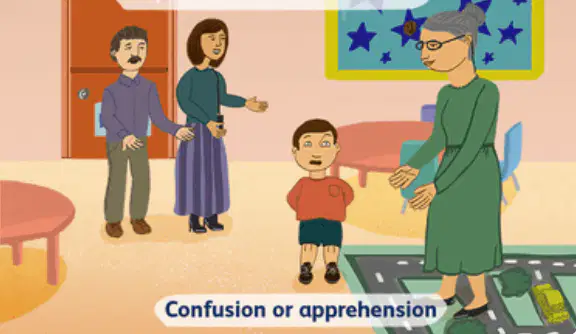
What attachment is this child showing?
Ambivalent
Avoidant
Secure
Disorganized
According to Attachment Theory, what type of attachment develops when caregivers are consistently responsive?
Disorganized
Insecure-avoidant
Secure
Anxious-resistant
Which core attitude is central to DDP?
Neutrality
Playfulness
Calmness
Indepence
In DDP, what does the acronym PACE stand for?
Play, Assert, Control, Engage
Protect, Accept, Comfort, Empathize
Playfulness, Acceptance, Curiosity, Empathy
Patience, Attention, Care, Encouragement
In DDP, what is the role of the caregiver during therapy sessions?
To stay quiet so the therapist can lead the process
To co-regulate emotions with the child and model attuned responses
To document the child’s behaviors for analysis
To challenge the child’s distorted beliefs when necessary
Which of the following reflects a decolonized application of attachment theory in clinical practice?
Promoting Western nuclear family structures
Interpreting behaviors solely through secure/insecure attachment binaries
Recognizing the role of extended kinship networks and collective caregiving in forming healthy attachments
Prioritizing individual autonomy over everything
Dr. Mullan argues that traditional psychology has been complicit in systemic oppression by pathologizing the responses of marginalized communities to historical and ongoing traumas. What questions promote a decolonized lens?
How has colonization disrupted attachment across generations?
What does secure attachment look like outside of white, nuclear family norms?
How do systemic oppression, migration, displacement, and community fragmentation shape the way we learn to trust — or not trust — connection?
All of the above
As clinicians we become attachment figures in the therapeutic space by...
Recreating dependency
Offering trust, consistency, and attuned presence
Fixing the problem

