
 Worksheets
UNIT- IV Part –A2 Symmetric networks
Total questions: 17
Worksheet time: 9mins
Utilizing the expansion theorem, which of the following is the correct symmetric function expression for: A’S0,1,4(B,C,D,E) + AS0,3,4(B’,C’,D’,E’)?
A’S0,1,4(B,C,D,E) + AS0,3,4(B’,C’,D’,E’)
A’S0,2,3(B,C,D,E) + AS0,1,4(B’,C’,D’,E’)
A’S0,3,4(B,C,D,E) + AS0,1,2(B’,C’,D’,E’)
A’S0,1,2(B,C,D,E) + AS0,2,3(B’,C’,D’,E’)
In the 'Proof: The given function is' table, what is the value of a# when A=0, B=1, C=1, D=1, E=1?
4
1
2
3
In the 'Combined as' table, what is the value of a# when A=1, B=1, C=1, D=1, E=1?
5
3
7
0
6.11: Which of the following describes a contact-network realization with the minimum number of contacts for a given function?
A realization that uses the least number of contacts to implement the function
A realization that uses the maximum number of contacts to implement the function
A realization that ignores the number of contacts used
A realization that uses random connections regardless of the function
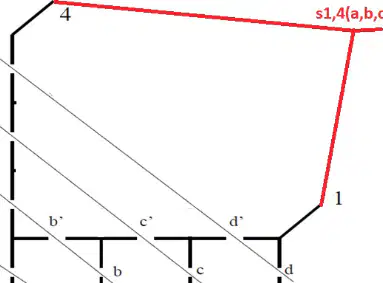
What is the value of
S_{1,4}(a,b,c,d)
S_{4,1}(a,b,c,d)
S_{2,3}(a,b,c,d)
S_{3,2}(a,b,c,d)
Let f1(x1,x2,...,xn) and f2(x1,x2,...,xn) be both symmetric functions. Which of the following functions is also necessarily symmetric?
f1 + f2
f1·f2
f1 ⊕ f2
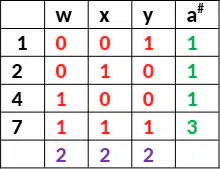
Which of the following statements is correct regarding the functions T1(w,x,y) = Σ(1,2,4,7) and T2(x,y,z) = Σ(0,3,5,6)? A. Both functions are symmetric and can be realized with only five transfer contacts for two outputs. B. Only T1 is symmetric and can be realized with five transfer contacts. C. Only T2 is symmetric and can be realized with five transfer contacts. D. Neither function is symmetric nor can be realized with five transfer contacts.
A. Both functions are symmetric and can be realized with only five transfer contacts for two outputs.
B. Only T1 is symmetric and can be realized with five transfer contacts.
C. Only T2 is symmetric and can be realized with five transfer contacts.
D. Neither function is symmetric nor can be realized with five transfer contacts.
Fill in the blank for the sum of a full adder function table: w x y | a 1 0 0 | ___
1
0
2
3
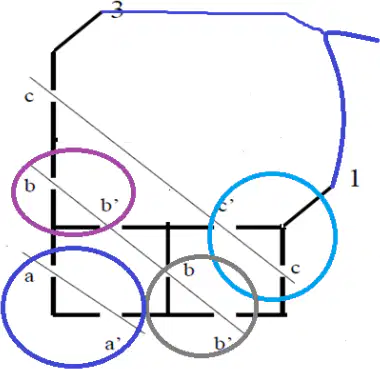
The contact network for this function requires how many Transfer contacts and how many NO contacts?
Four Transfer contacts and one NO Contact
Three Transfer contacts and two NO Contacts
Four Transfer contacts and two NO Contacts
Five Transfer contacts and one NO Contact
What is the value of a' when w=0, x=0, y=0?
0
1
2
3
The sufficient condition for the column sums to be the same and the sum to be half the number of rows is given by n! / (n-a)! a!. Which numbers meet this condition based on the explanation provided?
0 and 2
1 and 3
2 and 4
0 and 1
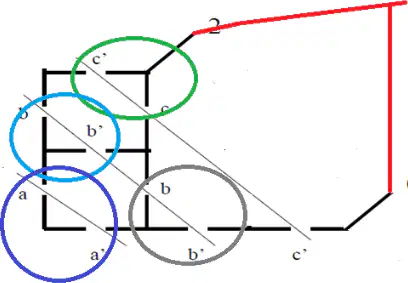
The contact network for this function requires how many Transfer contacts and how many NC contacts?
Four Transfer contacts and one NC Contact
Three Transfer contacts and two NC Contacts
Four Transfer contacts and two NC Contacts
Five Transfer contacts and one NC Contact
What are the two different numbers that appear as column sums in the first table?
5 and 7
4 and 6
6 and 8
3 and 9
The sum of the two different column sums is equal to the number of rows (number of min-terms).
True
False
What is the sufficient condition for the 'a' numbers in the table?
n! / (n-a)! a!
n! / (n+a)! a!
n! / (n-a)! (a+1)!
n! / (n+a)! (a-1)!
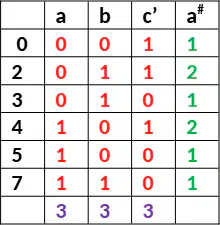
What is the column sum for the first table (a, b, c')?
3,3,3
2,4,3
4,2,3
3,2,4
According to the image, which theorem is used in the proof?
De Morgan's theorem
Shannon's expansion theorem
Boolean algebra theorem
Karnaugh map theorem

