
 Worksheets
HVACR Wrench Usage and Safety Quiz
Total questions: 30
Worksheet time: 15mins
What type of metals are many fasteners and HVACR system parts made of, and why is it important to use the proper size and type of wrench on them?
Copper and brass; to avoid deforming or destroying them.
Steel and aluminum; to prevent rusting.
Iron and zinc; to ensure proper conductivity.
Titanium and nickel; to maintain their strength.
What is the correct way to use a wrench to avoid damaging nuts or bolts?
Insert the socket halfway onto the nut or bolt.
Use a loose or worn wrench for better grip.
Ensure the wrench fits completely on the nut or bolt.
Push on the wrench rather than pulling it.
What is the safety recommendation for using a wrench to avoid injury?
Always push on the wrench rather than pulling it.
Always pull on the wrench rather than pushing it.
Use a wrench with a longer handle for better leverage.
Use a wrench with a shorter handle to avoid slipping.
According to the table in Figure 7-1, what wrench size is needed for a 1/2" bolt?
7/16"
9/16"
5/8"
3/4"
Why should you avoid pounding on a wrench to increase turning force?
It can damage the fastener, wrench handle, or wrench head.
It can loosen the bolt too quickly.
It can cause the wrench to slip off the bolt.
It can reduce the torque applied to the bolt.
What is the purpose of a service tool kit for HVACR technicians?
To carry all possible tools for every situation.
To contain only the most commonly required tools.
To store spare parts for HVACR systems.
To organize tools by size and type.
What is the primary material that wrenches should be made of?
Plastic
Good alloy steel
Aluminum
Copper
Which type of socket is best suited for a nut or bolt head that has enough room around it?
12-point socket
6-point socket
Adjustable socket
Open-end socket
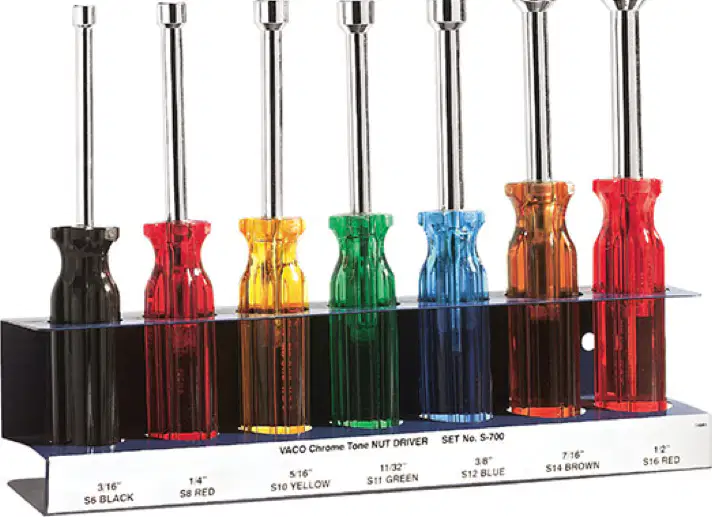
What is a nut driver primarily used for?
Cutting bolts
Driving screws
Tightening nuts and bolts
Measuring socket sizes
What is the most commonly used nut driver size?
1/4", 5/16", and 3/8"
1/2", 3/4", and 1"
6 mm, 8 mm, and 10 mm
7/16", 9/16", and 11/16"
How many contact points does a 12-point box end wrench have?
6
8
12
10
What type of wrench is recommended for use in close spaces and on unions where socket wrenches and box end wrenches cannot be used?
Open end wrench
Combination wrench
Adjustable wrench
Torque wrench
Why should open end wrenches with spread or burred jaws not be used for refrigeration work?
They are too heavy for refrigeration work.
They may damage soft brass and copper parts.
They are not strong enough to handle refrigeration bolts.
They are not designed for high-temperature environments.
What is a key characteristic of a combination wrench?
Both ends are open.
Both ends are box ends.
One end is open, and the other end is a box end of the same size.
It is adjustable to fit multiple sizes.
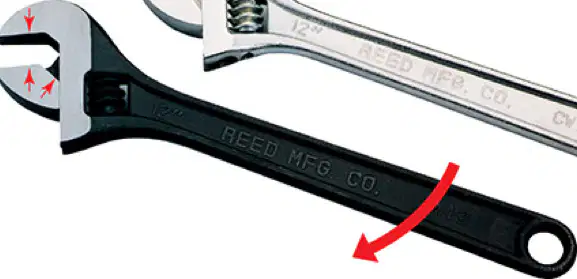
How should the handle of an adjustable wrench be pulled for effective use?
In the opposite direction of the arrow on the handle
In the direction of the arrow on the handle
Perpendicular to the wrench body
At a 45-degree angle to the wrench body
What is the primary use of a pipe wrench?
To grip pipes, studs, and other cylindrical surfaces
To tighten nuts and bolts of various sizes
To measure the diameter of pipes
To cut through cylindrical objects
Which of the following is NOT a type of pipe wrench?
Internal-type pipe wrench
Chain wrench
Strap wrench
Adjustable wrench
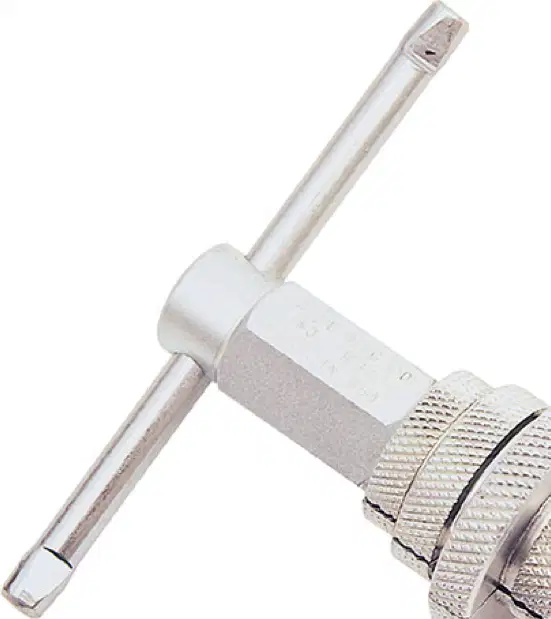
What is the function of the internal pipe wrench shown in Figure 7-11?
To grip the pipe from the outside.
To grip the pipe from the inside.
To cut the pipe into smaller sections.
To measure the diameter of the pipe.
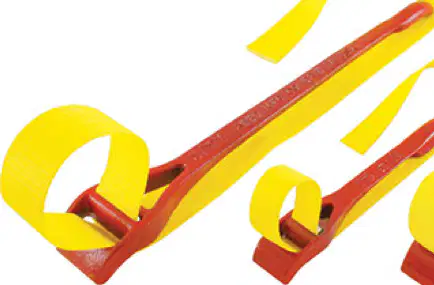
What is a unique feature of a strap wrench?
It uses a chain to grip objects.
It has a flexible strap to grip objects without damaging them.
It is specifically designed for SAE fittings.
It is used to cut through metal pipes.
What is the standard use of forged flare nut sizes?
Cutting pipes in automotive repair.
Tightening and loosening bolts in construction.
Used in automotive, marine, and refrigeration services.
Gripping and turning pipes in plumbing.
What material are hex key wrenches typically made of?
Alloy steel
Aluminum
Plastic
Brass
What feature allows a wrench with two ratcheting ends to be used as a fixed wrench?
A reversible ratchet
A locking ratcheting mechanism
A hexagonal stem
A square drive adapter
What is 'cracking' in the context of refrigeration service valves?
Breaking the valve stem for replacement
Slightly opening the valve to allow minimal refrigerant flow
Tightening the valve to prevent refrigerant leakage
Using a reversible ratchet to open the valve
Which tool is used to reverse the direction of turning without removing the wrench from the stem?
Fixed-end wrench
Reversible ratchet wrench
Hex key wrench
Torx key wrench
Which of the following is NOT a type of key wrench set shown in the image?
Hex Key Wrench Set
Torx Key Wrench Set
T-Handle Hex Key Set
Adjustable Wrench Set
Which size is NOT listed as a socket size for refrigeration valve stems?
3/16"
7/32"
1/4"
1/2"
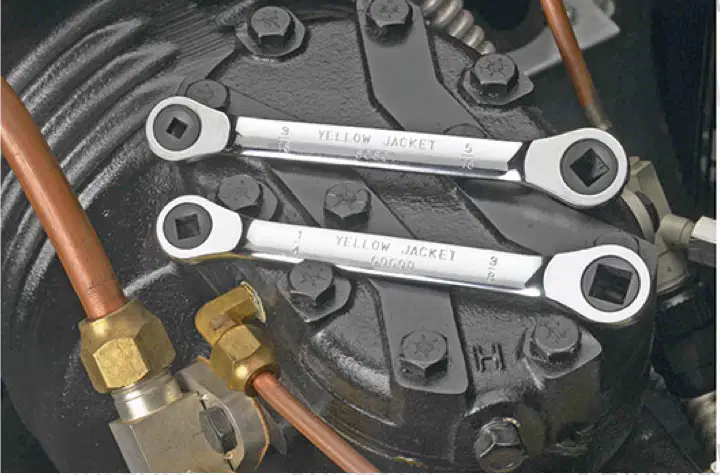
What is the purpose of a refrigeration service valve wrench?
To tighten bolts on car engines.
To accommodate various sizes used on HVACR systems.
To measure the temperature of refrigerants.
To cut copper pipes.
What is the function of a torque wrench?
To measure the temperature of a compressor.
To apply a turning force to achieve proper tightness.
To cut and shape metal parts.
To lubricate compressor parts.
What could happen if bolts, nuts, and other attachments on compressor parts are not tightened properly?
The compressor will overheat.
Warpage or other part damage may occur.
The refrigerant will leak out.
The compressor will stop functioning immediately.
What is the size of the square opening on one end of the reversible ratchet service valve wrench shown in Figure 7-16?
1/2 inch.
3/8 inch.
1/4 inch.
5/8 inch.

