
 Worksheets
Assessment: Metals, Nonmetals, Metalloids, Rare Earth Elements
Total questions: 25
Worksheet time: 15mins

The periodic table of elements shown to the side has eight elements highlighted. Which of the highlighted elements are metalloids? Select TWO correct answers.
Sodium (Na)
Boron (B)
Helium (He)
Polonium (Po)
Yttrium (Y)
Which of the following is a rare earth element?
Argon (Ar)
Gallium (Ga)
Zirconium (Zr)
Yttrium (Y)
Which of the following statements describes the physical properties of a nonmetal?
Good conductor, malleable, and ductile
Good conductor, not malleable, and not ductile
Poor conductor, not malleable, and not ductile
Good conductor, brittle, and ductile
Which of the following elements is a metal?
Carbon(C)
Iodine (I)
Zinc (Zn)
Neon(Ne)
What properties tell you that Gold (Au) is a metal?
It is a semiconductor, lustrous, and brittle.
It is a good conductor, and is malleable and ductile.
It is a poor conductor, brittle, and malleable.
It is a poor conductor, lustrous, and malleable.
Many elements are critical to the functioning of modern electronic devices because they are used as conductors in the manufacturing of computer chips and LEDs. Which types of elements are most often used for these specific purposes?
Choose 2 correct answers
Nonmetals
Metalloids
Rare Earth Elements
Compounds
Which of the following is an example of how rare earth elements are used in modern-day life?
Kitchen cabinets
LED light bulbs
Gas inside balloons
Car tires
Which of the following elements is an example of a nonmetal?
Krypton (Kr)
Lutetium (Lu)
Yttrium (Y)
Iron (Fe)
Students are designing a new product. They want it to heat up quickly and be able to bend into several different shapes. If the students want to use an element as the main component of their product, which type of element should they use?
Metalloid
Metal
Nonmetal
Rare Earth Element
Students conduct an experiment to test the properties of an element and find that it is brittle, shiny, and conducts electricity fairly well. As which type of element should the students classify the substance?
Metalloid
Nonmetal
Metal
Rare Earth Element

The table at the side describes the characteristics of three different objects.
Which type of element does Object C represent?
Rare earth element
Metalloid
Metal
Nonmetal
Which of the following elements is classified as a metalloid?
Gold (Au)
Oxygen (O)
Silicon (Si)
Helium (He)
Which property is most commonly associated with nonmetals?
High electrical conductivity
Ductility
Malleability
Brittle

Metals
Shiny Luster, Conductors, Malleable
Nonmetals
Dull Luster, Insulators, Brittle
Metalloids
Semi-Conductors, act like both metals and nonmetals
The ability of a material to allow the transfer of electricity or heat through it.
Conductivity
Malleability
Luster
Ductility
I have properties of both metals and nonmetals
Metals
Metalloids
Non Metals
Rare Earth Elements
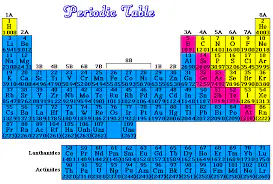
Which elements are on to the LEFT of the stair-steps?
Metals
Nonmetals
Metalloids
Periodic Table of Elements
Which elements are on the RIGHT of the stair-steps?
Metals
Nonmetals
Metalloids
Rare Earth Elements
Conductivity is the ability to
reflect light from a lustrous surface
transfer thermal and electrical energy
exist as a solid, liquid, or gas
be hammered into thin sheets
Rare Earth Element
I have properties of both metals and nonmetals
Metals
Metalloids
Non Metals
Rare Earth Elements
Rare Earth Elements are called "Rare" because it is too hard to find them.
True
False
Which physical property is most likely a Rare Earth Element?
Dull
Malleable
Brittle
Insulator
Rare Earth Elements have similar physical properties to what other kind of element?
Metals
Nonmetals
Metalloids
Compounds

