
NEW
Font size
 Worksheets
SPA Dance- MODERN DANCE
Total questions: 50
Worksheet time: 25mins
The history and development, fundamental movements, and principles of modern dance are best described by which of the following?
A break from classical ballet, emphasizing individual expression and innovative movement.
Strict adherence to classical ballet techniques and rigid forms.
Focus on traditional folk dances and cultural rituals only.
Emphasis on acrobatics and circus-style performances.
The function and value of modern dance is:
To express emotions and ideas through innovative movement and creativity.
To strictly follow classical ballet techniques and rules.
To focus only on traditional folk dances from different cultures.
To emphasize competitive sports and athleticism over artistic expression.
Exploring dance literature can help to improvise dance movements in modern dance compositions.
True
False
Sometimes
Never
Modern dance pieces can be created by utilizing which of the following local dance materials?
Myths, legends, folklores
Modern pop songs
International ballet techniques
Contemporary urban stories
The application of modern dance techniques can be evaluated through which of the following?
A performance
A written exam
A group discussion
A costume design
What is Modern Dance?
A discipline that preserves the technique of ballet and liberates itself to include total body participation and artistic expression
A form of music
A type of painting
A style of singing
Fill in the blank: Modern Dance is a development of movements that fit the ______ and intent of a dancer.
feelings
costume
stage
music
Modern Dance always uses costumes, scenery, music and footwear.
True
False
Where are the two key birth places of Modern Dance according to historians?
Asia and Africa
Europe (specifically Germany) and America
Australia and South America
India and China
Fill in the blank: The history of Modern Dance can best be explained by the important people, performances and other details that took place between the ______ in the west and the end of the 19th century.
1950s
1920s
1970s
1800s
The upper body (trunk, arms and face) in Delsarte’s theory of dance expression is responsible for:
Conveying emotional and expressive qualities in dance
Providing only physical support for movement
Maintaining balance without expressing emotion
Focusing solely on technical precision
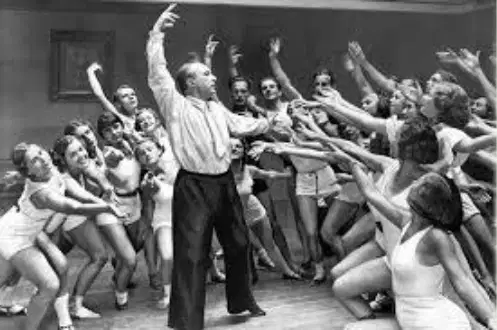
What is labanotation also known as?
Laban Kinetography
Ballet Notation
Dance Script
Rhythmography
Read the passage about Isadora Duncan. Isadora Duncan refused to follow formal dance education because of her esthetic ideas.
True
False
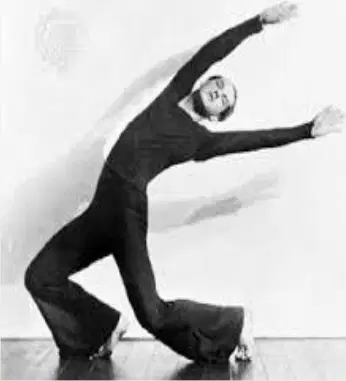
Ted Shawn sought to create an image of masculinity that is ______ and aesthetic.
muscular
fragile
timid
delicate
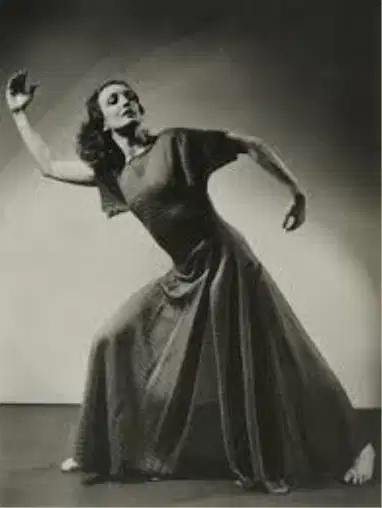
What is the name of the dance technique developed by Doris Humphrey that studies the interaction between gravity and the human body?
Fall and Recovery
Graham Technique
Contact Improvisation
Cecchetti Method
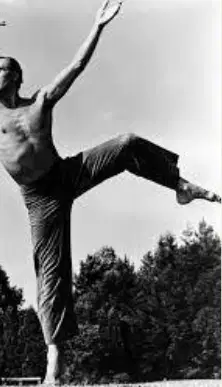
Jose Limón was given the title 'Finest Male Dancer of the Moment' by the New York Times.
True
False
Fill in the blank: Martha Graham created a vocabulary for the movement of the ______ and her work has been characterized by various aesthetical cycles.
pelvis
shoulder
foot
hand
According to Nikolaïs, what can be the 'center of movement' in dance?
Only the head
Only the feet
Any part of the body
Only the arms
Fill in the blank: Technical training in Nikolaïs's approach includes ______ and composition.
improvisation
notation
performance
lighting
According to the passage, what influenced the history of modern dance?
Various political and social movements that occurred during its time.
The invention of new musical instruments.
The popularity of classical ballet.
Advancements in stage lighting technology.
According to the passage, what do modern dancers use dance to communicate?
Their inner thoughts, feelings and intentions.
The history of classical ballet.
Famous stories from literature.
Scientific theories and facts.
According to the passage, modern dance is a unique art form that continues to evolve.
True
False
Exposure to different dance experiences helps you appreciate Modern Dance by:
broadening your understanding and appreciation of various styles.
making you dislike traditional dances.
limiting your creativity in dance.
focusing only on one dance form.
What is one way modern dance differs from classical ballet?
Modern dance often abandons the upright, erect body position of ballet in favor of purposeful falls to the floor.
Modern dance always uses pointe shoes, while ballet does not.
Modern dance strictly follows the same set of movements as ballet.
Modern dance never incorporates music, while ballet always does.
What is the main purpose of the 'Curl Down and Up' exercise in modern dance?
To improve arm strength
To increase flexibility
To be aware of the body's core support
To learn ballet positions
In the 'Curl Down and Up' movement, dancers should curl the spine over slowly, one ______ at a time.
vertebra
muscle
joint
bone

Which modern dance movement is shown in the images?
Curl Down and Up
Swings
Pirouette
Jazz Hands
Which of the following best describes a swing movement in the José Limón technique?
A) A movement that is rigid and static
B) A pendular movement with release, arching follow through, and suspension
C) A movement that does not involve breath
D) A movement that only uses the arms
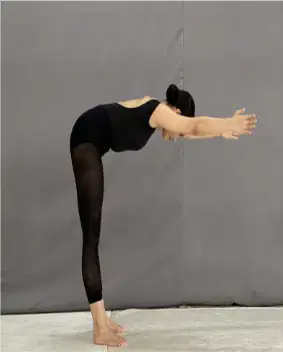
Flat-back exercises are performed to strengthen the ______ and stabilize the core.
hip
shoulder
wrist
ankle
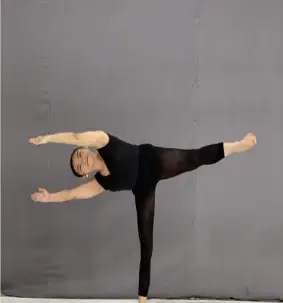
Laterals help dancers improve their ______ through shifting of weight from one side to another.
balance
speed
height
expression
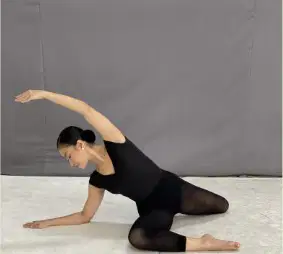
Which part of the body does the spiral torso twist begin in?
Head
Shoulders
Pelvis
Neck
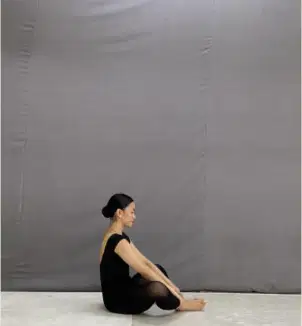
What is a Primitive Squat in ballet? Fill in the blank: A Primitive Squat is when the legs are _______, the spine is _______, the knees are entirely bent and the feet sit in a squat on the floor.
parallel; straight
turned out; curved
crossed; arched
together; twisted

Which ballet movement involves tilting the body back, holding the arms straight out, and balancing on the balls of the feet?
Primitive Squat
Hinge
Contraction and Release
Pirouette
Fill in the blank: The Graham technique's fundamental movement is a cyclic process that involves _______ and _______.
contracting; releasing
jumping; landing
twisting; turning
stretching; bending
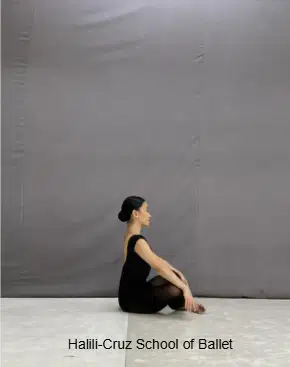
What is the name of this ballet movement?
Release
Pirouette
Arabesque
Plie
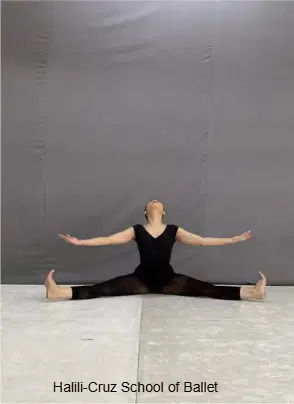
What is the name of this ballet movement?
High Release
Arabesque
Pirouette
Plie
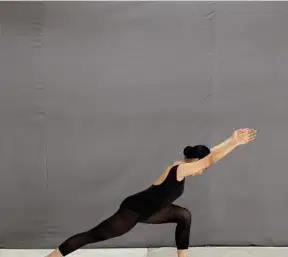
What is the name of this ballet movement?
Lunge
Pirouette
Arabesque
Plié
What is the main purpose of contractions in controlling falls in dance?
To relax the body
To keep the body's center of gravity in place
To increase speed
To create choreography
Fill in the blank: Floorwork in modern dance requires flexible joints, a relaxed body and sensitivity to the _______ input generated by the floor.
kinesthetic
auditory
visual
olfactory
Which type of floorwork involves jumping level?
Low floorwork
Middle floorwork
High or aerial floorwork
Pedestrian floorwork
Modern dance movement has no boundaries and has infinite possibilities – a general rule is that the derivative of something else is basically present in all modern dance moves. Modern dancers can find choreographic inspiration in any movement they see, whether it's classical ballet or a tree outside their window on a particular day.
True
False
According to the passage, what should dancers not be afraid to do when pursuing modern dance?
Create dance steps out of thin air
Follow only traditional dance forms
Avoid expressing emotions
Stick to strict choreography
Which of the following describes how you would use fundamental modern dance moves to represent a whale, a robot, and a doll?
By using flowing, undulating movements for a whale, sharp and mechanical movements for a robot, and stiff, jointed movements for a doll.
By using only jumping movements for all three characters.
By standing still and not moving at all for each character.
By spinning rapidly for a whale, hopping for a robot, and crawling for a doll.
A short dance sequence can be created using which of the following elements?
Formations and paths
Only music
Costumes and lighting
Props and makeup
Which of the following sequences correctly describes a way to move down and up from the floor using fundamental modern dance steps?
Start in standing, perform a lunge, lower to a seated position, roll to the floor, then reverse the steps to stand up.
Jump directly to the floor and stand up without any steps.
Spin in place and then sit down without using any dance steps.
Walk in a circle and then lie down without transitioning through dance movements.
What is modern dance?
Modern dance is a word that encompasses a wide range of dance styles and is also known as a dance genre.
Modern dance is a traditional folk dance from Europe.
Modern dance refers to a type of martial arts.
Modern dance is a style of classical ballet.
What is the main difference between modern dance and lyrical dance?
Lyrical dance is typically performed using contemporary music and is a combination of different dance genres, while modern dance has its own unique characteristics.
Modern dance is always performed barefoot, while lyrical dance requires special shoes.
Lyrical dance originated before modern dance in the early 1900s.
Modern dance focuses only on ballet techniques, while lyrical dance does not use ballet at all.
Which of the following is NOT a characteristic of modern dance?
It is based on early masters' techniques
It uses turned-out legs and pointed feet
It is a fusion of various dance styles
It focuses on ground-based movements
How does modern dance enrich a dancer’s experience?
It exposes dancers to contemporary techniques, increases enjoyment of music and movement, and enhances appreciation and comprehension of dance as an art form.
It limits dancers to traditional movements and discourages creativity.
It focuses only on physical fitness and ignores artistic expression.
It reduces the importance of music in dance and emphasizes only technical skills.
Why was the early 20th century significant for many dance artists?
It was a time when social and political conditions reflected the struggles and anxieties of the era, influencing dance.
It was a period when dance was banned in many countries.
It was the first time dance was introduced as an Olympic sport.
It was a time when only classical ballet was performed on stage.

