
 Worksheets
сбор
Total questions: 114
Worksheet time: 1hrs 2mins
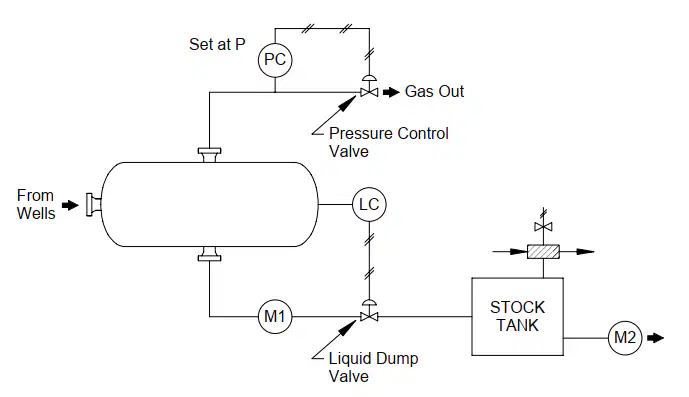
single stage separator
two stage separator
three stage separator
Initial Separation Pressure is too high
gas flashes
light hydrocarbons from liquid oil become gas
light components will stay in the
liquid
gas doesnt separate, stay dissolved in oil
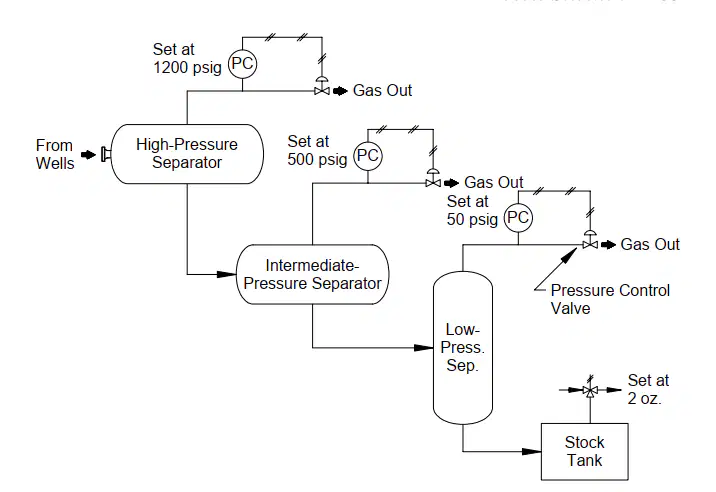
one stage separator
two stage separator
three stage separator
Discharge pressure
pressure at the outlet of a piece of equipment — such as a pump, compressor, or separator — where fluid is being discharged into the next stage of the process.
rate of pressure change over distance — how pressure drops or changes along the flow path of a fluid
pressure difference
FWKO
allow the
oil to be dumped to a treater or tank and the water to be dumped to
the water treating system
designed to separate the
free water from the oil and emulsion, as well as separate gas from liquid
compress the flash gas to sales
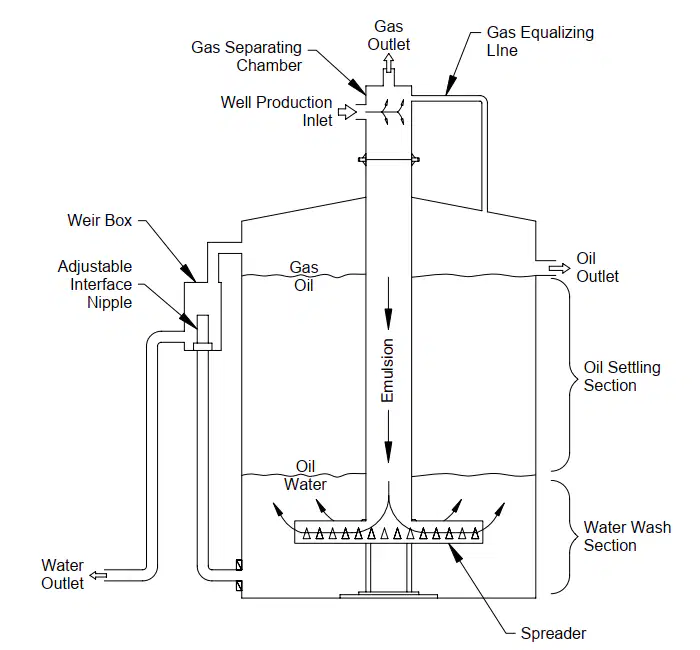
vertical FWKO
Horizontal bulk treater
Gunbarrel” with an internal “Gas Boot.
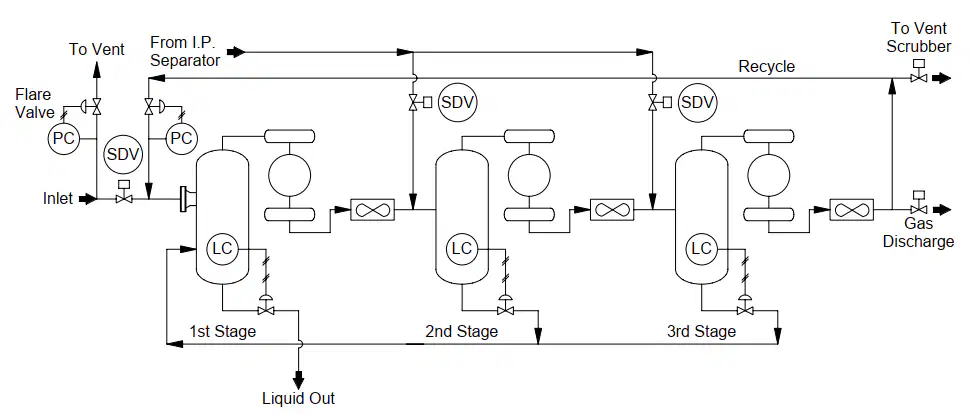
Three-stage compressor
Water treating system
Typical frame arrestor
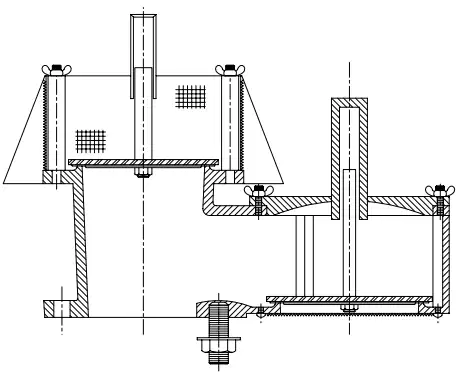
Pressure valve
Typical pressure/vacuum valve
“Gunbarrel” with an internal “Gas Boot.”
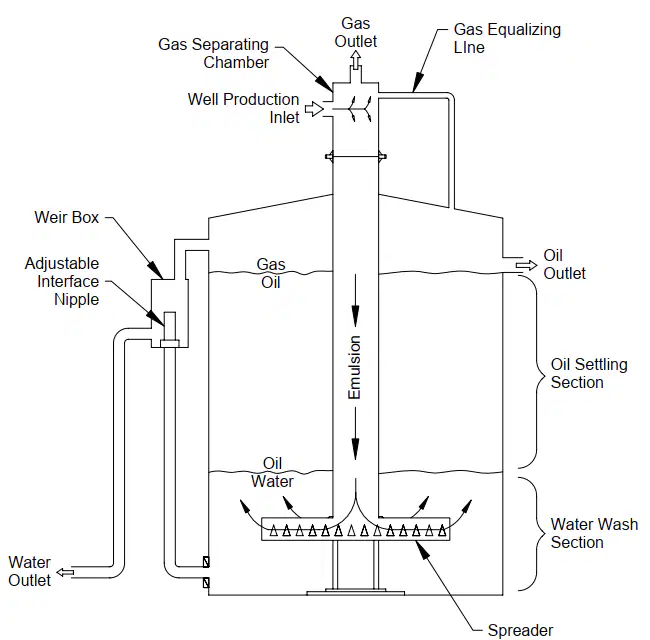
Gunbarrel” with an internal “Gas Boot
Horizontal bulk treater
typical flame arrestor
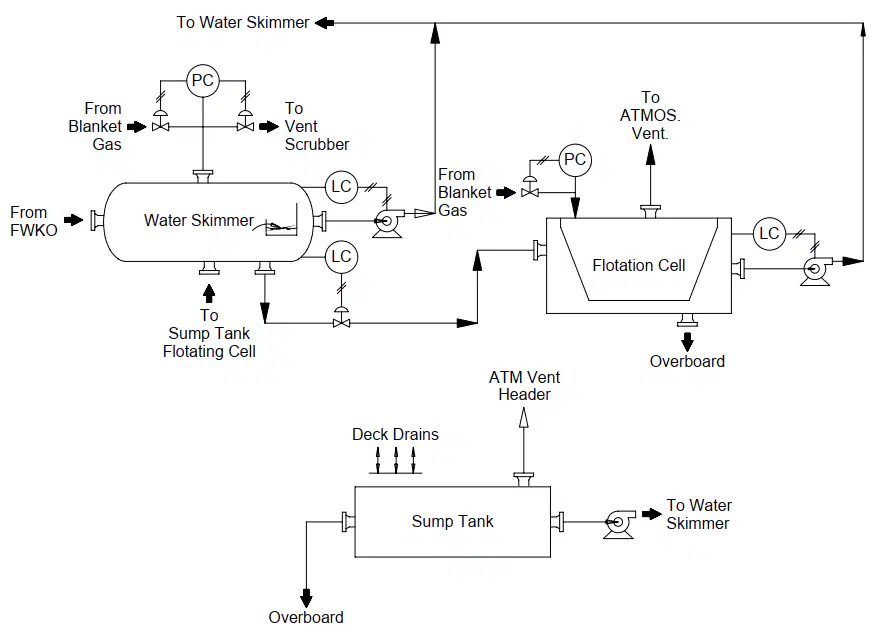
Water treating system
Three-stage compressor
Gas Dehydration
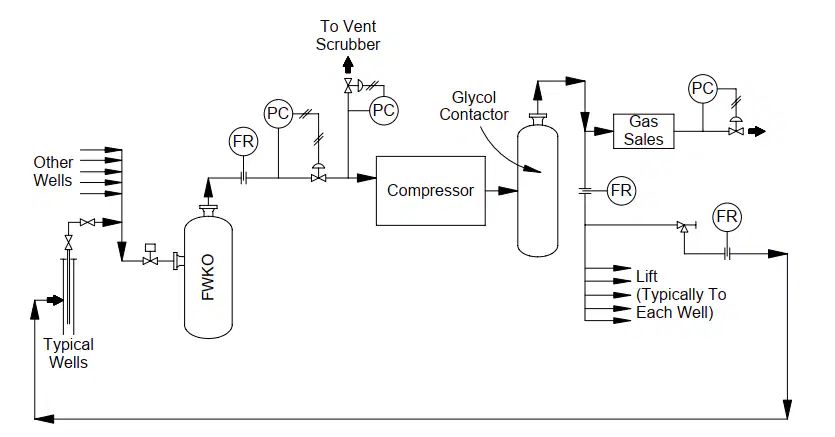
Well test system
Typical glycol reconcentrator
Gas lift system
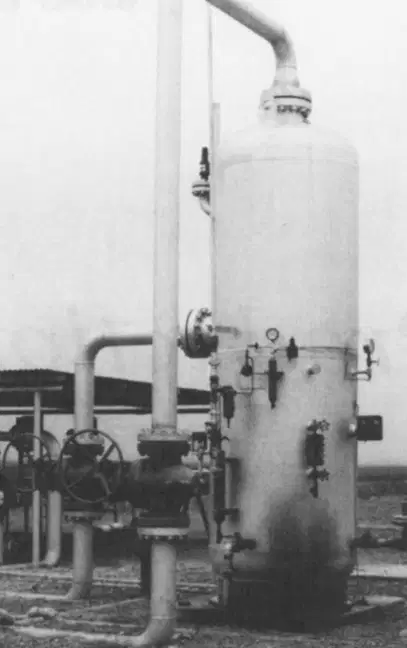
typical vertical two phase separator
typical horizontal separator on an offshore platform
Turbine-driven centrifugal compressor package
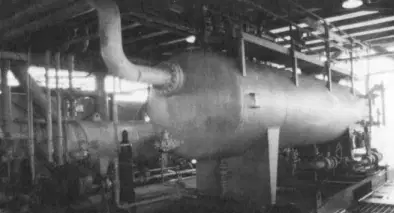
typical horizontal separator on an offshore platform showing the inlet side
two phase separator at a land location
Engine-driven
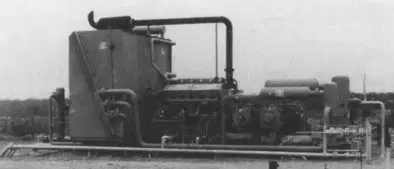
Turbine-driven centrifugal compressor package
Engine-driven reciprocating compressor package
A typical vertical two phase separator at a land location
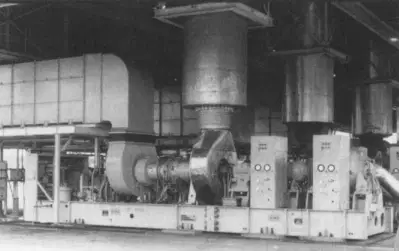
Turbine-driven centrifugal compressor package
Engine-driven reciprocating compressor package
A small glycol gas dehydration system
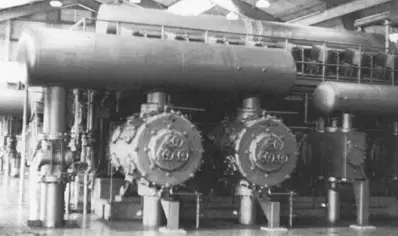
A 5500-Bhp integral reciprocating compressor
Turbine-driven centrifugal compressor package
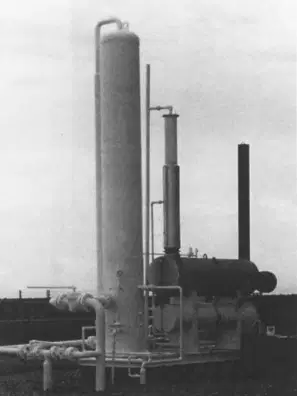
A small glycol gas dehydration system
The sixteen power cylinders
box-like cooler
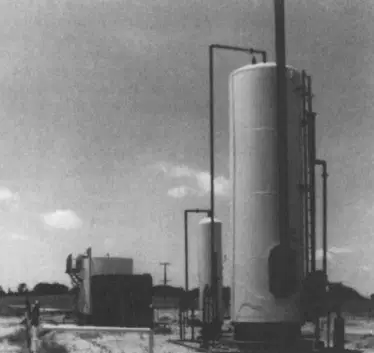
A typical vertical two phase separator at a land location
A vertical heater-treater
A horizontal heater-treater with two burners.
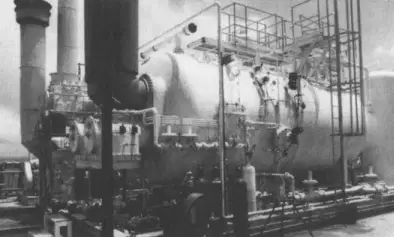
A typical horizontal separator on an offshore platform showing the inlet side
A 5500-Bhp integral reciprocating compressor.
A horizontal heater-treater with two burners
A gunbarrel tank for treating oil.
The emulsion enters the “gas boot” on top where gas is liberated and then drops into the tank through a specially designed “downcomer” and spreader system. The interface between oil and water is maintained by the external water leg attached to the right side of the tank. Gas from the tank goes through the inclined pipe to a vapor recovery compressor to be salvaged for fuel use.
unit for custody transfer of oil. In the vertical loop on left are BS&W
probe and a sampler unit. The flow comes through a strainer with a gas eliminator on top
before passing through the meter. The meter contains devices for making temperature and
gravity corrections, for driving the sampler, and for integrating the meter output with that of
a meter prover (not shown).
corrugated plate interceptor (CPI) used for treating water. Note that the top
plates are removable so that maintenance can be performed on the plates located internally
to the unit.
A horizontal skimmer vessel
for primary separation of oil from water with a
gas flotation unit for secondary treatment located in the foreground
contains devices for making temperature and
gravity corrections, for driving the sampler, and for integrating the meter output with that of
a meter prover
maintained by the
external water leg attached to the right side of the tank
two-phase separators
separate the liquid
stream into its crude oil and water components
separate gas from
the total liquid stream
gases evolve from the liquids and the well stream changes in
character
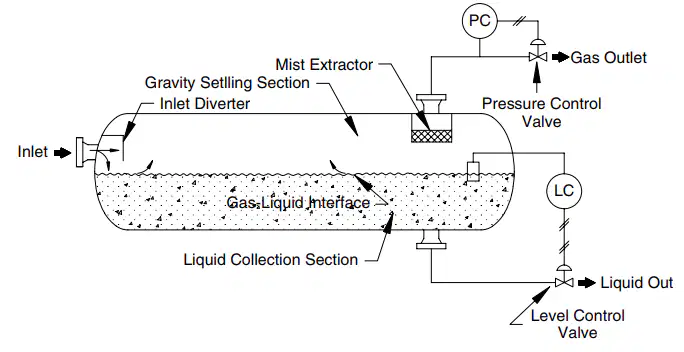
Two-Phase Oil and Gas Separation
Three-Phase Oil and Gas Separation
One-Phase Oil and Gas Separation
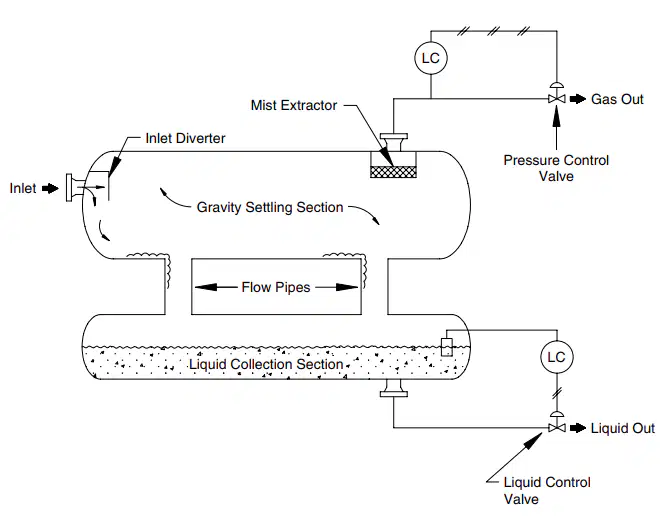
Double-barrel horizontal separator
Cylindrical cyclone separator
Spherical separator schematic
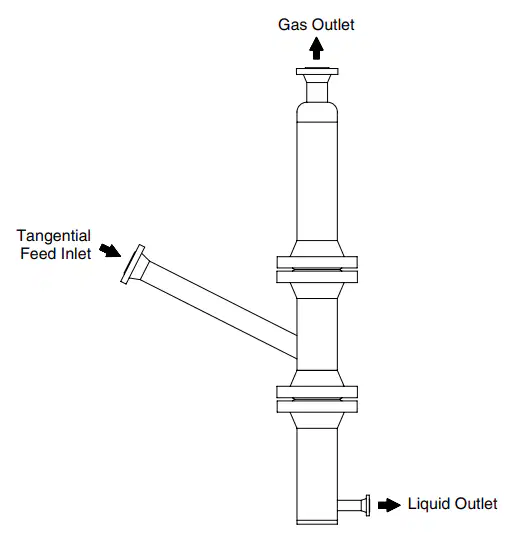
Cylindrical cyclone separator
Cylindrical cyclone separator
Cutaway view of a vertical two-phase separator
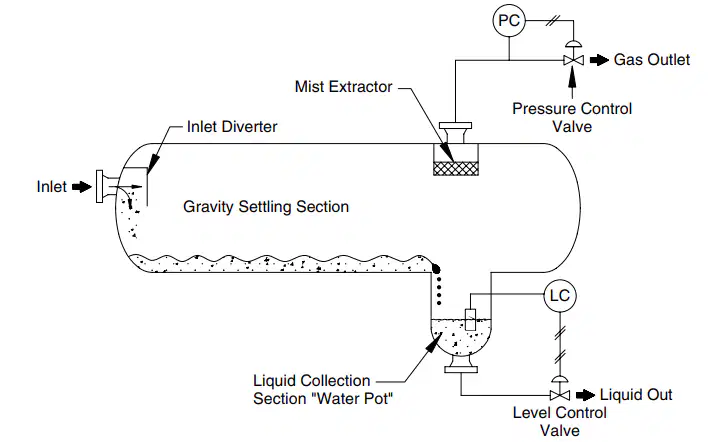
Single-barrel horizontal separator with a liquid “boot.”
Horizontal double-barrel separator fitted with a baffle-type
mist extractor in the gravity settling section.
Double-barrel horizontal separator
Scrubber
two-phase separator that is designed to recover liquids
carried over from the gas outlets of production separators or to catch
liquids condensed due to cooling or pressure drops.
special
case of a two-phase gas-liquid separator that is designed to handle large
gas capacities and liquid slugs on a regular basis.
prevents migration of fiberglass
fibers into the gas stream
Slug Catchers
special
case of a two-phase gas-liquid separator that is designed to handle large
gas capacities and liquid slugs on a regular basis
dehydration equipment that would
lose efficiency, be damaged, or be destroyed if contaminated with liquid
hydrocarbons; and upstream of a vent or flare outlet
fiberglass cylinder to the center
of the perforated metal tube
Wave Breakers
at low
velocities they will not work properly
result from surges
of liquids entering the vessel
use centrifugal force, rather than mechanical
agitation, to disengage the oil and gas
How recources separated?
Resources are separated by difference in specific gravity
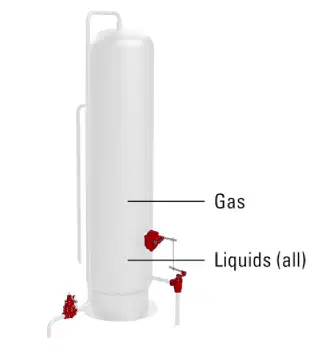
2 phase separator
3 phase separator
1 phase separator
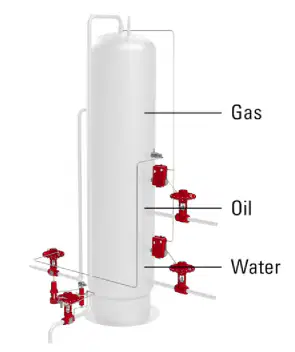
1 phase separator
2 phase separator
3 phase separator
phase equillibrium
liquids and vapors reached P and T at which they can separate
separate from the emulsion
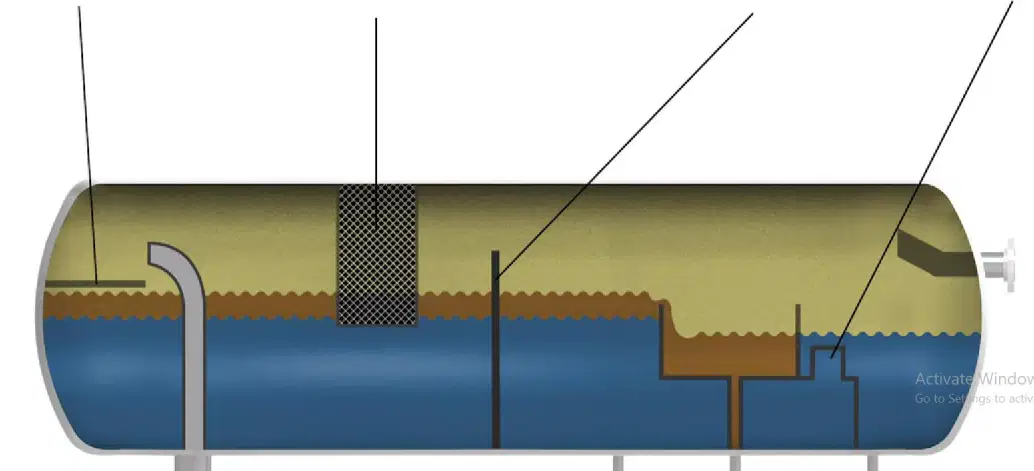
Diverter plates
Mist extraction
Wave breakers
Weirs
Wave breakers
Weirs
Diverter plates
Mist extraction
Mist extraction
Wave breakers
Weirs
Diverter plates
inlet diverter
changes the direction of flow by
absorbing the momentum of the
liquid and allowing the liquid
and gas to separate
operating and design pressures and temperatures
simply stated, phase
equilibrium is a condition
where the liquids and vapors
have reached certain pressure
and temperature conditions at
which they can separate
gravity settling section
coalescing elements that
provide a large amount of
surface area used to coalesce
and remove the small droplets
of liquid
velocity drops and small liquid
droplets that were entrained in
the gas and not separated by
the inlet diverter are separated
out by gravity and fall to the
gas-liquid interface.
liquid collection section,
located at the bottom of the
vessel, provides the required
retention time necessary for any
entrained gas in the liquid to
escape to the gravity settling
section
mist extractor
section uses
coalescing elements that
provide a large amount of
surface area used to coalesce
and remove the small droplets
of liq
small liquid
droplets that were entrained in
the gas and not separated by
the inlet diverter are separated
out by gravity and fall to the
gas-liq
provides the required
retention time necessary for any
entrained gas in the liquid to
escape to the gravity settling
section
Spherical Separators
advantages in pressure
containment, their limited liquid surge
capacity and fabrication challenges make
them difficult to size and operate
effectively.
The major benefits : no moving parts; low maintenance; compact, in terms of space
and weight; insensitive to motion; and low
cost when compared to conventional
separator technology.
improve upon single-barrel designs
by separating gas and liquid chambers,
allowing better liquid surge capacity.
Liquids drain into the lower barrel while
gas flows through the upper chamber
Centrifugal separators
advantages in pressure containment, their limited liquid surge capacity and fabrication challenges make
them difficult to size and operate
effectively.
major benefits: no moving parts; low maintenance; compact, in terms of space
and weight; insensitive to motion; and low
cost when compared to conventional
separator technology
improve upon single-barrel designs by separating gas and liquid chambers, allowing better liquid surge capacity. Liquids drain into the lower barrel while
gas flows through the upper chamber
What are the main functions of a heater treater in surface production? 3 answers
Reducing H₂S levels in gas streams
Dehydrating the crude oil
Separation of oil, gas, and water
Removal of salts from crude oil
Raising the temperature to prevent wax formation
Compare and contrast the use of vertical and horizontal two-phase separators. Which of the following are true statements?
Horizontal separators provide better performance with foaming crude.
Vertical separators handle sand and solids more effectively.
Vertical separators are more compact and cost-effective.
Vertical separators are better for high gas-liquid ratios.
Horizontal separators are suitable for facilities with limited installation height.
Vertical separator is recommended if the well stream contains sand
True
False
What is the main benefit of increasing the number of separation stages after the initial separation?
Reducing the amount of gas captured
Stabilizing more light components into the liquid phase
Increasing the temperature of the intermediate hydrocarbons
Increasing the volume of the gas phase
Decreasing the pressure of light components
Density, specific volume and compressibility factor are extensive parameters
True
False
At the inlet diverter section of the separator liquid and gas are separated due to ... /2 correct answers/
Momentum reduction
Agitation
Coalescence
Demulsification
Density difference
Which of two models used to describe reservoir fluid assume two components: stock tank oil and solution gas.
Ideal oil
Black oil
Compressible oil
Complex oil
Compositional oil
What mechanism of separation acts at the mist extractor section?
Density difference
Agitation
Heating
Coalescence
Momentum reduction
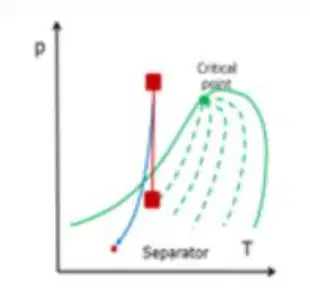
Wet gas
Black oil
Retrograde gas condensate
Volatile oil

Dry gas
Wet gas
Retrograde gas condensate
Volatile oil
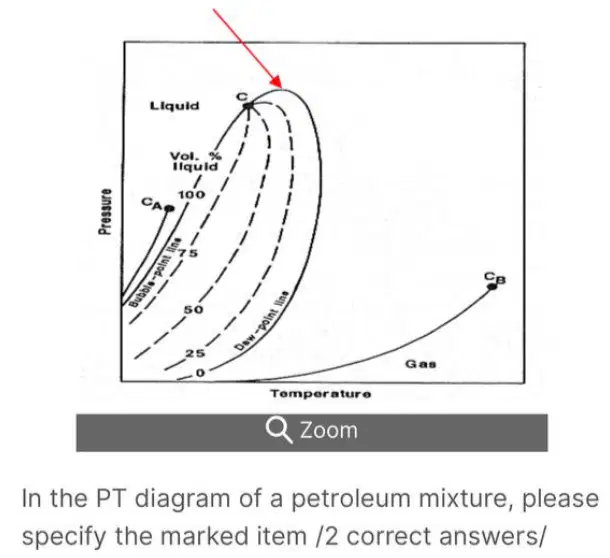
Cricodenbar
Dew point line
Cricodentherm
Bubble point line
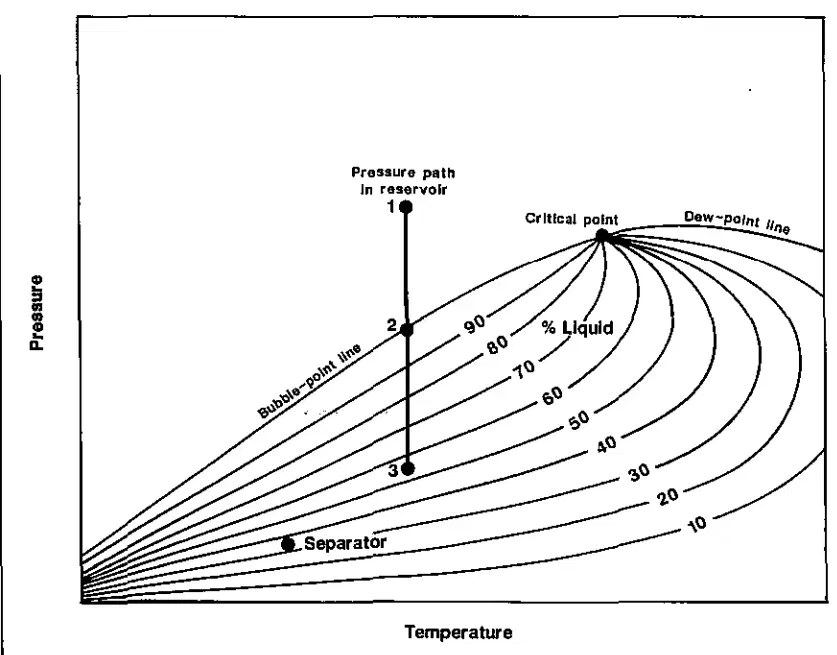
type of reservoir fluid
black oil
volatile oil
dry gas
wet gas
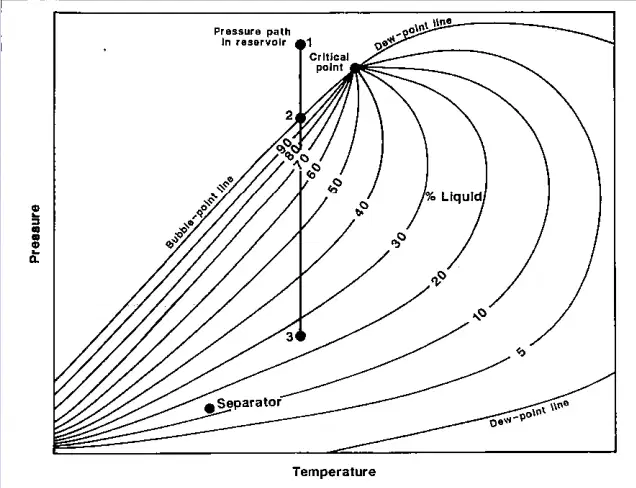
type of reservoir fluid
volatile oil
black oil
retrograde gas
wet gas
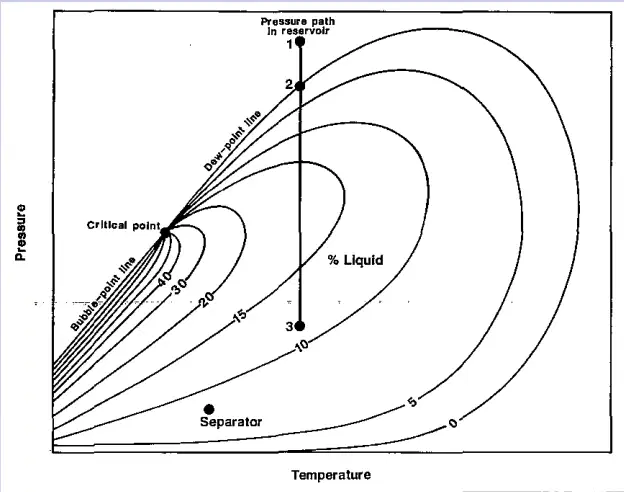
type of reservoir fluid
retrograde gas
black oil
volatile oil
wet gas
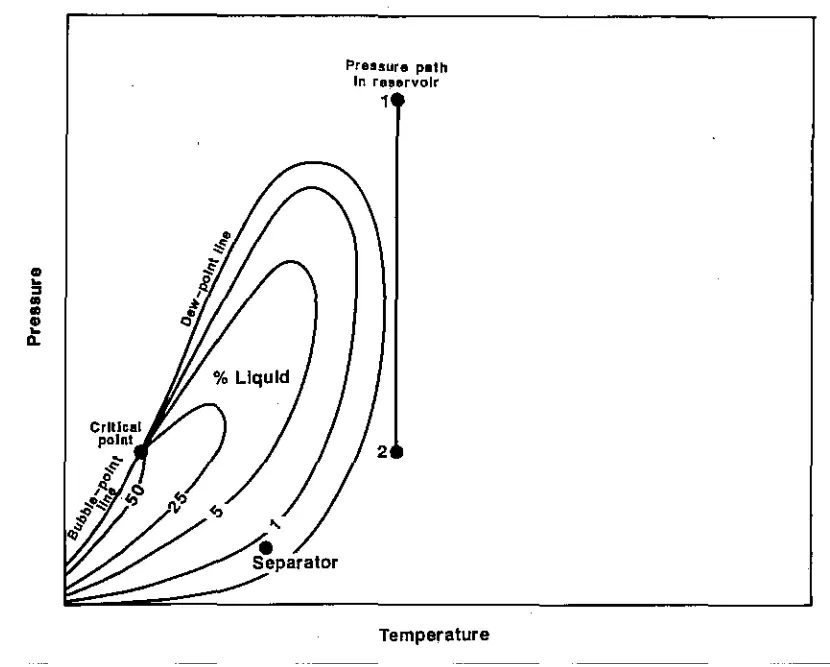
type of reservoir fluid
black oil
wet gas
dry gas
retrograde gas
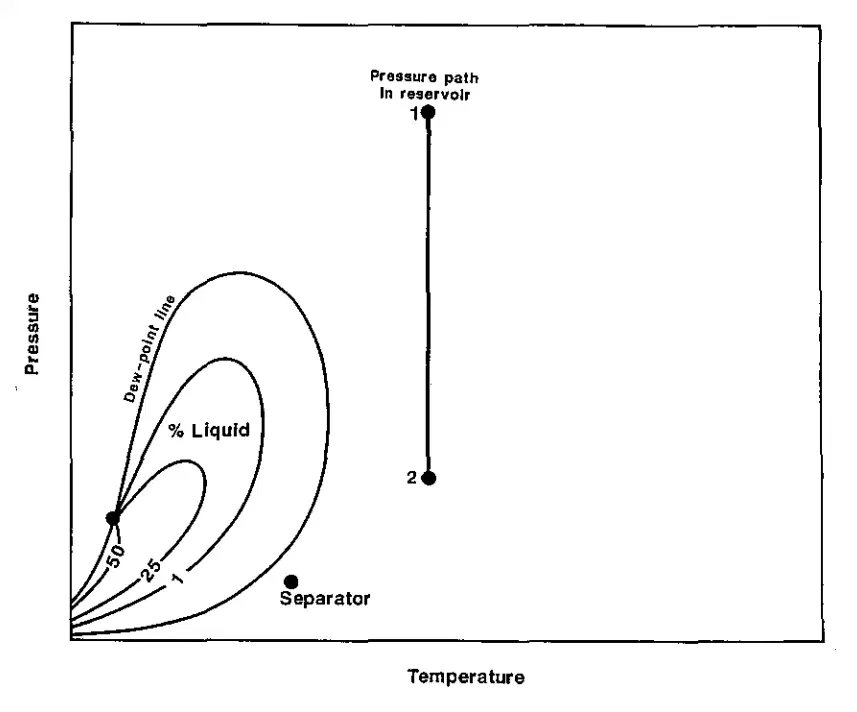
type of reservoir fluid
dry gas
wet gas
retrograde gas
volatile oil
Identification of each of the five fluid types:
GOR, gravity of the stock-tank liquid, color
heavy, nonvolatile molecules
gravity and pressure difference
final settling and water
Steps
Separation
Stabilization
Gas treatment
Oil treatment
Water treatment
Gas treatment
Oil treatment
Water treatment
Separation
Stabilization
Separation
Stabilization
Gas treatment
Water treatment
Oil treatment
Separation
Stabilization
Oil treatment
Water treatment
Gas treatment
Remove sand and solids
Corrugated Plate Interceptor (CPI)
Flotation Units
Hydrocyclones (Desanders)
LACT Unit
Removes oil by coalescing droplets
Corrugated Plate Interceptor (CPI)
Flotation Units
Hydrocyclones (Desanders)
Offshore platforms
Inject gas bubbles that lift oil to the surface
Corrugated Plate Interceptor (CPI)
Flotation Units
Hydrocyclones (Desanders)
Artificial islands
Uses floats or sensors
Pressure control
Level control
Temperature control
Instrument air systems
Engine-driven compressor that uses pistons
Reciprocating compressor
Centrifugal compressor
Sweetening equipment
Stabilizator
Turbine-driven compressor that uses spinning blades
Reciprocating compressor
Centrifugal compressor
Sweetening equipment
Heater-treater
Heated by fire tubes, separates oil (top) and water (bottom), low flow rates
Vertical heater-treater
Horizontal heater-treater
Gunbarrel Tanks
Glycol Dehydrator
LACT Unit
Low Absorbing Crevice Tube
Lease Automatic Custody Transfer
Low Affected Cooling Tube
Onshore facilities
separators, heater-treaters, tank
insulated vessels or enclosed buildings
movable facilities
facilities on barges
Marsh/shallow areas
insulated vessels or enclosed buildings
facilities on barges
integrated systems for oil, gas, and water
custom designs for special conditions
Artificial islands
custom designs for special conditions
insulated vessels or enclosed buildings
): integrated systems for oil, gas, and water
movable facilities
Which sector in the oil and gas supply chain is primarily responsible for transforming crude oil into usable products like gasoline and diesel?
Upstream
Midstream
Downstream
Exploration
Which of the following activities is part of the midstream sector in the oil and gas supply chain?
Drilling wells
Transporting crude oil and natural gas
Refining petroleum products
Marketing gasoline to consumers
Double-barrel horizontal separators can handle high gas flow rates, but not large liquid slugs
True
False
What are the two main gas liberation mechanisms in reservoir fluids? /2 correct answers/
Hyrdaulic liberation
Compressional liberation
Thermal liberation
Flash liberation
Differential liberation
At the mist extractor section of the separator following separation mechanism is activated
Heating
Agitation
Demulsification
Coalescense
Momentum reduction
What are the main functions of LACT unit in surface production? /2 correct answers/
Measuring and sampling of crude to meet standards
Separation of oil gas and water
Monitor BS and W
Dehydrating the crudde oil
Rdeucing H2S in gas streams
In what conditions would a vertical separator be preferred over a horizontal separator? /3 correct answers/
Low gas-liquid ratio
Low cost is a priority
High gas oil ratio
High sand and sediment content
When space is limited
Which of the following statements correctly describe oil behavior above the bubble point?
Gas remains dissolved in oil
Oil remains in single phase
Oil shrinks as gas comes out of solution
Oil is undersaturated
Oil slightly expands as pressure drops
What are the disadvantages of using spherical separators in oil field facilities? 3 correct answers/
Too large for most applications
Expensive to fabricate
Difficult to size and operate
Poor liquid-surge capacity
What mechanisms of separation act at the liquid collection section? / 2 correct answers/
Density difference
Agitation
Coalescense
Momentum reduction
Retention time
_ properties are independent of the quantity of the material present . Density, specific volume, and compressibility factor are examples.
Intensive
Extensive
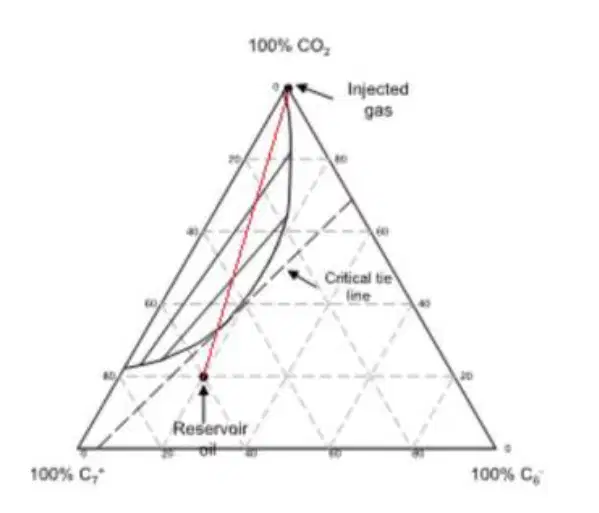
Determine the type of displacement considering the composition of injected gas and reservoir fluid on the terniary diagram provided
Immiscible
Miscible - Oil stripping
Miscible - Oil swelling
Miscible
Which operational issues aree associated with the mist extractor in 2 phase separators? 3 correct answers
Gas leakage
Temperature control failure
Ineffective droplet capture at high flow rates
Corrosion from acidic components
Blockages due to solid components
Give the definition for dew point pressure
pressure when small liquid drop on euillibrium with gas
formation pressure before oil development
rock pressure
normal pressure
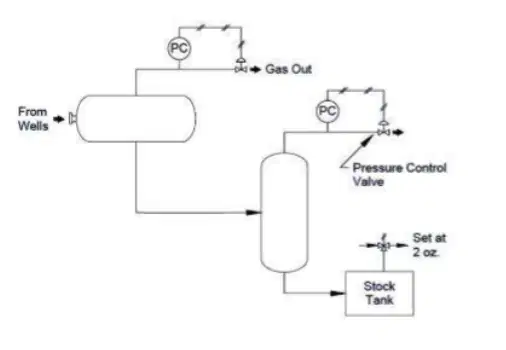
2 stage 3 phase
1 stage 3 phase
1 stage 3 phase
2 stage 2 phase
Choose the correct definition to triple point
The point at which all extensive properties of the gas and liquid are equal
The point at which all intensive properties of the gas and liquid are equal
The point at which solid, liquid and vapour co-exist under equilibrium conditions
The point at which solid exists from the area where liquid exists
The point at which solid exists from the area where vapour exists
For a pure substance, the pressure at the bubble point and dew point is equal to the vapor pressure of the substance at the temperature of interest.
True
False
The quanity of gas dissolved in an oil at reservoir conditions is called solution gas-oil ratio. Solution gas-oil ratio is the amount of gas that evolves from the oil as the oil is transported from the reservoir to surface conditions.
True
False
The two-component mixture has a broad region in which two phases coexist and this region is called
Saturation envelope
Phase envelope
Two phase envelope
All of above

Pressure / Concentratiom
Pressure/ Temperature
Temperature / Pressure
The term phase defines any homogeneous and physically distinct part of a system which is separated from other parts of the system by definite bounding surfaces
True
False



A black oil is said to be undersaturated when a slight decrease in pressure will allow release of some gas.
True
False
A sample of the reservoir liquid is placed in a laboratory cell. Pressure is adjusted to a value equal to or greater than initial reservoir pressure. Temperature is set at reservoir temperature. Pressure is reduced by increasing the volume in increments.
Separator test
Flash Vaporization
Differential Vaporization
This point represents the pressure and temperature at which solid, liquid, and gas coexist under
equilibrium conditions.
Triple point
Critical point
Melting point
The reduction in reservoir pressure below bubble- point pressure results in the evolution of gas in the pore spaces of the reservoir.
True
False
The volume of oil that enters the stock tank at the surface is more than the volume of oil which flows into the wellbore from the reservoir.
True
False
The pressure in a black oil reservoir at discovery will be either higher than the bubble-point pressure of the oil or equal to the bubble-point pressure. Discovery pressure is also known as initial reservoir pressure.
True
False

True
False





Dehydrating the crude oil

True
False
In the PT diagram of a petroleum mixture, specify the marked item 2 correct answers
Cricondenbar
Dew point line
Cricondentherm
Bubble point line
Unit of FVF of dry gas?
rcf/STB
scf/STB
rcf/scf
scf/rcf
Initial separation
Stabilizing more light components into the liquid phase
Decreasing the pressure of light components
Reducting the amount of gas captured
Increasing the volume of the gas phase
In inlet diverter liquid and gas separated due to
Agitation
Momentum reduction
Density difference
Coalescense
Heating
Vertical separator better for sand
True
False
Advantages of horizontal separators 3 correct answers
Better liquid settling
Higher gas handling capacity
Better for high solid content fluids
Easier to transport
More efficient in limited space
control liquid levels in 2 phase separator
liquid dump valve
float mechanism
control panel system
level gauge
pressure relief valve
Sublimation line
point at which solid exists from the area where vapour exists
point at which all intensive properties of the gas and liquid are equal
point at which all extensive properties of the gas and liquid are equal
point at which solid exists from the area there liquid exists
critical point
intensive properties are equal
extensive properties are equal
equllibrium conditions
horizontal separator-> failing in handling large liquid surges effectively, what design changes solve the problem?
switching to double-barrel configuration
using a vertical separator to handle surge volume more efficiently
increasing the length of the separator
installing additional sand jets to remove accumulated solids
advantages of horixontal over vertical separator
better liquid settling
higher gas handling capacity
easier to transport
more efficient in limited space
better for high solid content fluid
when the P of a black oil reservoir drops below bubble point -> ?
GOR increase
oil viscosity increase
oil FVF decrease
API decrease
GOR decrease
phase diagram
pressure x temperature
pressure x volume
pressure x saturation
pressure x production
phase diagram is graph of pressure plotted agains concentration showing the consitions under which the various phases will be present
true
false
"saturated" used to mean "critical point"
true
false

