wayground logo

Free Printable Worksheets

NEW

Font size

S
M
L
XL
Worksheets

SCIENCE TRAINING - ECOLOGY

Total questions: 50

Worksheet time: 34mins
Name
Class
Date
1.
Temperature, light, air, water, and soil are all  _____  parts of the environment
a)
alive
b)
biotic 
c)
abiotic
d)
living
2.
A living or once-living organisms in an ecosystem is a
a)
population
b)
biotic factor
c)
abiotic factor
d)
community
3.
Which of the following is not an abiotic factor?
a)
sun
b)
temperature
c)
soil
d)
grass
4.
A nonliving element in an ecosystem is an 
a)
animal
b)
abiotic factor
c)
biotic factor
d)
organism
5.
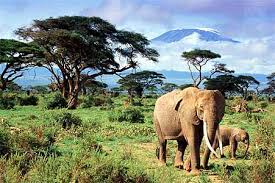
What are the biotic factors in this image?
a)
sunlight, elephants, and grasses
b)
sunlight, water,  and air
c)
elephants, plants, trees 
6.
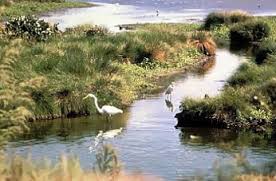
What are the abiotic factors in this image? 
a)
water, sunlight, dirt, air
b)
birds and plants
c)
water, plants, and birds 
7.
All energy transformations in an ecosystem begin with
a)
a scavenger
b)
the sun
c)
a decomposer
d)
a herbivore
8.
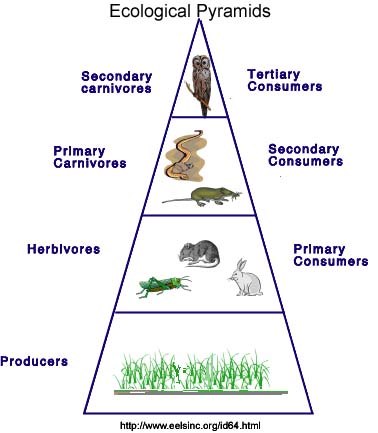
A diagram that shows the amount of energy that moves from one feeding level to another is termed..
a)
energy pyramid
b)
adaptation
c)
autotroph
d)
food web
9.
a system of food chains that shows the transfer of energy  is termed
a)
food web
b)
food chain
c)
prey
d)
predator
10.
an organism that can produce its own food through photosynthesis
a)
consumer
b)
heterotroph
c)
autotroph
d)
herbivore
11.
The direction of the flow of energy in a food web is represented by ___.
a)
Light bulbs
b)
Dotted Lines
c)
Arrows
d)
Bubbles
12.
What does every food chain start with?
a)
producers
b)
sun
c)
consumer
d)
decomposers
13.
Consumer that eats plants
a)
heterotroph
b)
herbivore
c)
producer
d)
community
14.
Energy increases as you move up the food pyramid (from bottom to top).
a)
True 
b)
False
15.
Which of the following is NOT a consumer
a)
grass
b)
dog
c)
shark
d)
fish
16.
A connection of food chains with many food energy paths in an ecosystem is a ____________
a)
ecosystem
b)
food web
c)
environment
17.
What is a producer?
a)
an organism that gets energy from eating other organisms
b)
an organisms that uses sunlight to make its own food
c)
an organism that gets energy from eating dead organisms, non-living material or waste
18.
An organism that gets energy from eating other organisms is a ______________
a)
producer
b)
consumer
c)
decomposer
19.
What is a carnivore?
a)
an animal that gets energy by eating other animals
b)
An animal that gets energy by eating only plants
c)
an animal that gets energy by eating both plants and animals
20.
An animal that gets energy from eating both plants and animals is a 
a)
herbivore
b)
carnivore
c)
omnivore
21.
Which of the following is a living part of the ecosystem?
a)
Air
b)
Sunlight
c)
Mushroom
d)
Soil
22.
An organism that uses sunlight to create its own food is known as a:
a)
Producer
b)
Heterotroph
c)
Consumer
d)
Decomposer
23.
The arrows in a food chain or web represents what?
a)
They point to the organism that is being eaten.
b)
It shows how sunlight flows within an ecosystem.
c)
They show what direction the energy is flowing between organisms. 
d)
They represent how water is transferred within a habitat.
24.
The largest group of organisms found in a food web would be:
a)
Primary Consumers
b)
Producers
c)
Decomposers
d)
Tertiary Consumers
25.

Organisms that can make their own food are called

a)

consumers

b)

heterotrophs

c)

detrivores

d)

autotrophs

26.

Which of these is NOT needed to do photosynthesis?

a)

oxygen

b)

carbon dioxide

c)

sunlight

d)

water

27.

Which of these is the correct formula for sugar (glucose)?

a)

CO2

b)

C6H12O6

c)

CHO2

d)

H12O6C12

28.

Which of these kingdoms of organisms NEVER does photosynthesis?

a)

Fungus

b)

Monera

c)

Plant

d)

Protist

29.

What is the lowest level of environmental organization to which three frogs of the same species would all belong?

a)

community

b)

ecosystem

c)

population

d)

niche

30.

Which of the following usually results when members of the same species require the same food and space?

a)

competition

b)

homeostasis

c)

succession

d)

symbiosis

31.

What is an organism’s niche?

a)

where an organism lives

b)

how an organism reproduces

c)

a disease caused by a parasite

d)

the role it plays in the community

32.

A remora attaches itself to a shark with an adapted fin. The remora eats food that the shark finds but would leave uneaten. The remora and shark show what type of relationship?

a)

commensalism

b)

competition

c)

mutualism

d)

parasitism

e)

predation

33.

A plover is a bird that crawls into a crocodile’s mouth. It cleans and eats the food left on the crocodile’s teeth. The crocodile gets its teeth cleaned and the plover gets food. What is this an example of?

a)

commensalism

b)

competition

c)

mutualism

d)

parasitism

e)

predation

34.

An octopus hunts and eats a hermit crab. What is represented in these actions?

a)

commensalism

b)

competition

c)

mutualism

d)

parasitism

e)

predation

35.

Lichens consist of fungi and algae. The algae makes food for both organisms while the fungi take in the water needed to produce food. Both organisms benefit from the relationship. What type of interaction is represented?

a)

commensalism

b)

competition

c)

mutualism

d)

parasitism

e)

predation

36.

Any area which an organism lives is part of the __________.

a)

abiotic area

b)

biosphere

c)

biotic factors

d)

biome

37.

Which organisms are not shown in this diagram but are essential to a balanced ecosystem?

a)

heterotrophs

b)

autotrophs

c)

producers

d)

decomposers

38.

Which sequence shows increasing complexity of levels of ecological organization?

a)

biosphere, ecosystem, population, community,

b)

population, biosphere, community, ecosystem

c)

population, community, ecosystem, biosphere

d)

ecosystem, population, biosphere, community

39.
Another name for a consumer is a
a)
heterotroph
b)
autotroph
c)
producer
d)
plant
40.
An Insect known as an aphid can be found on many types of plants in Texas.  These plants include flowers, vegetables, shrubs, bushes, and trees.  Aphids eat the sap from the plants on which they live.  Plants need this sap for nourishment.  What type of relationship exists between the aphids and plants in an ecosystem?
a)
Producer/Consumer
b)
Prey/Predator
c)
Consumer/Decomposer
d)
Parasite/Host
41.
A constant input of energy from the Sun is necessary to maintain any ecosystem.  What contributes to the sustainability of an ecosystem?
a)
Small population sizes
b)
Lack of adaptations
c)
Biodiversity
d)
Unstable environment
42.
Which human activity has had a negative impact on ocean systems?
a)
Monitoring
b)
Over-fishing
c)
Creation of artificial reefs
d)
Reduction in coastal developments
43.
Which process is responsible for carrying fertilizers that have been applied to crops into bodies of water, such as a river?
a)
Runoff
b)
Evaporation
c)
Ocean Currents
d)
Tectonic Plate movement
44.
Which of these correctly describes a relationship between organisms in the soil food web?
a)
Protozoa get nutrients from small arthropods
b)
Mammals are predators of birds
c)
Nematodes prey on arthropods
d)
Bacteria get nutrients from organic matter
45.

Mutualism is a symbiotic relationship where organisms........

a)

benefit from each other

b)

harm each other for food

c)

eat only other carnivores

d)

use photosynthesis as a way of creating energy

46.

What is the definition of commensalism?

a)

A relationship where both organisms benefit from each other.

b)

A relationship where one organism benefits and the other is harmed

c)

A relationship where one organism benefits and the other is not affected.

d)

A relationship where both organisms are harmed.

47.
Which of the following encompasses all the others?
a)
ecosystem
b)
community
c)
population
d)
organism
48.
The arrows in a food chain or web represents what?
a)
They point to the organism that is being eaten.
b)
It shows how sunlight flows within an ecosystem.
c)
They show what direction the energy is flowing between organisms. 
d)
They represent how water is transferred within a habitat.
49.

The most important organisms in the nitrogen cycle are:

a)

bacteria

b)

humans

c)

trees

d)

legumes

e)

consumers

50.

Mushrooms and other fungi are responsible for breaking down dead organic matter. In the ecosystem, they are called

a)

abiotic

b)

decomposers

c)

producers

d)

consumers