
 Worksheets
Key Vocabulary and Events of the Revolutionary War
Total questions: 121
Worksheet time: 1hrs 1mins

What does the term "revolution" refer to in the context of the key vocabulary?
Freedom from oppression
Major societal or government change
Opposing authority
Colonial army
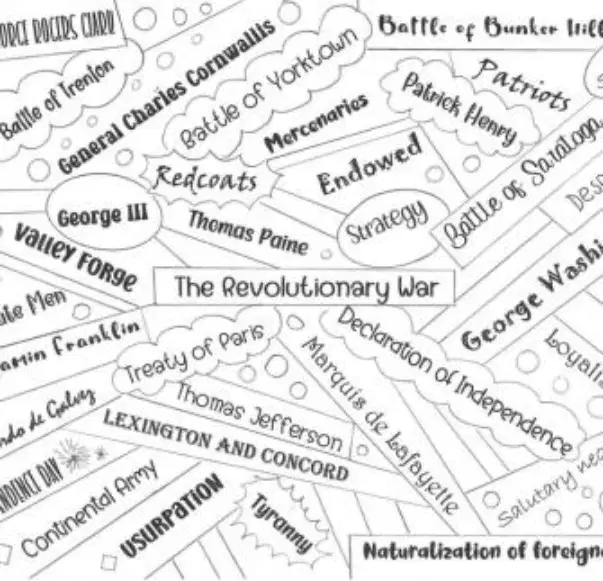
Which term describes freedom from oppression?
Liberty
Resistance
Independence
Salutary Neglect
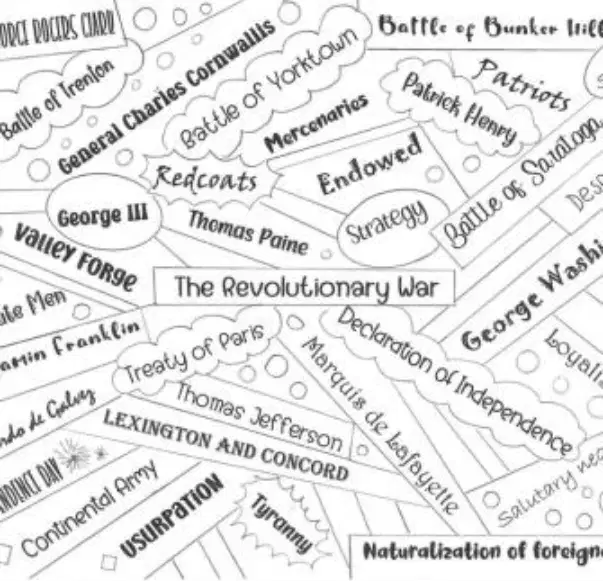
What was the significance of Lexington and Concord in 1775?
Final major battle
First battles of the Revolutionary War
Colonial leaders' meetings
Tax protest
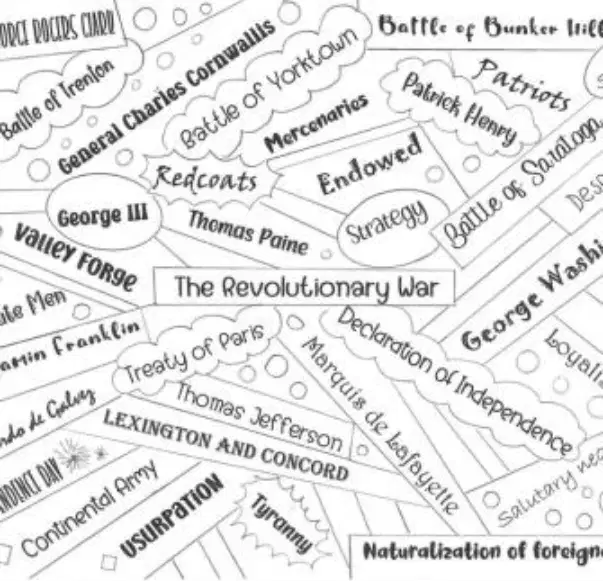
Who was the leader of the Continental Army and the first president of the United States?
Marquis de Lafayette
Benedict Arnold
George Washington
Thomas Jefferson
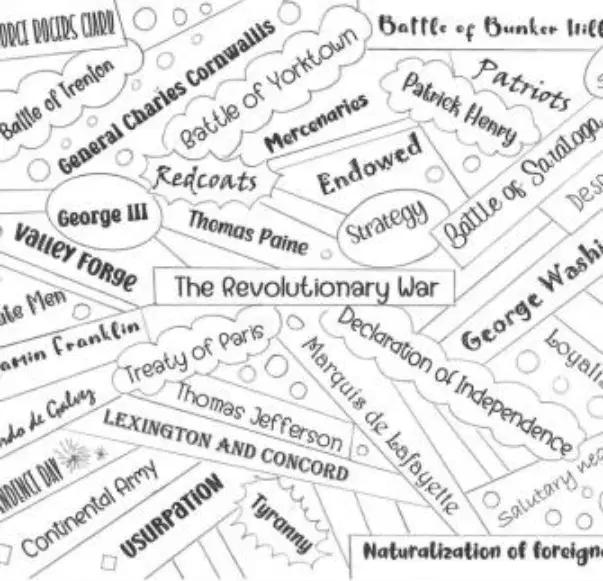
What was the purpose of the Stamp Act of 1765?
Tax on tea sales
Tax on printed materials
Law for governing new territories
Declaration of freedom
What event in 1773 protested British control over the sale of tea?
Stamp Act
Boston Tea Party
Yorktown
Salutary Neglect
What was the Declaration of Independence in 1776?
Meetings of colonial leaders
A law for governing new territories
A declaration of freedom
A protest against taxes

Who provided French aid for independence during the Revolutionary War?
Benedict Arnold
Marquis de Lafayette
George Washington
Thomas Paine
What was the Continental Congress?
Meetings of colonial leaders
Final major battle
Tax on printed materials
Law for governing new territories
What does "Salutary Neglect" refer to in British colonial policy?
Tax on tea sales
Britain's colonial self-governance policy
Law for governing new territories
Declaration of freedom
What is the timeline covered in the lesson on the American Revolution?
1600-1700
1754-1783
1800-1850
1700-1750
Which of the following is NOT one of the big ideas covered in the lesson?
Causes of unrest
Colonial resistance
War for independence
Industrial Revolution
Which event marked the beginning of the timeline of the American Revolution?
Boston Tea Party
French and Indian War
Stamp Act
Lexington and Concord
Which act was passed in 1765 during the American Revolution?
Sugar Act
Stamp Act
Declaratory Act
Tea Act
Which event occurred in 1773 as part of the road to the American Revolution?
Boston Massacre
Boston Tea Party
First Continental Congress
Lexington and Concord
What is the timeline covered in the lesson on the American Revolution?
1600-1650
1754-1783
1800-1850
1900-1950
Which of the following is NOT one of the big ideas covered in the lesson?
Causes of unrest
Colonial resistance
Industrial Revolution
War for independence
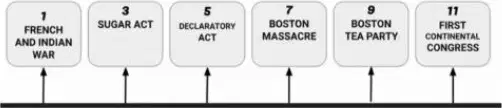
Which event marked the beginning of the timeline for the American Revolution?
Boston Tea Party
French and Indian War
Stamp Act
Lexington and Concord
Which act is associated with the year 1765 in the timeline?
Sugar Act
Stamp Act
Tea Act
Declaratory Act
What was the last event mentioned in the timeline leading up to the American Revolution?
Boston Massacre
Lexington and Concord
Tea Act
Intolerable Acts
What is the purpose of the 'Quick Check' section in the lesson?
To provide definitions of key terms
To ask students what they already know and want to learn about the American Revolution
To summarize the timeline of events
To explain how to edit the slide
What was the main reason Britain imposed new taxes on the colonies after the French and Indian War?
To fund new settlements in North America.
To pay for the war, which left Britain in debt.
To punish the colonies for supporting France.
To encourage trade between Britain and the colonies.
Who fought over territory in North America during the French and Indian War?
Britain and Spain.
France and Spain.
Britain and France.
The colonies and Native Americans.
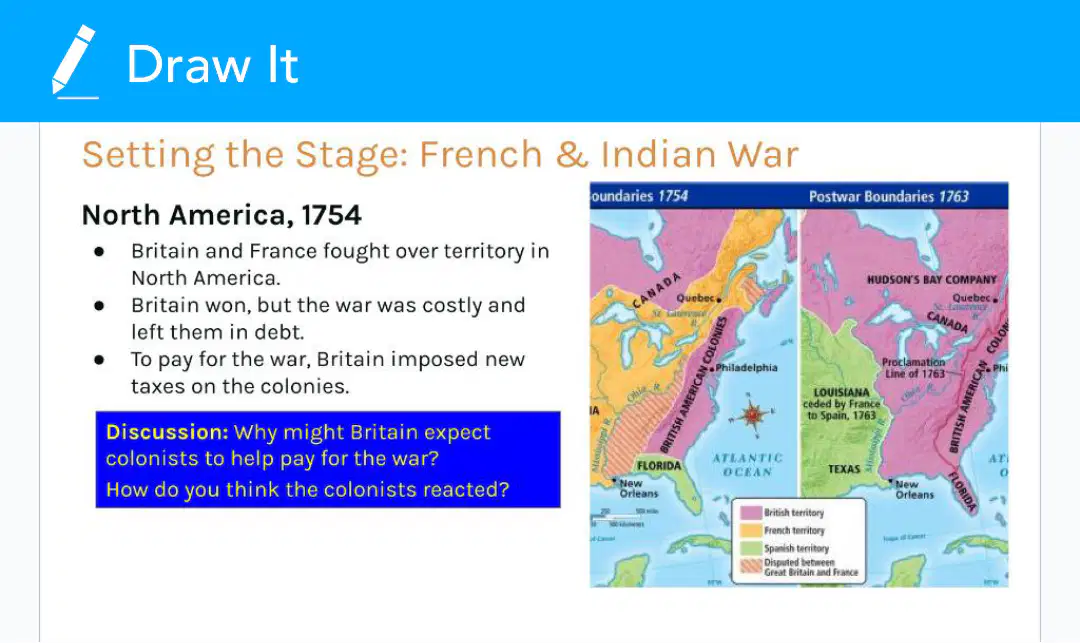
Which year marks the beginning of the French and Indian War?
1754
1763
1776
1781
What was the status of the colonies before 1763?
The colonies were under strict British control.
The colonies were self-governed.
The colonies were ruled by France.
The colonies were ruled by Spain.
What major change occurred in the colonies after 1763?
The colonies gained independence.
Britain imposed control through laws like the Sugar, Stamp, and Townshend Acts.
The colonies were given more freedom.
The colonies were ruled by France.
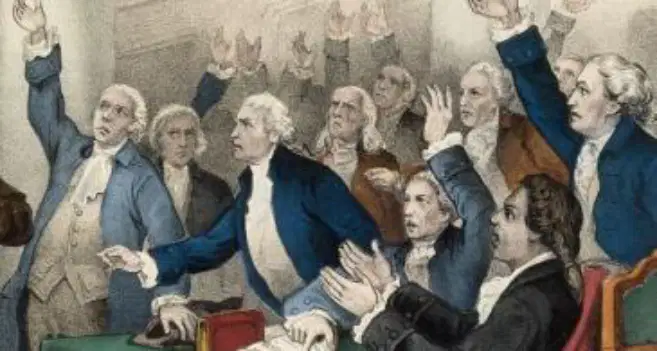
What was the colonial reaction to the new laws imposed by Britain after 1763?
The colonists were happy with the new laws.
The colonists were indifferent to the new laws.
The colonists were outraged over taxes and the loss of self-rule.
The colonists supported the British government.
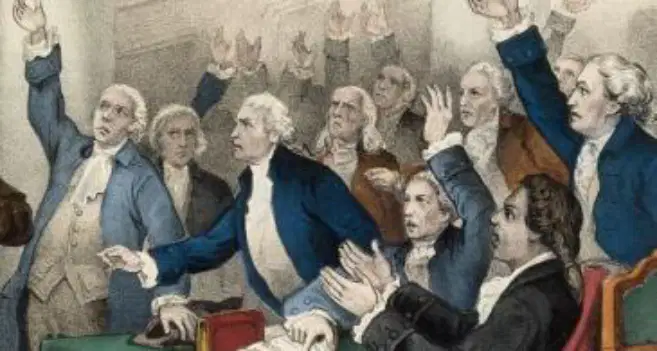
Which laws imposed by Britain angered the colonists the most?
Sugar, Stamp, and Townshend Acts.
Navigation Acts.
Tea Act.
Intolerable Acts.
Which British law, enacted in 1765, required colonists to pay a tax on most printed materials, including newspapers and legal documents?
Sugar Act
Townshend Acts
Stamp Act
Salutary Neglect
What was the purpose of the Sugar Act passed in 1764?
To tax sugar and molasses, aiming to raise revenue from the colonies
To tax goods such as glass, lead, paint, paper, and tea
To enforce stricter trade laws on the colonies
To allow the colonies to govern themselves
What does the term "Salutary Neglect" refer to?
A British law that taxed sugar and molasses.
A series of British laws taxing imported goods.
Britain's earlier policy of loosely enforcing trade laws, allowing the colonies to mostly govern themselves.
A British law requiring taxes on printed materials.
Which British laws in 1767 taxed goods such as glass, lead, paint, paper, and tea imported into the colonies?
Stamp Act
Townshend Acts
Sugar Act
Salutary Neglect
What was the purpose of the Stamp Act of 1765?
To tax imported goods such as tea and sugar
To tax newspapers, legal documents, and more
To provide free education to colonists
To establish new colonies in America
How did the colonists protest against the Stamp Act of 1765?
By forming alliances with Britain
By boycotting and holding public demonstrations
By creating new laws to replace the Stamp Act
By supporting the British government
Which group was formed to resist the Stamp Act of 1765?
The Sons of Liberty
The Loyalists
The British Parliament
The Continental Army
Who gave powerful speeches for colonial rights during the Stamp Act protests?
George Washington
Patrick Henry
Benjamin Franklin
Thomas Jefferson
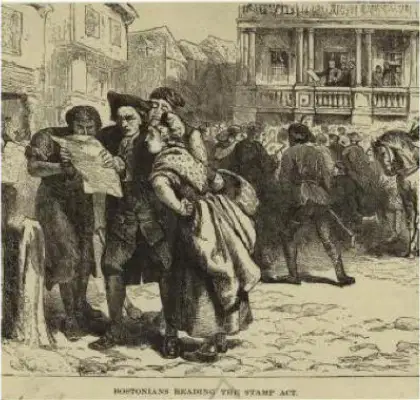
This illustration depicts a colonial protest against which British law that required the colonists to pay a tax on printed materials?
Stamp Act
Tea Act
Townshend Acts
Intolerable Acts
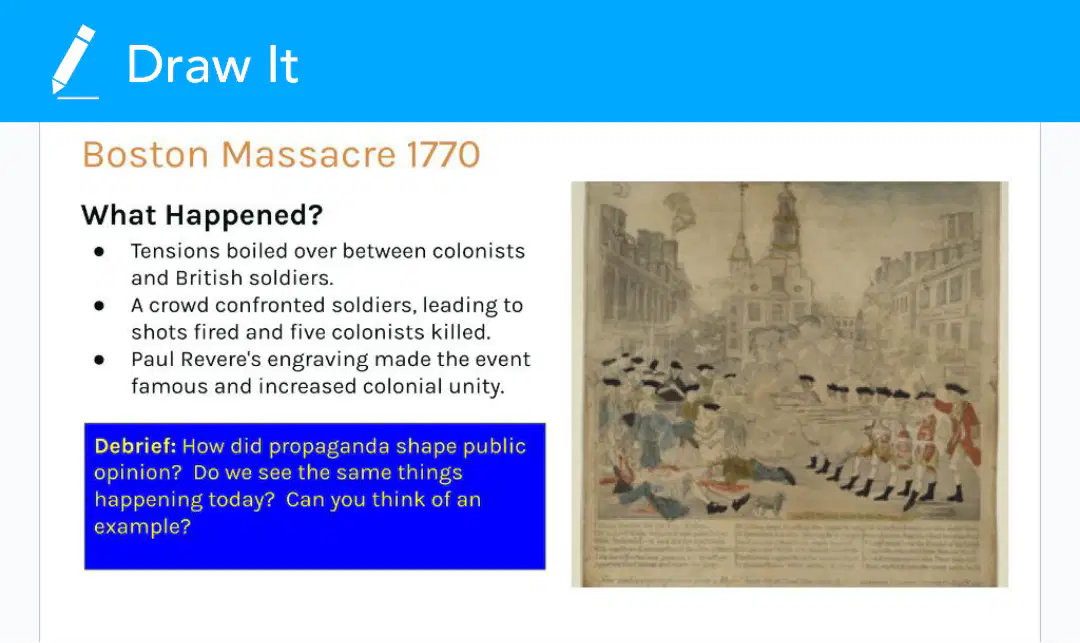
What event is described as tensions boiling over between colonists and British soldiers, leading to shots being fired and five colonists being killed?
Boston Tea Party
Boston Massacre
Lexington and Concord
Declaration of Independence
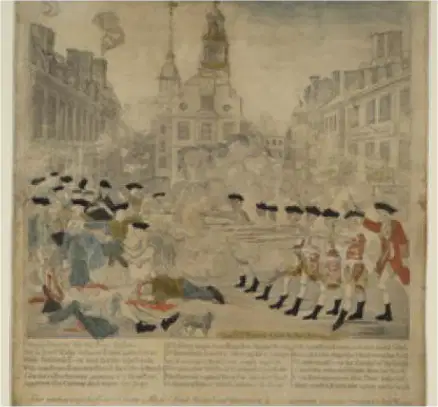
Who created the engraving that made the Boston Massacre famous and helped increase colonial unity?
Samuel Adams
Paul Revere
John Hancock
Benjamin Franklin
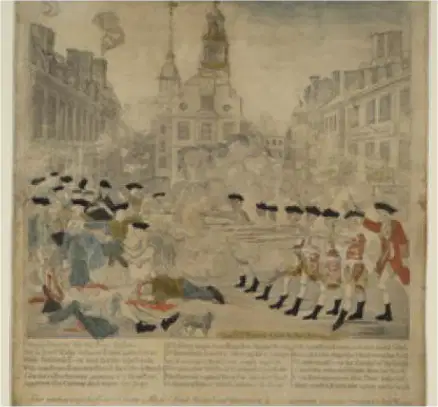
How many colonists were killed in the Boston Massacre?
Three
Five
Seven
Ten

What role did propaganda play in shaping public opinion during the Boston Massacre?
It had no effect on public opinion.
It made the event seem less significant.
It helped unify the colonists against British rule.
It caused colonists to support British soldiers.
What was Britain's policy of loosely enforcing trade laws and allowing the colonies to mostly govern themselves?
Mercantilism
Salutary Neglect
Navigation Acts
Intolerable Acts
Which two British laws passed after 1763 imposed new taxes on the colonies?
The Tea Act and the Quartering Act
The Sugar Act and the Stamp Act
The Townshend Acts and the Intolerable Acts
The Proclamation Act and the Declaratory Act
What is one argument about who is to blame for the Boston Massacre?
The colonial crowd was entirely innocent.
The soldiers were provoked by the colonial crowd.
The British government ordered the soldiers to fire.
The colonial crowd was armed and attacked the soldiers.
What was one of Britain's responses to the Intolerable Acts?
Sent aid to Boston
Closed Boston Harbor
Boycotted British goods
Organized Committees of Correspondence
Which of the following was a colonial response to the Intolerable Acts?
Abolished colonial assemblies
Enforced the Quartering Act
Boycotted British goods
Closed Boston Harbor
What was the purpose of the Committees of Correspondence organized by the colonies?
To enforce the Quartering Act
To maintain communication and unity among the colonies
To abolish colonial assemblies
To support British goods
In 1770, how would you classify yourself as a colonist based on British policies and colonial reactions?
Patriot
Loyalist
Neutral
Undecided
What should you reference when discussing your alignment as a colonist in 1770?
Specific events or acts that influenced your decision
Personal opinions without historical context
Modern-day policies
Random historical figures
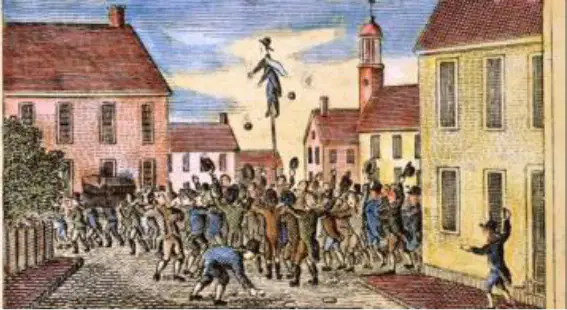
This historical depiction shows a colonial protest scene with a crowd gathered in a town square and a figure being hanged in effigy. Which event is being represented?
A protest against British taxation policies
A celebration of a royal wedding
A town meeting to elect a mayor
A religious festival
In the context of 1770, which group would a colonist align with if they supported independence from British rule?
Patriots
Loyalists
Neutralists
Federalists
What term describes colonists who remained loyal to the British Crown during the colonial period?
Patriots
Loyalists
Neutralists
Revolutionaries
What activity is suggested in the 'Draw-It' section of the learning material?
Sketch freedom/authority symbols
Write an essay on colonial policies
Create a timeline of events in 1770
Design a map of colonial territories
What is the purpose of discussing specific events or acts when imagining yourself as a colonist in 1770?
To understand the reasons behind your choice of alignment
To memorize historical dates
To create a fictional story about colonists
To compare British and French policies
This scene depicts colonial life and protests in 1770. What major event is most likely being represented?
The Boston Massacre
The signing of the Declaration of Independence
The Battle of Yorktown
The Louisiana Purchase
Which of the following acts is associated with the closure of the Boston Harbor until damages from the Boston Tea Party were paid?
Massachusetts Government Act
Quartering Act
Boston Port Act
Administration of Justice Act
Which act altered the government of Massachusetts, reducing its self-governance and increasing royal control?
Quartering Act
Massachusetts Government Act
Boston Port Act
Administration of Justice Act
Which act required colonists to house and provide for British soldiers in their homes?
Administration of Justice Act
Quartering Act
Boston Port Act
Massachusetts Government Act
Which act allowed British officials accused of crimes in the colonies to be tried in England or another colony?
Administration of Justice Act
Quartering Act
Massachusetts Government Act
Boston Port Act

Which act closed the port of Boston as punishment for the Boston Tea Party?
Massachusetts Government Act
Quartering Act
Boston Port Act
Administration of Justice Act

Which act allowed British soldiers to be housed in American homes without consent?
Quartering Act
Boston Port Act
Administration of Justice Act
Massachusetts Government Act
Which act restricted town meetings and local government in Massachusetts?
Administration of Justice Act
Massachusetts Government Act
Quartering Act
Boston Port Act
Which act allowed British officials accused of crimes to be tried in England instead of the colonies?
Boston Port Act
Administration of Justice Act
Quartering Act
Massachusetts Government Act
Who were the Patriots during the American Revolution?
People who supported independence from Britain.
People who remained loyal to the King.
People who wanted to avoid conflict.
People who supported the British monarchy.
What was the stance of the Loyalists during the American Revolution?
They supported independence from Britain.
They remained loyal to the King.
They wanted to avoid conflict.
They fought against the Patriots.
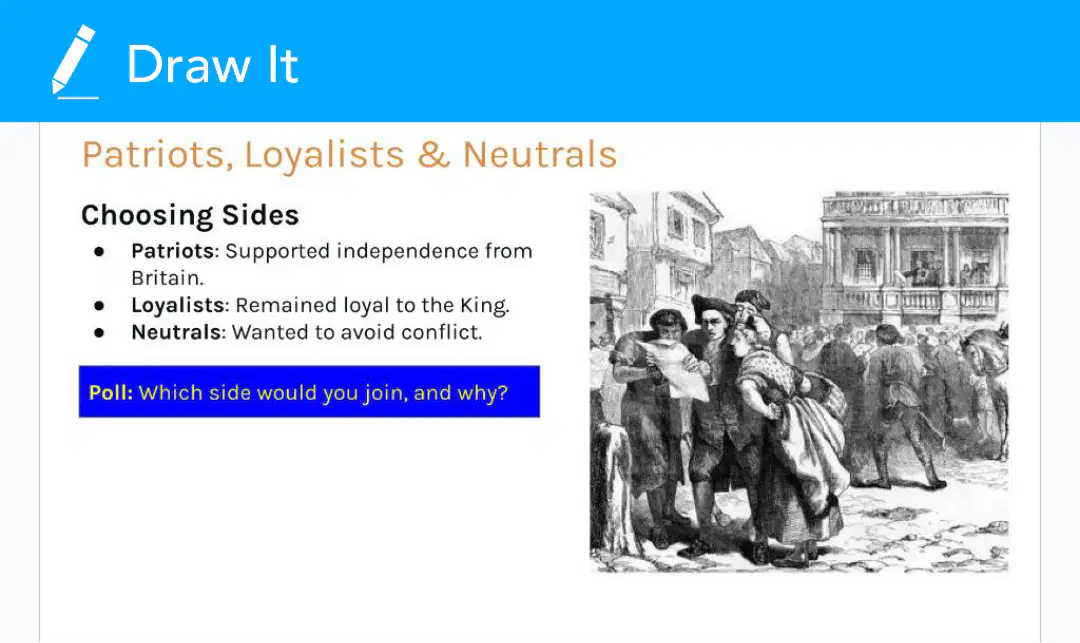
What did the Neutrals aim to do during the American Revolution?
Support independence from Britain.
Remain loyal to the King.
Avoid conflict.
Join the Patriots.
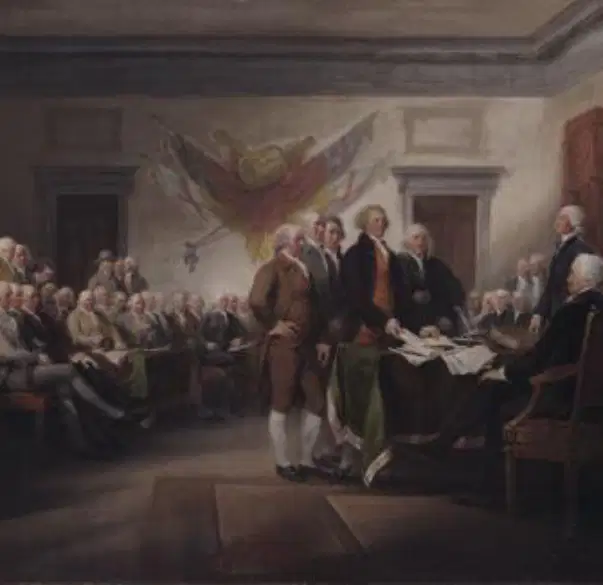
What was the main purpose of the First Continental Congress in 1774?
To declare independence from Britain.
To organize resistance against British policies.
To draft the U.S. Constitution.
To establish trade agreements with other nations.
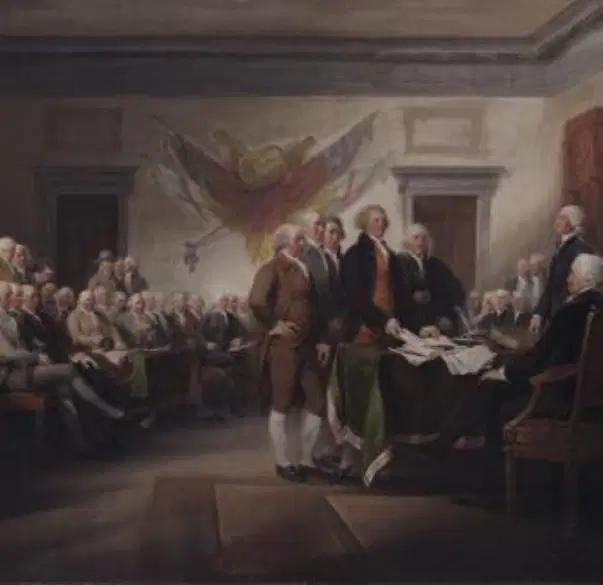
What action did the colonial leaders agree upon during the First Continental Congress?
To boycott British goods and petition for rights.
To form a new government immediately.
To declare war on Britain.
To establish a national bank.
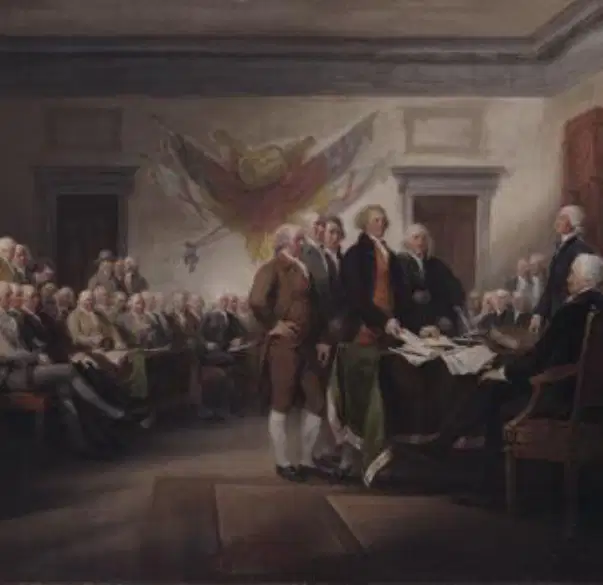
What was the significance of the First Continental Congress in terms of colonial unity?
It was the first step toward colonial unity.
It divided the colonies further.
It led to the immediate declaration of independence.
It established a monarchy in the colonies.
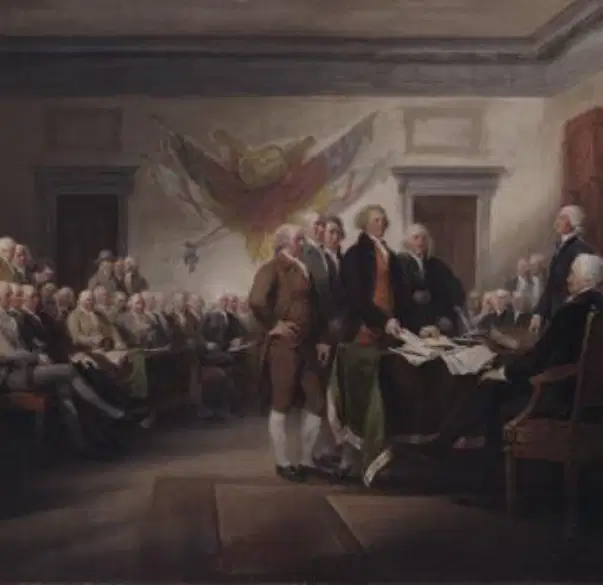
How does the First Continental Congress compare to modern protest or organizing?
Both involve collective action to address grievances.
Modern protests are less organized than the First Continental Congress.
The First Continental Congress was focused on economic issues only.
Modern protests are always violent, unlike the First Continental Congress.
What was the main objective of the British troops during the battles of Lexington and Concord in 1775?
To negotiate peace with the Patriots
To seize Patriot weapons
To recruit Minutemen for their army
To establish trade routes
Who confronted the British Redcoats at Lexington and Concord?
Loyalists
Continental Army
Minutemen
French allies
What event is famously referred to as the 'shot heard 'round the world'?
The signing of the Declaration of Independence
The first battle of the American Revolution
The Boston Tea Party
The surrender of British forces
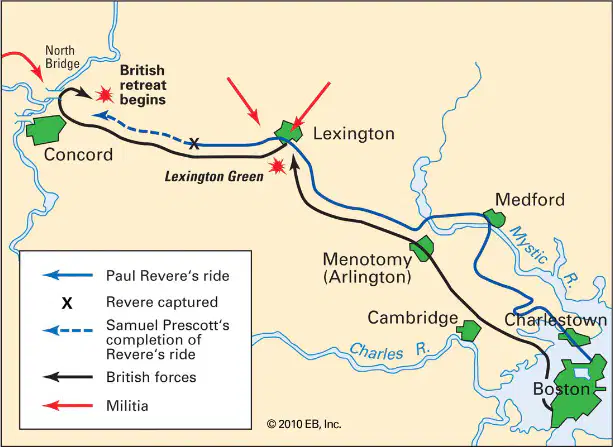
What does the map in the learning material depict?
The trade routes between Britain and the colonies
The route of British troops and Patriot response
The migration of settlers to the west
The locations of major Revolutionary War battles
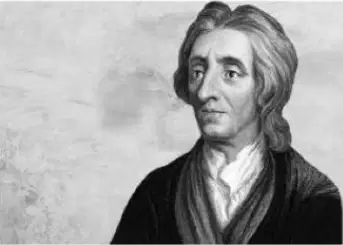
Who believed in natural rights such as life, liberty, and property?
John Locke
Thomas Paine
George Washington
Benjamin Franklin
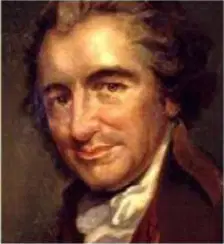
What was one of Thomas Paine's key contributions to America's fight for independence?
He argued for independence.
He wrote the Declaration of Independence.
He led the Continental Army.
He negotiated the Treaty of Paris.
According to John Locke, what can people do if a government violates their rights?
Accept the government's authority.
Change the government.
Move to another country.
Write a petition.
What was the purpose of Thomas Paine's 'Common Sense' pamphlet?
To inspire colonists to break from Britain.
To outline the U.S. Constitution.
To argue for the abolition of slavery.
To promote trade with Britain.
What does "taxation without representation" mean in the context of colonial grievances?
Being taxed by a government without having a say in its decisions.
Paying taxes only to local governments.
Refusing to pay taxes to any government.
Having representation in the government but still being taxed unfairly.
Which philosopher's idea of "natural rights" influenced the argument for life and liberty against oppressive governments?
John Locke
Thomas Hobbes
Jean-Jacques Rousseau
Voltaire
What were the Intolerable Acts, according to colonial grievances?
Policies that harmed colonial economies and self-governance.
Laws that granted colonies independence.
Acts that reduced taxes for colonists.
Policies that improved trade relations with Britain.
What year was the Declaration of Independence adopted?
1775
1776
1781
1783
Which of the following was NOT a purpose of the Declaration of Independence?
Declaring the colonies free from British rule
Listing grievances and natural rights
Calling for a government that protects people's rights
Establishing trade agreements with other nations
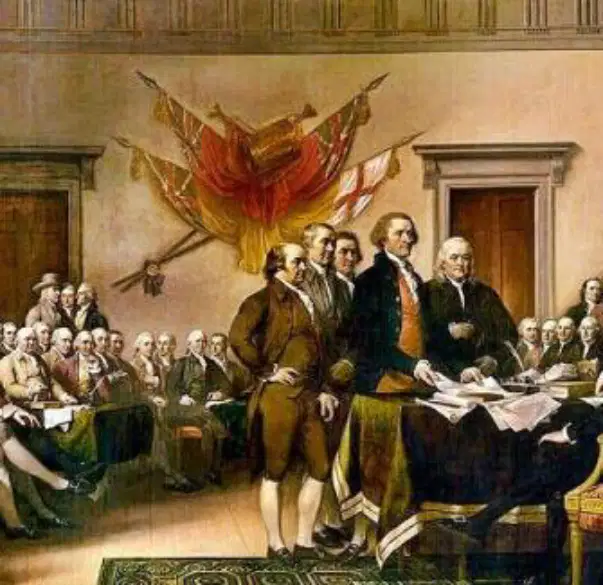
What phrase begins the Declaration of Independence?
We the People...
Four score and seven years ago...
We hold these truths...
In the course of human events...
What was one of the main purposes of the Declaration of Independence in 1776?
To declare the colonies free from British rule.
To establish trade agreements with other nations.
To create a new monarchy in the colonies.
To abolish all forms of government.
What did the Declaration of Independence call for in terms of government?
A government that protects people's rights.
A government led by the British monarchy.
A government based on military rule.
A government that prioritizes trade over rights.
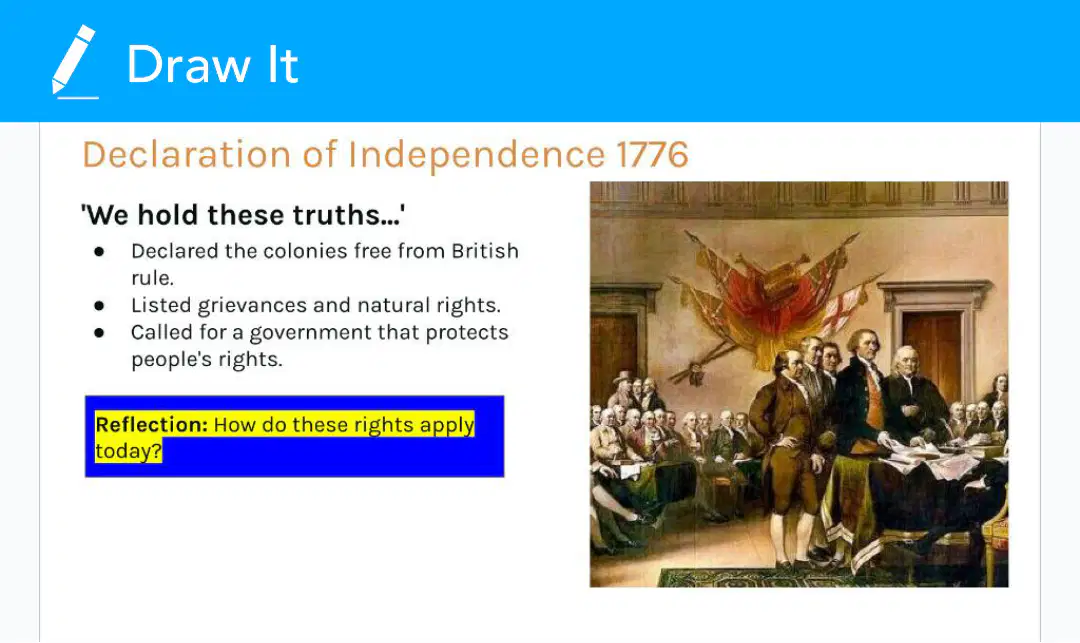
Which of the following was listed in the Declaration of Independence?
Grievances and natural rights.
A plan for industrialization.
A list of trade policies.
A declaration of war against other nations.
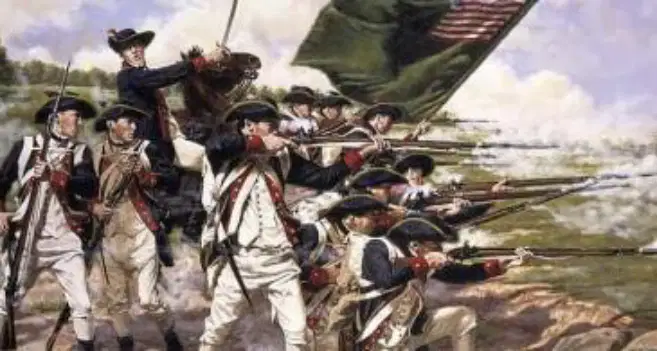
What was one advantage the Patriots had during the Revolutionary War?
Naval power
Home advantage
More resources
Well-trained army

Which type of warfare were the Patriots experienced in after the French and Indian War?
Naval warfare
Guerilla warfare
Trench warfare
Siege warfare
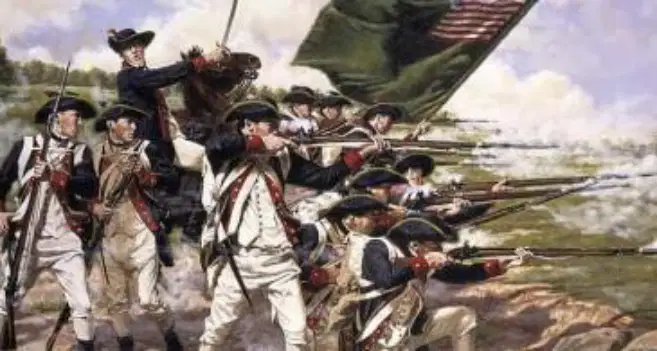
Who provided strong leadership for the Patriots during the Revolutionary War?
King George III
Thomas Jefferson
George Washington
Benjamin Franklin
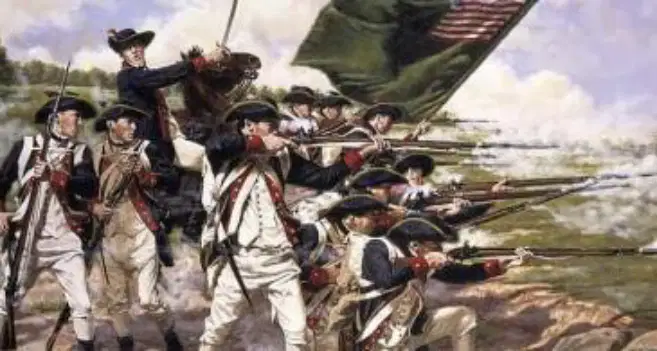
What motivated the Patriots to fight in the Revolutionary War?
Desire for naval power
Motivation for liberty
More resources
Well-trained army

What was one advantage the British had during the Revolutionary War?
Home advantage
Strong leadership
Well-trained army
Guerilla warfare experience
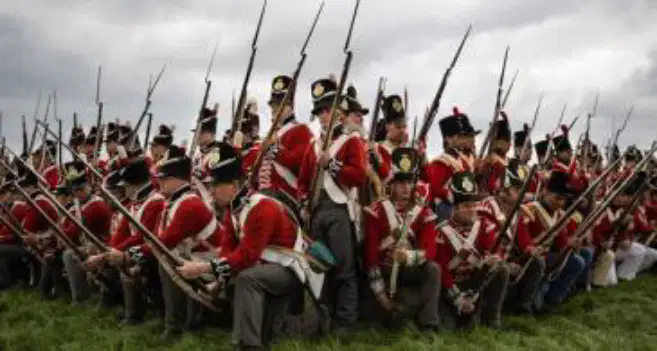
Which of the following was a resource advantage for the British during the Revolutionary War?
Naval power
Home advantage
Guerilla warfare experience
Strong leadership
Which of these British actions or policies directly contributed to increased colonial resistance and a movement towards independence? (Select two correct answers)
The establishment of salutary neglect, allowing colonies self-governance.
The passage of the Stamp Act, taxing printed materials without colonial representation.
The enforcement of the Intolerable Acts, which punished Massachusetts after the Boston Tea Party.
The British victory in the French and Indian War, securing more land for the colonies.
What was the significance of the Battle of Saratoga in October 1777?
It marked the end of the Revolutionary War.
It convinced France to help the colonies.
It was the first battle of the war.
It resulted in the capture of Washington.
What was the outcome of Washington's surprise attack during the Battle of Trenton in December 1776?
It boosted morale for the Patriots.
It led to the surrender of France.
It ended the Revolutionary War.
It resulted in the loss of American troops.
Which battle occurred in December 1776 during the American Revolution?
Battle of Saratoga
Battle of Trenton
Battle of Yorktown
Battle of Bunker Hill
Which battle convinced France to support the American colonies during the Revolutionary War?
Battle of Trenton
Battle of Saratoga
Battle of Yorktown
Battle of Lexington
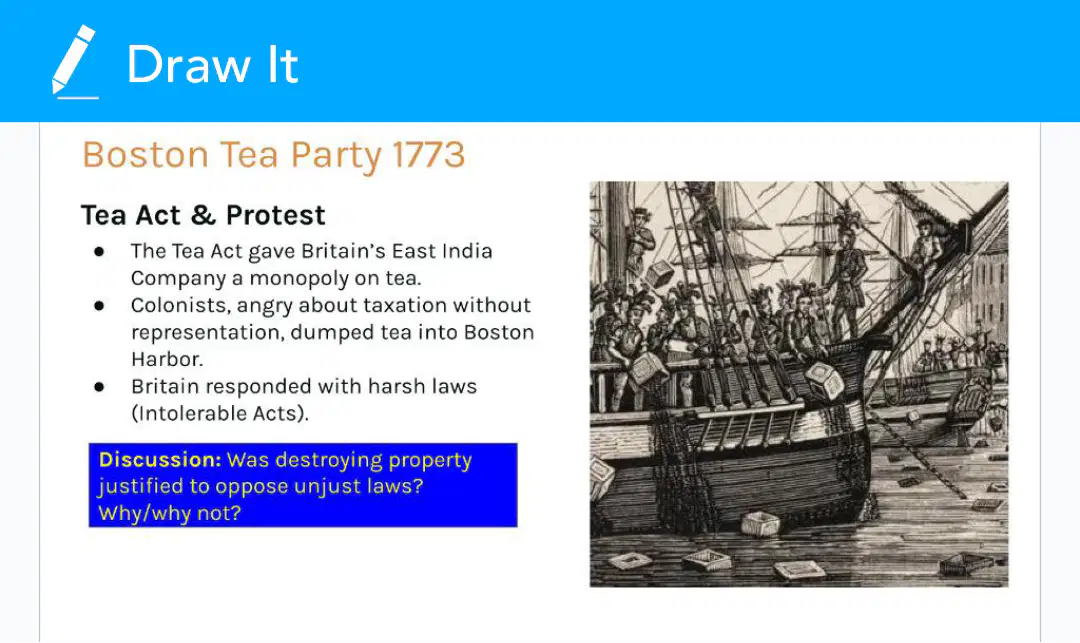
What was the main purpose of the Tea Act passed by Britain in 1773?
To give Britain’s East India Company a monopoly on tea.
To reduce taxes on tea for colonists.
To encourage colonists to trade tea with other countries.
To ban the consumption of tea in the colonies.
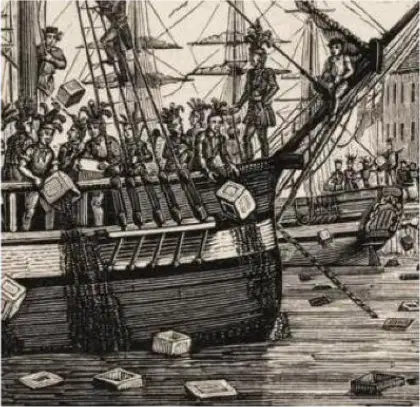
Why did the colonists dump tea into Boston Harbor during the Boston Tea Party?
They were celebrating a new trade agreement.
They were protesting taxation without representation.
They wanted to support the Tea Act.
They were trying to stop tea imports from India.
Who was the main author of the Declaration of Independence?
George Washington
Thomas Jefferson
John Adams
Benjamin Franklin
Which event is known as the "shot heard 'round the world"?
The battles of Lexington and Concord
The signing of the Declaration of Independence
The Boston Massacre
The Boston Tea Party
What was the main purpose of the First Continental Congress in 1774?
To declare independence from Britain
To organize colonial resistance to British policies
To write the Constitution
To elect a colonial president
Which act allowed British soldiers to be housed in colonial homes?
Sugar Act
Quartering Act
Townshend Acts
Stamp Act
Which act required colonists to provide housing and supplies to British soldiers?
Quartering Act
Stamp Act
Sugar Act
Tea Act
What was the main purpose of the Declaration of Independence?
To declare war on Britain
To outline colonial grievances and assert independence
To establish trade agreements with France
To create a new tax system
Who was the primary author of the Declaration of Independence?
John Adams
Thomas Jefferson
Benjamin Franklin
George Washington
Which event marked the official start of armed conflict between Britain and the colonies?
Boston Tea Party
Battle of Lexington and Concord
Signing of the Treaty of Paris
Boston Massacre
What was the main purpose of the Townshend Acts?
To abolish slavery in the colonies
To end the French and Indian War
To raise revenue by taxing imported goods
To grant independence to the colonies
Which event was a direct response to the Tea Act of 1773?
Battle of Bunker Hill
Stamp Act Congress
First Continental Congress
Boston Tea Party
Who was the King of England during the American Revolution?
King George III
King Charles II
King James I
King Henry VIII
What was the main goal of the First Continental Congress?
To declare independence from Britain
To address colonial grievances and seek a peaceful solution
To form a new government
To write the U.S. Constitution
What was the main outcome of the Treaty of Paris in 1763?
It ended the French and Indian War and gave Britain control of Canada
It ended the American Revolution
It created the Declaration of Independence
It established the first Continental Congress
Which event is considered a direct response to the Tea Act of 1773?
The signing of the Declaration of Independence
The Intolerable Acts
The Boston Massacre
The Boston Tea Party
What was the main purpose of the First Continental Congress in 1774?
To elect George Washington as president
To declare war on Britain
To discuss colonial grievances and organize resistance
To write the Constitution
Which document formally announced the colonies' break from Britain?
The Mayflower Compact
The Magna Carta
The Bill of Rights
The Declaration of Independence
Who was the primary author of the Declaration of Independence?
Thomas Jefferson
John Adams
Alexander Hamilton
Benjamin Franklin
Which act required colonists to provide housing and supplies to British soldiers?
Sugar Act
Tea Act
Quartering Act
Stamp Act
What was the main purpose of the First Continental Congress in 1774?
To declare independence from Britain
To organize colonial resistance to British policies
To elect a colonial king
To write the Constitution
Which of the following best describes the colonial reaction to the Tea Act?
They organized the Boston Tea Party
They ignored the new law
They wrote letters to Parliament in support
They accepted the lower price on tea
Who were the Loyalists during the American Revolution?
French allies of the colonists
Colonists who supported independence from Britain
British soldiers stationed in the colonies
Colonists who remained loyal to the British crown

