
 Worksheets
Module 18: Introduction to Cultural Patterns and Practices Quiz
Total questions: 35
Worksheet time: 18mins
Read the passage: Cultural ideas, practices, traits, and innovations are always changing, making the global cultural tapestry endlessly fascinating. This Module introduces important cultural patterns and practices that lay the groundwork for exploring more complex cultural issues.
Cultural ideas
Cultural practices
Cultural traits
Cultural geography
Fill in the blank: This module introduces important cultural patterns and ______ that lay the groundwork for exploring more complex cultural issues.
practices
animals
machines
numbers
Architecture, land use, and food preferences are shaped by which factor?
Culture
Climate
Technology
Economy
Fill in the blank: Land-use practices emerge as people create ways to extract ________ or economic value from the land.
agricultural
musical
artistic
athletic
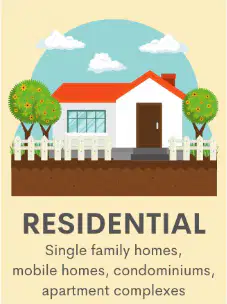
Which type of land use is described as 'Single family homes, mobile homes, condominiums, apartment complexes'?
Commercial
Residential
Recreational
Agricultural
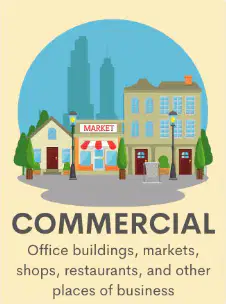
Which type of land use includes 'Office buildings, markets, shops, restaurants, and other places of business'?
Transport
Agricultural
Commercial
Recreational

Which type of land use is associated with 'Parks, playgrounds, athletic fields, swimming pools, community centers'?
Recreational
Residential
Transport
Agricultural
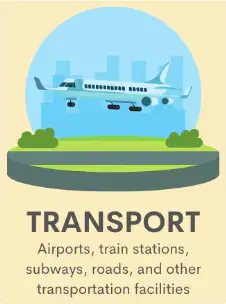
Which type of land use includes 'Airports, train stations, subways, roads, and other transportation facilities'?
Agricultural
Transport
Commercial
Residential
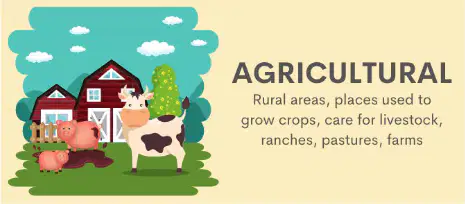
Which type of land use is described as 'Rural areas, places used to grow crops, care for livestock, ranches, pastures, farms'?
Agricultural
Residential
Recreational
Transport
What is a long-lot settlement pattern?
A settlement pattern where houses are clustered together in a circle
A linear settlement pattern in which each farmstead is situated at one end of a long, narrow rectangular lot having access usually to a river or a major road
A settlement pattern where lots are arranged in a grid
A settlement pattern with no specific organization
Fill in the blank: The French used ________ settlements to administer agricultural lands, where each farmstead is situated at one end of a long, narrow rectangular lot having access usually to a river or a major road.
long-lot
clustered
dispersed
grid
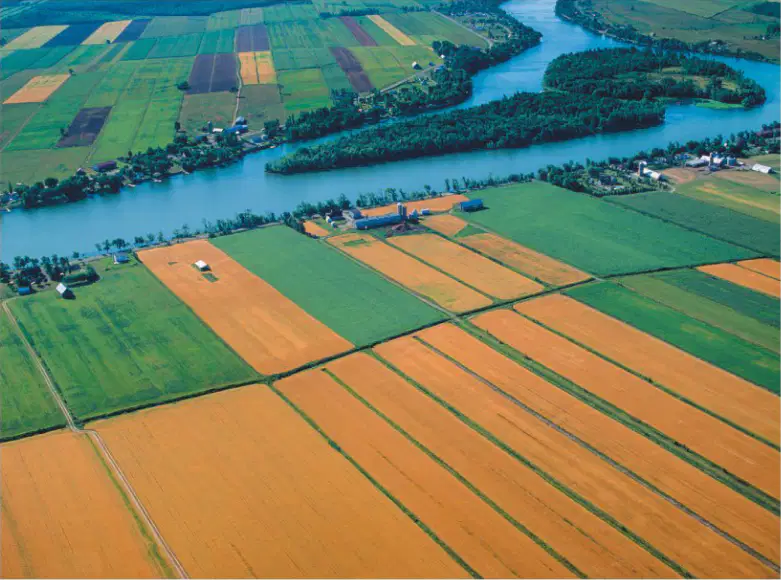
What is the main reason for the land-use pattern seen in the long-lot settlement pattern?
Natural disasters
Cultural and political administration over land
Random distribution of land
Economic competition
According to the passage, what does the saying 'Tell me what you eat, and I’ll tell you who you are' highlight?
The importance of cooking skills
The link between food and identity
The popularity of spicy food
The history of Chinese cuisine
In Singapore, most people have ______ ancestry, which has influenced the cuisine with southern Chinese flavors.
Chinese
Indian
Malay
Arab
Mass-produced tortillas are commonly found in ________, replacing traditional tortillerías.
supermarkets
pharmacies
bookstores
gyms
Cultural traits and attitudes can impact place by:
influencing the architecture, language, and traditions of a location
having no effect on the physical or social environment
making all places look and feel the same
eliminating all cultural differences in a region
What does 'Material culture' refer to?
The beliefs and values of a cultural group
The physical objects created and used by a cultural group
The language spoken by a cultural group
The traditions of a cultural group
Which of the following is NOT an example of material culture?
A) Buildings
B) Furniture
C) Food
D) Beliefs
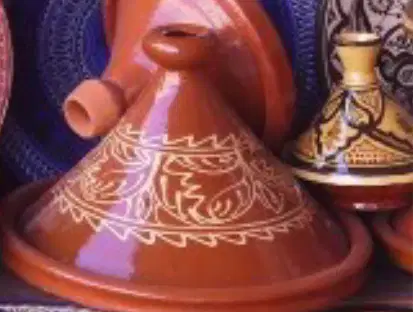
Fill in the blank: Material culture includes physical objects such as buildings, furniture, ________, food, artwork, and musical instruments.
clothing
language
beliefs
customs
Fill in the blank: Material culture includes physical objects such as buildings, furniture, clothing, food, ________, and musical instruments.
artwork
friendship
language
beliefs
What does nonmaterial culture include?
Physical objects
Intangible beliefs, values, myths, and symbolic meanings
Technology
Buildings

La Llorona is an example of a ______ in nonmaterial culture.
myth
law
ritual
artifact
Fill in the blank: A ________ is a single aspect of a given culture, whether material or nonmaterial.
cultural trait
cultural region
cultural diffusion
cultural landscape
What are local cultures/folk cultures?
Urban, diverse, and disconnected from the land
Rural, ethnically homogenous, and deeply connected to the local land
Modern, fast-changing, and global
None of the above
What does the term 'Indigenous cultures' refer to?
The dominant ethnic group in their homelands
A subset of local cultures that are no longer the dominant ethnic group in their homelands due to migration, colonization, or political marginalization
People who have migrated to new countries
Modern urban cultures
Fill in the blank: Popular cultures are __________, more influenced by key urban areas, and quick to adopt new technologies.
heterogeneous
homogeneous
isolated
traditional
Which of the following statements is true about popular culture?
It is slow to adopt new technologies.
It is more influenced by rural areas.
It is heterogeneous and quick to adopt new technologies.
Family customs have a greater influence than peer groups.
In popular culture, who often has a greater influence than family customs?
Peer groups
Teachers
Religious leaders
Celebrities
Which of the following is most likely to be considered material culture?
A) Religious beliefs
B) Traditional clothing
C) Language
D) Social norms
Fill in the blank: Material culture is most easily recognized in ________ because its elements are visible.
photographs
stories
songs
myths
What are cultural attitudes? Fill in the blank: Cultural attitudes are the beliefs, opinions, and perspectives that ______ a society.
shape
ignore
divide
confuse
How do cultural attitudes influence society?
They have no effect on society.
They influence the way people think about the world, understand their place in a community, and interact with others.
They only affect laws.
They only affect food choices.
Cultural attitudes can change over time and shape the societies and places they create. What is the result of this process?
Societies and places evolve based on changing cultural attitudes.
Societies and places remain unchanged regardless of cultural attitudes.
Cultural attitudes have no impact on societies or places.
Societies and places only change due to natural events.
Language, religion, and ethnicity are considered core parts of cultural identities because they:
help define and distinguish groups within a society.
are unrelated to how people identify culturally.
are only important in ancient cultures.
do not influence cultural practices.
What is the definition of 'Language'?
A mutual agreed-upon system of symbolic communication, which is an integral part of cultural identity.
A type of food.
A form of transportation.
A kind of animal.

