
Font size
 Worksheets
Revolution, AOC, Constitutional Convention Review
Total questions: 65
Worksheet time: 2hrs 38mins
Why is the Battle of Saratoga considered a turning point in the Revolutionary War?
The British victory extended the fighting for another year.
The American victory convinced France to ally with the United States.
The British defeat marked the beginning of a steady decline in British military superiority.
The American defeat led many soldiers to desert the Continental Army.

Which of the following promped General Washing to write this letter?
A shortage of Continental soldiers to maintain the siege of Yorktown
The high number of casualties suffered during the battle of Bunker Hill
Low morale after the British army captured New York City
Concern for the Continental troops during the winter at Valley Forge
Which event occurred as a result of General Cornwallis's surrender at the Battle of Yorktown?
France recognized American Independence and declared war again Great Britain
The Second Continental Congress agreed to the Articles of Confederation
Great Britain and the United States Signed the Treaty of Paris 1783
The Second Continental Congress sent the Olive Branch Petition to King George the III.
The "turning point in the war". It showed the patriots had a good chance of winning. France decided to ally with the Americans after this battle.
Battle of Monmouth
Battle of Trenton
Battle of Yorktown
Battles of Saratoga
Battle for New York
The last major battle of the Revolutionary War which resulted in the surrender of British forces
Battle of Monmouth
Battles of Saratoga
Battle of Trenton
Battle of Yorktown
Battle for New York
A 19-year-old French nobleman who volunteered to serve in Washington's Army.
Baron von Steuben
Marquis de Lafayette
Lord Cornwallis
Henry Clinton
Francis Marion
American naval commander in the American Revolution (1747-1792) said "I have not yet begun to fight."
Baron von Steuben
Francis Marion
John Paul Jones
Marquis de Lafayette
William Howe
American intellectual, inventor, and politician He helped to negotiate French support for the American Revolution.
Francis Marion
Marquis de Lafayette
Benjamin Franklin
Lord Cornwallis
John Burgyone

What was the first battle of the American Revolution?
Battle of Lexington and Concord
Battle of Bunker Hill
Battle of Yorktown
Battle of Saratoga


The battle that included "the shot heard 'round the world"
Battle of Saratoga
Battles of Lexington and Concord
Battle of Bunker Hill
Battles of Trenton and Princeton
Famous words were: "Give me liberty or give me death"
Patrick Henry
Alexander Hamilton
Thomas Jefferson
Thomas Paine
Wrote Common Sense which argued in favor of American Independence
Thomas Jefferson
Thomas Paine
John Adams
John Hancock

The Articles of Confederation created a _________________ type of national government.
strong
average
weak
federal
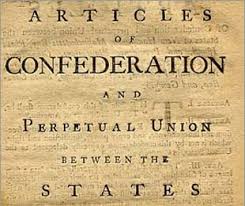


What did Shays Rebellion demonstrate to the U.S. Confederal Government?
That the people were not to be trusted
That the Articles of Confederation was too weak and needed to be replaced
That state governments were too strong
That more laws needed to be passed
Which strong feature of the Articles of Confederation created a method for western territories to become states?
The ability to sign peace treaties
Shays' Rebellion
Northwest Ordinance
60,000 Ordinance
Under the Articles of Confederation, the government could
sign treaties and create taxes
declare war and create taxes
sign treaties and declare war
none of the above
Under the Articles of Confederation, the government could not levy taxes, this caused problems because (check all that apply)
they could not trade with other countires
they could not pay off any debts
they could not pay state government
they could not pay soldiers

According to the Articles of Confederation, Congress COULD....
Declare war
Make peace treaties
Borrow money
Collect taxes

According to the Articles of Confederation, Congress could NOT....
Regulate trade
Collect taxes
Force states to obey the law
Declare war

Why couldn't the National government stop Shays' Rebellion?
It did not have an army
It did not have a president
George Washington had retired
The state militias were not strong enough

Shays' Rebellion showed....
that a weak national government could not keep order
that weak state governments divided the country
that farmers were violent
that the United States needed a king

What does the political cartoon represent?
3/5 Compromise: every 5 slaves = 3 people for representation & taxation in Congress
5/3 Compromise: every 3 slaves = 5 people for representation & taxation in Congress
3/5 Compromise: every 3 slaves = 5 people for representation in the slave trade taxes
10/8 Compromise: every 10 slaves = 8 people for representation in the Appalachian Mountains

Which of the following should replace the question mark in this diagram?
Direct democracy
Great Compromise
Checks and Balances
Missouri Compromise
Set up a bicameral legislature, one house would have representation based on population and the other would have equal state representation
Virginia Plan
New Jersey Plan
Great Compromise
Three-Fifths Compromise
Determined how slaves would count as a part of each state's population, each slave would count 3/5ths of a person
Virginia Plan
New Jersey Plan
Great Compromise
Three-Fifths Compromise
Group who argued for a stronger national government who could be powerful in foreign affairs and establishing better trade relations, in favor of ratification of the Constitution
Federalist
Anti-Federalist
Torie
Patriot
Group who opposed a stronger national government because the elite would have too much power, opposed to the ratification of the Constitution
Federalist
Anti-Federalist
Torie
Patriot
The Federalist Papers were written to promote which of the following?
the Constitution
Declaration of Independence
Articles of Confederation
Three-Fifths Compromise
Anti-Federalists insisted upon which of the following?
Virginia Plan
Bill of Rights
inclusion of slavery
New Jersey Plan
Which of the following was the result of the Great Compromise?
supreme court
electoral college
amendment process
bicameral (two house) legislature
Use the list and your knowledge of social studies to answer the following question.
I. George Mason – thought the Constitution would limit individual rights and states rights
II. James Madison – “Father of the Constitution”
III. Alexander Hamilton – supported the Constitution
IV Patrick Henry – thought the Constitution would limit individual rights and states rights
Which of the above held the point of view for a strong central government (Federalists)?
I and II
I and III
II and III
I and IV
Use the list and your knowledge of social studies to answer the following question.
I. George Mason – thought the Constitution would limit individual rights and states rights
II. James Madison – “Father of the Constitution”
III. Alexander Hamilton – supported the Constitution
IV Patrick Henry – thought the Constitution would limit individual rights and states rights
Which individuals held the point of view of fearing a strong central government (Anti-Federalists)?
I and II
I and III
II and III
I and IV
The Three-Fifths Compromise at the Constitutional Convention concerned which of the following issues?
the establishment of upper and lower legislative bodies
the manner in which bills and amendments would become law
the portion of federal revenues that would come from large and small states
the counting of slaves for purposes of determining representation and taxation
The conflict between large and small states regarding representation in Congress was settled by the _____________________.
Treaty of Paris
Treaty of Washington
Great Compromise
Three-Fifths Compromise
Why is the year 1787 significant to U.S. history?
The Articles of Confederation were repealed.
The U.S. Constitution was written.
Poor Richard's Almanac was first published.
The Declaration of Independence was signed.
Why is the Northwest Ordinance (1787) considered one of the most important laws passed following the American Revolution?
The law established policies for selling land to other countries.
The law reclaimed northwestern territory for the United States.
The law unified all remaining land into one large U.S. territory.
The law provided a system for admitting new states to the Union.


