
 Worksheets
Local Anesthesia Quiz
Total questions: 18
Worksheet time: 9mins
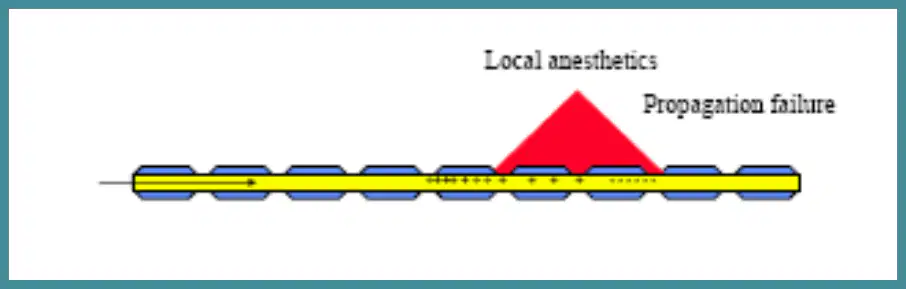
What is the primary mechanism of action of local anesthetics as described in the image?
Enhances Na+ entry, causing increased nerve conduction
Inhibits Na+ entry, causing action potentials and nerve conduction to be blocked
Stimulates nerve conduction by increasing action potentials
Blocks K+ entry, causing nerve conduction to be enhanced
Which factors influence the mechanism of action of nerve membrane stabilization?
Membrane Ca and pH
Membrane Na and K
Membrane temperature and pressure
Membrane size and shape
What can correct the loss of effects when absorption occurs?
Hyaluronidase
Adrenaline
Amidase
Conjugates
Which enzyme is involved in the metabolism of procaine in the liver?
Amidase
Esterase
Hyaluronidase
Adrenaline
How are local anesthetics chemically classified?
By their molecular weight
By their functional groups
By their solubility
By their pH levels

What is Lignocaine commonly used as?
Water soluble hydrochloride
Adrenaline substitute
Plasma esterase enhancer
Toxicity reducer
What is the recommended concentration for nerve block using the substance?
0.5-1%
5%
2-3%
1-2%
Which of the following is a symptom of toxicity mentioned in the content?
Respiratory depression
Increased heart rate
Enhanced digestion
Improved blood circulation
What condition is associated with myocardial depression?
Enhanced muscle activity
Reduced heart function
Increased blood pressure
Improved respiratory function
In what form is 1% Picrate Butamben available?
Tablet
Ointment
Syrup
Injection
Which minor procedures can Proxymetacaine be used for?
Removing foreign bodies from the ear, suturing, and catheterization
Treating chronic pain and inflammation
Enhancing visual acuity during eye exams
Long-term management of corneal diseases
What is the origin of cocaine as mentioned in the learning material?
Erythroxylon coca (Plants from Peru & Bolivia)
Cannabis sativa (Plants from India & China)
Papaver somniferum (Plants from Afghanistan)
Cinchona tree (Plants from South America)
Which method of administration is associated with cocaine?
Oral ingestion
Infiltration and nerve block
Intravenous injection
Sublingual absorption
What is one of the uses of cocaine in ophthalmology?
Treating glaucoma
Peeling of the corneal epithelium
Enhancing visual acuity
Reducing intraocular pressure
What is a notable property of cocaine in terms of nerve block ability?
Poor nerve block ability
Moderate nerve block ability
Good nerve block ability
No nerve block ability
Which local anesthetic has a moderate onset with short duration?
Lidocaine
Tetracaine
Procaine
Bupivacaine
Which local anesthetic has a short onset with long duration?
Lidocaine
Tetracaine
Procaine
Bupivacaine
What is the potency of bupivacaine compared to lignocaine?
2x
4x
6x
8x

