
 Worksheets
IDA (22EE72) Quiz Test
Total questions: 10
Worksheet time: 5mins
A separately excited DC motor of 220V supply is fed from an 230V rms voltage source. The rated speed of the motor is 950 rpm, now the motor is made to run at 880rpm. Select the converter to be used for this operation (co:2)
Inverter
Rectifier
Chopper
Cycloconverter
The third quadrant of multi quadrant operation of drive represents (co:1)
Forward Motoring
Forward braking
Reverse Braking
Reverse motoring
What is the relation between alpha(α), copper loss and iron loss with respect to overloading factor (co:1)
pc=α/Pcu
α=(Pc/Pcu)
Pcu=1-α
None
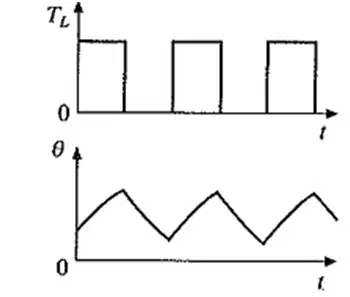
Identify the duty of motor (co:1)
Intermittent periodic duty with starting and braking
Intermittent periodic duty
Short time duty
Intermittent periodic duty with starting
In self controlled synchronous motor drive employing load commutated Thyristor inverter, if the source converter firing angle is in the range of 90≤αs≤180. Then the converter acts as (co.4)
Rectifier
Cycloconverter
Inverter
None
. The process of drawing out and twisting the finished yarn on smaller bobbins in the textile mill is called (co.5)
Spinning
Roving
Weaving
Drawing
Which of the following machine can be used for the improvement of power factor in industry? (co.5)
DC series motor
Squirrel cage induction motor
Synchronous machine
None
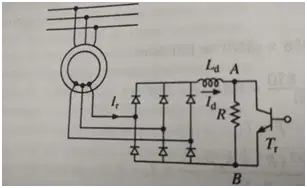
Identify the speed control method of induction motor (co.4)
Source voltage control method
Static rotor resistance control
Variable frequency control
None
The positive sequence voltage equation of an unbalanced source voltage and single phasing of an induction motor (Co.4)
1/3(Va+Vb+vc)
1/3(Va+αVb+α2vc)
1/3(Va+α2Vb+αvc)
None
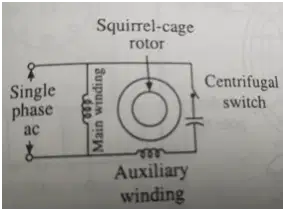
Identify the type of single phase induction motor (co.3)
Split phase
Capacitor start
capacitor run
Capacitor start and run

