
 Worksheets
Review Questions – EPAS 9 (2nd Quarter Exam)
Total questions: 60
Worksheet time: 3600secs
If an off position is not available on a VOM, where should the function switch be rested?
10 VAC
500 VAC
1000 VAC
OFF
Where should electronic instruments be protected from?
Dust
Fumes
Heat
All of the choices (Dust, Fumes, Heat)
What does AC stand for?
Direct Current
Alternating Current
Average Current
Active Current
What passive electrical component creates resistance in a circuit?
Resistor
Capacitor
Inductor
Diode
Which part of a multimeter connects to the component being tested?
Scale
Test probe
Pointer
Knob
Which type of resistor allows the resistance to be adjusted?
Fixed resistor
Variable resistor
Wirewound resistor
Carbon film resistor
Which instrument is used to measure resistance?
Ohmmeter
Ammeter
Voltmeter
Multitester
What is a rheostat used for?
Control current
Measure voltage
Store charge
Rectify AC
Which digit does the color yellow represent on a resistor color band?
3
4
5
6
A resistor's first three color bands are brown, black, red. What is its value?
100 Ω
10 kΩ
1 kΩ
1 Ω
Which colors show a 47 kΩ resistor on the first three bands?
Red, Orange, Yellow
Orange, Red, Violet
Yellow, Violet, Orange
Blue, Violet, Yellow
Which color is NOT used in the standard resistor value color code?
Orange
Pink
Green
Brown
A heater draws 8,000 mA from a 120 V line. What is its resistance?
1.5 Ω
15 Ω
150 Ω
0.15 Ω
Which of the following is NOT a part of a multimeter?
Pointer
Test probe
Scale
Adjustment probe
A fixed resistor is a type of resistor whose resistance ________.
does change
does not change
does fluctuate
does not evolve
Where can you view the measurement readout on a digital multimeter?
Analog scale
Digital screen
Pointer
Knob
Who introduced the 5S principle?
Americans
Filipinos
Japanese
British
What measuring device combines several functions (voltage, current, resistance) in one unit?
Voltmeter
Ammeter
Ohmmeter
Multitester
Which is commonly added to 5S to make it 6S?
Speed
Safety
Sustainability
Sorting
Which materials resist the flow of current?
Conductors
Semiconductors
Insulator materials
Metals
How much voltage is across a 470 Ω resistor with 0.05 A current?
4.7 V
2.35 V
23.5 V
47 V
Using Ohm's Law, what is the current through a 150 Ω resistor at 24 V?
0.16 A
1.6 A
0.016 A
16 A
What is the tolerance value for a silver color band on a resistor?
±5%
±20%
±10%
±1%
Who discovered the concept associated with mechanical power (historical)?
Isaac Newton
James Watt
Michael Faraday
George Simon Ohm
Which law mathematically shows rate at which energy is absorbed or produced in a circuit?
Ohm's Law
Kirchhoff's Law
Coulomb's Law
Power Law
Who discovered Ohm's Law?
James Watt
Michael Faraday
George Simon Ohm
Andre-Marie Ampere
Which one describes a potentiometer?
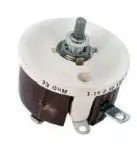
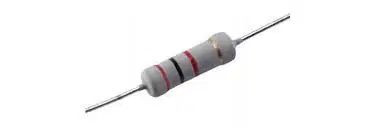
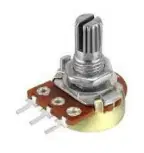
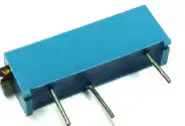
Which is NOT correct when interpreting a resistance reading from an ohmmeter?
Know the value of individual calibration in the ohmmeter scale
Identify the appropriate range multiplier to be used.
Connect the metallic part of the test probes
Make the necessary voltage measurements
Which solid material is the best conductor of electricity?
Gold
Copper
Silver
Aluminum
What is the most common material used as wire insulation?
Rubber
Paper
Plastic
Glass
Which instrument measures voltage?
Ammeter
Voltmeter
Ohmmeter
Wattmeter
A digital voltmeter gives a ______ of a voltage using an ADC.
pointer displays
analog display
none of the choices
Which color CAN be used on the 1st color band of resistors (choose the exception)?
Gold
Silver
Brown
None of these
When measuring an unknown voltage, how should you set the range selector?
Lowest then increase
Middle range
Set to the highest point and work downward
Set to auto
Why apply 6S in housekeeping?
To increase speed only
To reduce costs only
To improve aesthetics only
All of the above
What is the unit of electric current?
Ampere
Volt
Ohm
Watt
If you reverse multimeter probe polarity while measuring DC voltage, what happens?
No change
The pointer deflects to the left instead of the right
It turns off
It overloads
What indicates measured values on an analog multimeter scale?
Pointer / needle
Digital display
Sound
LED
How does voltage work?
It pushes electrons to flow
It measures resistance
It stores charge
It controls frequency
Where should you store a multimeter?
Dry area
Wet area
Hot area
Cold area
What is the formula to find current in a circuit?
I = R / V
I = V × R
I = V / R
I = P / V
What is the metric-prefix form of 3,300?
3.3 M
3.3 G
3.3 K
3.3 c
Which part should you avoid touching when measuring?
Scale
Pointer
Metal part of the test probe
Case
If you are using a multimeter for the first time, what should you do?
Guess the settings
Read the manual on how to use it
Ask a friend only
Use trial and error
Which instrument is used to measure electric current?
Voltmeter
Ammeter
Ohmmeter
Wattmeter
Given V = 150 V and I = 5 A, find Resistance (R).
15 Ω
30 Ω
300 Ω
3 Ω
Given V = 24 V and R = 100 Ω, find Current (I).
0.24 A
2.4 A
0.024 A
24 A
Given I = 0.2 A and R = 120 Ω, find Voltage (V).
2.4 V
24 V
240 V
0.24 V
Given V = 120 V and R = 8 Ω, find Current (I).
1.5 A
15 A
0.15 A
150 A
Given I = 15 A and R = 8 Ω, find Voltage (V).
12 V
120 V
30 V
8 V
Find power P when I = 4 A and R = 55 Ω.
220 W
440 W
880 W
55 W
Find power P when V = 24 V and R = 100 Ω.
0.24 W
5.76 W
2.4 W
24 W
Find power P when V = 120 V and R = 500 Ω.
14.4 W
28.8 W
288 W
2.88 W
Find power P when V = 9 V and I = 0.09 A.
0.081 W
0.81 W
8.1 W
0.009 W
Find power P when V = 220 V and I = 4 A.
220 W
440 W
880 W
55 W
Using the RX1 scale, identify the actual resistance reading.
0.25 Ω
2.5 Ω
25 Ω
250 Ω
Using the RX10 scale, identify the actual resistance reading.
2.5 Ω
25 Ω
250 Ω
2500 Ω
Using the RX100 scale, identify the actual resistance reading.
25 Ω
250 Ω
2.5 kΩ
25 kΩ
Using the RX1K scale, identify the actual resistance reading.
250 Ω
2.5 kΩ
25 kΩ
250 kΩ
Using the RX100K scale, identify the actual resistance reading.
25 kΩ
250 kΩ
2.5 MΩ
25 MΩ

