
 Worksheets
CC-P2
Total questions: 151
Worksheet time: 1hrs 16mins
Name
Class
Date
1.
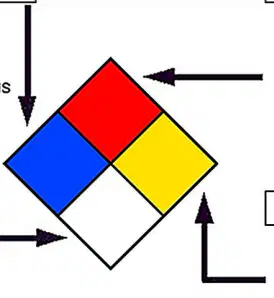
Red
a)
Health
b)
Fire/flammability
c)
Special
d)
Reactivity/Instability
2.
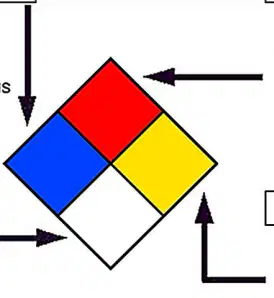
Blue
a)
Health
b)
Fire/flammability
c)
Special
d)
Reactivity/Instability
3.
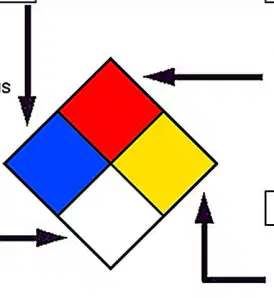
White
a)
Health
b)
Fire/flammability
c)
Special
d)
Reactivity/Instability
4.
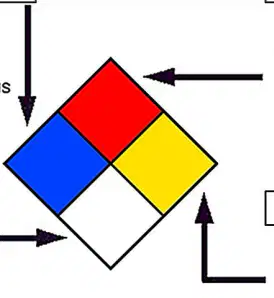
Yellow
a)
Health
b)
Fire/flammability
c)
Special
d)
Reactivity/Instability
5.
used for materials that give off harmful vapors; provides personnel protection only
a)
BSC
b)
Fume hood
c)
PPE
6.
▪ When skin or eye contact occurs, the best first aid is to flush the area with large amounts of water for at least ___________ and then seek medical attention.
a)
60 seconds
b)
10 minutes
c)
15 minutes
d)
30 minutes
7.
Ordinary Combustibles (wood, paper, cloth, etc.)
a)
Class A Fire
b)
Class B Fire
c)
Class C Fire
d)
Class D Fire
8.
Flammable liquids (grease, gasoline, paints, oils)
a)
Class A Fire
b)
Class B Fire
c)
Class C Fire
d)
Class D Fire
9.
Electrical equipment (motors, switches, computers)
a)
Class A Fire
b)
Class B Fire
c)
Class C Fire
d)
Class D Fire
10.
Flammable metals (magnesium, sodium, potassium, lithium)
a)
Class A Fire
b)
Class B Fire
c)
Class C Fire
d)
Class D Fire
11.
Extinguished using Metal X (special dry chemical) or sand
a)
Class A Fire
b)
Class B Fire
c)
Class C Fire
d)
Class D Fire
12.
Dry chemical, Carbon dioxide, Halon
a)
Class A Fire
b)
Class B Fire
c)
Class C Fire
d)
Class D Fire
13.
Dry chemical, Carbon dioxide (BC), Halon
a)
Class A Fire
b)
Class B Fire
c)
Class C Fire
d)
Class D Fire
14.
Pressurized water (A), Dry chemical (ABC)
a)
Class A Fire
b)
Class B Fire
c)
Class C Fire
d)
Class D Fire
15.
Arsenal or materials that are liable to result in detonation
a)
Class E Fire
b)
Class A Fire
c)
Class K Fire
d)
Class B Fire
16.
Combustible cooking media in commercial cooking equipment (vegetable- or animal oils and fats)
a)
Class E Fire
b)
Class A Fire
c)
Class K Fire
d)
Class B Fire
17.
Extinguished using Liquid designed to prevent splashing and cool the fire
a)
Class E Fire
b)
Class A Fire
c)
Class K Fire
d)
Class B Fire
18.
Cannot be extinguished; allowed to burn and nearby materials protected
a)
Class E Fire
b)
Class A Fire
c)
Class K Fire
d)
Class B Fire
19.
Anticoagulated venous, capillary, or arterial blood
a)
Serum
b)
Plasma
c)
Whole blood
20.
Liquid portion of clotted or anticoagulated blood prepared by centrifugation at 1000 to 2000g for 10 minutes
a)
Serum
b)
Plasma
c)
Whole blood
21.
glucose, potassiu, phosphate, bicarbonate, albumin, CK, AST
a)
Serum value > plasma value
b)
Plasma value > serum value
c)
WB value < plasma value
d)
CB value > VB value
e)
VB value > CB value
22.
TP, Calcium, LD
a)
Serum value > plasma value
b)
Plasma value > serum value
c)
WB value < plasma value
d)
CB value > VB value
e)
VB value > CB value
23.
Glucose (10 to 15%)
a)
Serum value > plasma value
b)
Plasma value > serum value
c)
WB value < plasma value
d)
CB value > VB value
e)
VB value > CB value
24.
Glucose post-prandial, potassium
a)
Serum value > plasma value
b)
Plasma value > serum value
c)
WB value < plasma value
d)
CB value > VB value
e)
VB value > CB value
25.
TP, Calcium
a)
Serum value > plasma value
b)
Plasma value > serum value
c)
WB value < plasma value
d)
CB value > VB value
e)
VB value > CB value
26.
Yellow
a)
20 gauge
b)
21gauge
c)
22 gauge
d)
23 gauge
e)
25 gauge
27.
For large-volume tubes or large-volume syringes used on patients with normal-size veins.
a)
20 gauge
b)
21gauge
c)
22 gauge
d)
23 gauge
e)
25 gauge
28.
For large-volume tubes or large-volume syringes used on patients with normal-size veins.
a)
20 gauge
b)
21gauge
c)
22 gauge
d)
23 gauge
e)
25 gauge
29.
Green
a)
20 gauge
b)
21gauge
c)
22 gauge
d)
23 gauge
e)
25 gauge
30.
Standard needle gauge for routine venipuncture on patients with normal veins
a)
20 gauge
b)
21gauge
c)
22 gauge
d)
23 gauge
e)
25 gauge
31.
For older children and adult patients with small veins or for syringe draws on difficult veins.
a)
20 gauge
b)
21gauge
c)
22 gauge
d)
23 gauge
e)
25 gauge
32.
Black
a)
20 gauge
b)
21gauge
c)
22 gauge
d)
23 gauge
e)
25 gauge
33.
Used on infants and children, difficult veins, or hand veins of adults.
a)
20 gauge
b)
21gauge
c)
22 gauge
d)
23 gauge
e)
25 gauge
34.
Blue
a)
20 gauge
b)
21gauge
c)
22 gauge
d)
23 gauge
e)
25 gauge
35.
Used to collect blood from scalp or tiny veins of premature infants; prone to hemolysis
a)
20 gauge
b)
21gauge
c)
22 gauge
d)
23 gauge
e)
25 gauge
36.
Orange
a)
20 gauge
b)
21gauge
c)
22 gauge
d)
23 gauge
e)
25 gauge
37.
ETS needle length
a)
1 to 1.5 inches
b)
0.5 to 1 inches
c)
0.5 to 0.75 inches
d)
1 to 2.5 inches
38.
Butterfly needle length
a)
1 to 1.5 inches
b)
0.5 to 1 inches
c)
0.5 to 0.75 inches
d)
1 to 2.5 inches
39.
high temperature =____ draw volume;
a)
Increase
b)
Decrease
40.
high altitude (>5000 ft) = __________ draw volume
a)
Increase
b)
Decrease
41.
migration of water vapor inside a tube
a)
High humidity
b)
Low humidity
42.
= escape of water vapor from a tube containing a wet additive
a)
High humidity
b)
Low humidity
43.
; low temperature = ____ draw volume
a)
Increase
b)
Decrease
44.
bleeding from the venipuncture site and hematoma formation
a)
Vascular
b)
Infections
c)
Anemia
d)
Neurologic
e)
Cardiovascular
45.
– second most common complication
a)
Vascular
b)
Infections
c)
Anemia
d)
Neurologic
e)
Cardiovascular
46.
– results from blood loss for testing; particular problem with pediatric patients
a)
Vascular
b)
Infections
c)
Anemia
d)
Neurologic
e)
Cardiovascular
47.
post-phlebotomy seizure or pain
a)
Vascular
b)
Infections
c)
Anemia
d)
Neurologic
e)
Cardiovascular
48.
vasovagal syncope, orthostatic hypotension, and cardiac arrest.
a)
Vascular
b)
Infections
c)
Anemia
d)
Neurologic
e)
Cardiovascular
49.
– allergic reaction to iodine, adhesives, or latex
a)
Vascular
b)
Dermatologic
c)
Anemia
d)
Neurologic
e)
Cardiovascular
50.
tolerates heating and sterilization for lengthy periods; subject to scratching and may cloud with strong alkali
a)
Borosilicate
b)
Aluminosilicate
c)
High silica
d)
Soft glass
51.
Pyrex, Klimax is an example of which type of glass material?
a)
Borosilicate
b)
Aluminosilicate
c)
High silica
d)
Soft glass
52.
6x stronger than borosilicate; better able to resist scratching and alkali attack
a)
Borosilicate
b)
Aluminosilicate
c)
High silica
d)
Soft glass
53.
Corex
a)
Borosilicate
b)
Aluminosilicate
c)
High silica
d)
Soft glass
54.
– heat, chemical, and electrical tolerance and excellent optical properties
a)
Borosilicate
b)
Aluminosilicate
c)
High silica
d)
Soft glass
55.
Vycor
a)
Borosilicate
b)
Aluminosilicate
c)
High silica
d)
Soft glass
56.
Used for high thermal, drastic heat shock, and extreme chemical treatment with acids and alkali
a)
Borosilicate
b)
Aluminosilicate
c)
High silica
d)
Soft glass
57.
Boron-free glass
a)
Borosilicate
b)
Aluminosilicate
c)
High silica
d)
Soft glass
58.
Can be used with strong acids and alkali
a)
Borosilicate
b)
Aluminosilicate
c)
High silica
d)
Soft glass
59.
Soda-lime glass
a)
Flint glass
b)
Low actinic glass
60.
most inexpensive; releases alkali causing errors in certain determinations
a)
Flint glass
b)
Low actinic glass
61.
reduces light transmission; used to contain photosensitive substances
a)
Flint glass
b)
Low actinic glass
62.
Amber-colored
a)
Flint glass
b)
Low actinic glass
63.
– excellent temperature tolerance and chemical resistance
a)
Teflon
b)
Polypropylene
c)
Polycarbonate
d)
Polyethylene
64.
– resistant to most chemicals; withstands high temperatures, becomes discolored by solvents; used for pipet tips, test tubes
a)
Teflon
b)
Polypropylene
c)
Polycarbonate
d)
Polyethylene
65.
stronger than polypropylene (resistant to shattering) and better temperature tolerance, but chemical resistance not as good; used for centrifuge tubes, graduated cylinders
a)
Teflon
b)
Polypropylene
c)
Polycarbonate
d)
Polyethylene
66.
resistant to most chemicals (except concentrated acids); for storage of alkaline solutions; used for disposable transfer pipets, test tubes, bottles
a)
Teflon
b)
Polypropylene
c)
Polycarbonate
d)
Polyethylene
67.
rigid, clear; used for test tubes, graduated tubes
a)
Polysterene
b)
Polyvinyl chloride
c)
Polycarbonate
d)
Polyethylene
68.
autoclavable
a)
Polysterene
b)
Polyvinyl chloride
c)
Polycarbonate
d)
Polyethylene
69.
not autoclavable
a)
Polysterene
b)
Polyvinyl chloride
c)
Polycarbonate
d)
Polyethylene
70.
soft and flexible but porous; frequently used as tubing
a)
Polysterene
b)
Polyvinyl chloride
c)
Polycarbonate
d)
Polyethylene
71.
not autoclavable
a)
Polysterene
b)
Polyvinyl chloride
c)
Polycarbonate
d)
Polyethylene
72.
holds but does not deliver the exact volume
a)
To contain
b)
To deliver
73.
delivers the exact volume it holds
a)
To contain
b)
To deliver
74.
characterized by etched ring or band near the mouth
a)
Blow out
b)
Blow me
c)
Self-draining
75.
allowed to drain by gravity
a)
Blow out
b)
Blow me
c)
Self-draining
76.
Which of the following are transfer pipettes?
a)
Volumetric
b)
Ostwald-Folin
c)
Serologic
d)
Mohr
77.
Which of the following are to-deliver, blow-out pipettes?
a)
Volumetric
b)
Ostwald-Folin
c)
Serologic
d)
Mohr
78.
Which of the following are measuring/ with graduated marks pipettes?
a)
Volumetric
b)
Ostwald-Folin
c)
Serologic
d)
Mohr
79.
Which of the following has single capacity mark?
a)
Volumetric
b)
Ostwald-Folin
c)
Serologic
d)
Mohr
80.
Which of the following is graduated down to tip?
a)
Volumetric
b)
Ostwald-Folin
c)
Serologic
d)
Mohr
81.
Which of the following is graduated between 2 marks?
a)
Volumetric
b)
Ostwald-Folin
c)
Serologic
d)
Mohr
82.
Which of the following is used for viscous fluids?
a)
Volumetric
b)
Ostwald-Folin
c)
Serologic
d)
Mohr
83.
Which of the following is used for non viscous sample and standards?
a)
Volumetric
b)
Ostwald-Folin
c)
Serologic
d)
Mohr
84.
Which of the following is used for serial dilution and measuring reagents?
a)
Volumetric
b)
Ostwald-Folin
c)
Serologic
d)
Mohr
85.
uses suction to draw sample into a disposable polypropylene tip; piston does not come in contact with the liquid
a)
Air displacement
b)
Positive displacement
86.
operates like a hypodermic syringe; tips must be rinsed out
a)
Air displacement
b)
Positive displacement
87.
▪ No air cushion; constant aspiration force; for high density or very viscous samples
a)
Air displacement
b)
Positive displacement
88.
Used for sampling in most discrete automated systems
a)
Air displacement
b)
Positive displacement
89.
Calibration of pipettes is every
a)
3 months
b)
weekly
c)
6 months
d)
12 months
90.
Calibration of centrifuge is every
a)
3 months
b)
weekly
c)
6 months
d)
12 months
91.
weight of distilled water delivered; most accurate
a)
Gravimetric method
b)
Spectrophotometric method
92.
absorbance of colores solution (potassium dichromate, p-nitrophenol) delivered
a)
Gravimetric method
b)
Spectrophotometric method
93.
– tubes attain a horizontal position during spinning and a vertical position when at rest; produces a tightly packed, flat sediment; recommended for SST
a)
Horizontal or swinging bucket
b)
Fixed-angle or angle-head
c)
Ultracentrifuge
d)
Cytocentrifuge
94.
3,000 rpm
a)
Horizontal or swinging bucket
b)
Fixed-angle or angle-head
c)
Ultracentrifuge
d)
Cytocentrifuge
95.
tubes are at fixed angle (25-40°) when rotating; capable of higher speeds with much less heat build-up; produces slanted sediment; decantation not recommended
a)
Horizontal or swinging bucket
b)
Fixed-angle or angle-head
c)
Ultracentrifuge
d)
Cytocentrifuge
96.
7,000 rpm
a)
Horizontal or swinging bucket
b)
Fixed-angle or angle-head
c)
Ultracentrifuge
d)
Cytocentrifuge
97.
used to separate layers of different specific gravities; usually refrigerated to counter the heat produced due to friction
a)
Horizontal or swinging bucket
b)
Fixed-angle or angle-head
c)
Ultracentrifuge
d)
Cytocentrifuge
98.
100,000 rpm
a)
Horizontal or swinging bucket
b)
Fixed-angle or angle-head
c)
Ultracentrifuge
d)
Cytocentrifuge
99.
for body fluid cell counts
a)
Horizontal or swinging bucket
b)
Fixed-angle or angle-head
c)
Ultracentrifuge
d)
Cytocentrifuge
100.
should not be used in the clinical laboratory
a)
Analytic reagent grade
b)
Ultrapure grade
c)
Chemically Pure Grade
d)
United States Pharmacopeia/National Formulary Grade
e)
Technical or Commercial Grade
101.
– primarily used to manufacture drugs and purity standards may not meet assay requirements.
a)
Analytic reagent grade
b)
Ultrapure grade
c)
Chemically Pure Grade
d)
United States Pharmacopeia/National Formulary Grade
e)
Technical or Commercial Grade
102.
impurity limitations not stated; not acceptable for research and laboratory techniques unless further purification is carried out or a reagent blank is included during analysis
a)
Analytic reagent grade
b)
Ultrapure grade
c)
Chemically Pure Grade
d)
United States Pharmacopeia/National Formulary Grade
e)
Technical or Commercial Grade
103.
for specific procedures such as chromatography, AAS, immunoassays, molecular diagnostics, and standardization techniques
a)
Analytic reagent grade
b)
Ultrapure grade
c)
Chemically Pure Grade
d)
United States Pharmacopeia/National Formulary Grade
e)
Technical or Commercial Grade
104.
high degree of purity suitable for use in most analytical procedures
a)
Analytic reagent grade
b)
Ultrapure grade
c)
Chemically Pure Grade
d)
United States Pharmacopeia/National Formulary Grade
e)
Technical or Commercial Grade
105.
– highly purified chemical that can be measured directly to produce a substance of exact known concentration and purity
a)
Primary standard
b)
Secondary standard
c)
ACS Primary standard
d)
Standard Reference materials
106.
purity tolerance value of 100+- 0.02%
a)
Primary standard
b)
Secondary standard
c)
ACS Primary standard
d)
Standard Reference materials
107.
certified for use in clinical chemistry laboratories
a)
Primary standard
b)
Secondary standard
c)
ACS Primary standard
d)
Standard Reference materials
108.
substance of lower purity with its concentration determined by comparison with a primary standard or SRM
a)
Primary standard
b)
Secondary standard
c)
ACS Primary standard
d)
Standard Reference materials
109.
purest type; recommended for standard preparation
a)
Type I
b)
Type II
c)
Type III
110.
acceptable for most laboratory procedures including reagent preparation
a)
Type I
b)
Type II
c)
Type III
111.
can be used for some qualitative tests but not for routine analyses and reagent preparation; water source for the preparation of Type I or II water and for washing glassware
a)
Type I
b)
Type II
c)
Type III
112.
Ultraviolet light
a)
<400 nm
b)
400 to 700 nm
c)
>700 nm
113.
Visible light
a)
<400 nm
b)
400 to 700 nm
c)
>700 nm
114.
Infrared light
a)
<400 nm
b)
400 to 700 nm
c)
>700 nm
115.
Relationship between wavelength (λ) and energy (E)
a)
Direct
b)
Inverse
c)
Either
d)
Neither
116.
The concentration of a substance is directly proportional to the amount of light absorbed and is inversely proportional to the logarithm of transmitted light
a)
Beer Lambert's law
b)
Handerson-Hasselbach equation
c)
Nernst equation
117.
Beer lambert's law; molar absorptivity
a)
a or ɛ
b)
b
c)
c
118.
Beer lambert's law; light path length
a)
a or ɛ
b)
b
c)
c
119.
Beer lambert's law; concentration
a)
a or ɛ
b)
b
c)
c
120.
To compute the absorbance value given the % transmittance:
a)
A = 2 log% T
b)
Cu = As / Au x Cs
c)
Cu = Au / As x Cs
121.
To determine the concentration of an unknown analyte:
a)
A = 2 log% T
b)
Cu = As / Au x Cs
c)
Cu = Au / As x Cs
122.
Provides polychromatic light which the sample will modify or attenuate by absorption
a)
Light source
b)
Entrance slit
c)
Monochromator
d)
Exit slit
e)
Cuvette
123.
Prevents stray light from entering
the monochromator system
a)
Light source
b)
Entrance slit
c)
Monochromator
d)
Exit slit
e)
Cuvette
124.
Wavelength selector; isolates a portion of the spectrum emitted by the source and focuses it on the sample
a)
Light source
b)
Entrance slit
c)
Monochromator
d)
Exit slit
e)
Cuvette
125.
Controls the bandpass; allows only a narrow fraction of the spectrum to reach the cuvette
a)
Light source
b)
Entrance slit
c)
Monochromator
d)
Exit slit
e)
Cuvette
126.
Sample cell; may be round or square
a)
Light source
b)
Entrance slit
c)
Monochromator
d)
Exit slit
e)
Cuvette
127.
Converts the transmitted light energy into an equivalent amount of electrical energy
a)
Photodetector
b)
Read-out device
128.
Processes the electrical signal, performs mathematical operations, and displays the output
a)
Photodetector
b)
Read-out device
129.
UV assays that do not produce color assays
a)
Deuterium or Hydrogen
b)
Xenon / Mercury
c)
Tungsten
d)
LASER
130.
UV visible
a)
Deuterium or Hydrogen
b)
Xenon / Mercury
c)
Tungsten
d)
LASER
131.
Visible to near infrared region
a)
Deuterium or Hydrogen
b)
Xenon / Mercury
c)
Tungsten
d)
LASER
132.
continuous, non-linear spectrum better separation of high-frequency light
a)
Prism
b)
Diffraction gratings
c)
Bandpass
133.
continuous, linear; uniform separation of wavelengths
a)
Prism
b)
Diffraction gratings
c)
Bandpass
134.
range of wavelengths transmitted; calculated as width at more than half the maximum transmittance
a)
Prism
b)
Diffraction gratings
c)
Bandpass
135.
UV and IR
a)
Quartz or fused silica
b)
Plastic
c)
Glass
136.
UV-visible
a)
Quartz or fused silica
b)
Plastic
c)
Glass
137.
Visible
a)
Quartz or fused silica
b)
Plastic
c)
Glass
138.
simplest type of photodetector
a)
Barrier layer cell
b)
Phototube
c)
Photodiode
139.
requires external voltage source
a)
Barrier layer cell
b)
Phototube
c)
Photodiode
140.
excellent linearity
a)
Barrier layer cell
b)
Phototube
c)
Photodiode
141.
istilled water, reagent, or sample used to subtract absorbances not due to the analyte of interest; sets the spectrophotometer to 0 absorbance or 100% transmittance
a)
Blank
b)
Standard
c)
Controls
142.
substance of known purity and concentration used to determine the concentration of the unknown analyte; definite concentration
a)
Blank
b)
Standard
c)
Controls
143.
– solutions containing various analytes with known target values; analyzed with patient samples to monitor analytical performance
a)
Blank
b)
Standard
c)
Controls
144.
▪ Characteristics: Commutable, stable, no matrix effects, with known analyte concentrations spanning clinically important range at appropriate decision levels
a)
Blank
b)
Standard
c)
Controls
145.
corrects for absorbance caused by the color of reagents; used to zero the instrument before measuring test samples and other blanks
a)
Reagent blank
b)
Sample blank
c)
Either
d)
Neither
146.
used to subtract the intrinsic absorbance caused by hemolysis, icterus, turbidity, or drug interference during sample analysis
a)
Reagent blank
b)
Sample blank
c)
Either
d)
Neither
147.
the wavelength set is the actual one selected by the monochromator; checked using didymium glass or holmium oxide
a)
Wavelength accuracy
b)
Absorbance check
c)
Linearity
d)
Stray light
148.
done using glass filters and solutions that have known absorbance values
a)
Wavelength accuracy
b)
Absorbance check
c)
Linearity
d)
Stray light
149.
a change in concentration results in a straight-line calibration curve (Beer’s Law); determined using neutral density filters and dichromate solution
a)
Wavelength accuracy
b)
Absorbance check
c)
Linearity
d)
Stray light
150.
any wavelength outside the band of interest; detected using sharp cutoff filters
a)
Wavelength accuracy
b)
Absorbance check
c)
Linearity
d)
Stray light
151.
sources include extraneous room light, light dispersed by a darkened lamp envelope, deteriorated optics, scratches on optical surfaces, dust particles in the light path, higher order spectra produced by diffraction gratings
a)
Wavelength accuracy
b)
Absorbance check
c)
Linearity
d)
Stray light
100 %

