
 Worksheets
Weathering Asessment
Total questions: 17
Worksheet time: 9mins
Erosion occurring as material wears away at the surface caused by wind, water, or glaciers is called
Carbonation
Abrasion
Hydrolysis
Weathering
Deposition creates flood plains, sandbars, sand dunes, and ___________at the mouths of slow-moving rivers.
Deltas
Plateaus
Canyons
Valleys

Ice wedging is an example of -
Physical weathering
Chemical weathering
Both physical AND chemical weathering
As the ________ increases, the size of particles carried by water increases.
Water depth
Slope
Water velocity
Temperature
U-shaped valleys are created as large masses of ice known as move down mountainsides, assisted by the force of
Glaciers - Erosion
Glaciers — Gravity
Icebergs - Water
Glaciation - Sediment
Carbon dioxide in rainwater creating carbonic acid is an example of:
Carbonation
Abrasion
Hydrolysis
Weathering
Areas defined by environmental conditions such as similar climate, soil composition, and geological features are called:
Carbonation
Abrasion
Hydrolysis
Ecoregions
Which statement best describes the processes of weathering and erosion?
Weathering and erosion break down any type of rock into smaller particles and carry them away.
Weathering and erosion deposit loose sediments on the bottom of the ocean.
Weathering and erosion determine the amount of water in a river that transports sediments.
Weathering and erosion compact loose sediments on the sea floor.
The chemical and physical breakdown of rocks into sediment is known as:
Carbonation
Abrasion
Hydrolysis
Weathering
River deltas are formed when sediments collect and settle over time. The process of sediments, soil, and rocks being added to a landform is called:
Chemical weathering
Physical weathering
Deposition
Erosion
A boulder has a large crack running through its structure in an area with frequent freezing and thawing. Which process best explains how this occurred?
Ice wedging
Carbonation
Hydrolysis
Deposition
V-shaped valleys, waterfalls, and rapids are features created by what kind of rivers?
Old
Mature
Young
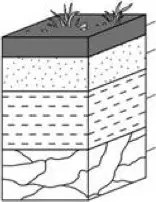
Which layer of the soil profile would be affected the most by weathering and erosion?
1
2
3
4
Which of the following aids in the weathering and erosion of rocks?
rain and wind
clouds
trees and flowers

the tree roots broke the sidewalk, this is an example of
Physical Weathering
Rock arches, sand dunes, and mushroom rock formations are caused by abrasion from
Ice
Wind
Water
Plants
When water softens minerals in rocks, it is an example of:
Carbonation
Abrasion
Hydrolysis
Weathering

