
 Worksheets
Atomic Adventure Assessment
Total questions: 27
Worksheet time: 21mins
The basic building blocks of all matter are—
Molecules
Atoms
Compounds
Mixtures
Which of the following are true about atoms? Choose 2 correct answers.
The properties of an atom are based on the number and arrangement of its subatomic particles.
Electrons are found inside the nucleus of the atom.
Atoms are made up of protons, neutrons, and electrons.
An element is a form of matter made up of two or more types of atoms that have been chemically bonded together.
Atoms of an element always have the same number of neutrons.
Using the following equations C + O₂ --> CO₂ Which term best describes the left-hand side of this equation?
The products
The compound
The electrons
The reactants
The following equation shows some carbon and oxygen atoms. Use the graphic to answer the question. C + O₂ --> CO₂ Which is another way to show this chemical equation?
One carbon atom plus one oxygen atom reacts to form one molecule with one carbon and two oxygens shown bonded
Two carbon atoms plus two oxygens react to form two molecules each with two carbons and two oxygens
Two carbon atoms react to form a molecule with two oxygens bonded together
One carbon atom plus one oxygen atom reacts to form a molecule with one carbon bonded to one oxygen
The chemical formula for ammonium is NH₄. N is the symbol for nitrogen and H is the symbol for hydrogen. Which of the following are true about ammonium?
There are 4 nitrogen atoms in ammonium.
There are 4 hydrogen atoms in ammonium.
Nitrogen and hydrogen are not chemically bonded.
Nitrogen and hydrogen are mixed but not bonded.
The chemical formula for table salt is NaCl, where Na = Sodium and Cl = Chloride. If a coefficient is placed in front of Na making two sodium atoms, there will be (a) chloride atom(s). Write the correct number in the box:
The following graphic shows some carbon and oxygen atoms. Use the graphic to answer the question. C + O₂ --> CO₂ In this equation, which represents the product(s)
C
O
C + O₂
CO₂
Chemical bonds are formed between which parts of atoms?
Protons
Electrons
Neutrons
Vacuoles
When two elements chemically combine, they form a—
reactant.
mixture.
compound.
valence.
This equation shows what happens when hydrogen and oxygen are chemically combined. 2H₂ + O₂ → 2H₂O How many total hydrogen atoms are in the product of this equation?
0
1
2
4
Use the equation to answer the question. CH₄ + 4 Cl₂ → CCl₄ + 4 HCl How many different elements are in this equation?
3
4
12
6
Read the following information and use it to answer the question. Silicon is a very common element on Earth. It makes up about 28% of the Earth’s crust and is symbolized as Si. You can find silicon in rocks, sand, clay, and soil, but it is usually mixed with other elements like oxygen. The mixtures are called silica and silicates. Scientists can get pure silicon, which is hard and shiny. Pure silicon is used to make computer chips and electronics. Sand and clay (which have silica) are used to make concrete and bricks. Silicates (a compound made of silicon and oxygen) help make glass and pottery. Silicones, made from silicon and other elements, are used in things like waterproofing and lubricants. Based upon this information, which type of silicon would a computer engineer most likely use in their daily work?
Silica from sand or clay
Pure silicon
Silicone (a combination of silicon and other elements)
Silicates with silicon and oxygen
A student wants to test how different amounts of heat affect the time it takes for a chemical reaction to occur with two different elements. The student hypothesizes that increasing the heat will make the reaction happen faster. In this experiment, what is the independent variable?
The amount of heat
The types of elements
The reaction time
The final temperature of the reaction
A science class is testing how different amounts of vinegar affect the speed of a baking soda reaction. They use three different amounts of vinegar: 50 milliliters, 100 milliliters, and 150 milliliters. They then mix each amount of vinegar with a fixed amount of baking soda and measure how quickly the bubbles form. What is the dependent variable in this experiment?
The amount of vinegar used
The amount of baking soda used
The speed at which the bubbles form
The type of container used
Categorize the following by classifying the term as an element or compound. Terms: Glucose (C6H12O6), Sulfur (S8), Water (H2O), Chlorine (Cl)
Glucose
Water
Sulfur
Chlorine
Choose the correct answer in the drop-down to complete the sentence. The law of conservation of matter states that matter cannot be created or destroyed, though the properties of matter can change. These two types of changes are called ____.
particle changes.
physical changes only.
physical and chemical changes.
interlocking cubic changes.
Compounds can be represented by chemical formulas. Each element in the compound is represented by its unique symbol. The number of atoms of each element in the compound (when more than one) is shown as a small number to the right of the element symbol. What is the correct name for this small number?
Coefficient
Exponent
Subscript
Multiplier
Which tool would be most appropriate for measuring the mass of a small rock, and what would be the most appropriate units? (choose 2 answers)
Ruler
Spring Scale
Triple Beam Balance
Newtons
Grams
Chlorine, sulfur, and oxygen all have atoms; however, the atoms of one element differ from those of the other element because of the number of which of the following subatomic particles?
Electrons
Protons
Neutrons
Ions
Which of the following statements correctly describes how elements are represented in science?
Elements are named using full words based on their color.
Each element is represented by a unique chemical symbol, often one or two letters.
Elements are represented by numbers that show their weight only.
All elements are represented by the same symbol because they are made of atoms.
Why is it important to collect data accurately during a science experiment?
So the experiment looks more exciting
So the results match what you wanted to happen
So the conclusions are based on correct information
So you can finish the experiment faster
Identify the number of atoms that are in the following chemical formula. Fe2O3
4
5
6
7

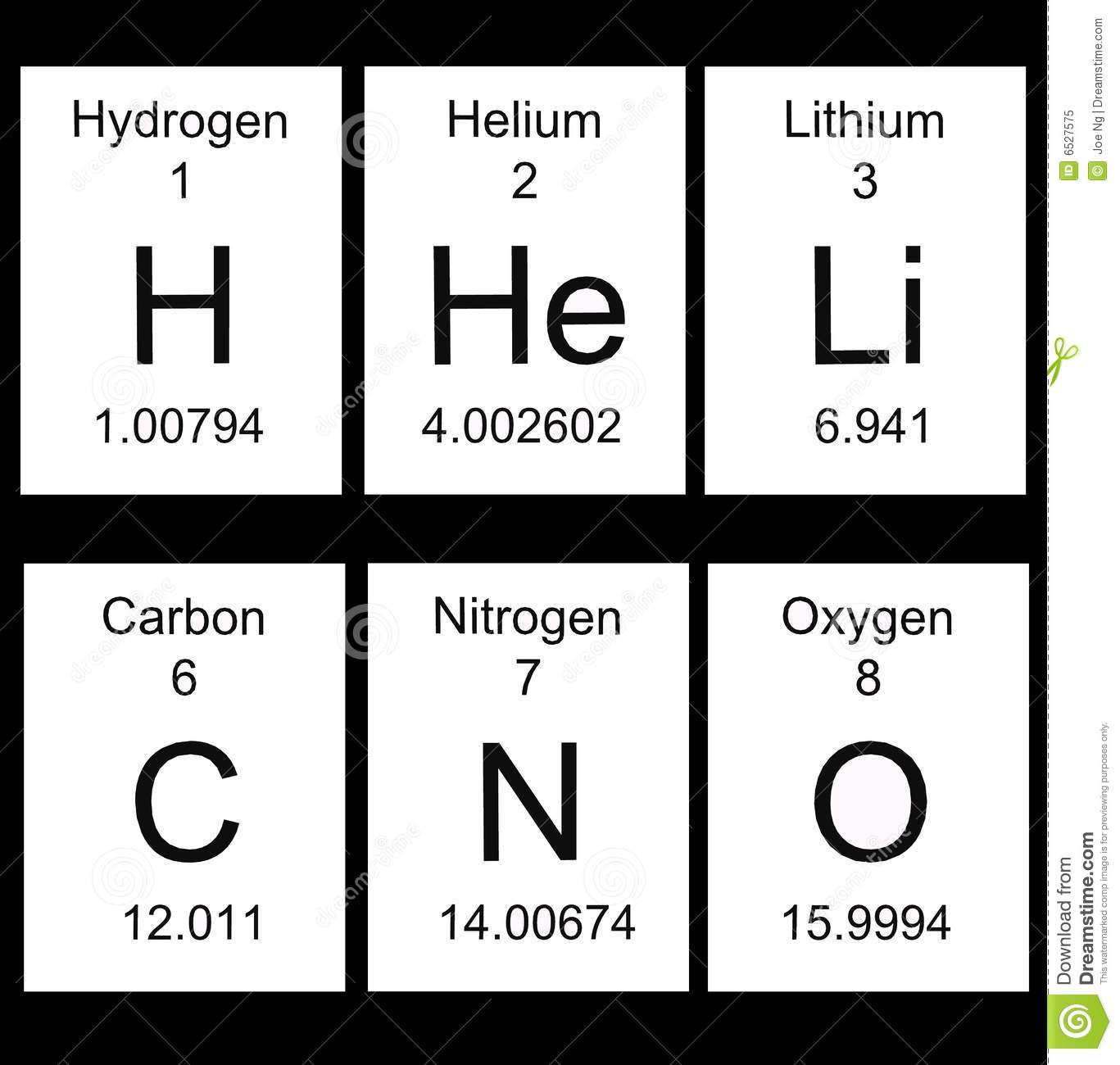

Organize the substances into element, compound, or mixture
sea water
sugar
hafnium
cobalt
water
milk
tin
DNA
air
oxygen
sodium chloride
coffee

