
 Worksheets
Hand Tools: Safety Introduction
Total questions: 35
Worksheet time: 18mins
Which statement best captures the safety message about hand tools in this lesson?
Hand tools are safe by design and rarely cause injury.
Hand tools are potentially dangerous if used incorrectly or not maintained.
Only power tools require safety training; hand tools do not.
Replacing hand tools frequently eliminates safety risks.
Why is instruction on correct use and maintenance included in training for plumbers and electricians?
It helps reduce tool purchase costs.
It prevents tools from becoming potentially dangerous through misuse or poor care.
It focuses on power tools only.
It ensures all tools are brand new.

The image shows a person with a small hand saw facing a massive tree. What safety principle does this illustrate?
Use any tool available; skill compensates for size.
Always use the right tool for the job at hand.
Avoid using saws in forest environments.
Large tasks require multiple people, not tools.
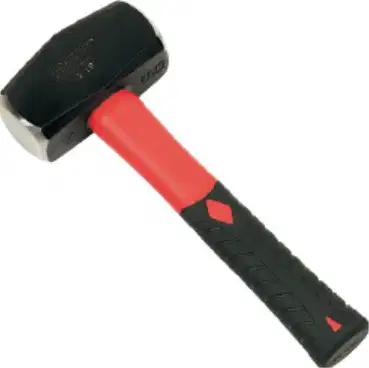
Which hammer is most appropriate for heavy hammering tasks with cold chisels and bolster chisels, and can also be used for light demolition work?
Claw hammer
Lump or club hammer
Ball peen hammer
Mallet
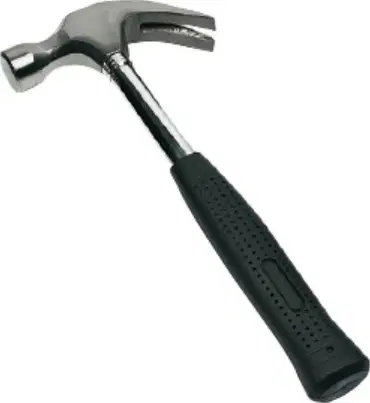
The claw of a claw hammer splits into a V shape primarily to:
Increase the striking surface
Reduce the weight of the head
Fit under the nail head for leverage when pulling
Hold screws while driving
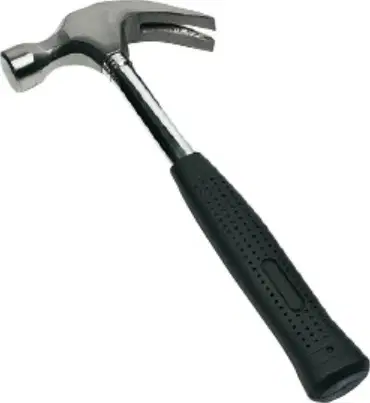
What materials are commonly used for the handle of a claw hammer? Select the best answer.
Only wood
Forged steel
Wood, fibreglass, or steel
Plastic only
What is the primary purpose of a spirit level in construction and plumbing work?
To measure distances
To ensure installations are level
To cut pipework
To locate studs behind walls
Which feature of a spirit level indicates levelness?
A rotating dial
A laser pointer
A bubble positioned between two marked lines
A digital display
Which statement best describes current practice regarding levels?
Only manual spirit levels are used today
Electronic or laser levels may be used instead of manual levels
Levels are no longer needed in modern installations
Spirit levels are used only for vertical measurements
Which two sizes are commonly used for spirit levels in the trade?
150 mm and 300 mm
600 mm and 1200 mm
900 mm and 1500 mm
300 mm and 600 mm
What distinguishes a boat level from standard spirit levels?
It is made of wood
It is 300 mm long and magnetic
It measures angles only
It has no bubble vial
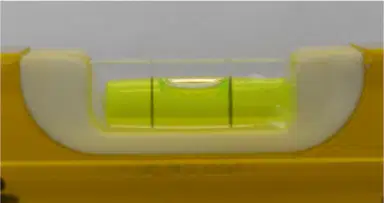
How do you know an object is level when using a spirit level?
The bubble touches one line marker
The bubble is perfectly centered between the two line markers
The bubble is at the far right of the vial
The bubble disappears
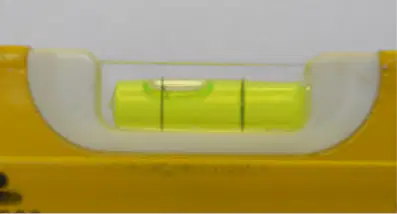
A bubble that is not perfectly between the two line markers indicates what?
The surface is level
The tool is faulty
The surface is not level
The vial is empty
Which measuring tool is described as vital for measuring sizes or marking out correctly and commonly available in 3 m or 5 m lengths?
Tape measure
Chalk line
String line
Plumb line
A tape measure used on site can provide measurements in which units?
Millimetres, metres, inches and feet
Centimetres only
Inches only
Feet and yards only
Which tool marks long straight positions for pipe runs or trunking by being held taut and flicked to leave a visible line?
Tape measure
String line
Chalk line
Line level
What is the key difference between a string line and a chalk line?
String line includes a ruler
String line has chalk powder to mark walls
String line has no chalk powder and cannot mark walls
String line is only used indoors
Which statement about using a string line is correct?
It is positioned loosely to allow movement
It is positioned very taut and often used with a line level
It measures in inches and feet
It is flicked to leave a chalk mark
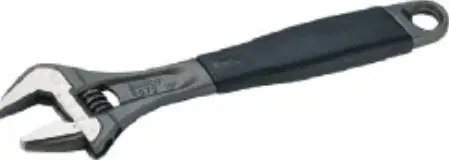
Which statement best describes the correct use of an adjustable spanner when working with nuts?
It is designed for tightening or loosening nuts and should be used on flat-sided nuts instead of grips.
It is only suitable for loosening rounded nuts and should replace all fixed spanners.
It must be used with additional grips to apply force in multiple directions.
It is primarily for cutting and shaping nuts rather than adjusting them.
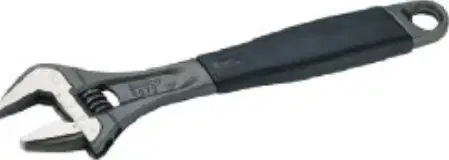
Why is the spanner head shaped to be positioned on the nut one way only?
To allow force on the handle to be applied in the correct direction and minimise slip.
To make the tool more decorative and easier to store.
To enable the spanner to fit both round and square nuts equally.
To prevent the need for adjusting the jaw size.
Which chisel is primarily used for notching joists or shaping wood to allow pipes or cables to pass by?
Cold chisel
Bolster chisel
Wood chisel
Floorboard chisel
A cold chisel is best described as a general-purpose tool for which material-related task?
Cutting and shaping wood
Cutting and breaking masonry, stone, and brickwork
Smoothing metal surfaces
Lifting floorboards
Which tool is used with a lump hammer when manually chasing a section of wall out?
Wood chisel
Cold chisel
Bolster chisel
Pipe cutter
Which statement about a bolster chisel is correct?
It is mainly for notching joists.
It is a general-purpose woodworking tool.
It is used with a lump hammer to cut masonry and can lift floorboards.
It is only used on metal.
What is the specialist version of a bolster chisel called?
Bevel-edge chisel
Floorboard chisel
Mortise chisel
Cold chisel
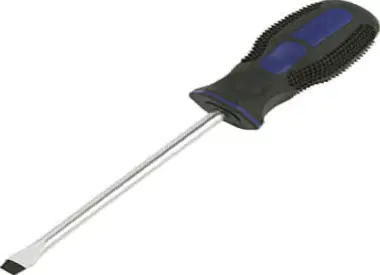
Which screw type is a flathead screwdriver designed to drive?
Slot-headed screws
Phillips screws
Pozidriv screws
Hex socket screws
Why should a flathead screwdriver not be used as a chisel or wedge?
It can void the tool warranty
The blade can be damaged quite easily
It is too short for prying
It may magnetize the screw
Which statement about Phillips head screws is correct?
They were designed to prevent over-tightening by riding out once sufficiently tight
They have an eight-point star shape
They are newer than Pozidriv
They cannot be driven by a Phillips screwdriver
Which statement correctly describes compatibility between Phillips and Pozidriv screwdrivers?
A Pozidriv driver fits a Phillips screw, but a Phillips driver will not fit a Pozidriv screw
A Phillips driver fits a Pozidriv screw, but a Pozidriv driver will not fit a Phillips screw
Both drivers fit both screws equally well
Neither driver fits the other screw type
Why is it important to have a selection of flathead screwdrivers of different sizes?
Different screws require different blade sizes
They wear out quickly
Larger blades produce more torque
Smaller blades are safer
Which saw is best suited for cutting small or awkward holes in materials and may be known as a keyhole or plasterboard saw?
Pad saw
Universal hard-point saw
Floorboard saw
Coping saw
What feature of a pad saw allows it to adapt for cutting metal when necessary?
Replaceable handle
Interchangeable blade that can be swapped for a hacksaw blade
Adjustable tooth pitch
Built-in file edge
The teeth of a universal hard-point saw are made from which material to help them stay sharp for a long time?
High-carbon steel
Tungsten steel
Stainless steel
Aluminium
Which statement best describes a universal hard-point saw?
A specialized saw only for metal
A general-purpose wood saw suitable for cutting wood to length and plastic pipework
A saw with a retractable blade used for keyholes
A fine-tooth saw exclusively for furniture joinery
When preparing to cut plastic pipework on site, which tool from this section would be the most appropriate choice?
Pad saw
Universal hard-point saw
Floorboard saw
Tenon saw

