
 Worksheets
PS L2 Assessment
Total questions: 10
Worksheet time: 5mins
Name
Class
Date
1.
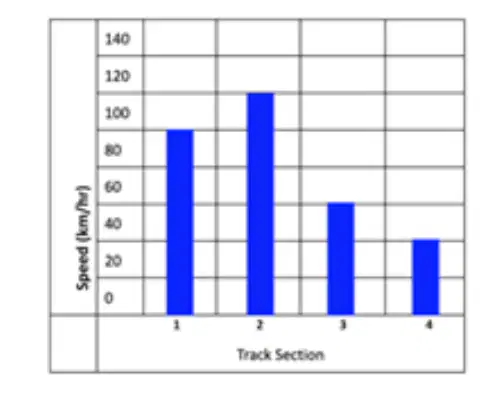
1. Why do the cars in each track section have different amounts of kinetic energy?
a)
a. The cars have different amounts of kinetic energy because they have a different amount of mass.
b)
b. The cars have different amounts of kinetic energy because they are being driven by different people.
c)
c. The cars have different amounts of kinetic energy because they are moving at different speeds.
d)
d. The cars all have the same amount of kinetic energy because they are the same type of cars.
2.
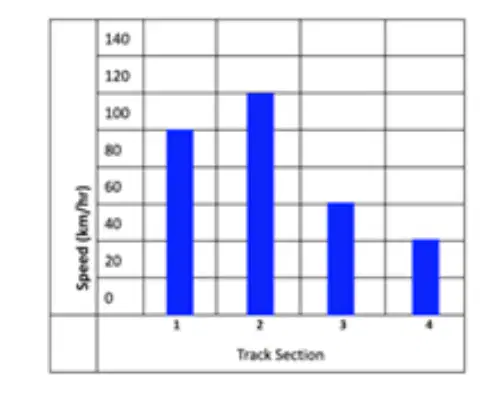
2. Which track has the least and most amount of kinetic energy? Why?
a)
a. Track 1 has the greatest kinetic energy because it is first and track 4 has the least amount of kinetic energy becauseit is last. The mass of the cars is the same.
b)
b. Track 2 has the greatest amount of kinetic energy because it is moving the fastest and track 4 has the least amount of kinetic energy because it is moving the slowest. The mass of the cars is the same.
c)
c. The cars all have the same mass so they have the same amount of kinetic energy.
d)
d. Track 3 is the average speed of the cars so it has the most kinetic energy and track 4 has the least because it is the slowest.
3.
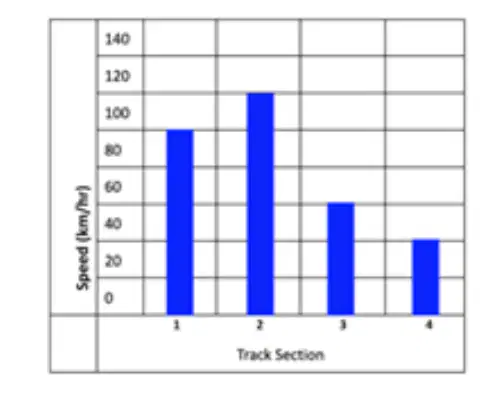
3. How can the car’s kinetic energy be increased?
a)
a. We can increase the car’s kinetic energy by increasing the mass or/and speed of the car.
b)
b. We can give the cars a push before they start to move to increase their kinetic energy.
c)
c. We can increase the car’s kinetic energy by increasing the size of its’ wheels.
d)
d. Once an amount of kinetic energy is set we can not increase it or decrease it.
4.
4. When doing an investigation why is it important to only change one variable at a time?
a)
a. If you change more than one variable it is challenging to deep track of the changes.
b)
b. It is impossible to create a data table that will allow you to record information for more than one variable.
c)
c. You will need to add many more steps to your procedure if you change more variables.
d)
d. If you change more than one variable, you will not know which one caused the change.
5.
use page 10 in your notebook
In order to investigate the effect of mass on the amount of kinetic energy
a. What did you change (independent variable)?
a)
a. The mass of the can
b)
b. The shape of the can
c)
c. The speed of the can
d)
d. How much clay was used.
6.
use page 10 in your notebook
In order to investigate the effect of mass on the amount of kinetic energy
b. What did you keep the same (controls)? Select all that apply:
a)
a. How high from the table
b)
b. the thickness of the clay
c)
c. The mass of the can
d)
d. The speed of the can
7.
use page 10 in your notebook
In order to investigate the effect of mass on the amount of kinetic energy
c. What did you measure (dependent variable)?:
a)
a. The speed of the can
b)
b. The mass of the can
c)
c. How high the can was lifted from the floor
d)
d. The thickness of the clay (compaction)
8.
6. How does speed affect the amount of kinetic energy in a moving object?
a)
a. Speed had no effect on the kinetic energy of a moving object.
b)
b. An increase in speed increases the kinetic energy of a moving object because we saw the clay become more compacted.
c)
c. An increase in speed only made the clay more compacted, it did not affect the amount of kinetic energy of an object.
d)
d. We could not measure the speed of the object so we are unable to measure the amount of kinetic energy of the clay.
9.
7. How does mass affect the amount of kinetic energy in a moving object?
a)
a. Mass does not appear to affect the amount of kinetic energy of an object because the clay was not squished.
b)
b. The greater the mass of an object the more slowly it moves so the less kinetic energy it will have.
c)
c. An increase in mass increases the kinetic energy of a moving object, because when I increased the mass of the falling object, the modeling clay was compacted more.
d)
d. Only when we increase the speed of an object can we increase the amount of kinetic energy of an object.
10.
8. The greater the squish of the clay:
a)
a. The greater the amount of kinetic energy in the can
b)
b. The lesser the amount of kinetic energy in the can.
c)
c. The amount of squish in the clay did not represent the amount of kinetic energy in the can.
100 %

