
 Worksheets
Congress Test
Total questions: 54
Worksheet time: 27mins
Refers to any classroom and school rule or expectation in which a student is not following
I
II
III
IV
Which of the following is NOT a qualification for a United States Representative?
Must be 30+ years of age.
Must be a United States citizen.
Must be an inhabitant of the state you represent at the time of the election.
Must be a citizen for 7 years.
Which clause gives Congress the power to make laws they deem “necessary and proper”?
Interstate Commerce Clause
Elastic Clause
Full & Faith Credit Clause
Executive Clause
How many years is a term for United States Representative?
2
4
6
Life
Which of the following is NOT a power given to Congress?
Create and maintain a Navy.
Borrow money to pay for government services.
Establish the naturalization process.
Interpret laws of the United States.
When the Vice President is not meeting, who presides over the Senate?
The President Pro Tempore
The Speaker of the House
The Secretary of State
The Majority Whip
Which of the following is a qualification for being a United States Senator?
Must be 35+ years of age
Must be born a United States citizen
Must go through the naturalization process
Must be a citizen and reside in the U.S. for 9 years prior to running for office
In the United States, who has the power to declare war?
The Secretary of Defense
The President as Commander in Chief
Congress
The Secretary of the Department of Homeland Security
Bills that deal with ________ must originate in the House of Representatives.
Taxes/tariffs/Raising revenue
National Crisis
Changing their salary
Calling up the militia
Each state has two __________, while each state’s number of __________ is determined by the National Census.
Legislators ; Representatives
Representatives; Electors
Senators ; Representatives
Senators; Justices
In the impeachment process, the _________ is responsible for trying the impeachment case, while the __________ has the sole power of impeachment.
Senate ; House of Representatives
Supreme Court ; House of Representatives
House of Representatives ; Senate
Supreme Court ; Senate
How many years is a term for a United States Senator?
2 Years
4 Years
6 Years
Life
Which of the following is a current United States Senator for Kentucky?
Matt Bevin
Andy Beshear
Chuck Schumer
Rand Paul
Which United States Representative is the current District 1 Representative in Kentucky?
James Comer
Brett Guthrie
Mitch McConnell
Andy Beshear
Which power does Congress have when it comes to dealing with a national crisis or emergency?
Power to make Executive Orders
Power to call up the National Guard to assist
Power to overrule national laws with a Congressional Mandate
Power to use Senatorial Courtesy
Which of the following is an overrepresented demographic in Congress?
Race: White/Caucasian
Age: Under 40 years old
Wealth: Lower middle class
Religion: Non-religious
Which position is specifically listed in the Constitution, the chamber’s most powerful, and follows the Vice President in order of presidential succession?
President Pro Tempore
Speaker of the House
Attorney General
Secretary of State
Which group is given the power to confirm presidential appointments?
House of Representatives
Senate
Congress
Supreme Court
The House of Representatives represents which group below?
The United States in foreign diplomacy
The States themselves
The People
The Court system
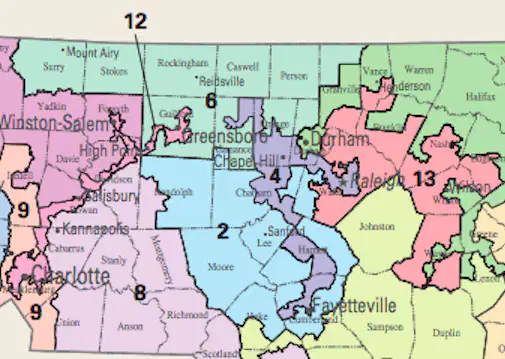
What term below does the image best represent?
Redistricting
Filibuster
Gerrymandering
Apportionment
A Representative voting in favor of a colleague's bill they don’t necessarily agree with in return for future support when needed is an example of?
Gerrymandering
Pork
Unified Government
Logrolling
A Senator halting action on a bill by reading from the phone book is an example of?
Filibuster
Logrolling
Senatorial Courtesy
Pocket Veto
Which of the following is the correct order of steps in the lawmaking process?
Bill is introduced, bill is sent to committee for hearings, bill is debated, bill is voted on.
Bill is drafted by chamber 1, voted on by chamber two, sent back to chamber one, sent to the president.
Bill is sent to the Senate from the House, Senate votes on bill, House votes on bill, it becomes law.
The President sends a bill to Congress, one chamber votes, sends it back to committee, it becomes law.
Senators represent which group below?
The United States in foreign diplomacy
The States themselves
The people
The court system
What vote count is needed to confirm a presidential appointment?
51% of Congressmen and women who vote
51% of the Senate who vote
67% of the Senate who vote
75% of the Senate who vote
Which position is only allowed to vote in the Senate when there is a tie?
Majority Whip
Speaker of the House
President Pro Tempore
Vice President
Which type of committee below would be the first to receive a proposed bill on business regulations? This committee continues from one Congress to the next.
Standing Committee
Joint Committee
Conference Committee
Select Committee
Why is it harder for the government to get things done under a divided government?
The lawmaking process becomes easier in Congress
The President and Congress likely won’t agree on specific issues
The Supreme Court typically strikes down laws under a divided government
It isn’t. This is when Congress and the President work together best.
If one million people were to move into Kentucky from Ohio before the next census, which of the following would be affected most?
Gerrymandering
Filibuster
Apportionment
Allotment
Which of the following is NOT a power granted to Congress by the United States Constitution?
Power to raise an army and navy
Power to promote the progress of science and trademarks
Power to create Post Offices and routes.
Power to veto bills
According to the information on Congressional demographics, which combination below is LEAST likely to be a Congressperson today?
31 year old white woman who does not practice religion.
65 year old white, protestant male.
50 year old African American, Catholic male.
48 year old white, Jewish male.

Current Speaker of the House
Mike Johnson
Mike McCarthy
Nancy Pelosi
Hakeem Jeffries
What is the majority vote of the House?
218
400
300
200
What is the majority vote of the Senate?
67
51
75
100
What is the term for the vote that takes place in the House and Senate to pass a bill?
Simple Minority
Large Majority
Simple Majority
It has to be unanimous
What is a pocket veto?
When the Senate kills a proposed bill
When the President does not sign a bill after 10 days, and Congress is not in session.
When the President refuses to sign the bill
When the President does not inform Congress that he has vetoed.
What is the purpose of the Conference Committee?
To hold hearings on the bill
To override a Presidential veto
to revise the bill
SO the House and the Senate can vote collectively on the bill
What is the purpose of a Committee?
To have hearings and review the bill
To hold a vote
Write a 'final draft' of the bill
Introduce the bill to the opposite chamber
Ideas for bills can come from many places including
Special interest groups, the president, Congress, and regular citizens
Special interest groups, vice-president, Supreme Court, and a bill.
Special interest groups, the Cabinet, Congress, and sponsors
Senators, the President, Supreme Court, and retired citizens
How do you override a veto?
2/3 vote in the House
2/3 vote in the Senate
2/3 vote in both Houses
Trick: Vetoes can't be overriden
If the President "does nothing" for 10 days after it arrives, What happens if Congress is NOT in session?
Debate
It Passes
It Dies
It gets pigeonholed
If the President "does nothing" for 10 days after it arrives, What happens if Congress IS in session?
Debate
It passes
It Dies
It gets pigeonholed
What does the term filibuster mean?
Talk a bill to death by delaying the vote
Love a bill to death by delaying the vote
Ignore a bill to death by delaying the vote
None of these are correct
After a bill passed in one house it then goes to...
The President
The other house
The Supreme Court
The Majority Leader
Where does a bill go once it passes Congress?
The Supreme Court
The President
The Senate
The Vice President
What percent of Congress is needed to pass a vetoed bill?
2/3
3/5
1/2
3/4
Who can propose a bill?
Citizens of the U.S.
A member of Congress
Everyone
The President
What is the final step in a bill becoming a law?
Floor debate
Signed by the President
Voting both houses
Veto by President
At which step do most bills fail to move forward?
Floor debate
Voting in both houses
Working on committees
All of the Above
What is the first step of the lawmaking process in Congress?
Debate on the floor
Working in committees
Voting
Signed by the president
What is the first step of the lawmaking process in Congress?
Debate by the full house
Introduce the bill in either house
Sign the bill into law
Send a bill to committee
After apportionment, if the State gets more or less congressional districts, they must?
Redistrict
Gerrymander
District
Census
A politico is a representative that?
Makes decisions based on own experience and expertise
Makes decisions based on political party needs
Makes decisions based on needs of constituents or what their district wants
Makes decisions either by what the district wants or by own experience depending on situation
Define delegate
Makes decisions based on own experience and expertise
Makes decisions based on political party needs
Makes decisions based on needs of constituents or what district wants
Makes decisions either by what the district wants or by own experience or expertise depending on situation.

