
 Worksheets
Wounds and Burns types and treatment
Total questions: 95
Worksheet time: 49mins
The skin serves as a barrier against ______ and pathogens.
injuries
vitamins
hormones
enzymes
When wounds occur, a series of events promote ______.
healing
infection
dehydration
paralysis
What is a wound? Fill in the blank: A wound is any break in the skin, either from ______ or surgical incision.
injury
exercise
medication
digestion
Healing of a wound depends on which of the following factors?
Location
Injury type
Blood supply
Overall health
All of the above
What is an open wound?
Skin remains intact, but underlying tissues are damaged.
Break in the skin, exposing underlying tissues.
A type of closed wound.
None of the above.
Fill in the blank: A closed wound is when the skin remains ________, but underlying tissues are damaged.
intact
broken
bruised
open
Which type of wound is described as 'outer skin layers rubbed away; usually heals without scarring'?
Abrasion
Incision
Laceration
Puncture
Fill in the blank: A ________ is a smooth cut from a scalpel or sharp object; may cause bleeding and scarring.
Incision
Abrasion
Contusion
Laceration
Which type of wound can lead to heavy bleeding and scarring due to an irregular tear?
Abrasion
Incision
Laceration
Puncture
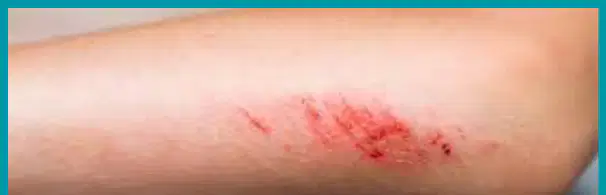
Look at the image and identify the type of wound shown.
Abrasion
Incision
Laceration
Puncture
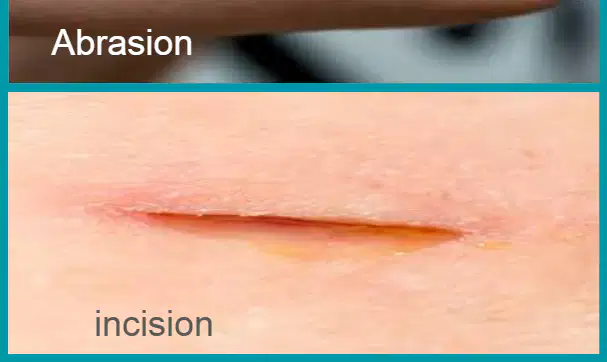
Look at the image and identify the type of wound shown.
Abrasion
Incision
Laceration
Puncture
What should you do to control bleeding?
Apply pressure to the wound.
Give the person water to drink.
Ask the person to walk around.
Cover the wound with ice only.
Managing Bleeding: What should you do after cleaning the wound?
Apply a bandage.
Leave it open to air.
Rub dirt on it.
Ignore the wound.
Managing Bleeding: Deep wounds may require which of the following?
Bandages
Sutures or staples
Ice packs
Antibiotics
Which of the following statements about arterial bleeding is true?
Arterial bleeding is mild and slow.
Arterial bleeding is severe and urgent; bright red blood spurts.
Arterial bleeding does not require immediate attention.
Arterial bleeding is always internal.
What should you do to control arterial bleeding? Fill in the blank: ________ and elevate the bleeding site.
Apply pressure
Apply ice
Bandage loosely
Lower the bleeding site
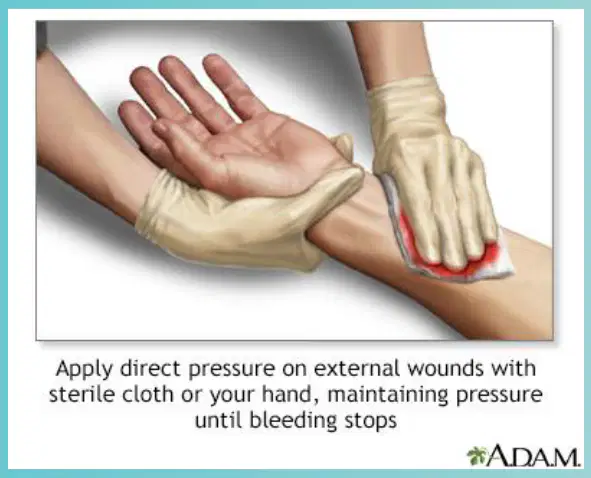
What is the purpose of applying direct pressure to a wound?
To stop the bleeding.
To increase blood flow.
To clean the wound.
To numb the area.
Venous bleeding produces a steady flow of which color of blood?
Bright red
Dark red
Blue
Yellow
Burns are epithelial injuries caused by ________, chemical, or electrical agents. Fill in the blank.
thermal
mechanical
bacterial
magnetic
Burns can affect which parts of the body?
Only the skin
Only the internal linings
Both the skin and internal linings of the body
Only the muscles
Which degree of burn affects only the epidermis and causes redness and minor pain?
First Degree
Second Degree
Third Degree
Fourth Degree
Which degree of burn extends into the dermis and causes blisters and swelling?
First Degree
Second Degree
Third Degree
Fourth Degree
Which degree of burn destroys both epidermis and dermis and may require skin grafts?
First Degree
Second Degree
Third Degree
Fourth Degree
Which degree of burn extends to muscle and bone, causing severe damage and is life-threatening?
First Degree
Second Degree
Third Degree
Fourth Degree
Which of the following best describes the sequence of events in healing?
A) Healing involves a random chain of events.
B) Healing involves a sequential chain of events.
C) Healing does not involve any chain of events.
D) Healing is instantaneous.
What happens when blood vessels break during the healing process?
No bleeding occurs.
Bleeding and clot formation occur.
The wound immediately closes.
The area becomes infected.
Fill in the blank: A ______ forms to protect the damaged area during the healing process.
scab
scar
rash
bruise
Inflammation is characterized by _______ , heat, swelling, and pain.
redness
itching
numbness
coldness
What is the function of inflammation in response to injury?
It causes infection
It confines the injury and promotes healing
It increases pain only
It destroys healthy cells
Which type of cells ingest dead cells and debris during inflammation?
Red blood cells
Phagocytic cells
Platelets
Nerve cells
Connective tissues release _______ at the wound margins. (Role of Fibroblasts)
fibroblasts
collagen
elastin
macrophages
What do fibroblasts do during wound healing? (Role of Fibroblasts)
Release antibodies
Pull tissue over the open wound
Destroy bacteria
Form scabs
This process aids in closing the wound and forming new _______. (Role of Fibroblasts)
tissue
bones
enzymes
hormones
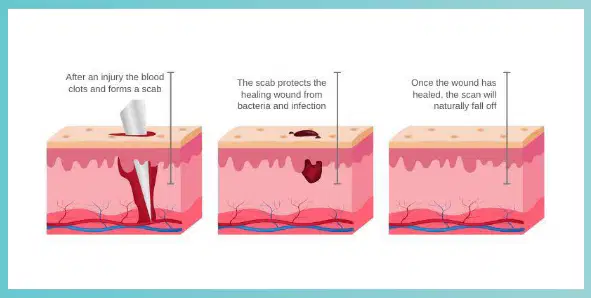
What forms from the clot to protect the wound?
Scab
Scar
Bruise
Blister
Fill in the blank: A scab prevents further ______ and infection.
injury
growth
digestion
respiration
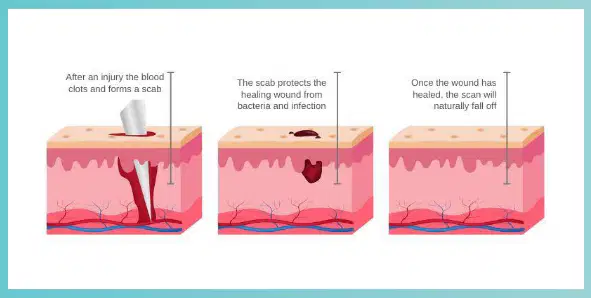
After an injury, the blood helps protect the wound by:
forming a clot to stop bleeding
increasing the heart rate
causing the skin to harden
removing all bacteria instantly
Which of the following may lead to scar tissue formation?
Minor scratches
Severe wounds
Sunburn
Allergic reactions
Burns can lead to _______, shock, and reduced circulation.
dehydration
infection
bleeding
fracture
Monitoring and _______ these effects is crucial for recovery.
managing
ignoring
delaying
exaggerating
What is the first step in the treatment of wounds?
Clean the wound to prevent infection.
Apply a bandage without cleaning.
Ignore the wound and let it heal naturally.
Cover the wound with dirt to stop bleeding.
Which of the following should be applied to a wound as needed?
Antiseptics and dressings
Water
Oil
Paint
What should you monitor for after treating a wound?
Signs of infection or complications
Signs of healing
Signs of bleeding
Signs of pain
What is the recommended treatment for first-degree burns?
Cool compresses and pain relief.
Apply butter to the burn.
Break any blisters that form.
Cover with ice directly.
What should you do for second-degree burns?
Keep blisters intact; seek medical attention if severe.
Pop the blisters and apply ice directly.
Apply butter or oil to the burn area.
Ignore the burn and cover it with a dirty cloth.
What is the treatment for third and fourth-degree burns?
Require professional medical treatment and possible surgery.
Apply ice directly to the burns.
Treat at home with over-the-counter ointments only.
Cover with cotton and wait for healing.
Importance of Proper Care: Proper care promotes faster healing and reduces _________
complications
hydration
nutrition
exercise
Why is proper wound care important?
It promotes faster healing and reduces complications.
It increases the risk of infection.
It delays recovery.
It has no effect on healing.
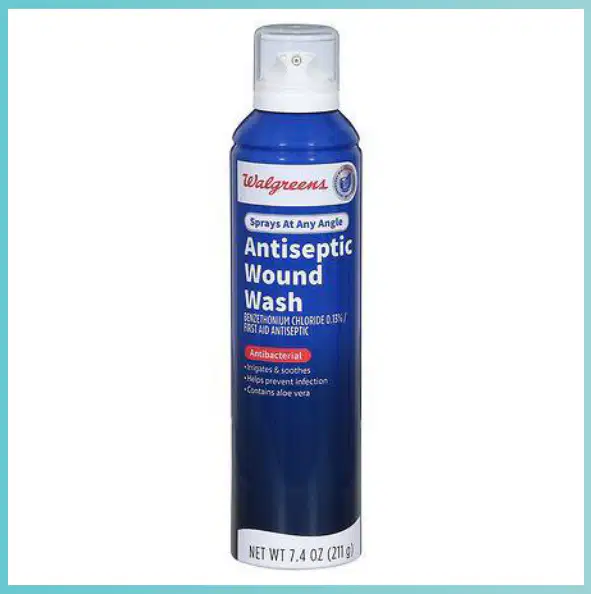
Fill in the blank: Use __________ cleanser as directed by a healthcare provider when cleaning a wound.
antiseptic
detergent
abrasive
moisturizing
Fill in the blank: When applying a dressing, use ______ gloves.
sterile
dirty
plastic
bare
Fill in the blank: Avoid dragging the bandage to prevent introducing ______.
microorganisms
oxygen
moisture
heat
Fill in the blank: Secure the dressing with ______ tape and check circulation.
hypoallergenic
duct
masking
electrical
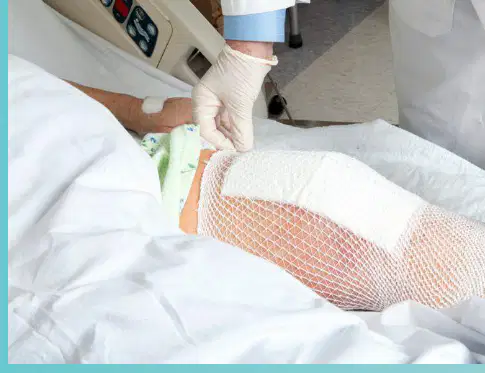
Which of the following is the first step when changing a bandage?
Remove the dressing carefully
Use bandage scissors to cut the bandage material
Clean the wound before applying a new sterile dressing
Apply ointment
Fill in the blank: When changing a bandage, you should use _______ to cut the bandage material.
bandage scissors
kitchen knife
nail clippers
tweezers
What should you soak stuck dressings in before removal?
Sterile saline or water
Alcohol
Hydrogen peroxide
Vinegar
What precautions should be taken during dressing changes to prevent contamination?
Take precautions to prevent contamination during dressing changes.
Use bare hands to touch the wound directly.
Ignore the cleanliness of the environment.
Reuse old dressings without sterilizing.
Where should used materials be disposed of after dealing with stuck dressings?
Regular trash bin
Biohazard container
Recycling bin
Laundry basket
Which of the following is a common sign of wound infection?
Redness
Swelling
Warmth
Pain around the wound
All of the above
Fill in the blank: Other symptoms of wound infection may include ______ drainage and fever.
purulent
clear
watery
bloody
Fill in the blank: One type of wound is called a _________.
Laceration
Sprain
Fracture
Contusion
Fill in the blank: A _________ is a type of wound that is caused by a sharp object piercing the skin.
Puncture
Abrasion
Contusion
Laceration
Fill in the blank: An _________ (skin tear) is a type of wound.
Avulsion
Laceration
Abrasion
Contusion
Fill in the blank: An _________ (surgical or related) is a type of wound.
Incision
Contusion
Abrasion
Laceration
Treatments for abrasions sometimes require _______ ointment.
antibiotic
moisturizing
antifungal
steroid
It is important to keep an abrasion clean and moist with periods of open air because:
it promotes faster healing and reduces the risk of infection.
it causes the wound to dry out and heal more slowly.
it increases the chance of scarring.
it prevents the formation of new skin.
Bullet wounds are often called ______ wounds.
puncture
abrasion
incised
lacerated
Which of the following is a common cause of puncture wounds?
Stepping on a nail
Paper cut
Sunburn
Frostbite
What is an incision?
A) A type of infection
B) When a doctor or surgeon cuts tissues open
C) A type of medication
D) A type of bandage
Why is it important to follow doctors' orders to keep a wound clean and dry after an incision?
To prevent infection and promote healing.
To make the wound look better.
To avoid having to visit the doctor again.
To speed up the scarring process only.
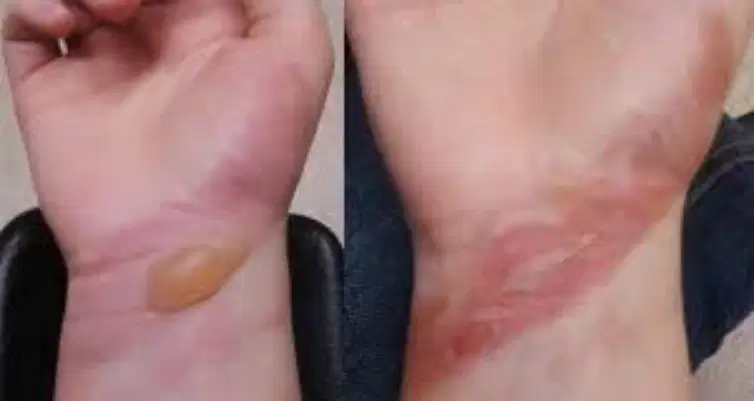
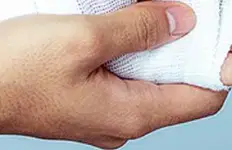
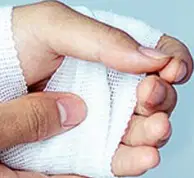
Look at the images of the wrist. What type of injury is shown in these pictures?
Bruise
Burn
Cut
Fracture
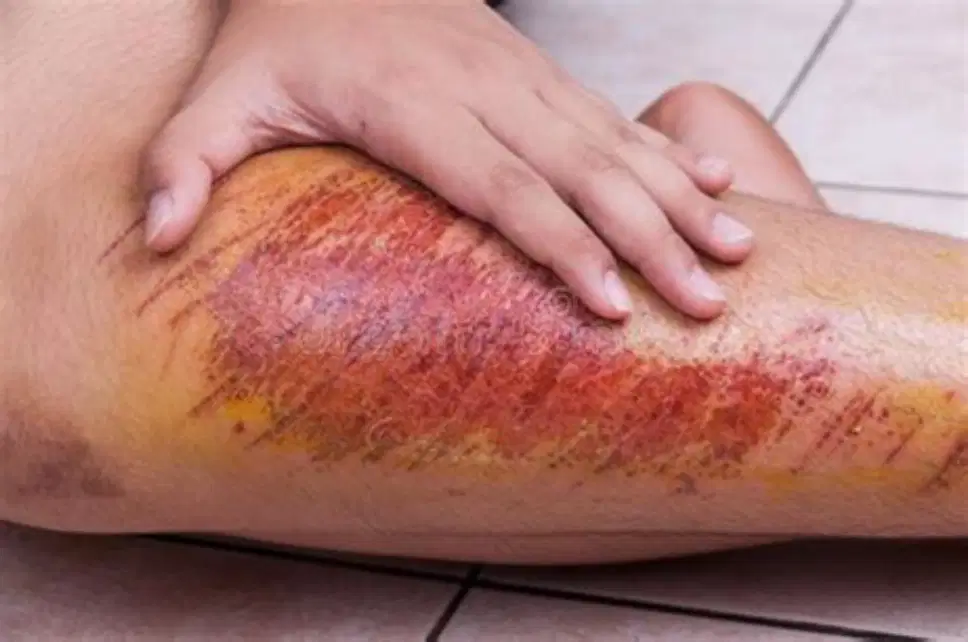
Look at the image of the person's leg. What type of injury is shown in the image?
Burn
Abrasion
Fracture
Insect bite
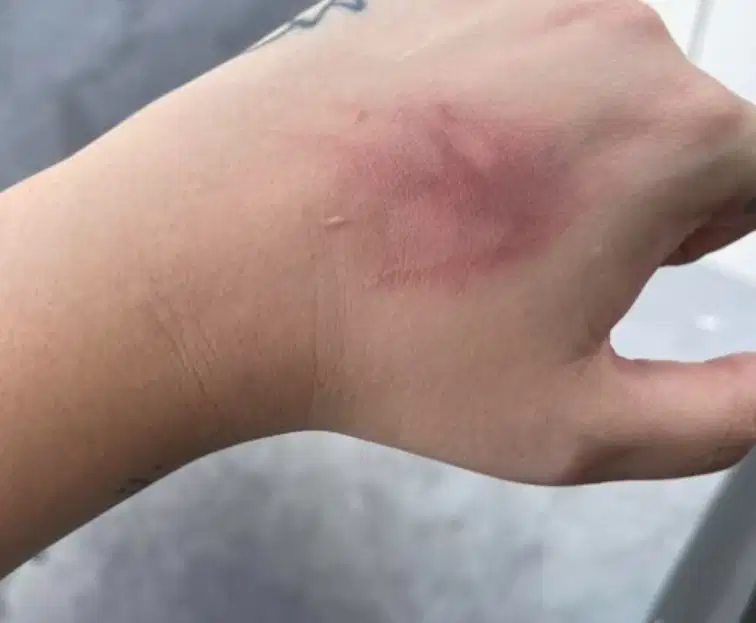
What is shown in the image?
3rd Degree Burn
A bruise on a hand
1st degree burn
2nd Degree burn
Which of these is a basic first aid procedure?
cleaning and bandaging a cut
putting a cast on a broken arm
getting an x-ray of a swollen finger
popping a dislocated shoulder back into place
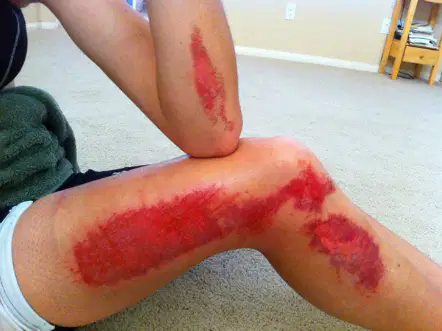
What is an abrasion?
A deep cut in the skin
When the skin rubs against something rough; scrape
A burn caused by heat
A swelling under the skin
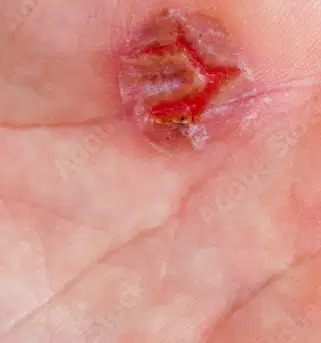
Look at the image of the palm with a wound. What is the most likely cause of this type of wound?
Avulsion/ skin tear
puncture
abrasion
incision
What is shown in the image?
3rd Degree Burn
A bruise on a hand
1st degree burn
2nd Degree burn
Which of these is a basic first aid procedure?
cleaning and bandaging a cut
putting a cast on a broken arm
getting an x-ray of a swollen finger
popping a dislocated shoulder back into place

Which type of wound is this?
Laceration
Avulsion
Puncture
Abrasion

What type of wound is shown?
Puncture
Abrasion
Laceration
Incision

What type of wound is shown?
Abrasion
Laceration
Puncture
Incision

What type of wound is shown?
Laceration
Abrasion
Incision
Puncture

What type of wound is this?
Puncture
Avulsion
Incision
Abrasion

What type of wound is shown?
Abrasion
Laceration
Avulsion
Puncture
When applying a bandage Step 1 is:
Antiseptic
Wound Preparation
Stopping the bleeding
Apply layers of the bandage
None of these
When applying a bandage Step 2 is:
Antiseptic
Wound Preparation
Stopping the bleeding
Apply layers of the bandage
All of these should be done at once
When applying a bandage Step 3 is:
Antiseptic
Apply layers of the bandage
Wound Preparation
Stop bleeding
None of these
When applying a bandage Step 4 is:
Apply layers of the bandage
Antiseptic
Wound Preparation
Stop Bleeding
Daily checks of the bandage
debridement is:
The removal of damaged tissue or foreign objects from a wound.
The inclusion of damaged tissue or foreign objects from a wound.
The cleansing of a wound before care
A pain management technique
Bandages must be changed
Every day or 2
Depending on the severity of the wound
Once a week
Until they fall off
What are the FOUR purposes of bandaging?
Secure dressings
Reduce swelling
Provide comfort
Support and immobilize limbs
Control bleeding
Which cell plays a major role in chronic inflammation by performing a wide range of functions?
Lymphocyte
Macrophage
Plasma cells
Mast cells
During what process will pathogens be engulfed by white blood cells that ingest foreign particles?
(a)
Which of the following vascular change that corresponds with redness?
Increased vascular permeability
Vasodilation
Chemotaxis
Infiltration of white blood cells
The nurse recognizes that which of the following are classic signs of inflammation? (select all that apply)
redness
heat
fever
swelling
pain
What is the localized collection of pus called?
Abscess
Angioblast
Bacteremia
Contractures
What is the term used to describe the collection of pus in a body cavity?
Empyema
Fever
Phagocytosis
Platelets

