
 Worksheets
Quiz Cell Sructure, Cell Membrane and Cell Transport
Total questions: 30
Worksheet time: 15mins
Name
Class
Date
1.
These statement belongs to the Cell Theory:
a)
All living things are made of Bio molecules
b)
All cells come from other existing cells
c)
Atoms are the cells basic unit
2.
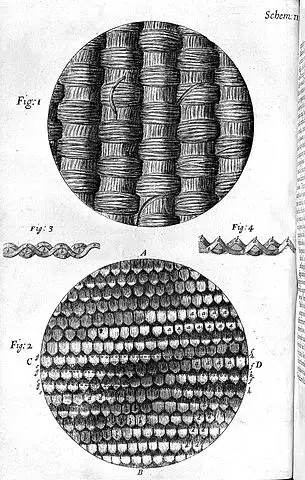
What did the cells Robert Hooke see, resemble to him?
a)
Onion cells
b)
Rooms where monks Lived
c)
Dorms where students live
d)
Empty boxes
3.
Prokaryotic cells have DNA but no nucleus
a)
True
b)
False
4.
What additional layer is found around the outside of plant cells and bacteria?
a)
Cell membrane
b)
Capsule
c)
Cell wall
5.
Where are proteins made in a cell?
a)
Ribosomes
b)
Nucleus
c)
Cytoplasm
d)
Rough ER
6.
Converts the energy stored in glucose into ATP (adenosine triphosphate) for the cell, through the process of cellular respiration
a)
Mitochondria
b)
Chloroplast
c)
Golgi apparatus
d)
Nucleus
7.

This structure Stores water and provides turgency for the Plant Cell
a)
12
b)
4
c)
5
d)
6
8.
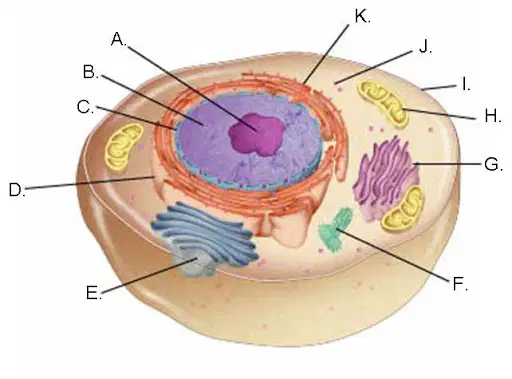
This structure is semipermeable, allowing some substances to pass into the cell and blocking others.
a)
A
b)
C
c)
I
d)
F
9.
What process takes place inside chloroplasts?
a)
Cellular respiration
b)
Replication
c)
Photsynthesis
d)
Chlorophyll
10.
The functions of the cell membrane include (Select 2):
a)
Making energy for the cell
b)
Production of proteins for the cell
c)
Anchoring the cytoskeleton
d)
Control the movement of materials in and out of the cell
11.

The process shown below is ( Select all correct responses )
a)
Passive transport
b)
Active transport
c)
Simple difussion
d)
Facilitated difusion
12.
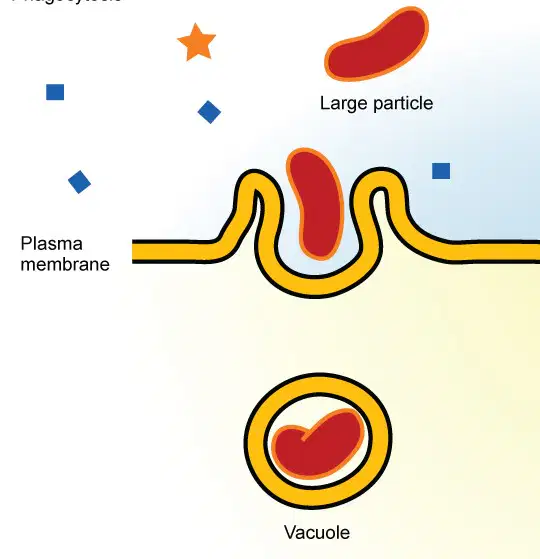
The process shown below is showing a white blood cell eating a bacteria and it anexample of :
a)
Exocytosis
b)
Endocytosis
c)
Does not use energy
d)
pinocytosis
13.
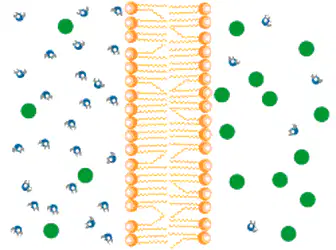
What process will most likely to take place here?
a)
Simple diffusion
b)
active transport
c)
Osmosis
d)
Endocytosis
14.

The diagram below is showing active transport because ?
a)
It is moving ions against the concentration gradient
b)
It is moving ions using ATP
c)
it uses NO energy
d)
no movement is taking place
15.
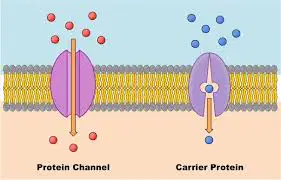
The diagram below shows :
a)
Active transport
b)
Facilitated diffusion
c)
Osmosis
d)
Simple diffusion
16.

Egg B must have been placed in a
a)
Hypertonic Solution
b)
Hypotonic solution
c)
Isotonic solution
d)
Option 4
17.
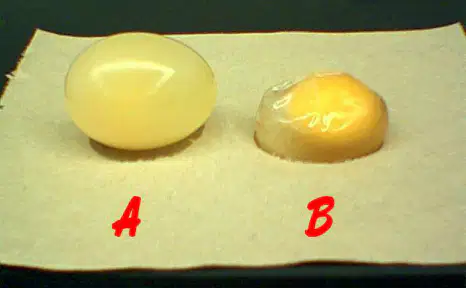
Egg A must have been placed in a:
a)
Hypertonic soltion
b)
Hypotonic solution
c)
Isotonic solution
18.

What process is taking place
a)
Passive transport
b)
Active transport
c)
Osmosis
d)
Diffusion
19.
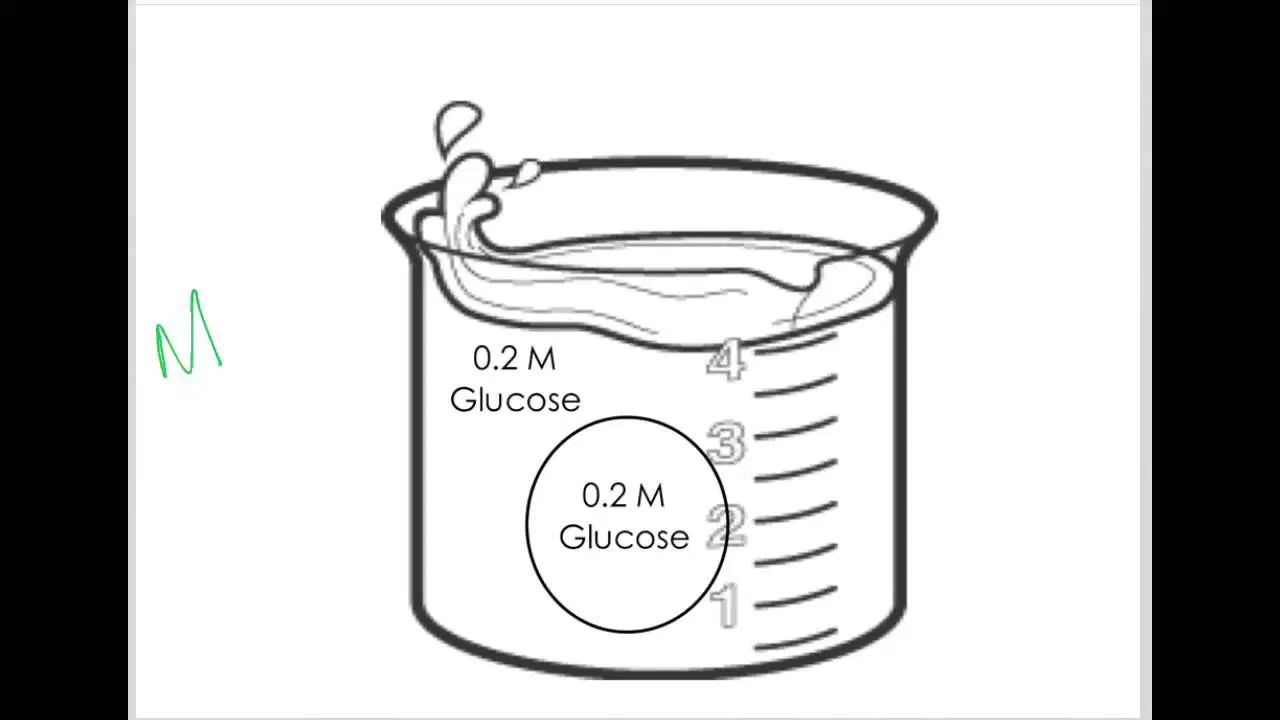
This situation presents a
a)
Hypertonic solution
b)
Hypotonic Solution
c)
Isotonic solution
20.

Which beaker contains the cell that will most likely shrink
a)
A
b)
B
c)
C
21.
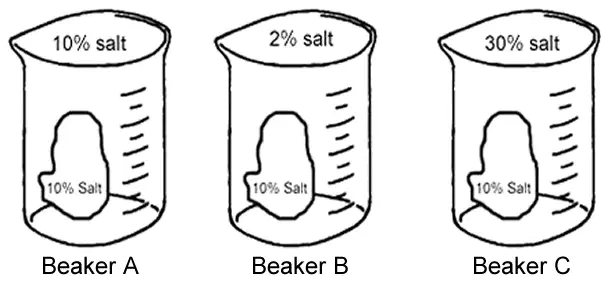
Which beaker contains a cell that will swell because water will enter ?
a)
A
b)
B
c)
C
22.

In which beaker water will move in and out equally , keepin the egg stable?
a)
A
b)
B
c)
C
23.
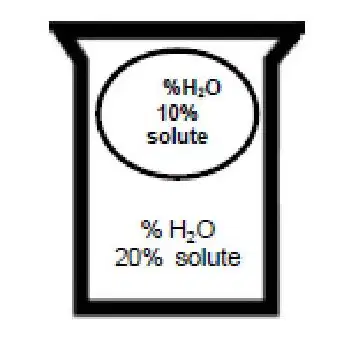
Water will move:
a)
inside the cell
b)
Outside the cell
c)
Both directions
d)
It won't move
24.
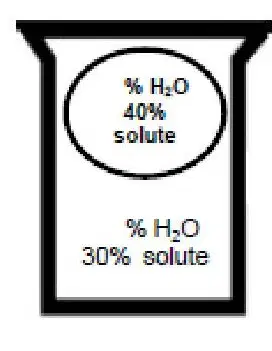
Water will move :
a)
Into the cell
b)
Out of the cell
c)
Equally in both directions
d)
The solute will move
25.
What is the primary function of the cell membrane?
a)
Energy production
b)
Transport of substances
c)
Cell division
d)
Protection
26.
Which organelle is responsible for photosynthesis in plant cells?
a)
Mitochondria
b)
Chloroplast
c)
Ribosome
d)
Endoplasmic reticulum
27.
What type of solution causes a cell to swell?
a)
Hypertonic solution
b)
Hypotonic solution
c)
Isotonic solution
28.
What is the primary role of ribosomes in a cell?
a)
Cell division
b)
Energy production
c)
DNA replication
d)
Protein synthesis
29.
Which of the following structures is responsible for packaging and distributing proteins?
a)
Lysosome
b)
Golgi apparatus
c)
Smooth ER
d)
Rough ER
30.
What type of solution causes a cell to lose water and shrink?
a)
Hypertonic solution
b)
Hypotonic solution
c)
Isotonic solution
100 %

