
 Worksheets
Safety and Sanitation Review
Total questions: 46
Worksheet time: 15mins
To avoid cuts: Which type of knives are safer to use?
Sharp knives
Dull knives
Rusty knives
Plastic knives
To avoid cuts: Should you put knives in a drawer full of knives?
Yes
No

To avoid cuts: Where should you store knives? Fill in the blank. Store knives in a ________ or a knife rack. (Just like in our kitchens)
knife block
drawer with other utensils
plastic bag
open countertop

To avoid getting burned, what should you do when opening the oven?
Stand directly in front of the oven
Stand to the side of the oven
Open the oven with bare hands
Leave the oven door open

To avoid getting burned, you should use ______ for handling hot pans, including those coming out of the microwave.
hot pads
paper towels
bare hands
plastic bags
dish towels
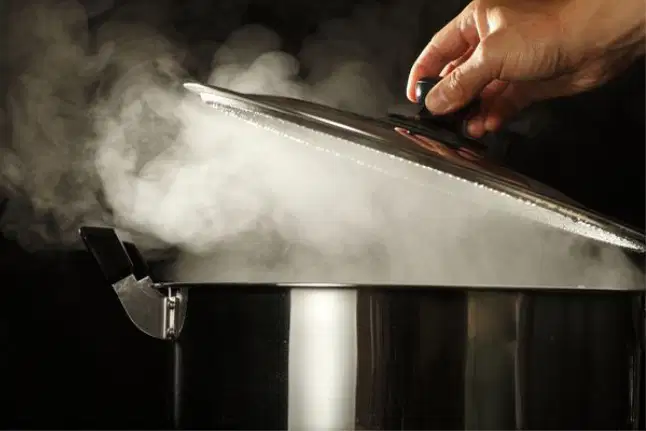
Kitchen Safety Tip: Lift the lids off of foods so the steam goes ______ and your face.
toward you
away from you
above you
under you
Kitchen Safety Tip: Pull the rack of the oven out, rather than having to ______.
reach in
stand back
close the door
turn off the oven

Kitchen Safety Tip: Turn pan handles toward the ______ or ______ of the stove.
inside, back
outside, front
left, right
top, bottom

How can you avoid falls in the kitchen?
Climb on counters
Do not climb on counters
Leave spills on the floor
Run around
What should you do to avoid falls when something spills on the floor?
Ignore the spill
Clean any spills as soon as they happen
Wait for someone else to clean it
Walk over the spill

To help prevent fires, which of the following should you do?
Keep all flammable objects away from direct heat (hot pads, papers etc.)
Place flammable objects near the stove
Ignore flammable objects
Use paper towels to clean the stove
To help prevent fires, you should never put ______ on the range.
paper towels
pots and pans
oven mitts
cooking utensils
To help prevent fires, you should watch your stove carefully and never leave it unattended because:
It helps prevent fires from starting.
It makes cooking faster.
It keeps the kitchen clean.
It saves electricity.

If it is a grease fire, what should you do? Select all that apply.
Put a lid on it (or a wet cloth towel)
Pour baking soda on it
Use a fire extinguisher

If it is a grease fire, you should put a ______ on it (or a wet cloth towel).
lid
blanket
pan
paper

If it is a grease fire, you should pour ______ on it.
baking soda
water
flour
sugar

If it is a grease fire, you should use a fire ______. (Located next to the aprons.)
extinguisher
blanket
hose
bucket

Do NOT ever use the following when dealing with a kitchen fire: Which of these should you avoid using?
WATER
SUGAR
FLOUR
Fill in the blank: You should keep all _______ and equipment clean.
surfaces
windows
papers
clothes
Fill in the blank: Wash the counter with a _______ at the end of every cooking lab.
disinfectant
towel
broom
spoon
Which of the following is a recommended cleaning practice?
Clean only at the end of the day
Clean as you go
Never clean during cooking
Clean only if there is a mess
You are allowed to spray sanitizer or any cleaning chemical on another person in class.
True
False
What is the consequence of spraying sanitizer or any cleaning chemical on another person in class? Fill in the blank: Doing so is an automatic _______ and you will be kicked out of the class for the day.
pass room
detention
extra homework
warning
What is the first step in washing dishes according to the instructions?
A) Wash dishes
B) Fill the side of the sink with the disposal with hot soapy water
C) Dry dishes
D) Put dishes away
Fill in the blank: After filling the side of the sink with hot soapy water, the next step is to _________.
Wash dishes
Dry dishes
Clean the floor
Turn off the lights
Fill in the blank: After washing dishes, the next step is to _________.
Dry dishes
Throw dishes away
Paint dishes
Hide dishes
Fill in the blank: The final step in washing dishes is to _________.
Put dishes away
Leave dishes in the sink
Dry dishes with a dirty towel
Throw dishes outside

According to the Sanitation Rules, how long should you wash your hands with hot soapy water?
5 seconds
10 seconds
20 seconds
1 minute

When should you wash your hands? Fill in the blank: You should wash your hands ______ cooking. Select all those that apply.
before
after
during
while

What should you do if you have a cut or open sore on your hands while cooking?
Continue cooking without any precautions
Wear gloves while cooking
Wash your hands and ignore the cut
Ask someone else to cook for you

What should you do with your hair while working in the kitchen?
Leave it hanging in your face
Pull back or cover your hair
Cut your hair short
Wear a hat only
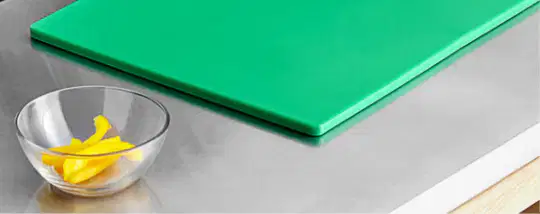
Which type of cutting board should be used for meat?
Dirty cutting board
Clean, unused cutting board
Any cutting board
Old cutting board

When tasting foods, what should you use every time?
Fingers
Dirty spoon
Clean spoon
Fork

What is the temperature range of the 'Danger Zone' for food safety?
0° to 40°
41° to 135°
136° to 165°
140° to 165°
Foods should be stored within two hours.
True
False
Fill in the blank: Keep hot foods ______ and cold foods COLD.
HOT
WARM
FROZEN
CHILLED
Fill in the blank: When in doubt, ______!
THROW IT OUT
KEEP IT SAFE
ASK A FRIEND
IGNORE IT
TRY IT FIRST

The best ways to THAW frozen food...select all those that apply
In the fridge for 2-3 days
Under cold, running water
In the microwave, if used immediately
What is a food borne illness? Fill in the blank: A food borne illness is an illness caused by eating food contaminated with _________?
too much bacteria
sugar
vitamins
water
How common is food borne illness?
Rare
Extremely common
Not common at all
Only in certain countries
General conditions for bacterial growth are FATTOM: Fill in the blank. 1. ________ is one of the general conditions required for bacterial growth.
Food Source
Gravity
Electricity
Magnetism
General conditions for bacterial growth are FATTOM: Fill in the blank. 2. ________ is one of the general conditions required for bacterial growth.
Temperature
Gravity
Pressure
Light
General conditions for bacterial growth are FATTOM: Fill in the blank. 3. ________ is one of the general conditions required for bacterial growth.
Acid Level
Protein Level
Vitamin Level
Mineral Level
General conditions for bacterial growth are FATTOM: Fill in the blank. 4. ________ is one of the general conditions required for bacterial growth.
Oxygen
Nitrogen
Carbon dioxide
Sulfur
General conditions for bacterial growth are FATTOM: Fill in the blank. 5. ________ is one of the general conditions required for bacterial growth.
Time
Sugar
Salt
Light
General conditions for bacterial growth are FATTOM: Fill in the blank. 6. ________ is one of the general conditions required for bacterial growth.
Moisture
Light
Salt
Sugar

