
 Worksheets
SECOND QUARTER EXAM IN TLE-CREATIVE TECH
Total questions: 50
Worksheet time: 26mins
What does PLC stand for in the context of control systems?
Programmable Logic Controller
Power Line Communication
Process Level Control
Programmable Load Circuit
Which of the following is NOT a component of PLC programming?
A) Timers
B) Internal Relays
C) Counters
D) Sensors
Which system is used for managing entry and exit in parking lots as per the case studies?
Automatic car park barrier system
Manual ticketing system
RFID-based library management system
Biometric attendance system
What is a control system?
A control system is defined as a system of devices that manages, commands, directs, or regulates the behavior of devices or systems to achieve a desired result.
A control system is a device that only measures temperature in a room.
A control system is a type of software used for word processing.
A control system is a network protocol for internet communication.
In a closed loop control system, the control action from the controller is entirely dependent on the desired output.
True
False
What is a Programmable Logic Controller (PLC)?
A) A digital computer used for the automation of various electro-mechanical processes in industries to control machines and processes.
B) A type of manual switch used in electrical circuits.
C) A device used only for memory storage.
D) A type of power supply.
What is a relay?
A device that stores electrical energy
An electrically operated switch that opens and closes circuits
A type of battery
A type of resistor
Which type of relay has no moving mechanical parts?
Electromechanical relay
Solid-state relay
Magnetic relay
Manual relay
Fill in the blank: In an electromechanical relay (EMR), contacts are opened or closed by a ________ force.
magnetic
thermal
gravitational
hydraulic
Which of the following is NOT a basic part of an electromechanical relay?
A) Coil
B) Armature
C) Capacitor
D) Contacts
Relays typically have two or three connections. Name them.
Common, Normally Open, and Normally Closed
Input, Output, and Ground
Live, Neutral, and Earth
Positive, Negative, and Signal
True or False: The NO (Normally Open) relay has an opened circuit state when no current is applied to its coil.
True
False
Which contact allows the current to flow when the contact is still or de-energised?
A Normal Open contact (NO)
A Normal Closed contact (NC)
What are the two ratings that relays often have, and what do they indicate?
AC and DC ratings, which indicate how much power can be switched through the relays.
Voltage and frequency ratings, which indicate the speed of relay operation.
Current and resistance ratings, which indicate the coil strength.
Temperature and humidity ratings, which indicate environmental suitability.
In positive logic, the digit 1 represents which of the following?
A) OFF circuit
B) An open switch
C) Low voltage
D) ON circuit
In negative logic, the digit 0 represents _______.
OFF circuit
ON circuit
High voltage
True statement
A logic gate is a device that performs a Boolean function and produces a single binary output.
True
False
The digits 0 and 1 in computing systems can represent which of the following pairs?
Up and Down
True and False
High and Low
All of the above
In digital electronics, the decision making capability of the gate circuit is called _______.
logic
amplification
oscillation
filtering
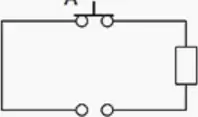
What is the output of an AND gate if input A is 1 and input B is 0?
0
1
Cannot be determined
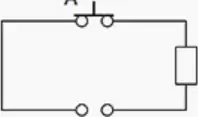
Fill in the blank: The output of an OR gate is 1 if either input A or input B is ___.
1
0
undefined
negative
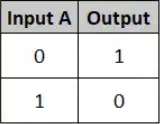
The NOT gate is also known as a(n) _______.
inverter
buffer
amplifier
oscillator
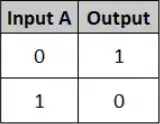
The output of a NOT gate is 1 when the input is 0.
True
False
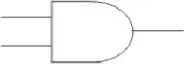
Which gate produces an output of 1 only when all its inputs are 1?
A) AND gate
B) OR gate
C) NAND gate
D) NOT gate
NOR gate: What is the output when both inputs A=1 and B=1?
0
1
2
-1
XOR gate: What is the output when both inputs A=1 and B=1?
0
1
2
Undefined
XNOR gate: What is the output when both inputs A=1 and B=1?
1
0
2
-1
What is the purpose of a timer in control tasks as described in the passage?
To count the number of events
To control an event based on time
To measure voltage
To store data
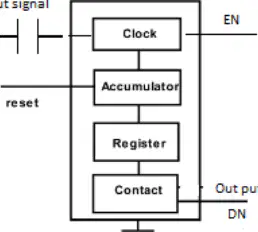
Which bit changes state when the accumulated value reaches the pre-set value in a timer?
EN-Enable Bit
DN-Done Bit
Reset Bit
Clock Bit
What are the two basic types of time delay relay mentioned in the passage?
A) ON-Delay timer and OFF-Delay timer
B) Start timer and Stop timer
C) Enable timer and Disable timer
D) Accumulator timer and Register timer
Makes the mBot move


what is a loop?
The action of doing something over and over again.
Moving a character up and down
changing a costume
Coding a background
What is a variable?
A label for a piece of information used in a program.
A repeated sequence of code
the changing of costumes for a character
adding code to a character

What kind of command is this?
Conditional If Statement
a loop
a forever loop
A costume change

The following code is drawing shapes when program runs. As you learned in the class, program code is executing in a sequential manner. In the code above how many of the steps will be executed when the program runs?
11
12
14
13

A block that starts the action; also called a "hat" block or "starter" block; usually a click or press of a button is called what?
Event
Control
Variable
Sound
Which code uses the ultrasonic sensor?


What will this code allow mBot to do?
Follow around the race track clockwise.
Follow around the race track counter-clockwise.
Follow around the race track either clockwise or counter-clockwise.
This code contains a logic error and won't do anything for long.
digitalWrite (LED1, HIGH);
delay(1000);
digitalWrite (LED1, LOW);
What does the program do?
LED Switch Off at the beginning, wait for 60s and then switch ON.
LED Switch ON at the beginning, wait for 10s and then Switch OFF.
LED Switch ON at the beginning, wait for 1s and then switch ON.
LED Switch ON at the beginning, wait for 1s and then switch OFF.
R1: int Led1=4;
R2: void setup(){
R3: digitalWrite (LED1, High);
R4: }
LED1 was not declared above void setup. Which row is the error?
R1
R2
R3
R4
delay (1000);
1000 in delay is equivalent to how many second?
10s
2s
60s
1s
What is the primary function of an Editor in an IDE?
Displays the current value of a selected variable
Converts source code into machine code
Allows a programmer to enter and edit source code
Executes the program line by line
What does an Interpreter do in an IDE?
Converts source code into machine code line by line
Converts the entire source code into machine code at once
Logs the values of variables as the code executes
Allows programmers to enter and edit source code
What is the purpose of Error Diagnostics & Debugger in an IDE?
To execute the program repeatedly
To find and fix errors in the code
To enter and edit source code
To convert source code into machine code
Name one feature of an IDE.
Syntax highlighting
Version control
Debugging tools
Code completion
What does IDE stand for?
Integrated Design Environment
Integrated Development Environment
Interactive Development Environment
Integrated Data Environment
digitalWrite(13, HIGH);
delay(1000);
digitalWrite(13, LOW);
delay(1000);
Which symbol ends a programming statement?
Semicolon ;
Parenthesis )
Comma ,
Curly Brace }
Which pin is the wire connected to?
digitalWrite(13, HIGH);
delay(1000);
digitalWrite(13, LOW);
delay(1000);
13
12
100
digital pin
digitalWrite (LED1,HIGH);
What does it means by HIGH?
Blinking
Switch OFF
Switch ON
Sequence

