
Font size
 Worksheets
Program Development and Water Tank Quiz
Total questions: 100
Worksheet time: 50mins
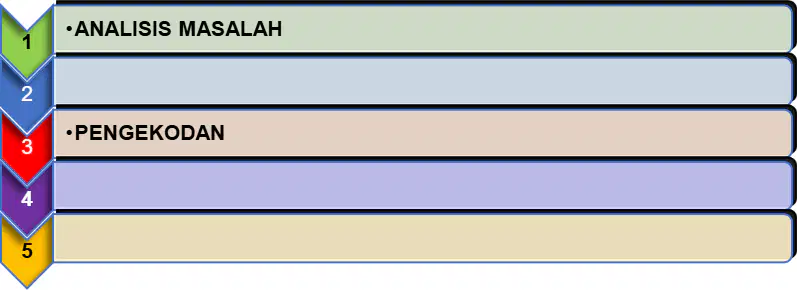
Which of the following is a phase in program development?
ANALISIS MASALAH
BAKING A CAKE
PLAYING FOOTBALL
DRAWING A PICTURE
What is the main purpose of building a program for a cylindrical water tank, as mentioned in the text?
To calculate the total surface area and volume
To paint the tank
To move the tank
To fill the tank with sand
Which phase comes after 'ANALISIS MASALAH' in the program development process?
PENGEKODAN
EATING
SINGING
JUMPING
Why do you need to build a new water tank, according to the scenario?
To meet increasing water usage needs
To play with water
To make a swimming pool
To decorate the garden

Which phase involves listing techniques used in coding?
Coding phase
Testing phase
Documentation phase
Planning phase

Which phase involves listing techniques used in testing and debugging?
Testing and debugging phase
Coding phase
Documentation phase
Analysis phase

Which phase involves listing techniques used in documentation?
Documentation phase
Coding phase
Testing phase
Design phase
What does "Fasa Analisis Masalah" mean in English?
Problem Analysis Phase
Solution Phase
Calculation Phase
Design Phase
What is the main problem stated in Rajah 1?
Building a program to calculate the volume and surface area of a water tank
Drawing a water tank
Measuring the height of a tank
Painting a water tank
Which of the following is a technique used in the problem analysis phase?
Decomposition technique
Painting technique
Cooking technique
Drawing technique
If a programmer needs to create an algorithm using pseudocode and flowcharts, which phase and technique are involved?
Design phase and algorithm technique
Problem analysis phase and decomposition technique
Testing phase and debugging technique
Implementation phase and coding technique
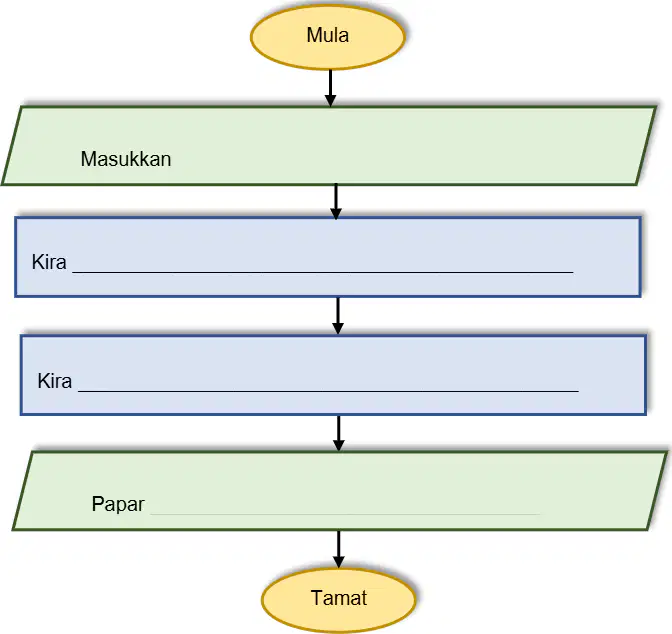
What is the first step in the flowchart shown in the image?
Papar
Tamat
Mula
Kira
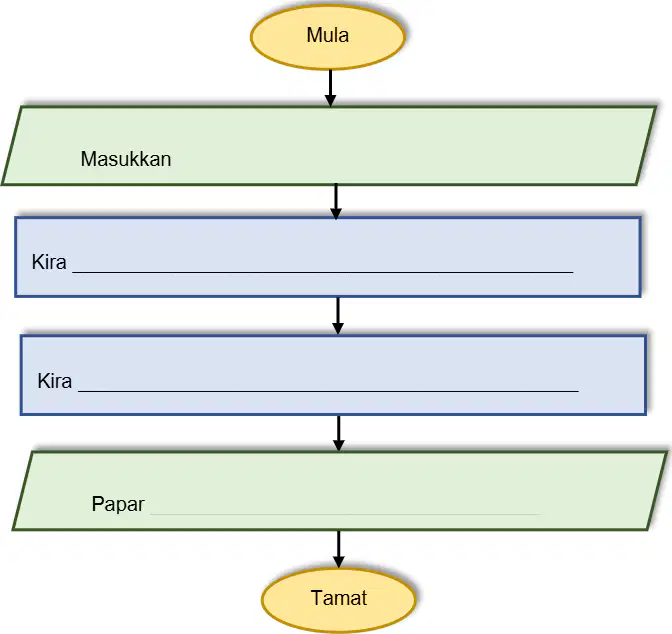
Which step comes right before 'Tamat' in the flowchart?
Masukkan
Papar
Kira
Mula
What does the word 'Masukkan' mean in the context of the flowchart?
Start
Display
Input
End
If you are writing pseudocode, which of the following is the correct order of steps?
Tamat, Papar, Kira, Masukkan, Mula
Mula, Masukkan, Kira, Papar, Tamat
Papar, Kira, Masukkan, Tamat, Mula
Kira, Masukkan, Papar, Tamat, Mula
Why is it important to follow the correct order of steps in a flowchart or pseudocode?
To make the process look nice
To ensure the process works correctly
To use more colors
To make it longer
In the coding phase, what will a programmer choose?
The programming language to use and write code based on flowcharts and pseudocode
The color of the computer
The type of keyboard
The size of the monitor
Which phase involves choosing a programming language and writing code based on flowcharts and pseudocode?
Coding phase
Testing phase
Planning phase
Maintenance phase
What is one computational thinking technique suitable for the coding phase?
Algorithm
Painting
Singing
Dancing
What is the same variable used for in both calculations according to the table?
Both calculations use the same variable
Both calculations use different colors
Both calculations use different computers
Both calculations use the same song
What is the difference in the calculations for surface area and volume of a water tank?
Different calculations are made for surface area and volume
The same calculation is used for both
Only the color is different
Only the size of the paper is different
In the Testing and Debugging phase, what does the programmer do?
Test the written program to detect and correct any errors
Paint a picture
Write a story
Sing a song
In the technique of ________________________, a programmer breaks a big problem into smaller parts and tests the program step by step.
Decomposition
Abstraction
Iteration
Debugging
Which technique is used to write comments in a developed program?
komen
Peniskalaan
Leraian
segmen kod
Writing ____________________ helps programmers remember all the code that was written.
komen
Peniskalaan
Leraian
segmen kod
It also helps other programmers understand the ____________________ that was written.
komen
Peniskalaan
Leraian
segmen kod
A diagram showing four boxes labeled: "segmen kod", "Leraian", "Peniskalaan", and "komen".
This is a diagram showing different programming techniques.
This is a diagram of a food chain.
This is a diagram of a water cycle.
This is a diagram of a plant.
What does the technique of decomposition help with in programming?
Breaking big problems into smaller parts
Making the program run faster
Changing the color of the program
Drawing pictures in the program
What do you multiply by to change centimeters (cm) to millimeters (mm)?
X10
X100
÷10
÷100
What do you do to change millimeters (mm) to centimeters (cm)?
Add 10
Divide by 10
Multiply by 10
Subtract 10
To change meters (m) to centimeters (cm), what should you do?
Multiply by 100
Divide by 100
Add 100
Subtract 100
If you have centimeters (cm) and want to change them to meters (m), what should you do?
Multiply by 100
Divide by 100
Add 100
Subtract 100
What do you multiply by to change kilometers (km) to meters (m)?
X10
X100
X1000
÷1000
What is the main focus when making a comparison between two things according to the material?
Color
Size
Unit
Shape
Which operation is used to find the relationship between units?
Addition or subtraction
Multiplication or division
Multiplication or addition
Subtraction or division
What does it mean to break a big problem into smaller problems when testing a program?
To make the problem easier to solve
To make the problem harder
To ignore the problem
To copy the problem
Which of the following is a type of error message that says "invalid syntax"?
Syntax error
Logic error
Output error
Input error
If a message says which line of code is wrong, what type of error is it?
Runtime error
Syntax error
Logic error
Output error
What does a logic error show?
The output is not correct even though the input and information are shown
The computer shuts down
The program runs faster
The screen turns blue
What is the purpose of making complete documentation?
To record all important information
To delete the program
To make the program run slower
To hide the errors
What is the first step when you want to find the sum and average of two numbers?
Output the result
Input the numbers
Subtract the numbers
Multiply the numbers
Which line in the code calculates the sum of the two numbers?
jumlah = nombor1-nombor2
purata = jumlah/2
print(“\nJumlah dua nombor adalah”,jumlah)
nombor1=float(input(“Masukkan nombor pertama”))
What does the code print(“\nPurata dua nombor adalah”,purata) do?
It asks for the first number
It prints the sum of the numbers
It prints the average of the numbers
It subtracts the numbers
If you want to find the average of two numbers, which operation should you use?
Add the numbers and divide by 2
Subtract the numbers and multiply by 2
Multiply the numbers and add 2
Divide the numbers and subtract 2
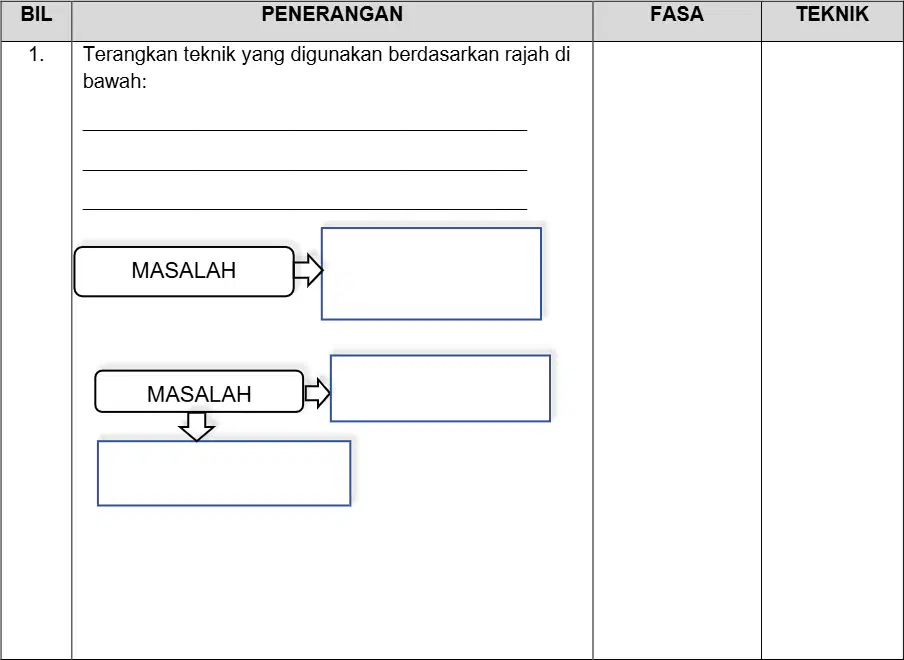
Look at the diagram below. What does it show?
Combining problems together
Breaking a problem into smaller parts
Ignoring the problem
Multiplying problems
What is the first step in making a pseudocode?
Start
Input
Calculate
Display
Which of the following is an example of an input in a process?
Typing a number into a computer
Showing the answer on the screen
Adding two numbers together
Finishing the program
What does the word "purata" mean in a formula?
Average
Sum
Difference
Product
If you want to show the answer in a pseudocode, which word should you use?
Display
Input
Start
End
Why do we use formulas like "jumlah" and "purata" in computer science?
To help us calculate answers
To make the text longer
To decorate the page
To make it harder to read
What is the main component when writing code instructions?
Writing code instructions for input, process, and output
Drawing pictures
Singing a song
Reading a story
When testing, why are big problems and small problems separated?
To make it easier to organize how to test code segments
To make the page look pretty
To make the code longer
To make it harder to understand
What do you call a smaller part of a big problem when writing code?
Small problem
Big problem
Big answer
Small answer
If you have a big problem in your code, what should you do to solve it?
Break it into smaller problems
Ignore it
Make it bigger
Erase everything
What does the technique described in the document involve?
Making a checklist of steps to test for errors
Drawing pictures of computers
Writing a story about a family
Counting the number of books in a library
Which of the following is included in the documentation for the mini project?
A complete report involving the phases of program development and computational thinking techniques
A list of favorite foods
A map of the school
A drawing of a house
What is one of the situations described for the mini project?
Calculating zakat fitrah for a family during Syawal
Planting a tree in the garden
Making a paper airplane
Drawing a rainbow
What should you use to solve the problem of calculating the electricity bill in Situation 2?
Computational thinking techniques for each phase of program development
Guessing the amount
Asking a friend for the answer
Ignoring the bill
Which of the following is NOT part of the required documentation for the mini project?
A list of favorite songs
Dokumen Pustaka (Reference Document)
Panduan Pengguna (User Guide)
A complete report of program development phases
What does the diagram with five boxes most likely represent?
Steps in a checklist for testing and debugging
Different types of animals
Colors of the rainbow
Days of the week
What is the unit rate for using 1-200 kWh of electricity in a month?
0.218 seunit
0.450 seunit
1.000 seunit
0.100 seunit
If someone uses more than 201 kWh of electricity in a month, what is the rate per unit?
0.450 seunit
0.218 seunit
0.100 seunit
1.000 seunit
Which grade is given for a score between 80 and 100?
A
B
C
F
What percentage of the final grade is the Project Work Mark?
30%
70%
50%
100%
If a student scores 65, which grade will they get?
C
B
D
E
If a student scores 45, what grade will they receive?
E
D
F
B
What is the main purpose of cryptography?
To protect information from being exposed and accessed by unauthorized parties.
To make information look pretty.
To slow down computers.
To make data bigger.
Which of the following is NOT a key aspect of data security in cryptography?
Existence
Storage
Integrity
Decoration
What does the term "kriptografi" originate from?
Greek language
Latin language
French language
German language
Which of the following is an example of cryptography used in ancient times?
Hieroglyphs
Barcodes
QR codes
Emojis
What is the process of changing normal text into a meaningless form called in cryptography?
Encryption
Translation
Summarization
Decoration
What is a pair of algorithms used in cryptography to change information called?
Cipher pair
Number pair
Color pair
Shape pair
What is the process called that changes cipher text back to normal text?
Decoding
Encoding
Encrypting
Writing
Which cipher method involves reversing the entire message?
Reverse Cipher
Substitution Cipher
Transposition Cipher
Rail Fence Cipher
Which cipher method uses the Rail Fence Cipher?
Transposition Cipher
Reverse Cipher
Substitution Cipher
Decoding Cipher
Which cipher method involves changing letters based on the alphabet (A-Z)?
Reverse Cipher
Transposition Cipher
Rail Fence Cipher
Decoding Cipher
Which of the following is the correct first step in the process of encryption (proses penyulitan)?
A meaningless text (teks sifer) will be produced.
The message (plain text) will be sent from the sender to the receiver.
The message will be encrypted using a key and algorithm.
The receiver will receive the message in plain text.
What is the correct order of steps in the decryption process (proses nyahsulit)?
The cipher text is decrypted into plain text, the message is encrypted, the receiver receives the plain text.
The message is encrypted, the cipher text is decrypted, the receiver receives the plain text.
The message is encrypted, the receiver receives the plain text, the cipher text is decrypted.
The cipher text is decrypted into plain text, the receiver receives the plain text, the message is encrypted.
Which cipher method uses a simple reversal technique and does not require a key?
Substitution cipher
Transposition cipher
Zigzag cipher
Reversal cipher
Which cipher method replaces letters in the message with other letters according to a shifted alphabet?
Reversal cipher
Substitution cipher
Symbol cipher
Zigzag cipher
Which cipher method uses matching graphic symbols for encryption and decryption?
Symbol cipher
Reversal cipher
Zigzag cipher
Substitution cipher
Which cipher method writes the message in a table form and requires a key for both encryption and decryption?
Reversal cipher
Substitution cipher
Table cipher
Symbol cipher
Which cipher method is also known as the zigzag cipher and arranges the message in a zigzag pattern?
Table cipher
Zigzag cipher
Symbol cipher
Reversal cipher
What is the main purpose of using a Reverse Cipher in the examples shown?
To change the order of letters in a word or message
To add numbers to a message
To make the message longer
To remove letters from a message
In the Substitution Cipher example, what does the key K=4 mean?
Move each letter 4 places to the right in the alphabet
Move each letter 4 places to the left in the alphabet
Replace each letter with a number
Skip every 4th letter
If you use a Reverse Cipher on the word "MAHU", what will the result be?
UHAM
MAHU
HUAM
UMAH
What is the first step when using a Caesar Cipher with a key of 4?
Find each letter in the alphabet and move it 4 places to the right
Write the message backwards
Replace each letter with a number
Skip every 4th letter in the message
Why do people use ciphers like Reverse Cipher and Substitution Cipher?
To keep messages secret
To make messages longer
To make messages colorful
To erase messages

What does the diagram above help you do?
Encrypt a message using the Caesar Cipher
Write a story
Draw a picture
Count numbers
What is the key used in the Caesar Cipher example shown in the learning material?
3
5
6
8
Which cipher is used to encode the word "RAJIN BELAJAR" in the learning material?
Caesar Cipher
Pigpen Cipher
Vigenère Cipher
Morse Code
What is the main purpose of using a cipher like Caesar or Pigpen?
To make words longer
To make words easier to read
To hide or encode messages
To change the language
If you shift the letter 'A' by 6 places to the right in the alphabet using a Caesar Cipher, what letter do you get?
F
G
H
Z
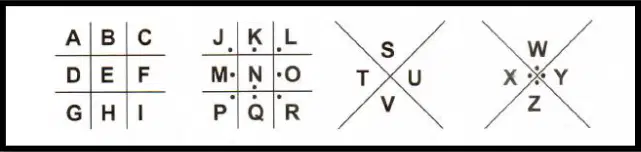
Look at the Pigpen Cipher chart. Which letter is represented by the symbol that looks like an upside-down "L"?
K
O
L
B
If you are given a word in Pigpen Cipher, what should you do to find the original word?
Count the letters
Match each symbol to its letter using the Pigpen Cipher chart
Rearrange the letters
Add numbers to the letters
What is the key used in the Columnar Cipher for the message "SAYANGI ALAM SEKITAR" in the given exercise?
PEN
BATU
RAIL
KUNCI
Which cipher method is used in question 12 to decode the message "KMBLHAIOE"?
Columnar Cipher
Rail Fence Cipher
Caesar Cipher
Vigenère Cipher
In the exercise, what is the key used to decode the cipher text "EGEAXMARYXSOBJA"?
BATU
PEN
RAIL
KUNCI
What is the value of the key (kunci) used in the Rail Fence Cipher example in the document?
1
2
3
4
Which of the following is NOT mentioned as a cipher method in the document?
Columnar Cipher
Rail Fence Cipher
Caesar Cipher
None of the above

