
 Worksheets
1. Workshop Safety (WHS)
Total questions: 53
Worksheet time: 26mins
What is the main purpose of PPE in an engineering workshop?
To improve comfort
To reduce hazards and injuries
To increase speed
To identify workers
Which action is correct when lifting a heavy object?
Keep legs straight and bend at the waist
Twist while lifting
Keep the load close and lift with your legs
Hold the load away from your body
What is the first step to safely use a bench grinder following WHS procedures?
Remove guards for better visibility
Wear PPE and check the tool and guards
Let several students use it at once
Start the machine before checking it
What is the main focus of sustainable engineering?
Maximizing product performance regardless of environmental impact
Designing and manufacturing to minimize waste and use recyclable materials
Selecting only the cheapest materials
Eliminating material classification in design
Which area in engineering should sustainability affect?
Only marketing strategies
Material selection and manufacturing
Customer service policies
Software licensing agreements
Which list shows how materials are classified here?
Ceramic, glass, liquid, gas
Metal, alloy, polymer, composite
Organic, inorganic, radioactive, inert
Ferrous, non-ferrous, thermodynamic, kinematic
What is iteration in design development?
One pass through the design steps to make a final product
Repeating and improving design steps based on feedback
Skipping testing to save time
Outsourcing design work
Which of the following is a common design constraint in engineering?
User preferences only
Availability of patents
Cost, time, and materials
Color of the prototype
What is an advantage of Computer-Aided Design (CAD) for engineers?
CAD removes the need for documentation.
CAD allows precise modeling and easy design changes.
CAD replaces engineering standards.
CAD removes the need to talk to manufacturers.
Project documentation and reports mainly help engineers do what during development?
Track progress and decisions.
Increase file size.
Avoid technical drawings.
Replace orthographic drawings with sketches.
What is the main purpose of Australian Standards in engineering drawings?
To make drawings look artistic and unique
To ensure consistent symbols, dimensioning, and presentation
To replace dimensions with sketches
To eliminate isometric and orthographic projections
Which drawing method follows Australian Standards for clear and consistent dimensions and views?
Using orthographic and isometric conventions defined by standards
Sketching only a freehand pictorial with no measurements
Presenting a 3D render without any symbols
Writing a paragraph description instead of a drawing
Which factor directly affects the energy output of renewable systems?
Wind speed or sunlight
Battery capacity
Pipe diameter
Paint color
What is the main task when learning about control systems?
Identify the main components of a control system
Calculate national energy demand
Design a new turbine blade
Memorize historical inventors
Which best distinguishes an open-loop from a closed-loop control system?
Open-loop systems use feedback to adjust outputs; closed-loop systems do not.
Open-loop systems operate without feedback; closed-loop systems use sensor feedback to adjust outputs.
Both open-loop and closed-loop systems continuously compare outputs to desired setpoints.
Closed-loop systems cannot use sensors or actuators.
An Arduino reads a temperature sensor and turns a fan on or off to control temperature. Which are the sensor and actuator?
Sensor: fan; Actuator: temperature sensor
Sensor: temperature sensor; Actuator: fan (motor)
Sensor: microcontroller; Actuator: setpoint
Sensor: power supply; Actuator: microcontroller
How does 3D printing (additive manufacturing) work?
Material is removed from a solid block
Material is cast in a mold and then machined
Material is built up layer by layer
Material is forged by hammering
Why is 3D printing useful for testing several product versions quickly?
It eliminates the need for digital models
It allows rapid prototyping and quick design changes
It makes parts stronger than forged ones
It needs no manufacturing knowledge
In orthographic projection, which set of views is typically required to fully describe a simple 3D object at 1:1 scale in these exercises?
Front, Left Side, Top
Front, Right Side, Bottom
Isometric, Perspective, Oblique
Rear, Bottom, Section
Exercise 1 shows a step-shaped block. From the stated FRONT ELEVATION direction, which dimension corresponds to the overall width seen from the front?
100
50
25
30
When drawing the Left Side 2D View for Exercise 1 at 1:1 scale, what total length along the base should be shown?
50
100
75
30
In Exercise 2, the long base is split into two lengths marked 30 and 70. What is the total base length to be represented in the orthographic views?
50
70
90
100
For Exercise 2, the small front extension is dimensioned 20 in length and 25 in height. In the FRONT view, what vertical height should this extension appear as?
20
25
30
50
Which tool must be used when making 2D projections in both exercises?
Compass for arcs
Ruler for straight edges
Protractor for angles
French curve for splines
In orthographic projection, which view shows the object as seen from directly in front of the indicated direction arrow labeled FRONT ELEVATION?
2D Front View
2D Top View
Right/Left Side 2D View
Isometric View
Exercise with the stepped hollow frame: The front face is divided into three equal horizontal steps. Each step has a vertical rise labeled 20. What is the total vertical height of the stepped opening visible in the 2D Front View?
20
40
60
80
For the stepped hollow frame exercise, the bottom outer edge is dimensioned as three equal segments of 20 along the width. What is the overall width across the front face?
20
40
60
80
In the stepped hollow frame exercise, which orthographic view would best show the depth (thickness) of the surrounding frame from front to back?
2D Front View
2D Top View
Right Side 2D View
Isometric View
In the second exercise, the taller block in front has a height labeled 45. Which view will show this full height as a vertical dimension when projected?
2D Top View
2D Front View
Left Side 2D View
Pictorial View only
In the second exercise, the top overhanging bar along the back has a total length labeled 54. Which orthographic view primarily reveals this full length horizontally?
2D Front View
2D Top View
Left Side 2D View
Sectional View
Which of the following best describes an isometric drawing?
A 3D representation where all axes are equally foreshortened
A 2D view showing only the front of the object
A sketch with no measurements or scale
A view showing the object from directly above
What is the primary reason for using standard symbols in engineering drawings?
To avoid using measurements
To reduce the number of views required
To ensure clear and universal communication
To make drawings look more artistic
When selecting materials for a product, which property is most important if the product must withstand high forces without breaking?
Transparency
Electrical conductivity
Strength
Color
Allow analogue output devices to act upon receiving digital control signals
Actuator
Analogue to digital converter (ADC)
Digital conversion (DC)
Digital motor compression (DMC)
Type of input device that can automatically take readings and measurements
Analogue
Actuator
Sensor

What is the name of given sensor?
Water Sensor
Soil Moisture Sensor
Light Dependent Resistor
Potentiometer
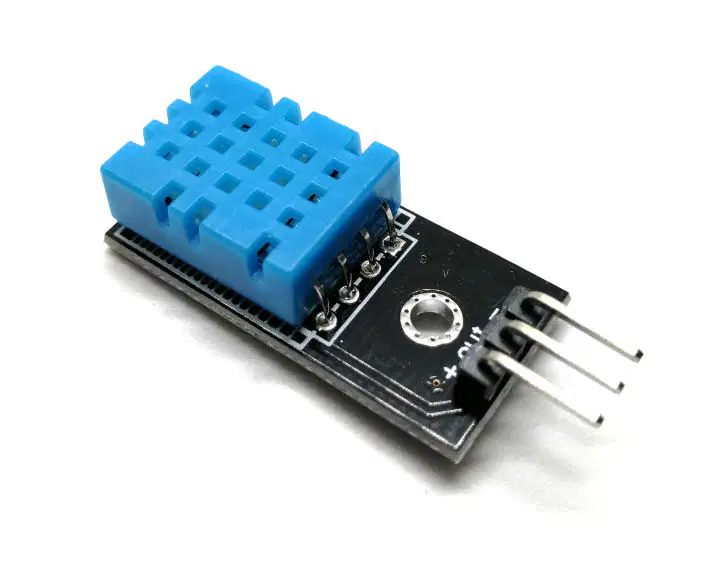
What is the name of given sensor?
Water Sensor
Soil Moisture Sensor
Light Dependent Resistor
Humidity Sensor

What is the name of given sensor?
Water Sensor
Soil Moisture Sensor
Ultrasonic Sensor
Humidity Sensor
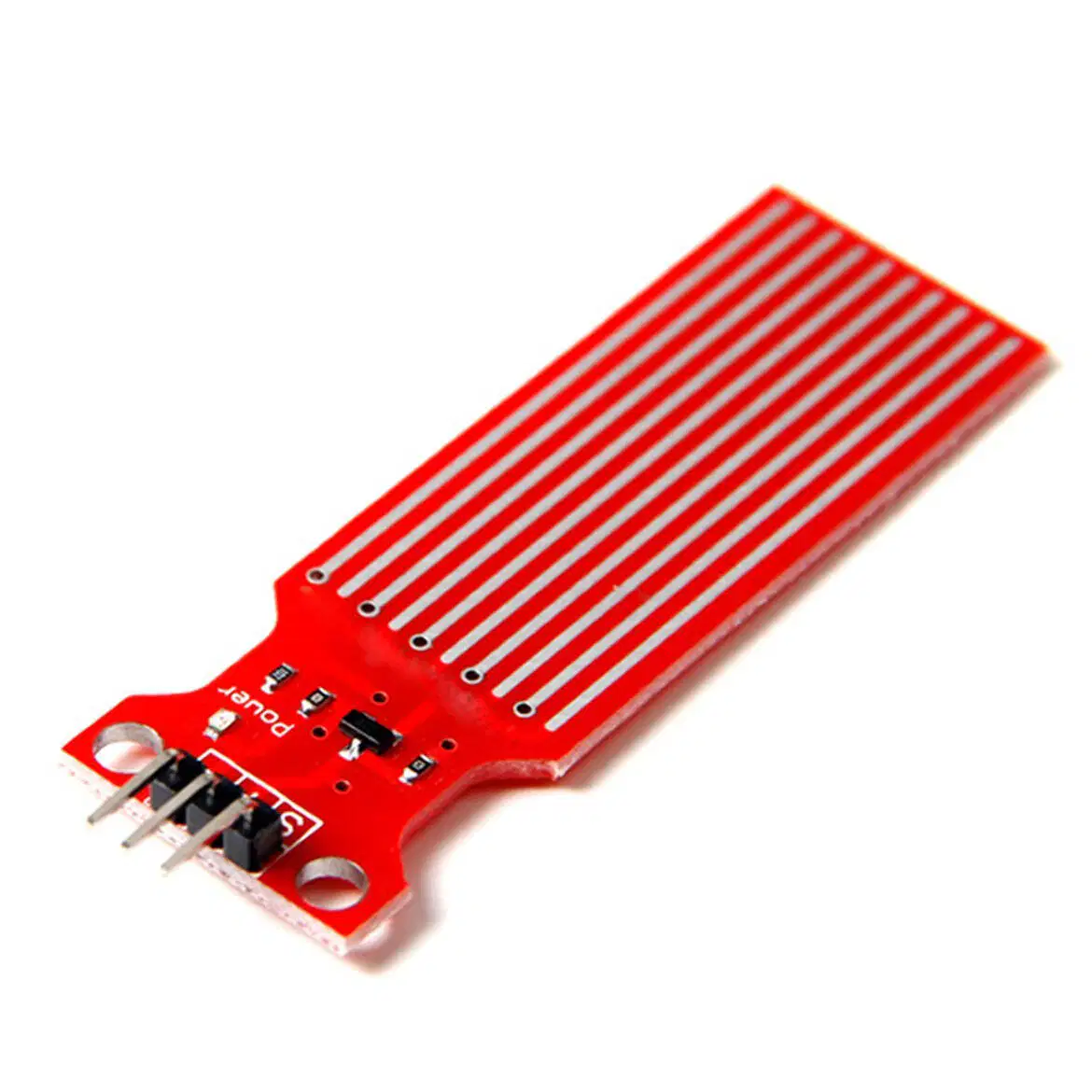
What is the name of given sensor?
PIR Sensor
Soil Moisture Sensor
Water Sensor
Humidity Sensor
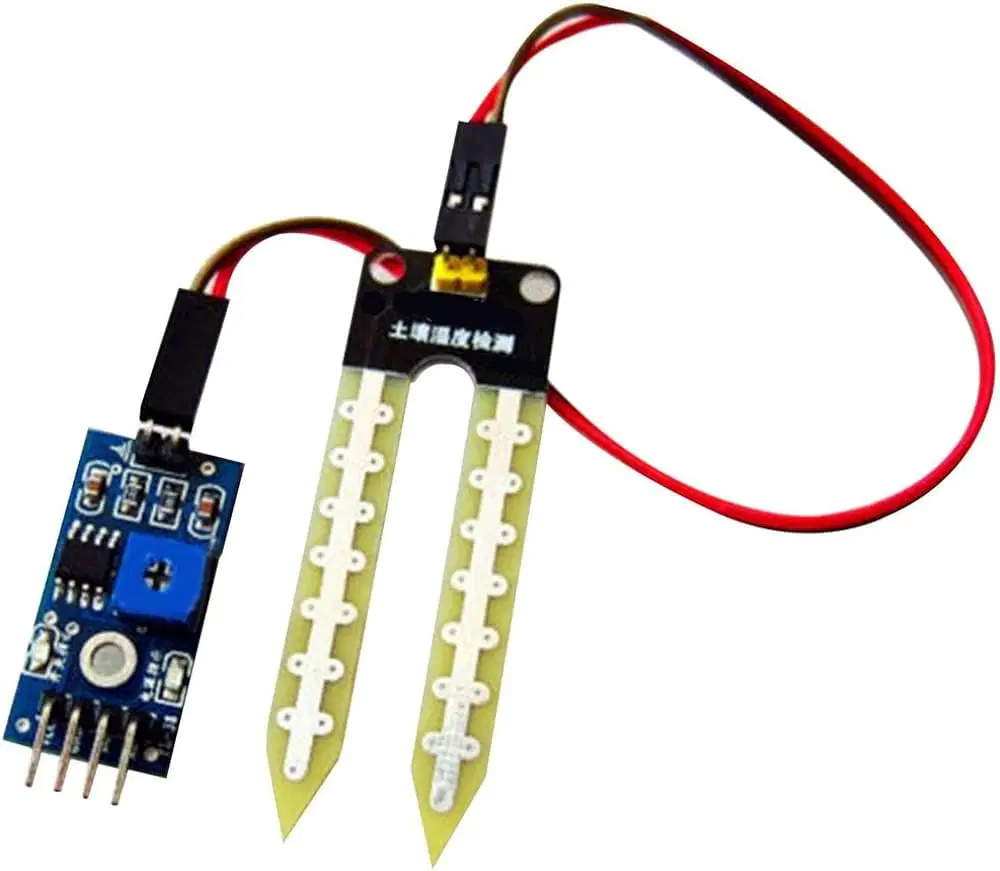
What is the name of given sensor?
PIR Sensor
Soil Moisture Sensor
Water Sensor
Humidity Sensor
What is the name of given sensor?
PIR Sensor
Soil Moisture Sensor
Water Sensor
Humidity Sensor

What is the name of given sensor?
PIR Sensor
Soil Moisture Sensor
Water Sensor
Gas Sensor

What is the name of given sensor?
IR Sensor
Soil Moisture Sensor
Water Sensor
Gas Sensor
What does PWM stand for?
Pulse Width Modulation
Power Width Motion
Pulse Wave Modulation
Power Wave Modulation
A wind turbine can produce electrical energy because __________.
it boils water
it slows wind
it turns a generator
it collects light
As a wind turbine spins, it generates electrical energy that can be stored for later use in a __________.
tank
battery
generator
bulb
Which process can be used to power your home?
solar electric energy
solar thermal energy
both solar thermal and solar electric energy
neither
Where does the heat come from for geothermal energy?
water
sun
atoms
earth
A generator can convert mechanical power into:-
Electricity
Wind
Energy
Electrons

