
 Worksheets
CJH Unit 4 Test Review
Total questions: 65
Worksheet time: 53mins
What is the main job of the Exectutive Branch?
Make the laws
Carry out the laws
Choose the laws
Interpret the laws
This branch's role is to enforce the laws.
Legislative Branch
Executive Branch
Judicial Branch
This branch is the Commander-in-Chief of the military.
Legislative Branch
Executive Branch
Judicial Branch
What is the main job of the Judicial Branch?
Make the laws
Carry out the laws
Interpret the laws
Write the laws
What did Shays' rebellion reveal about the Articles of Confederation?
That it was too similar to the British system
That it was too weak to succeed
That it was strong and resilient
That it was a successful model of government

In the fall of 1787, because of Shays' Rebellion, what did government leaders do?
They decided Massachusetts couldn't be a state anymore
They allowed all the states to become independent countries
They met in Philadelphia to fix the Articles of Confederation
They switched to a French model of government
What does 'due process' mean?
That someone doesn't have to testify against themselves
That people must be read their rights
That people have the right to a fair trial
That the government can't take your property without paying a fair price for it
That you can't be tried for the same crime twice
This branch can review laws for their constitutionality.
Legislative Branch
Executive Branch
Judicial Branch
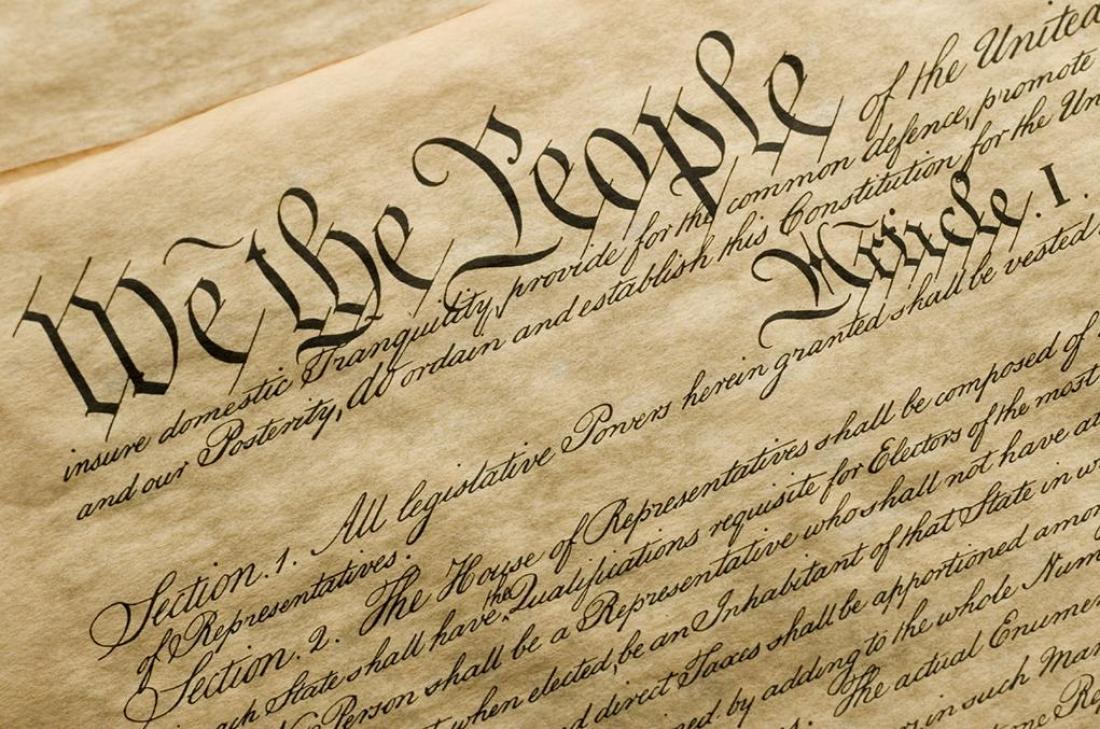
How did the Federalists and Anti-Federalists "compromise" to ratify (approve) the U.S Constitution?
The added the Bill of Rights (First 10 Amendments)
They outlawed cruel and unusual punishment.
Ensured due process of the law.
The Federalists threatened the Anti-Federalists to war.

Ideas from the _________ were also included in the U.S. Bill of Rights
Selective Service
Spanish Bill of Rights
English Bill of Rights
Ideas from the English Bill of Rights were included in the Declaration of Independence and the U.S. Bill of Rights. Those ideas include the importance of ________ and the consent of the governed
individual rights
religion
King's rights

Anti-Federalists were in favor of:
States Rights and the protection of individual rights.
A strong Central Government.
A Monarchy (King & Queen) to rule over the country.
a powerful National Government
Which statement supports the Anti-Federalists in the struggle over ratification of the US Constitution?
Constitution should protect individual liberties
What is the chief purpose of the Constitution?
To guarantee the equal protection of individual rights
To establish a government that allows for the flexibility of expanding the protection of individual rights
To create a system for balancing the rights claims of individuals and government
To defend the rights of the majority
What is the purpose of the Bill of Rights?
To list key rights that the government must respect and defend
To protect individuals and the minority political voice from the tyranny of the majority
To establish a justice system for making impartial decisions
To guarantee the equal protection of individual rights
What type of government involves the people's vote.
Democrats
Republicanism
Limited Government
Monopoly
Popular Sovereignty states power comes from?
Batman
The Government
The American People
The President
What is the system where the 3 branches of government keep one from having too much power?
Popular Sovereignty
Limited Government
The strong arm of the law
Checks and Balances
What does the Bill of Rights protect?
The Constitution
Individual Rights
The President and Vice President
The X-Men
What is it called when the government is divided into the legislative, executive, and judicial branches?
Separation of Powers
Federalism and Anti- Federalism
A tree?
Republicanism
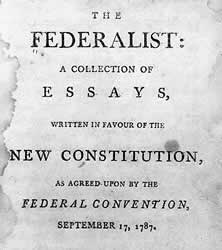
The "Federalist Papers" were written to:
Explain and convince the people into supporting the new U.S Constitution.
spark a new revolution among the American people against their government.
oppose a strong centralized government.
create a new monarchy.
The President created by the Constitution is really just a king.
Federalist
Antifederalist
The Constitution says federal laws are “the supreme law of the land,” so the federal government could just take complete control.
Federalist
Antifederalist
Solution: Bill of Rights: Amendment VI to the U.S. Constitution - In all criminal prosecutions, the accused shall enjoy the right to a speedy and public trial, by an impartial jury … and to have the Assistance of Counsel for his defense.
What's the grievance?
For imposing Taxes on us without our Consent:
For depriving us in many cases, of the benefits of Trial by Jury:
For Quartering large bodies of armed troops among us:
He has affected to render the Military independent of and superior to the Civil power.
What's the solution to this grievance: For imposing Taxes on us without our Consent?
Congress, which is made up of people who are elected, decides what taxes are necessary.
Congress, which is made up of people who are elected, is in charge of the military.
Someone accused of a crime has the right to a trial in a reasonable amount of time, a jury decides their fate, and they get a lawyer.
The President, who is elected, is the leader of the military.
Under the Articles of Confederation,
the nation was united all together as "Americans"
nation was divided, where each state was almost like it's own country

Why was not having a federal court system under the Articles of Confederation considered a weakness?
It allowed for too much federal control over state laws.
There was no fair way to solve legal problems between states.
It made the judicial system too powerful.
It increased the power of the executive branch.
Why would the constitution be written to divide power between 3 different branches of government?
It would be impossible to have one person do all three of those jobs. Therefor, the 3 branches makes sure that all of the work is divided evenly.
The 3 branches just sound cooler than having just 2 branches
The 3 branches are meant to make everything more confusing
The 3 three branches are made to make sure that one person or group did not have absolute power.
Which is the last step in amending the U.S. Constitution?
The voters approve the amendment in a national election.
The president signs the amendment in a public ceremony.
Three-fourths of the state legislatures ratify the amendment.
Two-thirds of both houses of Congress ratify the amendment.
Which of the following is an example of responsible citizenship?
Ignoring jury duty summons
Voting in elections
Littering in public places
Avoiding taxes
Which action demonstrates obeying rules and laws?
Speeding in a school zone
Cheating on a test
Following traffic signals
Downloading pirated movies
How can citizens participate in their community besides voting?
By ignoring local events
By serving on juries
By avoiding public meetings
By not paying taxes
What is the primary purpose of voting in a democracy?
To entertain citizens
To select leaders and influence policies
To increase taxes
To avoid political discussions
Why is it important for citizens to obey rules and laws?
To create confusion
To ensure personal gain
To maintain social order and protect rights
To avoid community involvement
What is a civic duty that involves making decisions in a court case?
Voting
Serving on a jury
Paying taxes
Attending school
Right to keep and bear arms
1st Amendment
2nd Amendment
9th Amendment
7th Amendment
No soldier can be quartered in a home (kept sleeping in your home)without the permission of the owner
3rd Amendment
2nd Amendment
10th Amendment
4th Amendment
Freedom of Religion, Speech, the Press, Assembly, and Petition
1st Amendment
4th Amendment
9th Amendment
7th Amendment
The right to a fair and speedy trial by a jury of one's peers. The right to have witnesses and to give a defense
7th Amendment
8th Amendment
9th Amendment
6th Amendment
No cruel or unusual punishment, no excessive bail or fines
7th Amendment
8th Amendment
9th Amendment
5th Amendment
Federal powers that are not stated in the Constitution are reserved for the states and or people
10th Amendment
8th Amendment
9th Amendment
1st Amendment
When a territory gained _______ free adult people, it could write a Constitution and apply to the U.S. government to become a state
5,000
50,000
60,000
Any number of
The lasting impact of the Northwest ordinance of 1787 was...
that slavery would be made illegal forever after in the U.S.
that the U.S. was unable to compromise.
that we would be dragged into another war.
that it provided instructions on how the U.S. should add new states to the U.S. in the future.

(a) is a system of government in which power is shared between the national and state governments.
Which of these compromises gave states practicing slavery the ability to count a portion of their enslaved people into account towards the overall state population?
Great Compromise
3/5 Compromise
Fugitive Slave Clause
The United States Congress, which is made up of two houses, is a ________.
Constitutional legislature
Bi-session legislature
Reform legislature
Bicameral legislature
The decision to restructure the federal government (Constitution) occurred in...
1776
1800
1787
1812
Some well known Anti- Federalists were ______
George Washington & John Adams
Samuel Adams & John Hancock
Alexander Hamilton, James Madison, John Adams
Patrick Henry, George Mason, Thomas Jefferson

