
 Worksheets
FIE721-Chapter Two-1
Total questions: 16
Worksheet time: 8mins
What does structural reliability and durability imply in construction materials?
Ability to resist degradation and avoid structural damage
Ability to change color over time
Ability to increase weight with age
Ability to conduct electricity
Why is it essential for concrete to be designed to maintain its integrity and quality?
To enhance its color
To avoid deterioration
To increase its weight
To conduct electricity
How can the durability properties of concrete be improved?
By painting it regularly
By using proper admixtures/pozzolanic materials
By exposing it to sunlight
By adding more water
Why is it important to identify and evaluate deterioration mechanisms in concrete structures?
To increase the cost of construction
To ensure the longevity and safety of the structures
To make structures look aesthetically pleasing
To reduce the need for skilled labor
How does the size of aggregates in concrete vary?
From several meters to kilometers
From sub-micron sized particles to several centimeters
From millimeters to meters
From nanometers to micrometers
What is the range of void dimensions in concrete?
From micrometer to meter-sized pores
From nanometer-sized gel pores to several millimeter-sized pores
From centimeter to meter-sized pores
From millimeter to centimeter-sized pores
What is the range of dimensions for voids in concrete as described in the text?
From micrometer to centimeter
From nanometer to millimeter
From millimeter to meter
From centimeter to meter

What type of pores are relevant for the durability of concrete?
Capillary pores
Gel pores
Macro pores
Microcracks

Which type of pores in concrete are associated with entrained air?
Compaction pores
Entrained air pores
Gel pores
Micro pores
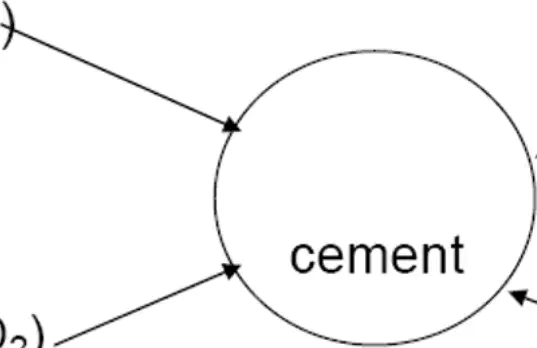
Diagram showing the chemical composition of Portland cement with percentages for Lime, Silica, Alumina, and Iron Oxide. What is the main component of Portland cement by percentage?
Lime
Silica
Alumina
Iron Oxide
What is a typical feature of concrete in normal climatic conditions?
High thermal resistance
Large number of cracks
Increased flexibility
Rapid color change
What factor significantly influences the volume of hardened concrete?
Temperature
Moisture content
Aggregate size
Cement type
Why is evaluating the dimensions of the entrances between larger capillary pores important in concrete?
To prevent the penetration of deleterious substances
To increase the strength of the concrete
To enhance the color of the concrete
To reduce the weight of the concrete
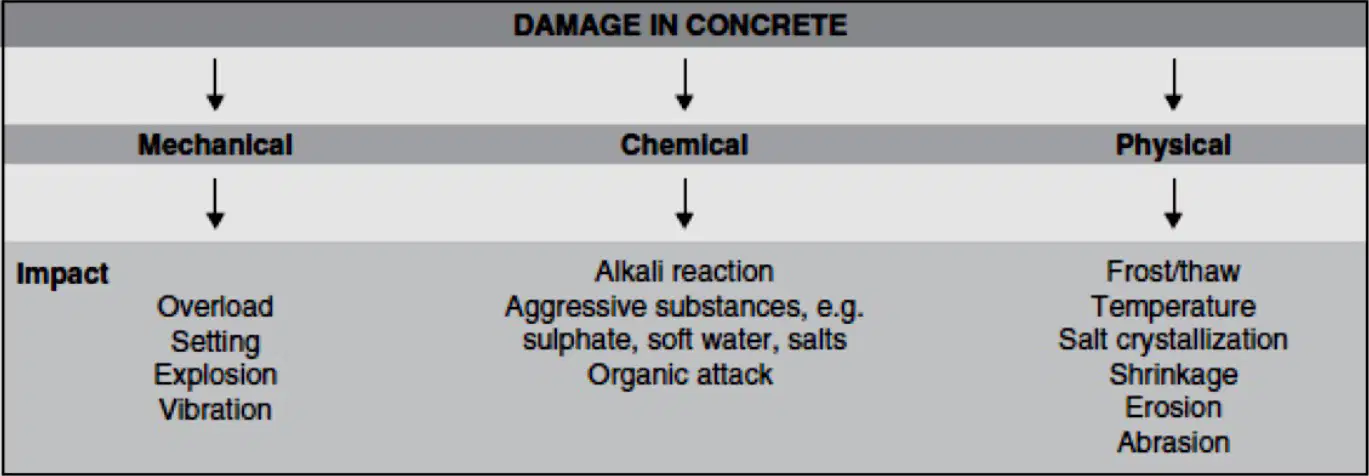
Which of the following is a chemical cause of damage to concrete?
Overload
Alkali reaction
Frost/thaw
Vibration
What type of error is associated with inadequate structural design in concrete?
Chemical reaction
Design error
Erosion
Weathering
What causes non-uniform volume changes in concrete at later ages?
Surface drying
Chemical reactions like reinforcement corrosion
Rapid cooling
Excessive compaction

