
 Worksheets
Forensic Science: Introduction to Botanical Evidence
Total questions: 77
Worksheet time: 39mins
Fill in the blank: _______ are the silent witnesses to crimes.
Plants
Animals
Stones
Vehicles
Approximately how many different plant species provide evidence from macroscopic to microscopic forms?
4,000
40,000
400,000
4,000,000
Crime scene investigators (CSIs) must be trained to look for and collect botanical evidence.
True
False
Fill in the blank: The application of plant science to crime-scene analysis involves the use of __________ or plant evidence.
botanical
zoological
mineralogical
forensic
Which professionals analyze plant structures in forensic botany?
Police officers
Trained botanists and technicians
Lawyers
Chemists
Forensic botany is usually divided into subunits.
True
False
Plants have very specific environmental requirements. Fill in the blank: One of the requirements is ________ temperature.
correct
delicious
colorful
musical
Plants have very specific environmental requirements. Fill in the blank: One of the requirements is the amount of ________ and sunlight.
humidity
wind
soil
fertilizer
Plants have very specific environmental requirements. Fill in the blank: One of the requirements is ________.
pH
plastic
metal
concrete
Plants have very specific environmental requirements. Fill in the blank: One of the requirements is soil composition and ________.
elevation
color
taste
weight
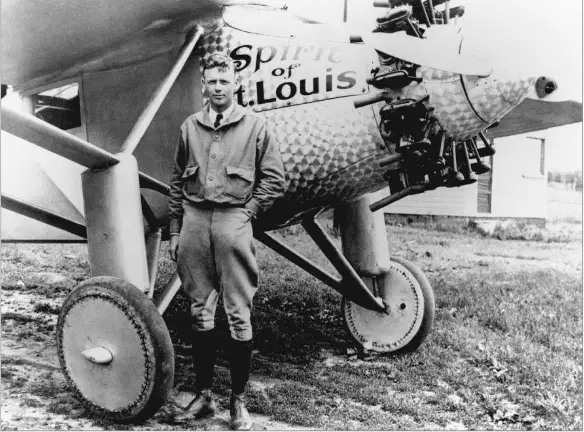
According to the history of forensic botany, when did the legal acceptance of forensic botanical evidence first occur in the United States?
1925
1935
1959
1965
According to the history of forensic botany, the first case of pollen being used as forensic evidence occurred in ________ in 1959.
Sweden
France
Japan
Canada
According to the slide on the History of Forensic Botany, which countries are ahead of the U.S. in the acceptance of forensic botany?
Canada, Mexico, and Brazil
New Zealand, Great Britain, and Australia
France, Germany, and Italy
China, Japan, and South Korea
Fill in the blank: The U.S. lags behind ________, Great Britain, and Australia in the acceptance of forensic botany.
New Zealand
Canada
Ireland
South Africa
What type of training is required for acceptance in forensic botany?
Extensive and specialized training in botany and how to be an expert witness.
Basic gardening skills and plant identification.
General knowledge of biology and chemistry.
Experience in law enforcement only.
Which of the following is NOT mentioned as a requirement for specialized training in forensic botany?
A) Botany
B) How to be an expert witness
C) Chemistry
D) None of the above
What does dendrochronology use in forensic science?
Pollen grains
Tree rings in woody plants
Animal bones
Soil samples
Dendrochronology is dependent on ________ factors.
environmental
genetic
chemical
mechanical
What does palynology focus on in forensic science?
Tree rings
Understanding pollen and spores
DNA analysis
Insect activity
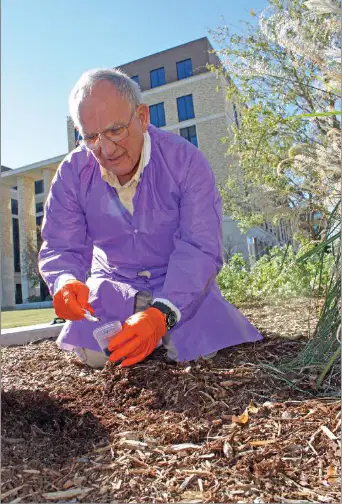
Palynology includes the study of methods of ________.
pollination
germination
fertilization
photosynthesis
Fill in the blank: The two main types of pollen producers are ________ and ________.
Gymnosperms and angiosperms.
Bryophytes and pteridophytes.
Fungi and algae.
Mosses and liverworts.
Fill in the blank: Spores are ________ reproductive structures.
asexual
sexual
binary
vegetative
Multiple Choice: Which of the following statements about bacterial endospores is true?
They are used in reproduction
They are produced one at a time
They are sexual reproductive structures
They are pollen producers
True or False: Bacterial endospores are used in reproduction.
True
False
What are assemblages in the context of botanical evidence?
Groups of animals living together
Groups of plants usually dominated by one species
Groups of insects found at a crime scene
Groups of rocks found in a specific area
Fill in the blank: Assemblages are groups of plants usually dominated by one _______.
species
leaf
root
flower
Determining when and where plants are found at a crime scene is important because it is _______ and geographically specific.
seasonally
randomly
universally
permanently
If a plant found at a crime scene is not native to the area, what might this indicate about the body?
It may indicate that the body was moved.
It may indicate the plant is poisonous.
It may indicate the body is very old.
It may indicate the crime happened in winter.
What is one method used in forensic science to determine the postmortem interval using botanical evidence?
Examining gastric contents
Measuring blood alcohol level
Analyzing hair follicle DNA
Fingerprint analysis
Which of the following is a way to use botanical evidence to determine the postmortem interval?
A) Examining gastric contents
B) Measuring body temperature
C) Analyzing fingerprints
D) Interviewing witnesses
When using botanical evidence, what should investigators observe to help determine the postmortem interval?
The environment
The victim's clothing brand
The type of vehicle at the scene
The color of the investigator's gloves
Recognizing gravesites can involve which of the following observations?
Possibly devoid of any plants
Covered in snow
Surrounded by animals
Marked with a sign
New plant growth at a gravesite can be an indicator used in forensic botany.
True
False
Which of the following is a step in documenting the evidence at a crime scene?
A) Scan and walk
B) Ignore the scene
C) Destroy evidence
D) Leave the scene untouched
Fill in the blank: One of the steps in documenting the evidence is to create a __________ sketch.
Preliminary
Final
Digital
Verbal
Which form is used as part of documenting the evidence at a crime scene?
Evidence Site Form
Crime Report Form
Witness Statement Form
Suspect List Form
Fill in the blank: As part of documenting the evidence, it is important to conduct __________ sampling.
habitat
random
chemical
visual
According to the procedure for processing a crime scene for botanical evidence, what is the first step in mapping the evidence?
Establish a datum point
Collect all visible evidence
Photograph the entire scene
Interview all witnesses
According to the procedure for processing a crime scene for botanical evidence, what label is used when mapping the evidence?
Evidence Inventory Label
Botanical Reference Tag
Scene Sketch Marker
Chain of Custody Label
According to the procedure for processing a crime scene for botanical evidence, who should collect the evidence?
Only one person collects
Anyone present at the scene collects
Multiple people collect together
The evidence is collected by the suspect
According to the procedure for processing a crime scene for botanical evidence, what type of samples are needed when collecting the evidence?
Control samples
Random samples
Synthetic samples
Aged samples
According to the correct procedure for packaging botanical evidence, should botanical samples ever be stored in plastic?
True
False
According to the correct procedure for packaging botanical evidence, should botanical evidence be frozen?
True
False
According to the correct procedure for packaging botanical evidence, botanical evidence may be temporarily stored using ________.
plant presses
plastic bags
aluminum foil
glass jars
According to the correct procedure for packaging botanical evidence, what type of containers should be used if possible?
Sterile containers
Plastic bags
Cardboard boxes
Glass jars
What is dendrochronology?
Study of tree rings in woody plants
Study of animal fossils
Study of soil layers
Study of water currents
Dendrochronology was used in which famous case?
O.J. Simpson trial
Lindbergh baby kidnapping hearing in 1935
Watergate scandal
Salem witch trials
Fill in the blank: Dendrochronology involves counting the ________ rings.
tree
water
stone
metal
Which scientific method is used in dendrochronology to determine the age of wood?
Radiometric dating
Carbon-dating
DNA analysis
X-ray imaging
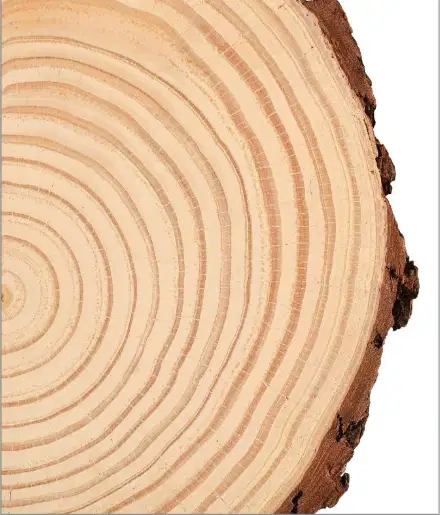
What does each ring in the image represent?
Each ring represents one year of growth in the tree.
Each ring represents a different species of tree.
Each ring represents a month of growth in the tree.
Each ring represents a layer of bark on the tree.
What is palynology?
The use of pollen and spore evidence to solve crimes.
The study of fingerprints in forensic science.
The analysis of blood spatter patterns.
The examination of hair and fiber evidence.
Palynology is based on which principle?
Principle of Similarity
Locard’s Principle of Exchange
Principle of Conservation
Principle of Probability
How is pollen evidence examined in forensic science?
Using various microscopes.
By tasting the pollen.
By burning the pollen.
By freezing the pollen.
What is meant by a pollen 'fingerprint' in forensic science?
The unique pattern of pollen grains that can link evidence to a specific source.
A method of identifying fingerprints using pollen dust.
A technique for removing pollen from crime scenes.
A type of fingerprint found only on plants.
When analyzing botanical evidence, it is important to factor in variables.
True
False
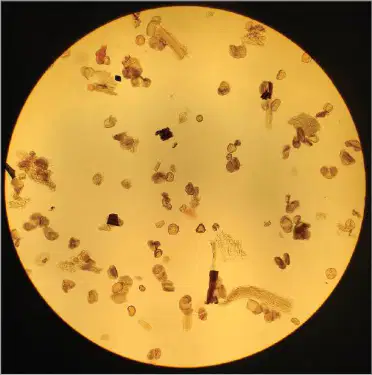
What does the image show in the context of palynology?
Pollen grains as seen under a microscope.
Bacterial colonies growing on agar.
Fossilized leaves in sedimentary rock.
Crystals of salt under polarized light.
Summarize how botanical evidence can be analyzed by forensic scientists. According to the slide, what must be done to diatoms before they can be examined?
They must be frozen
They must be cleaned
They must be stained
They must be dried
Summarize how botanical evidence can be analyzed by forensic scientists. What process may be required to clean diatoms before examination?
Acid washes
Freezing
Ultraviolet exposure
Mechanical grinding
Summarize how botanical evidence can be analyzed by forensic scientists. What instrument is used to view diatom specimens according to the slide?
Light microscope
Scanning Electron Microscope (SEM)
Magnifying glass
X-ray machine
Summarize how botanical evidence can be analyzed by forensic scientists. The image shows diatoms as seen under a microscope. What is done to the specimens after they are viewed using a SEM?
They are destroyed
They are identified and counted
They are colored
They are frozen
What is left behind by plants' leaves, roots, and stems that can be used in forensic botany?
Plant wax markers
Chlorophyll stains
Pollen grains
Cellulose fibers
Which technique is used to find plant wax markers in forensic botany?
Mass spectrometry
Gas chromatography
Gel electrophoresis
PCR
What does DNA barcoding use to identify plant species in forensic botany?
Specific genetic signatures
Leaf shape and size
Soil composition
Flower color
DNA sequence varies slightly from species to species in DNA barcoding.
True
False
What is one advantage of metabaroding in forensic botany?
It is slow and manual
It quickly analyzes mixed DNA samples
It only works with pure samples
It is not automated
Fill in the blank: Metabaroding uses high-throughput ________ equipment.
automated
manual
analog
mechanical
Which of the following is NOT a pollen database mentioned in advances in forensic botany?
Global Pollen Database
European Pollen Database
North American Pollen Database
East Asian Pollen Database
Name one type of pollen database used in forensic botany.
Global Pollen Database
Animal DNA Registry
Mineral Sample Archive
Insect Trace Database
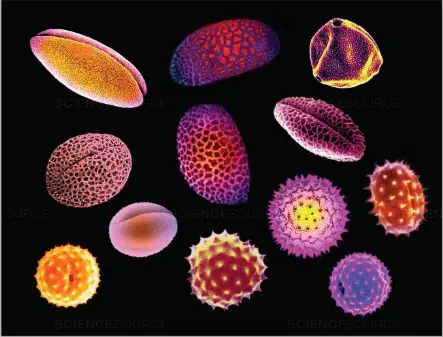
Refer to the image of pollen grains. What type of evidence do these images represent in forensic botany?
Botanical evidence (pollen)
Chemical evidence
Digital evidence
Fiber evidence
Fill in the blank: __________ evidence is everywhere.
Botanical
Chemical
Digital
Physical
Which of the following can provide information about the geographic origin of a crime?
Forensic chemistry
Forensic botany and forensic palynology
Forensic entomology
Forensic anthropology
Fill in the blank: Plant assemblage can help narrow down its __________.
location
color
height
age
The role of botanical evidence is slowly increasing.
True
False
Fill in the blank: Pollen is a reproductive structure containing ______ gametes.
male
female
haploid
diploid
Plants and fungi may disperse pollen or spores.
True
False
Fill in the blank: Botanical evidence has been used to help solve a diversity of ______.
crimes
puzzles
recipes
diseases
Pollen evidence collected from objects or suspect(s) must be compared with baseline samples.
True
False

