Wayground logo

Free Printable Worksheets

Font size

S
M
L
XL
Worksheets

Atoms Review

Total questions: 50

Worksheet time: 1hrs 9mins

Name
Class
Date
1.
In Dalton's Atomic Theory, all elements consist of __________ that cannot be divided.
a)
Atoms
b)
Parts
c)
Molecules
d)
Hydrogen
2.

Who was the Greek philosopher who called the smallest particle of matter an "atom"?

a)

Democritus

b)

Aristotle

c)

J.J Thompson

d)

Einstein

3.

Which of the following is/are conclusions based on Rutherford’s gold foil experiment?

a)

Atom is mostly empty space

b)

The nucleus is positively charged

c)

The atom has a small dense nucleus

d)

All answers are correct

4.

Who is the scientist who proposed the "planetary" model of an atom where the electrons orbit around the nucleus?

a)
Democritus
b)
Niels Bohr
c)
Ernest Rutherford
d)
Chadwick
5.
J.J. Thomson provided evidence that an atom...
a)
is the smallest particle of matter
b)

contains negatively charged particles (electrons)

c)
has an overall negative charge
d)
has an overall positive charge
6.

What model did Thomson create?

a)

The wave-point particle model

b)

The Plum Pudding model

c)

The Alpha particle model

d)

The multiple proportions model

7.

Match the charges to the subatomic particle.

a)

Electrons

1.

negative

b)

Neutrons

2.

neutral

c)

Protons

3.

positive

8.
A tiny but very dense, positively charged portion of the atom that holds most of the atomic mass
a)
Electron Shells
b)
Orbitals
c)
Electron Cloud
d)
Nucleus
9.
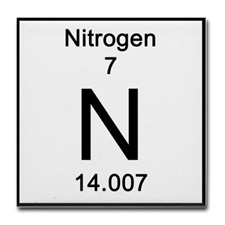
What is the number of protons that the element in this image contain?
a)
14
b)
7
c)
15
d)
18
10.

Look at this picture of Argon off the periodic table. Which of the following is true for this element?

a)

18 neutrons

b)

40 neutrons

c)

22 neutrons

d)

21.9 neutrons

11.

Which part of an atom is used to identify it?

a)

number of protons

b)

number of neutrons

c)

number of electrons

12.

Two atoms of the same element with two different masses like Carbon-12 and Carbon-14 are called ​ (a)   . Their masses are different because the number of​ (b)   are different.

Choose from the below words
protons
ion
isotopes
neutrons
electrons
13.

When you have an atom, O-2 for example, this is called an ​ (a)   . This is because the number of ​ (b)   has changed.

Choose from the below words
ion
electrons
protons
isotope
neutrons
14.

Match the correct answer to each ion

a)

O-2

1.

gained 2 electrons

b)

Na+1

2.

lost 1 electron

c)

Ca+2

3.

lost 2 electrons

d)

F-1

4.

gained 1 electron

e)

N-3

5.

gained 3 electrons

15.

Al+3

The +3 tell you the

a)

number of protons.

b)

atomic mass.

c)

charge of the atom.

16.

Iodine-131

The -131 tells you the

a)

number of protons.

b)

atomic mass.

c)

charge of the atom.

17.

The atomic mass of an atom is equal to

a)

number of protons plus number of neutrons

b)

number of protons plus number of electrons

c)

number of electrons plus the number of neutrons

18.

What two subatomic particles must be equal for an atom to have no charge (neutral).

a)

protons and neutrons

b)

protons and electrons

c)

electrons and neutrons

19.
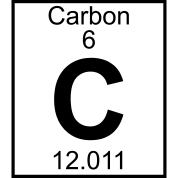
What does the 6 represent?
a)
atomic mass
b)
atomic number
c)
element name
d)
chemical symbol 
20.
What does 12.011 represent?
a)
atomic mass
b)
atomic number
c)
element name
d)
chemical symbol 
21.
Each column in the periodic table is called a _________ .
a)
period
b)
group
c)
cluster
d)
unit
22.
What element is will have the most similar physical and chemical properties to the element Sulfur (S)?
a)
Carbon (C)
b)
Phosphorous (P)
c)
Oxygen (O)
d)
Neon (Ne
23.
Periods on the periodic table are __________.
a)
Horizontal Rows
b)
Vertical Columns
24.
The atoms along the staircase are called 
a)
metals
b)
nonmetals
c)
metalloids
d)
noble gases
25.
What's a valence electron?
a)
electrons in the second energy level
b)
electrons in the outermost energy level
c)
the atomic number
d)
electrons in the first level
26.
Elements which are shiny, conduct electricity and heat are called
a)
metal
b)
nonmetal
c)
metalloid
d)
nonexistent
27.

What do the vertical columns on the periodic table tell us?

a)

The number of orbitals

b)

The number of valence electrons (electrons on the outer most shell)

28.

What do the horizontal rows on the periodic table tell us?

a)

The number of energy levels

b)

The number of valence electrons (the electrons on the outer most shell)

29.
The Modern Periodic Table of Elements is arranged by
a)
atomic mass
b)
atomic number
c)
valence electrons
d)
number of isotopes
30.

a grouping of elements based on similar properties, arranged by columns in the periodic table; also known as a group

a)

family

b)

period

c)

row

d)

isotope

31.

The periodic table is mostly comprised of what type of element?

a)

Metals

b)

Nonmetals

c)

Metalloids

32.

Which elements are to the LEFT of the zigzag?

a)

metals

b)

nonmetals

c)

metalloids

33.

Which elements are colored red?

a)

nonmetals

b)

metals

c)

metalloids

34.
Silicon is a semiconductor and has properties of both metals and nonmetals. What type of element is Silicon? 
a)
Metal
b)
Nonmetal
c)
Metalloid
d)
Pretty
35.
All of these properties describe metals except...
a)
malleable
b)
conductors
c)
brittle 
d)
shiny
36.

Which of the following is an Alkali Metal?

a)

Magnesium

b)

Chromium

c)

Sodium

37.
Which of the following is an Alkaline Earth Metal? 
a)
Calcium
b)
Lithium
c)
Phosphorus
d)
Copper 
38.

Which of the following is a Halogen?

a)

Bromine

b)

Rubidium

c)

Beryllium

39.

Which of the following is a Noble Gas?

a)

Krypton

b)

Chlorine

c)

Gallium

40.

Which of the following is the most reactive group of metals?

a)

Alkali

b)

Alkaline Earth

c)

Halogen

41.
Which of the following is the most reactive group of non-metals? 
a)
Alkali
b)
Alkali Earth
c)
Halogen
d)
Noble Gas
42.

Which of the following groups is unreactive?

a)

Alkali

b)

Transition Metals

c)

Noble Gas

43.
As you move down the periodic table atoms get bigger.  This is because ____________.
a)
The atoms have more mass.
b)
The atoms have more protons.
c)
The atoms have more energy levels
d)
The atoms have more neutrons
44.
As you move across the periodic table atoms tend to get smaller because, ______________.
a)

the electrons are weaker

b)
the atoms have less mass
c)

the protons pull stronger on the electrons

d)

the protons push the electrons away

45.

Which nuclear emission involves the release of a helium nuclei (2 protons and 2 neutrons)?

a)
alpha
b)
gamma
c)
positron
d)
beta
46.
Which of the following nuclear emissions has the greatest penetrating power?
a)
alpha
b)
gamma
c)
beta
d)

neutron

47.

Which type of radiation is just a single electron?

a)

beta

b)

gamma

c)

alpha

d)

neutron

48.

time for half of the nuclei in a sample to decay

a)
half life
b)

half time

c)

half cycle

d)

half decay

49.
The splitting of a nucleus into smaller nuclei is
a)
fusion
b)
fission
c)
decay
d)
gamma radiation
50.
Takes two small nuclei and combines them into a larger nucleus
a)
fission
b)
fusion