
Font size
 Worksheets
CH5 Muscular System REVIEW
Total questions: 47
Worksheet time: 45mins
Label the muscles
What is the main neurotransmitter at the neuromuscular junction?
Dopamine
Serotonin
Acetylcholine
Epinephrine
The functional unit of a myofibril is called a:
Myofilament
Sarcolemma
Sarcomere
Myosin
Which muscle tissue type is non-striated?
Skeletal
Smooth
Cardiac
Voluntary
Ligaments connect:
Muscle to bone
Bone to bone
Muscle to muscle
Tendon to bone

Which muscle is responsible for plantar flexion?
Tibialis anterior
Gastrocnemius
Biceps femoris
Quadriceps femoris
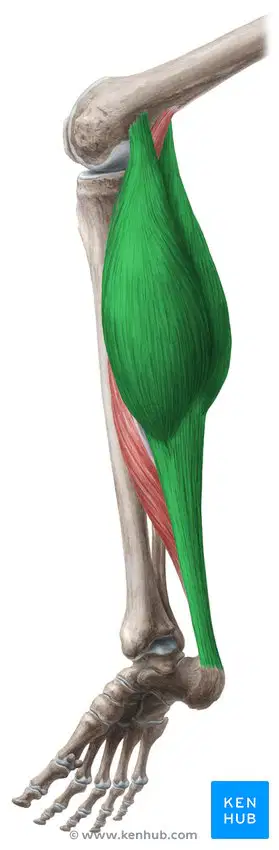
The Achilles tendon connects the calf muscle to which bone?
Talus
Navicular
Calcaneus
Cuboid
The SA node in the heart initiates contractions through which muscle type?
Skeletal
Cardiac
Smooth
Voluntary

Which best describes involuntary motion?
Requires conscious thought
Controlled by the autonomic nervous system
Controlled by the somatic nervous system
Only occurs in skeletal muscle
Why do skeletal muscles appear striated?
Due to overlapping actin and myosin filaments
Because of connective tissue wrappings
Because they have a single nucleus
Due to lack of mitochondria
Which property allows muscles to respond to a stimulus?
Elasticity
Excitability
Contractility
Extensibility
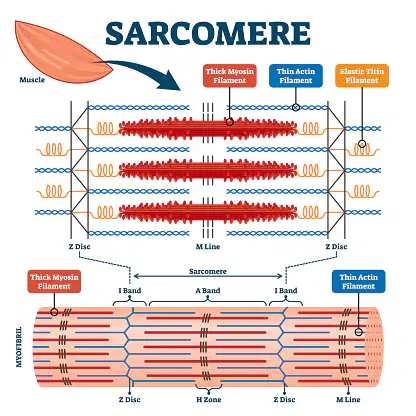
During contraction, the sarcomere:
Lengthens
Stays the same
Shortens
Disappears
Which structure is responsible for connecting adjacent cardiac muscle cells?
Desmosomes
Intercalated discs
Tendons
Synaptic clefts
Which of the following is a correct statement regarding the role of muscles in body temperature regulation?
Muscles do not contribute to body heat
Muscle activity increases heat production in the body
Heat is only produced when muscles are inactive
Only cardiac muscle produces heat
What occurs when ACh remains in the synaptic cleft?
The muscle remains contracted
The muscle immediately relaxes
Calcium channels close
The neuron becomes hyperpolarized
When you lift a textbook, which lever component is represented by your elbow joint?
Force
Resistance
Fulcrum
Insertion
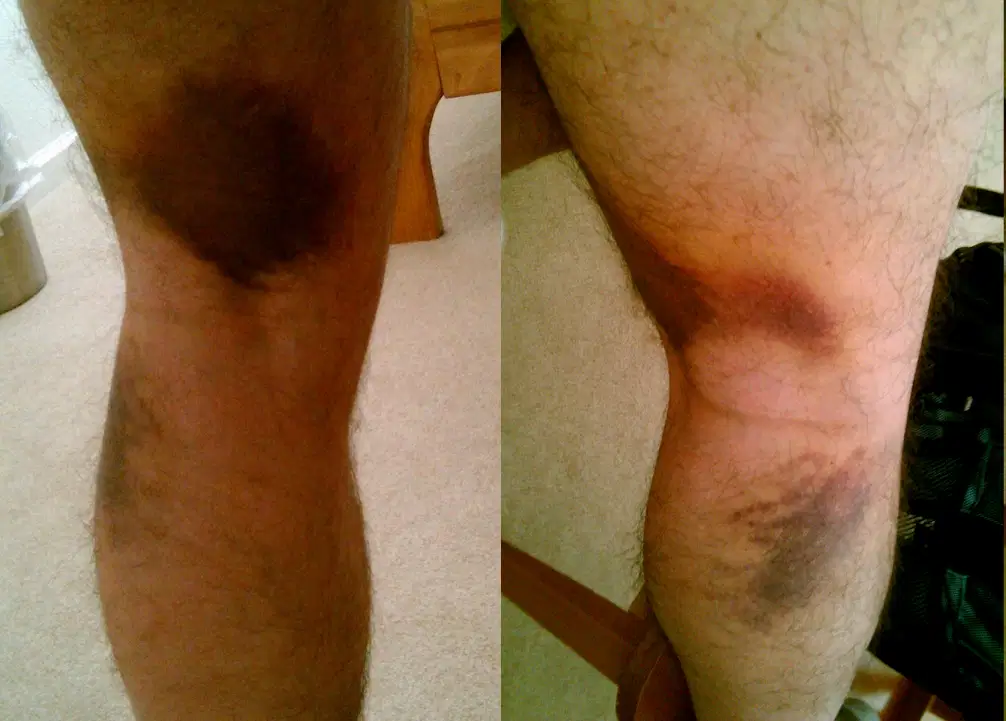
A torn hamstring that shows bruising and swelling but partial strength is a:
Grade I
Grade II
Grade III
Mild strain
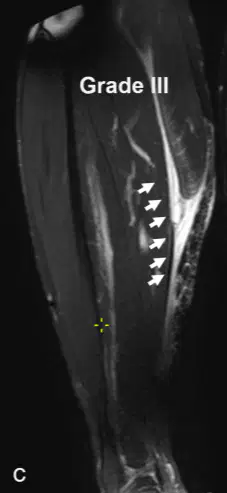
A severe muscle strain completely tearing the muscle results in:
Tenderness only
Mild swelling
Complete loss of strength
Increased elasticity
Which feature is shared by both skeletal and cardiac muscle?
Both are involuntary
Both are multinucleate
Both are striated
Both are controlled by the SNS
A loss of muscle tone would most directly affect:
Heat production
Posture maintenance
Oxygen transport
Neural transmission
During muscular dystrophy, what protein is defective or missing?
Actin
Myosin
Dystrophin
Collagen
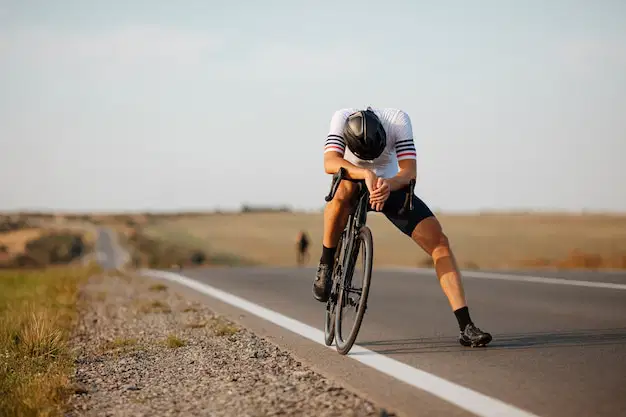
A cyclist collapses after a 50 km ride due to electrolyte imbalance. What function is most affected?
Muscle excitability
Muscle elasticity
Bone lever action
Blood vessel dilation
If a person’s ACh receptors are blocked, what would you expect?
Continuous muscle contraction
Paralysis
Increased excitability
Faster fatigue
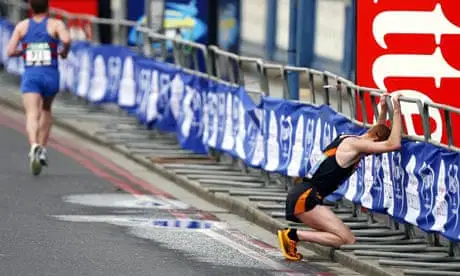
A marathoner develops atrophy in their legs after an injury. Which property is lost first?
Contractility
Elasticity
Excitability
Extensibility
Which example shows extensibility in action?

The bladder expanding to store urine

The quadriceps contracting to extend the knee

The hamstrings returning to resting position

The biceps shortening to lift a dumbbell
Which of the following best explains why Duchenne muscular dystrophy is more severe than Becker muscular dystrophy?
Becker affects both skeletal and smooth muscle.
Duchenne completely lacks functional dystrophin, while Becker retains partial function.
Becker occurs only in females.
Duchenne involves mitochondrial defects rather than gene mutations.
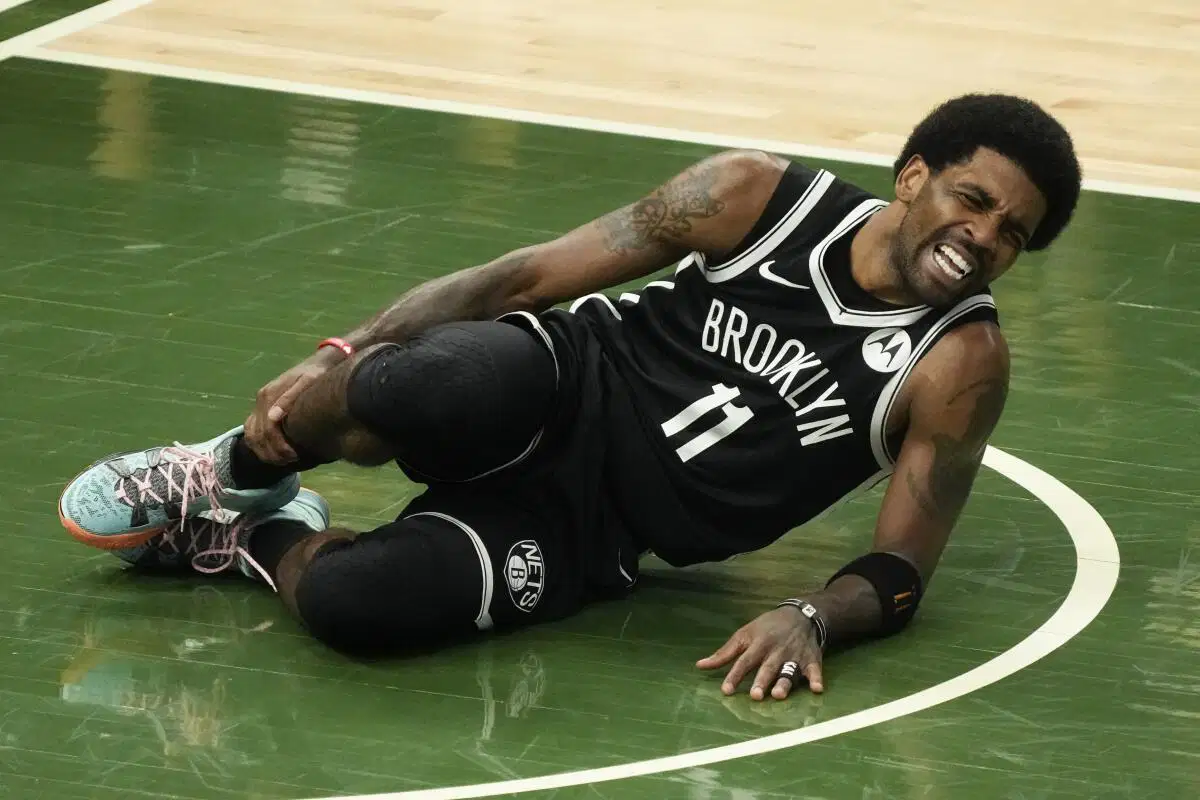
A basketball player reports sharp pain and swelling after an abrupt sprint. The physician notes a partial tear with mild bruising and decreased strength. Which classification best fits this injury?
Grade I – Mild strain
Grade II – Moderate strain
Grade III – Severe strain
Chronic muscle fatigue
Which of the following are characteristics of a Grade III muscle strain? (select all that apply)
Complete loss of muscle function
Mild pain and tenderness
Muscle torn completely through
Noticeable loss of strength
Identify the muscles
Identify the muscles
Identify the muscles and bones
Identify the muscles
Label the muscles
Identify the facial muscles:
Label the components of the movement shown
Label the components of the movement shown:
Match the following histology "slides" with their label:

cardiac muscle

skeletal muscle
(longitudinal)

skeletal muscle
(transverse)

smooth muscle

Using the bar graph to answer the questions:
Which sport involves the most muscle strains?
Lacrosse
Figure Skating
Baseball
Swimming
Which sport involves the most muscle contusions?
Figure Skating
Baseball
Lacrosse
Swimming
What percentage of swimming injuries is attributed to muscle strains?
5%
7%
10%
12%
What percentage of lacrosse injuries were due to muscle contusions?
24%
27%
7%
11%
Identify the structures of the NMJ
The neuromuscular junction is responsible for converting (1) (a) impulses generated by the (b) into a (2) (c) signal at the NMJ, back into the (1) impulse within the (d) , telling the muscle when to (e) .
Identify the origin and insertion of the muscle shown:
Identify the origin and insertion of the pictured muscle:
What is Label #7?
blood vessel
fascicle
muscle fiber
tendon

During muscle contraction, (1) (a) attaches to receptors on the motor end plate, triggering a(n) (2) (b) in the (c) . This signal causes (d) to pull (e) inward, shortening the muscle fiber and producing contraction. When (1) is removed from the receptors, the (2) stops, and the muscle relaxes.
Match the components of the musculoskeletal lever their definition:
agonist
muscle that contracts to create movement
antagonist
muscle that opposes the action of another
synergist
muscle assisting in the prime movement
fixator
muscle stabilizing the joint
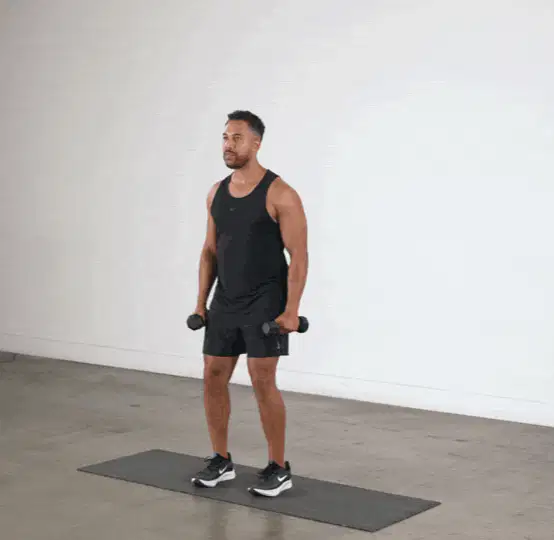
Match the functions with a component of the muscular system:
Applies the force for movement
muscle
Acts as the lever
bone
Acts as the fulcrum
joint
Connects bone to bone
ligament
Connects muscle to bone
tendon
During her pharmacy shift, Maria spends most of her 8-hour day standing at the prescription counter. By the end of her shift, she notices lower back discomfort and tingling in her legs. Her supervisor recommends adjusting her posture and alternating between standing and sitting breaks throughout the day.
Question:
Analyze how poor posture and decreased muscle tone could contribute to Maria’s symptoms, and evaluate how improving static and dynamic posture could enhance her musculoskeletal and circulatory function.
Poor posture increases muscle tone, improving blood flow and preventing nerve compression.
Poor posture decreases muscle tone, reducing blood flow and stressing nerves and ligaments; improving alignment restores circulation and support.
Poor posture strengthens ligaments and increases muscle contraction, preventing fatigue and tension.
Improved posture decreases muscle tone, allowing ligaments and tendons to relax completely and reduce tension.

