
 Worksheets
BASIC H CIRCUIT
Total questions: 19
Worksheet time: 10mins
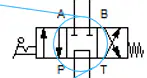
The opened cynosure system (open centre hydraulic system) is ideal for systems that operate at:
High pressure
Low pressure
Variable pressure
Constant flow
Which of the following is an advantage of an open centre hydraulic system?
Difficult to maintain
Generates excessive heat
Easier to maintain
Expensive to design
The open centre hydraulic system is suitable for circuits that contain:
Motors only
Actuators other than motors
Pumps only
Reservoirs only
One disadvantage of the open centre system is that the fluid reservoir must be:
Very small
Large enough for proper cooling
Completely sealed
Filled with gas
Which of the following is not listed as an advantage of an open centre hydraulic system?
Easier to maintain
Cost less to configure and design
Generates excessive heat
Straightforward to diagnose
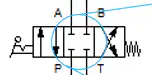
The closed cynosure system (closed centre hydraulic system) is ideal for systems that operate at:
Lower pressure
Variable pressure
Higher pressure
Constant flow
Which of the following is an advantage of a closed centre hydraulic system?
Costs more to configure and design
Ideal for low-pressure operation
Requires large reservoir
Ideal for high-pressure system
One disadvantage of the closed centre hydraulic system is:
Difficult to diagnose
Costs more to configure and design
Operates at low pressure
Needs large reservoir
Why are most hydraulic pumps operated below their maximum capacity?
To increase the pressure
To make them run faster
To ensure durability
To reduce oil usage
What happens when a hydraulic pump is operated at its maximum capacity for a long period?
It increases the bearing’s lifespan
It has no effect on performance
It affects the durability of the pump’s bearings
It reduces power consumption
What may happen if the pump operates at a pressure of 120 bar?
The bearing’s life increases
The bearing’s life is reduced by half
The system becomes more efficient
The pump stops immediately
What happens when the pump speed exceeds its maximum rated speed?
The bearing life increases
The bearing life decreases
The pump operates more efficiently without impact
The pump remains unaffected
Which of the following statements about flow rate is TRUE?
Pump speed does not affect lifespan
Higher speed increases bearing life
Bearing life decreases when speed exceeds the limit
The maximum pump speed can be ignored
What is the main cause of pump cavitation?
Excessive lubrication
Improper pump maintenance
High ambient temperature
Excessive oil pressure
Cavitation occurs when __________.
The pump operates at normal temperature
Fluid does not fill all the pump chambers
The pump operates at full pressure
There is no air in the fluid
What happens when there is a space filled with air in the pump chamber?
The pump’s efficiency decreases
The pump speed increases
The fluid temperature drops
The pump pressure increases
What is the common perception of hydraulic systems among many people?
They are clean and leak-free
They are efficient and quiet
They are dirty and often leak
They require no maintenance
How can hydraulic system leaks be effectively controlled and eliminated?
By reducing fluid pressure
Through perfect design, installation, and maintenance
By using thinner hydraulic fluid
By increasing pump speed
Why can excessive internal leakage damage the hydraulic fluid?
Due to contamination from external particles
Due to heat generated inside the system
Due to vibration from the pump
Due to reduced oil viscosity

